
Charity is helping NC public schools, but it’s not a sustainable plan | Opinion
When did investing in public schools become so polarized and partisan? As a native North Carolinian, I always believed that investing in education at all levels was a primary reason for our state’s growth and prosperity.
Education should be a unifying issue, one that brings people together to ensure every child has the opportunity to succeed. Yet, instead of rallying around our schools, we find ourselves locked in debates over adequate funding, teacher pay and culture war issues designed to distract and outrage.
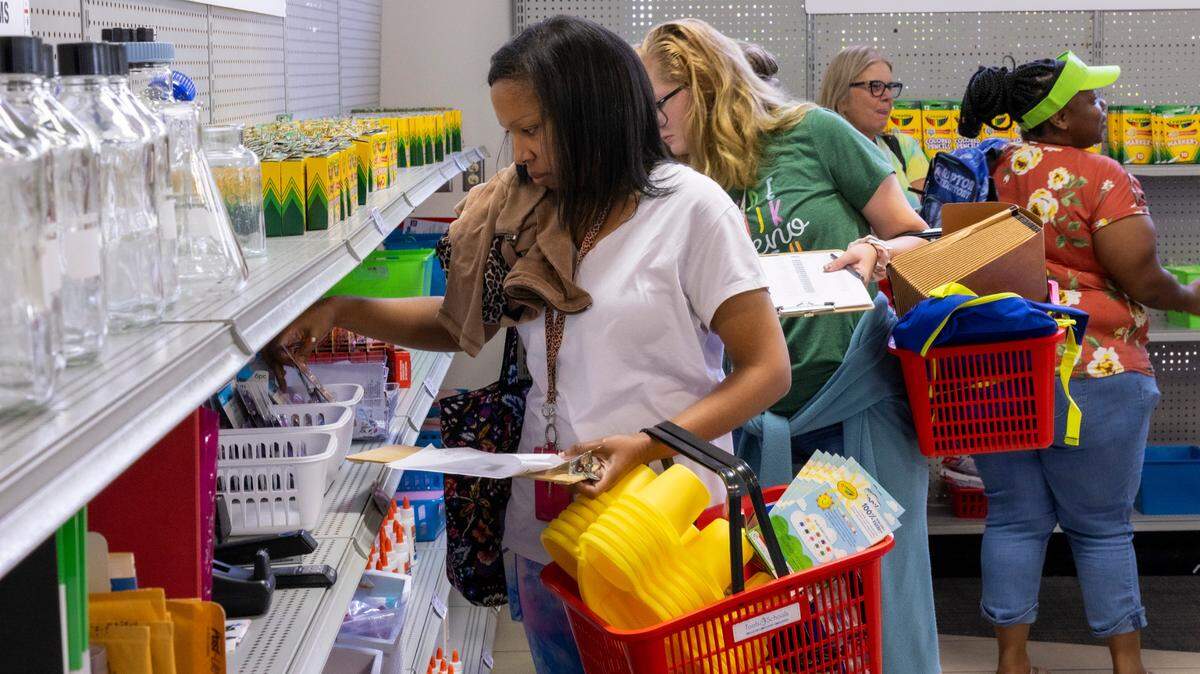
The challenges facing our public schools are not abstract — they are painfully real. Consider Tools4Schools, a free classroom supply store created by WakeEd Partnership that provides basic supplies to teachers in Wake County Public Schools. We started this initiative two years ago and have given away more than $1 million in school supplies to teachers.
Since 2002, Charlotte’s Classroom Central been distributing free school supplies to thousands of teachers each year in more than 200 schools in six school districts: Charlotte-Mecklenburg, Iredell-Statesville, Union, Gaston, city of Kannapolis and Lancaster, S.C.
Nonprofits like Tools4Schools and Classroom Central highlight a troubling reality: our teachers are not receiving the resources they need. A recent study found N.C. teachers still spend an average of more than $1,300 annually of their own money on supplies, fourth highest in the nation.
Instead of having the tools they need, teachers are forced to rely on charitable donations, when and where they are available, for help with essentials to do their job. Why? The primary reason is that our state ranks near the bottom nationally in per-pupil spending. State funding for classroom supplies was cut in half 15 years ago by the legislature during the Great Recession and has never been restored.
Teachers should be focused on student learning, not worrying about where to find copy paper or dry erase markers.
The funding crisis extends beyond classroom supplies. Wake County Public Schools recently set up a community Angel Fund to pay off school lunch debt for low-income students. This effort reflects the generosity of our community but underscores a larger problem. Why are we relying on donations to ensure that students can eat at school? For many children, school lunch is their primary source of nutrition, yet we struggle to provide even this basic need without community assistance.
Another significant issue is low teacher pay. North Carolina’s average teacher salary is $56,559, almost $13,000 below the national average. The state’s average starting teacher salary of $40,136 ranks 42nd in the nation and almost $15,000 below the minimum living wage.
This is why many educators are leaving the profession or moving to neighboring states where they can earn more. The consequences of this teacher shortage are profound. When we underpay teachers, we struggle to attract and retain the best talent, and ultimately, our students suffer.
Teachers are the backbone of our education system, yet their compensation often becomes a political football. Instead of acknowledging their critical role in shaping the future of our state, some seek to demonize our educators. But what could be more important than ensuring that our children are taught by highly qualified and well-compensated educators?
So, why has investing in public education become so divisive? Perhaps it’s because education touches on so many fundamental issues — economic inequality, social mobility and community values. But instead of working together to solve these problems, we’ve allowed them to deepen our political divides. This polarization is a disservice to our students, teachers and communities.
The challenges facing our state’s public schools are real but not insurmountable. We must move beyond partisan battles and focus on the common goal of providing a high-quality education for all students. This means increasing funding for classroom resources, ensuring that no child goes hungry at school, and raising teacher pay to reflect the importance of their work.
Our state’s future depends on the success of our public schools. Education is a necessity for the well-being and progress of our entire state. Let’s make sure our actions reflect that reality, including at the ballot box in November.