How the Supreme Court deciding its own election could spell chaos for NC | Opinion
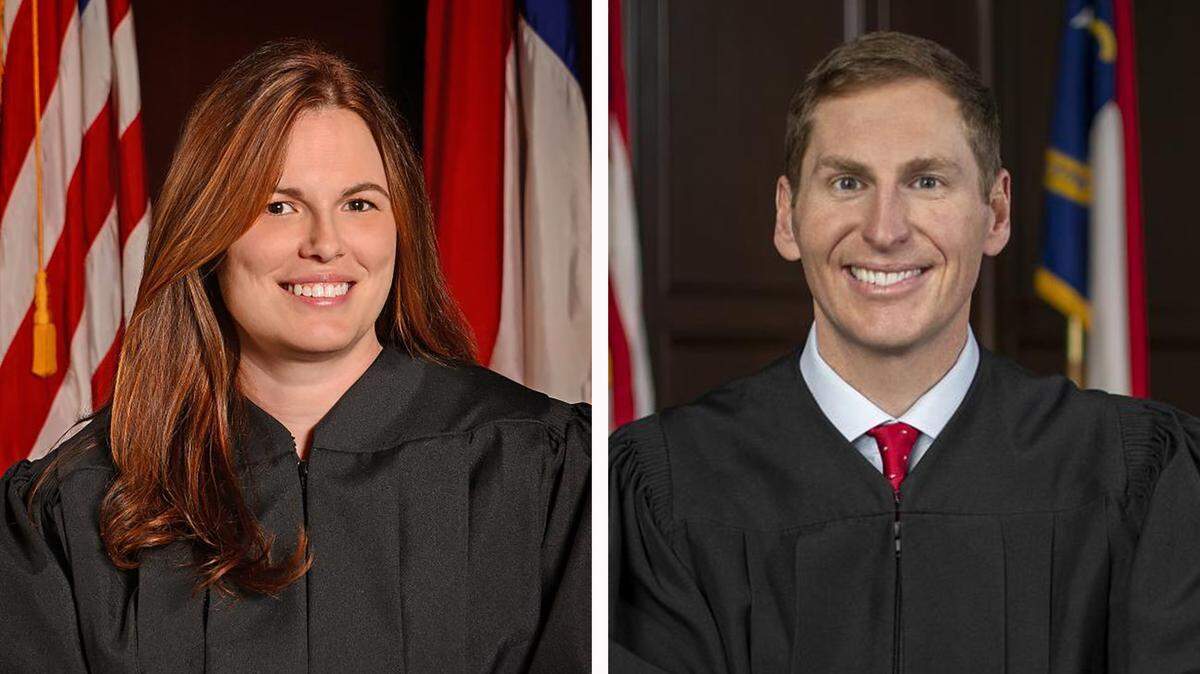
The North Carolina Supreme Court is poised to decide the outcome of an election for one of its own seats — a virtually unprecedented situation that has the potential to create real chaos for the state.
Jefferson Griffin, the GOP candidate in the race, lost to Democratic incumbent Allison Riggs by 734 votes, a margin that held firm through multiple recounts. But Griffin is seeking to reverse his loss by challenging the validity of 60,000 votes he believes should not have been counted.
This week, a federal judge sent the case back to the N.C. Supreme Court. Punting the decision to the N.C. Supreme Court is an ideal outcome for the GOP, because the court has tended to side with Republicans on big cases in the past. The GOP-controlled court has already blocked the state from certifying Riggs’ victory while the case plays out.
Michael Bitzer, a political science professor at Catawba College, says he can’t recall another election where this many ballots were sought to be deemed ineligible. That lack of precedent means most experts aren’t exactly sure what will happen if the court sides with Griffin, or what exactly the court would say if it did.
If the court rules those 60,000 votes ineligible, as Griffin has requested, that wouldn’t just impact the Supreme Court race. It could very well impact other races down the ballot that were only decided by a few thousand votes. Would those victories be overturned, too, even though the results have already been certified?
And what about future elections? There would be no stopping any candidate, from any party, to start blindly challenging ballots in races whose outcomes they disagree with. The loser of an election could just comb through ballots to see what might potentially violate the criteria set out by the court.
Bitzer said that removing all of those votes would be the most extreme outcome.
“The greater likelihood, I think, would just simply be with so many questions raised, is there a requirement for another election? A second bite at the apple?” Bitzer said.
But that alone would be a precarious decision. Not only would it continue to erode public confidence in the judiciary and our electoral processes, it would also create its own kind of chaos.
“If that’s the case, that could certainly open up future elections to the same kind of scrutiny and potentially continuous elections until somebody wins by a big enough margin,” Bitzer said. “It opens up a whole new stream of hypotheticals. If people are unhappy with their result, can they call the election process into question and invalidate the integrity of the election?”
The situation bears some resemblance to 2020, when Donald Trump and his allies turned to the courts to try to overturn his election loss. They filed various lawsuits alleging violations of federal law and widespread voter fraud in key swing states, and Trump implied that a sympathetic court could sway the election in his favor. The U.S. Supreme Court refused to do so. Even a conservative court wasn’t willing to bend the law to fit their politics in a situation with such high stakes.
One would hope that the North Carolina Supreme Court would do the same now. At least one Republican justice has shown a reluctance to accept Griffin’s argument. Justice Richard Dietz dissented from the decision to block the certification of Riggs’ victory, writing that the court could “invites incredible mischief” by rewriting the rules of an election after it has already occurred.
Many of the votes challenged by Griffin come from people who did not provide a driver’s license number or Social Security number on their voter registration. Republicans say that prevents election officials from verifying their identities, despite the fact that every voter in North Carolina had to provide identification in order to vote last year under the state’s voter ID law.
Asher Hildebrand, a former Democratic aide who now teaches at Duke University, said that in his view, the issue at hand isn’t just what the ruling could say about the politicization of our judiciary, but also the fragility of the right to vote.
“Nobody is disputing that the 60,000 voters were eligible to vote. And to say that their vote should not be counted because of some clerical error on their forms is an affront to them,” Hildebrand said. “It says a lot about their views about the right to vote if they think it should be taken away simply because of a technicality like that.”
The Supreme Court should keep that in mind. While partisan political pressures are always tempting, this case is about more than just one election. Is the court really willing to take that on?
This story was originally published January 9, 2025 at 5:00 AM with the headline "How the Supreme Court deciding its own election could spell chaos for NC | Opinion."