
If the Supreme Court hadn’t failed NC, there wouldn’t be this voting mess in Texas | Opinion
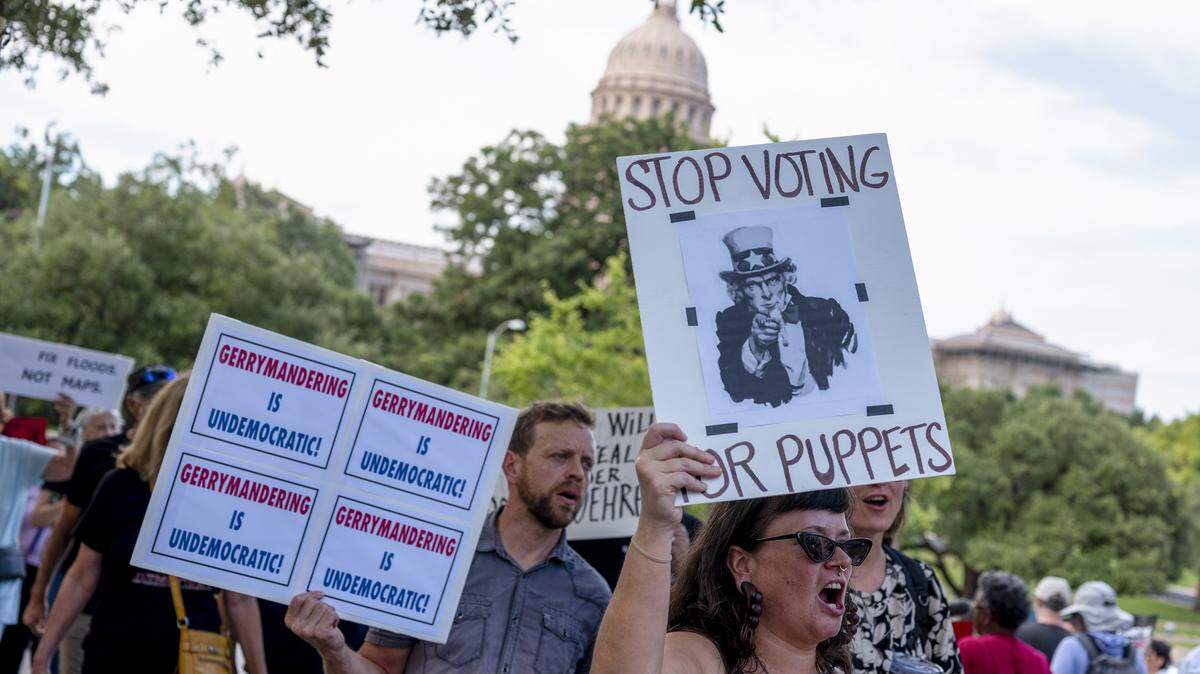
In North Carolina, the Texas gerrymandering showdown evokes a mixture of familiarity and chagrin.
North Carolina, one of the nation’s most gerrymandered states, has seen multiple court battles over congressional and legislative district maps drawn by the legislature.
But what’s cause for chagrin – at least among those who support free and fair elections – is that a legal challenge that originated in North Carolina almost brought an end to partisan gerrymandering nationwide.
If the plaintiffs had prevailed, Texas Republicans wouldn’t be trying to redraw the state’s congressional districts to gain five more House seats in the 2026 election, and the leaders of Democratic states wouldn’t be threatening to retaliate with gerrymandering of their own.
The North Carolina case was filed in 2016 by Common Cause and others. The defendants were the chairmen of the legislature’s redistricting committee, Sen. Bob Rucho and Rep. David Lewis. The landmark case is known as Rucho v. Common Cause.
A panel of three federal judges agreed that North Carolina’s congressional district map was so tilted in Republicans’ favor that it violated the Constitution by discriminating against voters based on their political affiliations.
On appeal to the U.S. Supreme Court, the North Carolina case was joined with a Maryland case in which the plaintiffs alleged illegal partisan gerrymandering by Democrats.
That was the point at which the Supreme Court could have cured what has become an electoral disease that has made many primaries more important than the general election, fueling extreme politics and undermining voters’ faith in the fairness of elections.
Instead, the Supreme Court’s majority punted. In June of 2019, the court declared by a 5-4 vote that partisan gerrymandering is a political question that federal courts have no legal grounds to resolve.
Chief Justice John Roberts wrote in the majority opinion that federal courts “are not equipped to apportion political power as a matter of fairness, nor is there any basis for concluding that they were authorized to do so.”
In her dissent, Justice Elena Kagan recognized that a crucial opportunity had been missed. She wrote: “Of all times to abandon the Court’s duty to declare the law, this was not the one. The practices challenged in these cases imperil our system of government. Part of the Court’s role in that system is to defend its foundations. None is more important than free and fair elections. With respect but deep sadness, I dissent.”
Bob Phillips, executive director at Common Cause North Carolina, said it was hard to push the argument against partisan gerrymandering to the top of the U.S. judicial system only to have it found to be “nonjusticiable.”
“That was a painful decision for us,” Phillips said this week.
The disappointment had a bitter epilogue. A Democratic majority on the state Supreme Court found in February of 2022 that partisan gerrymandering violates the North Carolina Constitution, only to have the ruling reversed in 2023 after Republicans took control of the state Supreme Court.
Some argue that worries about partisan gerrymandering are overblown. They say it has gone on since the man the practice is named for – Massachusetts Gov. Elbridge Gerry – signed politically warped districts into law in 1812.
But partisan gerrymandering is getting worse. Texas testifies to that. And so does North Carolina.
Democrats tailored districts to their interests before Republicans took control of the General Assembly, but not like what is in place now. In 2009, under Democratic-drawn maps, the state’s congressional delegation was split 8-5 in favor of the Democrats. Under Republican maps it is 10-4 in favor of Republicans.
In earlier years, the legislative district maps were such that Republicans won control of the state House in 1994, 1996, 2002 and the state House and Senate 2010. Since Republicans have drawn the maps, Democrats have been trounced in both chambers in the last seven elections.
State Sen. Dan Blue, a Wake County Democrat who served on redistricting committees going back to 1981, said, “We drew districts that were fair enough that Republicans could flip the House, which shows there wasn’t extreme gerrymandering.”
Leo Daughtry, a former Republican state lawmaker from Johnston County who served as majority leader from 1994-1998, said of redistricting, “Now, with computers, they can make it really more partisan than they used to.”
The U.S. Supreme Court didn’t stop partisan gerrymandering, but Daughtry thinks North Carolina should.
“Now it’s getting to the point where we really need to have an independent redistricting commission,” he said. “I just think the whole redistricting process has gotten out of hand.”
And unless someone blinks, a surge of extreme partisan gerrymandering may soon be getting out of Texas.
Associate opinion editor Ned Barnett can be reached at 919-404-7583, or nbarnett@newsobserver.com