Desperate to redefine Roy Cooper, NC Republicans resort to AI tactics | Opinion
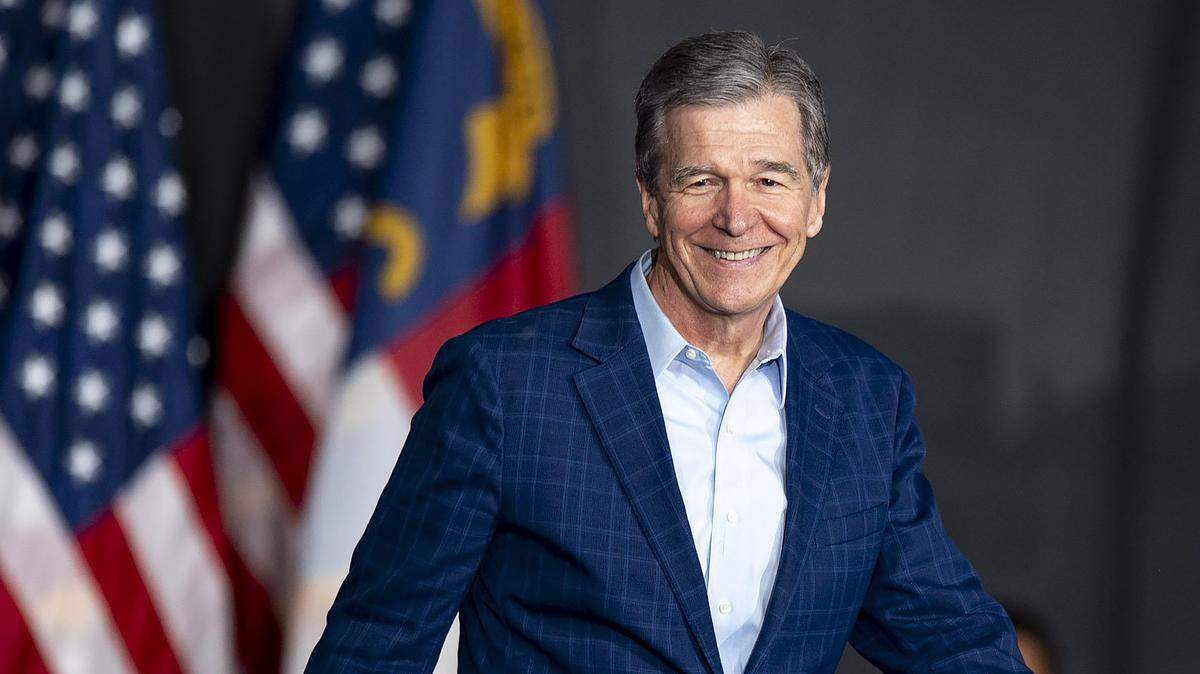
When U.S. Sen. Bernie Sanders held rallies in Greensboro and Asheville earlier this month, the North Carolina Republican Party saw an opportunity.
The party falsely claimed in a post on X that Sanders was coming to campaign for former Gov. Roy Cooper, who is running for U.S. Senate in 2026. Accompanying the post is a photo of Cooper looking off into the distance, wearing a T-shirt that bears Sanders’ campaign logo.
There’s just one problem: the photo isn’t real.
It was generated using Grok, a generative artificial intelligence chatbot that’s integrated with X. Grok is a product of xAI, which, like X itself, is owned by Elon Musk.
The post represents a growing danger in political campaigns: the use of artificial intelligence technology in ways that can manipulate and mislead voters. While the image does have a Grok watermark, it’s not immediately obvious that the photo was generated with AI. The words “Created with Grok” appear at the bottom of the post, but unless you know what Grok is, that doesn’t help much. The party also posted the same image on Facebook, where the “Created with Grok” disclaimer doesn’t appear at all.
Manipulating an image of Cooper to feign a connection between him and a politician is dishonest and lazy, especially when that connection doesn’t really exist in the first place. It’s the kind of deception and misinformation that’s all too common in politics, AI or not. But since the launch of Cooper’s Senate campaign, Republicans have been desperate to redefine Cooper in the eyes of North Carolina voters who generally have a favorable view of him.
They’ve already made several attempts to link him to nationally recognizable figures like Joe Biden and Nancy Pelosi who are less popular with North Carolinians than Cooper. They’ve nicknamed him “Radical Roy” and attempted to assign him blame for the policies of Democrats in Washington and across the country. Linking Cooper to Sanders and his policy proposals, no matter how questionable it may be, is just another example of that.
Mac McCorkle, a former Democratic strategist who now teaches at Duke University, thinks that Republicans are testing out different ways to try to combat Cooper.
“What they’re probably doing right now is they’re throwing a lot of stuff up on the wall to figure out what’s going on,” McCorkle told me. “I think they will get way more serious and concentrated in their message about Cooper, but they’ve got to find it first. And I don’t think they have it.”
It’s not the first time that AI has been used for political purposes in North Carolina. In the 2024 election, an outside group called Americans for Prosparody created a television ad that used AI to make a parody of former Lt. Gov. Mark Robinson, who was running for governor at the time. The ad did contain a disclaimer that AI was used to produce the content. The issue has surfaced in elections nationwide, too. During the 2024 election, AI-generated images and videos that perpetuated falsehoods about former Vice President Kamala Harris and Taylor Swift circulated online with the help of prominent figures like Elon Musk and Donald Trump.
All of which may become more common, especially as the use of AI becomes more pervasive. Last year, North Carolina lawmakers introduced legislation that would require a disclaimer when artificial intelligence is used in political advertisements. The bill passed the House unanimously but never made it out of the Senate. An Elon University poll conducted last year found that more than two-thirds of North Carolinians support such a law.
Of course, this sort of thing happened before AI, too. In 2022, for example, mailers circulated by a GOP-affiliated group featured deceptively edited photos of Democratic candidates. In that case, the creator altered existing images, likely with some sort of photo editing software, rather than generating a new one out of thin air. But the effect was the same: it misled voters into believing a candidate supported something, or someone, they haven’t publicly aligned themselves with.
Misinformation, disinformation and deception have long plagued our politics — AI is just a new tool that can be used to exacerbate an enduring problem. Republicans apparently don’t have enough real ammunition against Cooper, so they’ve invented some out of thin air. That’s the kind of manipulative messaging that should trouble us all.
Paige Masten is a deputy opinion editor for the Charlotte Observer and McClatchy’s North Carolina opinion team.
This story was originally published August 26, 2025 at 9:49 AM with the headline "Desperate to redefine Roy Cooper, NC Republicans resort to AI tactics | Opinion."