
Analysis: The Leandro case is dead, but its issues remain alive.
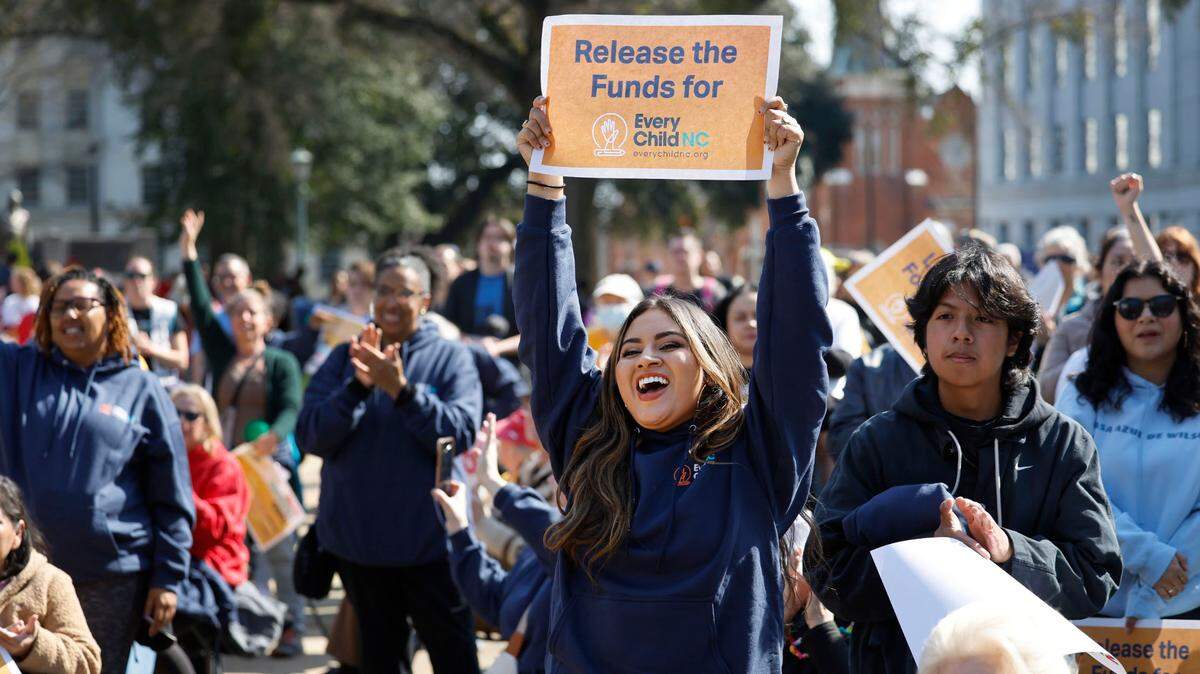
After decades of litigation, the North Carolina Supreme Court ended the Leandro school funding case last week, but it left its fundamental issues unresolved.
The case, which began in 1994 with a lawsuit filed by five low-wealth counties, was expected to decide a major legal question: Can the courts compel more spending on public schools to fulfill a state constitutional requirement that all children have access to a sound basic education?
Instead, four members of the court’s five-member Republican majority punted. They ruled 4-3 that the Leandro case was fatally flawed because it evolved into a constitutional challenge to the statewide school funding system without being properly identified as such. The ruling reversed a 2022 Leandro decision by a Democratic-led court that said the courts can require state officials to transfer funds to increase school spending. It also ended the Leandro litigation.
The final ruling leaves unanswered the question about the court’s power to compel funding. It also leaves many of the state’s 1.5 million public school students in classrooms that lack appropriately licensed teachers and basic educational resources.
State Rep. Phil Rubin, a former federal prosecutor who also has argued civil cases as a deputy state attorney general, said the court’s majority ruled on a technical issue that wasn’t central to the case.
“That they could come in three decades later and say, ‘Oh, actually, the court no longer has jurisdiction over this case’ – as soon as I read that I sort of metaphorically hung my head and said, ‘C’mon, you’re kidding. That’s what you’re going to base this on?’ ” Rubin said.
That’s what they based it on. But that didn’t stop Republican legislative leaders from hailing the decision as a victory for their claim that the courts cannot dictate state spending.
State Senate leader Phil Berger said in a statement: “For decades, liberal education special interests have improperly tried to hijack North Carolina’s constitutional funding process in order to impose their policy preferences via judicial fiat. Today’s decision confirms that the proper pathway for policymaking is the legislative process.”
However, while the court opinion, written by Chief Justice Paul Newby, does say the courts should not be involved in the details of school policy, the decision does not deny the court’s power to order increased funding.
Robert Orr, a former Republican state Supreme Court justice, said the decision released on the eve of Easter weekend has been widely misunderstood.
“This sort of sweeping declaration that the opinion somehow ties the court’s hands in dealing with the legislature is simply not in there,” Orr said. “The only thing that tied the court’s hands is subject matter jurisdiction.”
Orr supports more funding for public schools — North Carolina ranks near the bottom nationally in its funding effort — but he said the Leando case developed serious procedural issues over its long journey through the courts. “Procedurally,” he said, “it has been a train wreck.”
In their dissents, Democratic justices Anita Earls and Allison Riggs said the Republican majority contrived procedural issues to reach an outcome that serves their political views. Republican Justice Richard Dietz said in his dissent that the case should have been sent back to a lower court where its procedural issues could be resolved without ending the case entirely.
Instead, after agreeing to reconsider the 2022 Leandro decision ordering more school funding, the court’s majority waited more than two years before declaring that the case’s procedural flaws effectively rendered it moot.
“When three decades have gone by and no one has been arguing this (procedural issue), it feels like it’s an excuse to get rid of the case,” Rubin said. “And that is what is destroying the legitimacy of the North Carolina Supreme Court. They keep playing around with the rules and doing things in a legally strange way.”
The constitutional right to a sound basic education remains intact and how the state must fulfill that right can still be decided by the courts.
But for now the legislature’s neglect of school funding remains and the legal effort to increase funding must start over. That process will take years and will fail yet another generation of students who will be denied the level of education that the state constitution promises them.
And that injustice, no matter how the state Supreme Court evades it, is not a technical issue.
Associate opinion editor Ned Barnett can be reached at 919-404-7583, or nbarnett@newsobserver.com
This story was originally published April 6, 2026 at 5:00 AM.