Black South Carolina locals mistrust police investigation into Jim Duncan’s suicide
READ MORE
What really happened to Jim Duncan?
The Super Bowl hero from Lancaster, SC supposedly committed suicide in a police station.
Expand All
Philadelphia Inquirer reporter Bruce Kaidan visited Lancaster, South Carolina, several weeks after Jim Duncan’s Oct. 20, 1972, death. Kaidan interviewed Duncan’s mother, Ella Ree Clyburn, as she sat behind the counter at the liquor store where she worked.
Based on that reporting, here’s what she said:
“I haven’t told this to any white person, until now,” Clyburn said, “but Jimmy knew he was going to be killed.”
She told Kaidan about an exchange she had with her son the night before he died from a single gunshot wound to his head.
“We were in my living room and he was playing with my youngest boy, my baby. He loved that child. All of a sudden he said: ‘Mama, somebody’s out there to kill me.’”
“I said, ‘Butch, don’t be silly. Who’d want to kill you?’”
“He said, ‘Somebody’s out there to shoot me.’”
Clyburn talked about visions her son had throughout his life, how he predicted he would play in the NFL and buy his mom a house “with heat you can turn on just by throwing a switch,” how he knew he would play in the Super Bowl.
All those premonitions had come true. So she asked Duncan one more time who was going to kill him.
“You’ll know when it happens,” he said. “The person involved, he’ll be the one.”
Duncan may have hinted at what happened to him in the lobby of the town’s police station on that autumn day more than 48 years ago.
Death ruled suicide
A lack of transparency from Lancaster authorities had left an information vacuum in the wake of Duncan’s death.
Conspiracies theories filled the void.
A coroner’s inquest panel ruled Duncan’s death a suicide. Almost none of the African American people interviewed for this series believed Duncan died that way, including Billy Ray Crawford, who served on the inquest panel.
Duncan’s widow, Alice Caston, wondered why Lt. Russell Hinson had worn his personal holster that day, something Lancaster Police Chief Larry Lower said Hinson almost never did. And Clyburn wondered why her son’s car was parked several blocks away on White Street if he had intended to enter the police station in search of a gun to kill himself.
“They say my boy shot himself,” Clyburn told a reporter. “They haven’t convinced me.”
Others believe there may have been a scuffle or argument between Hinson and Duncan, and Duncan was accidentally shot. And the scene was fixed up to look like a suicide. But Elroy Duncan doesn’t believe his brother, who was 6-foot-2, 200 pounds, trained in karate and a three-year pro football veteran, would have lost a one-on-one physical fight with Hinson, then 52.
“I’m saying that there is no way this man could have shot Butch in the back of the head,” Elroy said, “unless he was behind him and just pulled the trigger.”
Some interviewed for this story posited that Duncan’s death was linked to his involvement with white women.
And the increasing understanding of chronic traumatic encephalopathy (CTE) in the last decade gave rise to another possibility: that Duncan wasn’t in his right mind, and the unusual circumstances of his death might be explained by possible brain damage from playing football.
It’s well established that he was coping with a variety of problems, including financial ruin, a possible drug habit, anxiety and stress. And if he was suffering from CTE, it’s possible that could have pushed him to a suicidal end.
Regardless of the theory, it’s hardly surprising to University of Florida professor Mark Fenster that the Black community in Lancaster turned to conspiracy theories.
“If you grow up in the Jim Crow South and you’re African American, there is a conspiracy against you, to try to prevent you from voting, to try to prevent you from moving to particular neighborhoods, to try to prevent your economic success, to try to prevent you from going to particular schools,” Fenster said.
“You’re viewing the world in a way in which the world is treating you.”
A different theory related to Duncan’s death
It’s well established, Duncan was a lady’s man.
A 1970 Baltimore Sun story mentioned that he was engaged to a woman from Buffalo named Betty Clinton, who was from Lancaster. That doesn’t appear to have happened, and was wishful thinking on Duncan’s part, according to his brother, Elroy Duncan.
Lynda Duncan, Elroy’s wife, said Jim Duncan would sometimes date two women at the same time. Elroy also said Duncan had a child with a woman in Winnsboro, South Carolina, though Elroy never met the woman or the child. Duncan’s widow, Alice Caston, said Duncan successfully went to court to prove that the child was not his.
.PNG "Return Man Maryland State yearbook senior photo 1968 (8).PNG")
“He was outgoing. Everyone liked him that was around him and he had a very, very kind heart,” said Lynda Duncan. “A very giving person. He definitely liked females. Everybody liked Butch because he was so giving.”
As stated, Duncan was married to Alice at the time of his death, but she was living in Greenville, South Carolina, with her parents. Back in Lancaster, Billy Ray Crawford had no idea his friend, Duncan, was married.
“He was kind of star-like,” said Crawford. “Didn’t have a problem getting no women.”
Race didn’t matter.
Duncan had been warned at least twice by Lancaster police about talking to white women, according to his friend and former NFL teammate, Bob Grant.
“In our sports world, nobody gave a damn about what color you were when you were on the road, or in the nightclub, whether it was the Whiskey in West Hollywood or 20 Grand in Detroit,” Grant said. “But when you brought that attitude back down to Lancaster, they weren’t quite ready for it at that time. I doubt very seriously it would make any difference today, but at that time there were obviously some that were threatened by it.”
Duncan died just five years after the Virginia v. Loving Supreme Court case struck down nationwide bans on interracial marriage. South Carolina’s statewide ban on interracial marriage officially persisted until 1998. Only Alabama kept its ban intact longer until 2000.
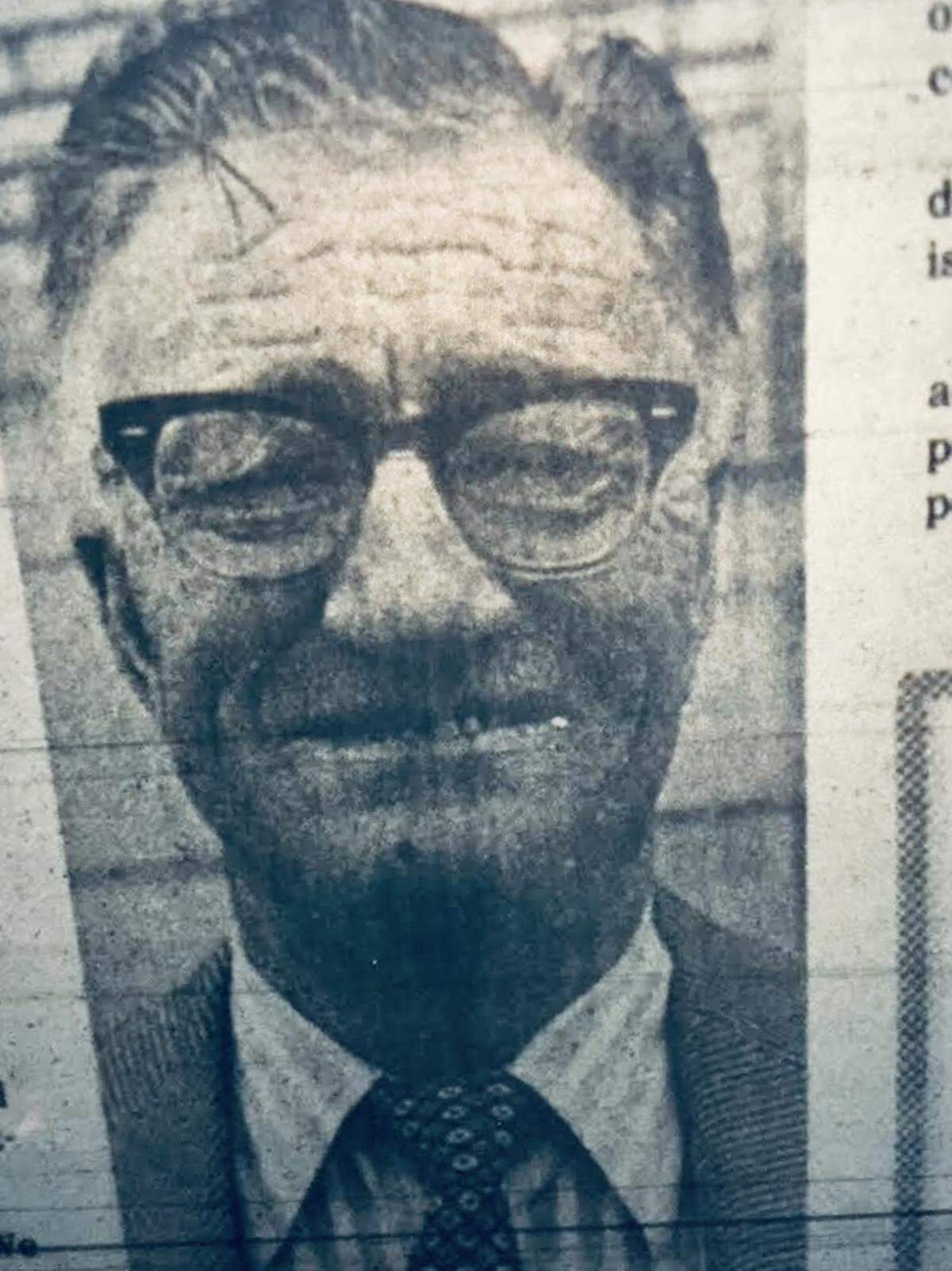
A theory that came up roughly a dozen times during the reporting of this story went like this: Duncan was involved with one of Hinson’s daughters, and Duncan died in the police station because of that.
Those sharing the rumor never specified which daughter. In some versions of the rumor, it’s just a white woman — not one of Hinson’s daughters.
Hinson had three daughters. Two spoke with The Herald (the third is deceased). None of the three lived in Lancaster at that time. And the two living daughters say they didn’t know Duncan.
“I didn’t have a clue who he was,” said Barbara Ferguson in 2018. “As well as I can remember, I didn’t know that he was supposed to be, or had been in the NFL, because, back then, NFL didn’t interest me. I had small children and was not heavily into that.”
Her father rarely spoke about the incident. And she was unaware of the theory that Duncan’s death was connected to his interactions with white women in Lancaster.
“If that was true,” she said, “I never heard anything about that.”
The daughter said she hoped Duncan’s family was not placing blame for his death on anyone but Duncan. And she was not thrilled about a reporter calling her so many years later and dragging the incident out of history.
“Some things are better left alone,” she said.
Could CTE have played a factor?
What’s known of Duncan’s life in the fall of 1972 makes it feasible that he died by suicide.
“Almost every suicide is multi-determined, with biological, psychological, and situational factors synergizing to create a perfect storm,” said University of Southern California neurologist, Dr. Jeff Victoroff.
Could CTE, the incurable brain disease that stems from repetitive hits to the head and is closely connected to playing football, have been a factor in Duncan’s death? It’s simply not possible to know. A brain can be preserved for CTE testing only within the first 24 hours after death.
If Duncan had CTE, it might explain one of the major hurdles that many doubters of the suicide story could not get over: the setting. Why kill yourself in a police station? Alice Caston and Elroy Duncan both said Duncan owned a gun.
If CTE played a role in Duncan’s death, he would join a list of football players who perished in dramatic and grisly fashion, and were later diagnosed with the disease.
Justin Strzelcyzk, 36, got into a police chase and crashed into a tanker truck, which then exploded, killing the former Pittsburgh Steelers offensive lineman in 2004.
Terry Long, 45, of the Pittsburgh Steelers, drank antifreeze and died in 2005.
Andre Waters, 44, of the Philadelphia Eagles and Phoenix Cardinals, put a gun in his mouth and fatally pulled the trigger in 2006.
In 2011, Dave Duerson, the former Pro Bowl safety for the Chicago Bears, fatally shot himself in the chest, with a suicide note indicating he wanted his brain donated for scientific study.
Duerson’s CTE case was confirmed, and was almost a relief to his family. Duerson’s son, Brock, told The New York Times that the diagnosis provided an explanation for his dad’s decline, which saw his finances collapse, his marriage fail and his mental cognition deteriorate. Duerson’s diagnosis provided the kind of closure to his family that Duncan’s loved ones may never get.
The ages of these former NFL players show that CTE is not an old man’s disease.
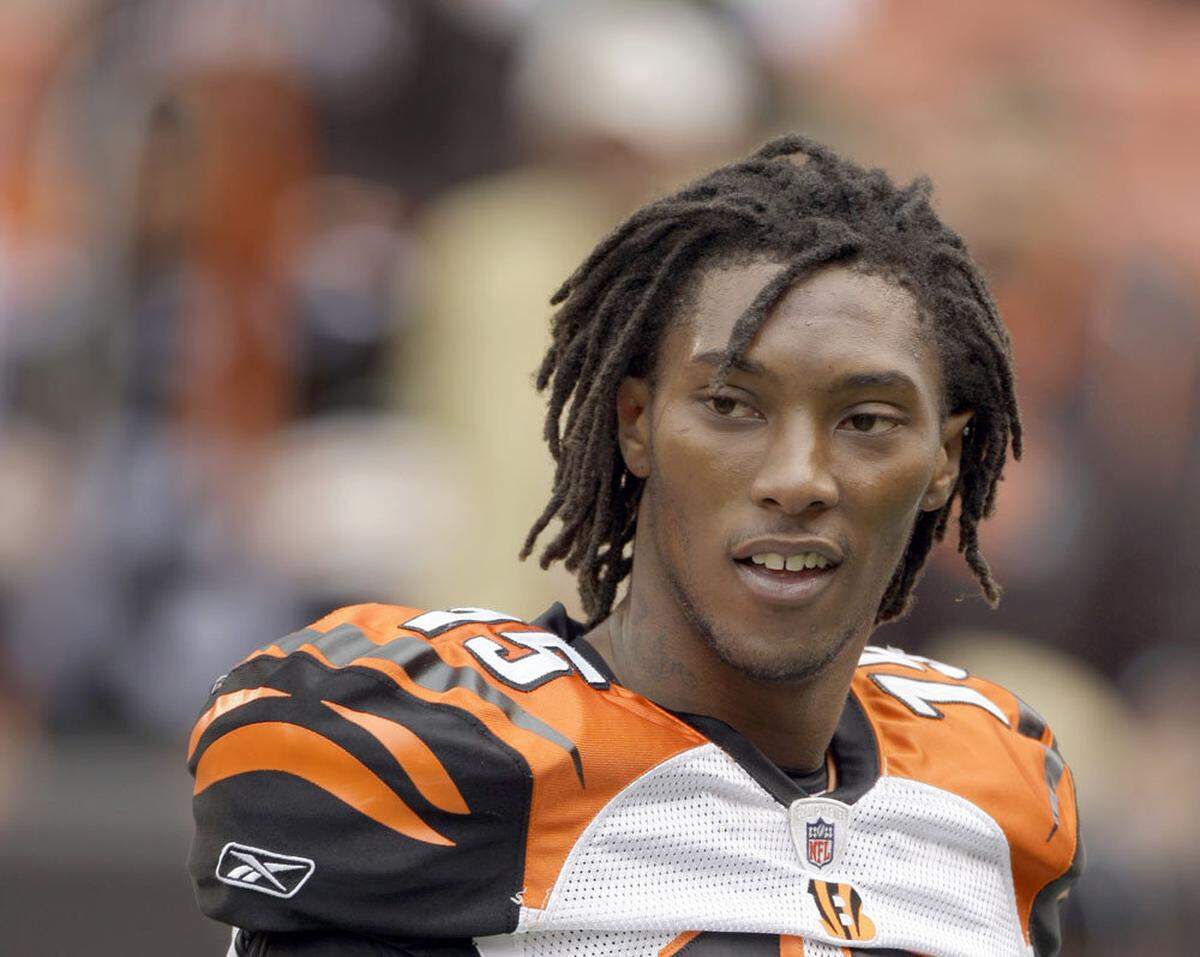
Cincinnati Bengals receiver Chris Henry died after falling out of a truck bed during an argument with his girlfriend in Charlotte in 2009. Researchers discovered his brain had ample evidence of CTE, even though NFL and West Virginia University records showed Henry had never been diagnosed with a concussion.
Henry, like Jim Duncan, was 26 when he died.
Segregation in South Carolina
Reporting in the aftermath of the coroner’s inquest made it clear that Lancaster’s African American community didn’t believe the official version of Duncan’s death.
Protests seemingly were everywhere in 1972 America. If people didn’t agree with the inquest findings, why didn’t they make signs, march on Main Street? Because Lancaster wasn’t the kind of town where people, of any color, were going to stir things up by demonstrating.
A 1971 Charlotte Observer story hinted at the community’s collective psyche.
The article described how peacefully Lancaster’s school integration process had proceeded in 1970-71, compared to other local towns. The story quoted an unnamed Black teacher, who said, “If you’re black, you don’t rock the boat… This is a white man’s town, and it always has been. If you want to get along, you stay in line.”
The Supreme Court outlawed segregation in 1954, but Lancaster’s schools remained completely segregated through the 1964-65 school year. Lancaster native Michael Bogan was one of the first Black students to integrate Lancaster High School in 1965. He attended that school for a year before returning to segregated Barr Street School.
“I didn’t like being called n***** when I was walking down the hallway.” Bogan told The Herald. “And that was pretty much every day.”
Lancaster was not desegregating fast enough and had its federal education funding withdrawn in 1968. That finally prompted total integration, beginning in the fall of 1970, the same time Jim Duncan’s NFL career was taking off.
There was daily fighting that year at schools in Chester, Rock Hill and Charlotte. And about 65 miles east in Lamar, South Carolina, a mob of white parents attacked buses carrying African American children. The students were ushered to safety by National Guardsmen, while the mob rocked two of the buses back and forth until they tipped over.
But there was no major violence in Lancaster, and a letter to The Charlotte Observer editor from a resident gave some clue why.
“Therein lies the secret of Lancaster’s success. No one has rocked the boat and we’ve had smooth sailin’. My hat is off to my fellow citizens, both black and white.”
Company that supported school integration
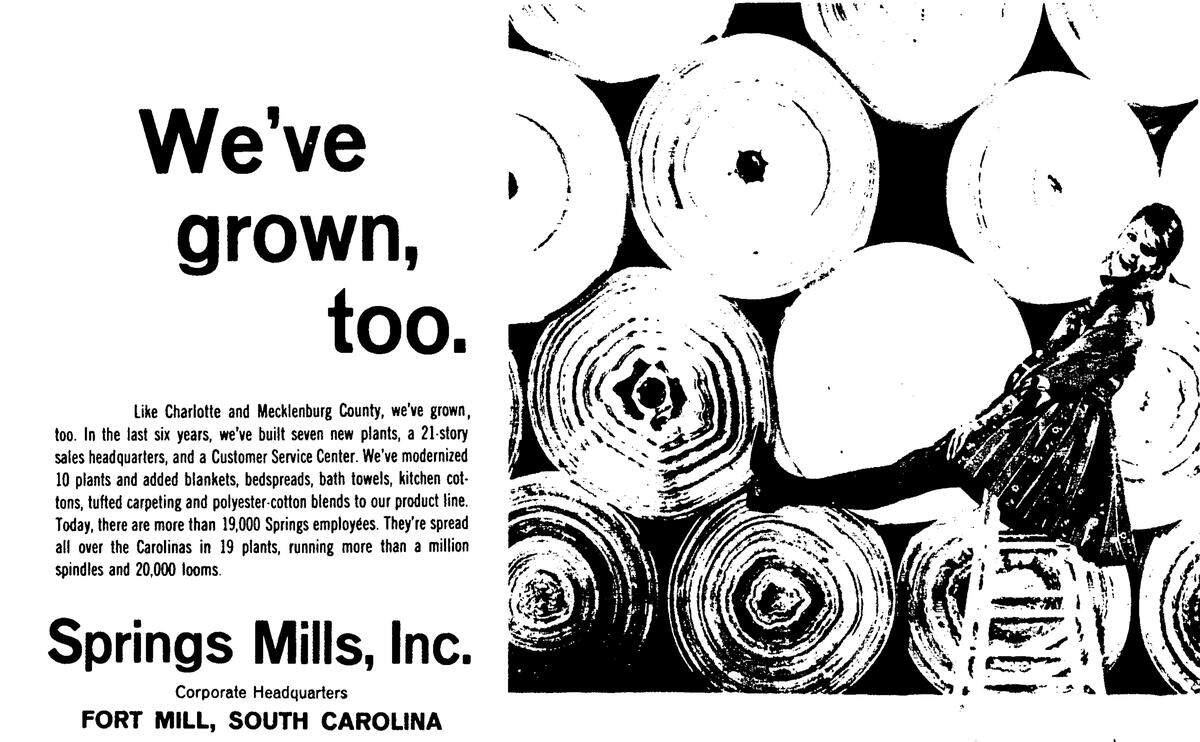
The Observer story mentioned that Springs Mills Inc. played a behind-the-scenes role to ensure a peaceful first year of school integration in Lancaster. Springs, a Fortune 500 textile giant headquartered in Fort Mill but with its largest facilities based in Lancaster County, did almost $400 million worth of business in 1973. By then, the company had been a dominant force in Lancaster for almost a century.
“All of those textile towns were very much corporately controlled,” said Timothy Minchin, a historian who has written extensively about Southern mill towns during the Civil Rights era.
Springs CEO Peter Scotese, speaking to the Textile Marketing Forum at Clemson in 1970, said “at Springs, we are committed to change. Not change for the sake of change. But change that we can manage, that keeps us in step with the swift currents of social evolution.”
He added, “Revolution should be controlled by force, if necessary.”
Lancaster still is an isolated rural town, but it especially felt that way in 1972 when Duncan returned home following the collapse of his football career. The town was at least 30 miles from any big urban area, and Springs owned the town’s newspaper, the Lancaster News, giving the company some degree of control over the information consumed by residents.
For decades, Springs pumped millions of dollars into Lancaster County, building a new hospital and campus of USC Lancaster, through scholarship programs and recreation opportunities.
“Everybody you knew worked at Springs Mills,” said Bogan. “In high school, that was the only job you could do. Unless you were a school teacher, you either worked for the mill or the bleachery.”
There was another factor that contributed to the “Don’t rock the boat” mindset.
Floyd White, who taught Duncan at Barr Street and later worked at Lancaster High, said most local Black community leaders had long preached turning the other cheek when confronted with racist indignities. He said the town had always produced educators, and they didn’t promote public activism and demonstration. That contributed to a Black populace in Lancaster who turned the other cheek when racial tensions flared. And one that wasn’t prepared to make its discontent publicly known after Duncan’s death.
“It wasn’t like it is now, something happens and we rally up,” White said. “You saw a lot of drinking and talking, but no action behind it. You saw people getting together talking about it but you didn’t see nobody stepping up, saying, ‘Let’s go up here.’”
No investigation report, autopsy, photos
It was in this setting, following Duncan’s death, that Lancaster authorities never produced photos from the scene or released investigation reports, no autopsy was conducted and a coroner’s inquest, which could have provided more answers, seemed to only wall off more investigation.
“One thing that helps conspiracy theories flourish is official action that seems kind of (incomplete), that seems to not be what it is the event, itself, deserves,” said Fenster, the Florida professor and expert on conspiracy theories.
The few interactions Lancaster authorities had with Duncan’s family or supporters only fueled the conspiracy theory fires.
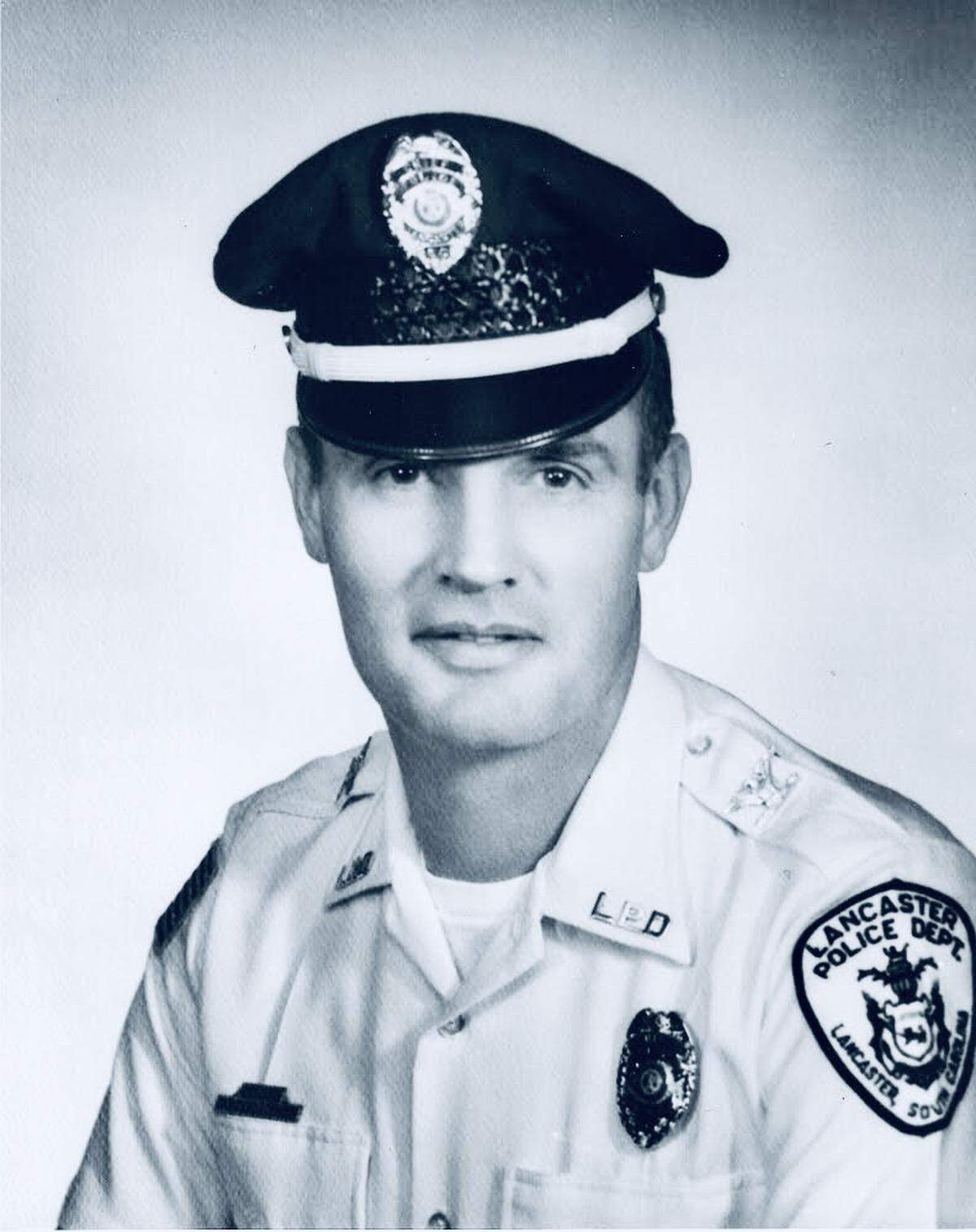
After visiting Lancaster to report on Duncan’s death, The New York Times’ Pulitzer Prize winner Dave Anderson wrote that Elroy Duncan was told by Lancaster Police Chief Larry Lower, “Don’t pursue this further. One death is enough.”
In July 2018, Lower was asked if he remembered saying that to Elroy Duncan.
“Noooo, ain’t no way I’m gonna tell somebody that,” said the 81-year old former Marine and longtime police officer. “We did everything we could do to determine what really happened. That’s me. I’m not the person that tries to cover things up. That’s never been my makeup. So, no there ain’t no way I would have told them that.”
Even so, a cloud remains in the minds of many.
University of South Carolina assistant law professor Seth Stoughton said Duncan’s death, and the two versions of the story that emanated from it, reminded him of Michael Brown’s shooting in Ferguson, Mo., in 2014. Initially, after Brown was fatally shot by police officer Darren Wilson, there was conflicting information about whether he was killed in self-defense or murdered.
“Where people fell on that depended entirely on their trust for the police. It had very little to do with the actual incident itself,” said Stoughton, a former police officer. “In the absence of information, it all comes down to trust. Do we trust the sources of information providing this story?”
Duncan’s story happened almost 50 years ago, but serves as a reminder that many of the same issues that clouded the truth then, still exist today. That struck Rosey Gilliam, whose father, Sandy Gilliam, coached Duncan in high school and college.
“We’re at a point now where if you took away the date and time could you imagine that happening today?” He said. “And the answer is yes you can.”
Have questions or comments about Return Man? Reach The Herald at 803-281-2840 or RHNews@gmail.com.
BEHIND THE STORY
MOREWhy did we report this story?
On multiple occasions I have been asked some version of “why are you digging this up all these years later?”
My main motivation was trying to fill in Jim Duncan’s story, one that 47 years later, still has so many unanswered questions.
This story is still relevant because it entails many of the issues American society continues to grapple with: drugs, escaping poverty, the financial issues of young adults, race relations, and community-law enforcement relations.
As Rosey Gilliam, whose father coached Jim Duncan in high school and college, said to me about Duncan’s story, “If you took away the date and time, could you imagine that happening today? And the answer is yes you can.”
Read more by clicking the arrow in the top right corner of this box.
Where did the idea come from?
I covered high school football for The Herald and have written often about how this area of South Carolina produced numerous NFL players, including seven active ones from Rock Hill.
I was looking up a list of NFL players from South Carolina, and near the end of the list I found the name “Jim Duncan.” I Googled his name, and one line from his Wikipedia page jumped out: “He was found to have committed suicide with a policeman’s revolver in 1972.”
That Internet search set me off on a journey to learn more about how Duncan went from the NFL’s most feared kickoff return man, to dead in a span of less than two years.
How did we report the story?
Over more than two years I made dozens of trips to Jim Duncan’s hometown, Lancaster. I interviewed more than 40 people, from family and friends, to high school, college and NFL teammates and coaches, as well as lawyers and doctors involved in the final days of his life and the confusing aftermath.
I submitted numerous Freedom of Information Act requests -- many of which came back empty -- and spent numerous hours at the Lancaster County Library, combing through microfilm of the Lancaster News and old phone books, and at libraries in Charlotte and New Orleans.
This story was originally published January 26, 2021 at 5:00 AM with the headline "Black South Carolina locals mistrust police investigation into Jim Duncan’s suicide."