Duke, UNC football players sue the NCAA. What to know about the lawsuits
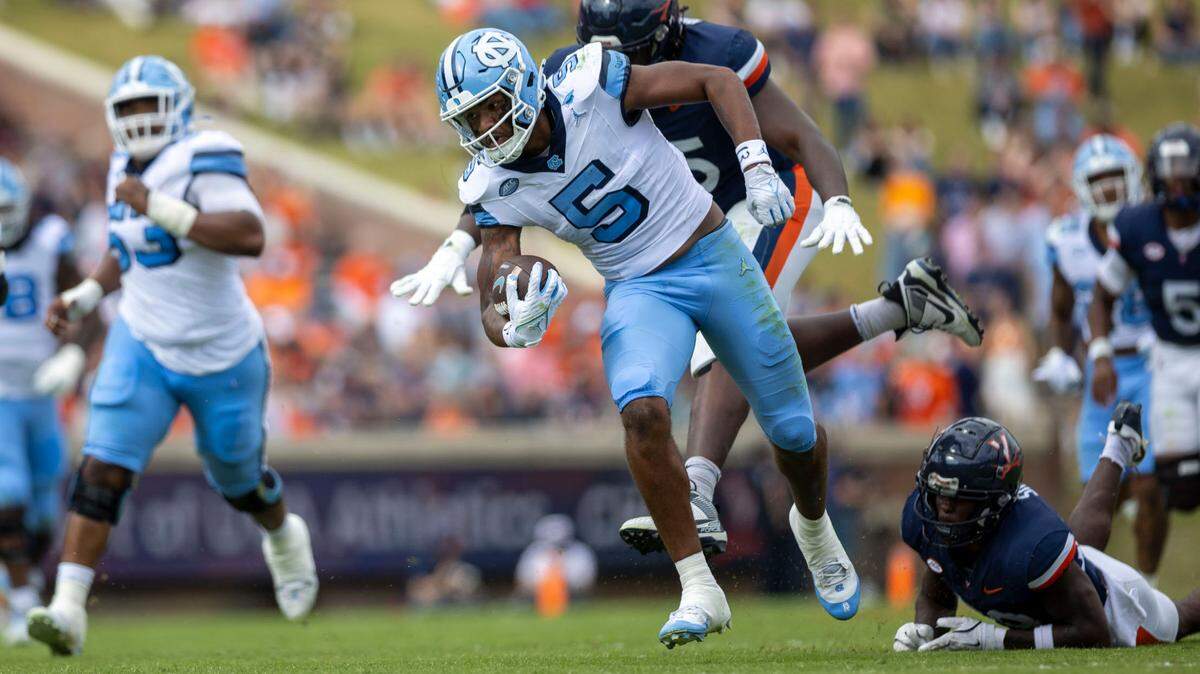
Three former Duke football players and one from North Carolina have joined a former NC State player in suing the NCAA in regard to its five-year eligibility window.
UNC wide receiver JJ Jones and Duke linebacker Cameron Bergeron are plaintiffs in one lawsuit. Duke defensive end Ryan Smith and cornerback Tre’Shon Devones are listed as plaintiffs in a second lawsuit.
They are seeking a preliminary injunction, filed Tuesday in North Carolina business court, to regain eligibility for the 2025-26 season. All four players are represented by the same legal team, based in Charlotte.
In February, former NC State player Corey Coley sued the NCAA in federal court over loss of eligibility.
Diana Florence, one of the attorneys on the two newest lawsuits, said the conversations with the players began at different times. The legal team hoped, based on the outcomes of Diego Pavia and Nyzier Fourqurean’s cases involving eligibility, its clients would receive an additional year of eligibility without litigation.
“As long time litigators, we see going to court as the last resort,” Florence said in an email. “We understand it is expensive and not the most efficient way to solve problems.”
The NCAA, however, postponed a decision to this fall about if players should receive five years of eligibility. That required current student-athletes to seek legal recourse, Florence said.
NCAA rules limit a student-athlete to four seasons of eligibility that must be used in a five-year window or “clock.” Injuries and other circumstances impacted the players’ ability to finish multiple seasons, their lawsuits allege, limiting their opportunities as collegiate student-athletes. Unlike some players, they were not granted additional seasons through hardship waivers.
They claim the NCAA’s eligibility rules and the method in which exceptions are applied violate North Carolina’s antitrust law by putting an unreasonable restraint on competition. The current rules require these players to enter the NFL Draft, where they would have a low chance of success. An additional season would help them, the lawsuit states.
The lawsuits state the players will suffer “irreparable harm unless injunctive relief is granted,” citing the significant financial benefit through name, image and likeness compensation, if they are not granted an additional season of eligibility.
Smith and Devones earned $50,000 in NIL payments in 2024, while Bergeron received $40,000. All three could earn $150,000 for their participation in 2025.
Meanwhile, Jones earned $100,000 in NIL in 2024 and has received offers of up to $500,000 if his additional eligibility is granted.
Smith played five seasons at Duke (2020-24) and earned an additional season of eligibility due to Covid-19 pandemic rules.
Devones, who transferred to Duke from Rice, was on a college football roster for six seasons and participated in five (2019-24). He received an additional season of eligibility due to Covid-19 and medical redshirt in 2021. Devones, however, only participated in three games during the 2020 season, which typically falls under the threshold for a normal redshirt season.
Jones and Bergeron played four seasons (2021-24). Their lawyers say it’s unfair to limit them to four years of eligibility when they played for their entire careers against older players who earned the fifth-year due to the pandemic.
“JJ and Cam and their fellow student athletes that started college in 2021 will have the unfortunate distinction of being members of the lost generation who suffered all the downsides of COVID and received no relief,” Florence said.
According to the lawsuit, the “balance of equities” and public interest favors the players.
Florence said the team shares the same goal as the NCAA: Acting in the best interest of student-athletes.
“Each has been extraordinary on and off the field. Each needs one more year to maximize their potential. And they are asking for no more than any other athletes that came before them,” Florence said. “All they want is to finish their graduate degrees, earn the NIL compensation they are being offered based on their talents, and have a chance to play at the next level. Forcing them to end their collegiate careers now accomplishes none of those basic goals.”
A hearing is set for April 22. The spring college football transfer window opens on Wednesday and closes on April 25.
NCAA denies violations in Coley case
A similar lawsuit was filed in federal court by N.C. State defensive back Corey Coley in February. His complaint also challenges the NCAA’s five-year “clock” and the four-game redshirt rule, noting he played through injuries and personal hardship. His lawsuit came after being denied a hardship waiver.
Coley’s lawsuit cites the lack of fairness with which the NCAA applies its five-year rule and approves waivers. That negatively impacts an athlete’s ability to earn NIL compensation and violates new pro-competition court rulings.
Coley filed a request for preliminary injunction like the other plaintiffs, according to his attorneys. N.C. State wants Coley to return to the team, according to his complaint. It was originally rejected by the NCAA.
The NCAA says in the defendant opposition filing Coley’s request should be denied because he cannot prove irreparable harm nor can he “prove a likelihood of success on the merits because [his] allegations do not implicate and/or violate the Sherman Antitrust Act.”
The NCAA states previous cases (O’Bannon vs. NCAA and Alston vs. NCAA) impacted the organization’s compensation rules. Their outcomes also did not find that regulatory eligibility rules, such as the ones argued, were commercial in nature.
Because Coley, and therefore the additional plaintiffs, are arguing against rules that are not commercial in nature, they are exempt from antitrust regulations, the NCAA states.
Florence, speaking on behalf of her clients, said “there are certainly situations” when the NCAA can create regulations. The issue is the arbitrary nature, the phrase which Coley’s attorneys repeatedly used, in which the rules are applied. The NCAA’s inconsistency in waiver denial or approval has led to claims of antitrust violations.
“The NCAA can impose rules but they must have a pro-competitive effect,” Florence said. “The NCAA’s actions in the way they issue waivers for additional eligibility up to now have been the opposite.”
Coley’s attorneys filed an appeal and disputed the NCAA’s statements. They are waiting for a ruling and additional response from the NCAA.