
NC State basketball coach Justin Gainey on Raleigh, Rick Barnes — and his roster
The Wolfpack had lost six straight games, but on Feb. 1, 1997 — the eve of Groundhog Day — there was a sense “N.C. State’s basketball team finally would shake its shadow,” wrote former N&O columnist Caulton Tudor.
Justin Gainey, then a freshman guard, proved to be a big reason why. In the Wolfpack’s season-shifting 58-54 win over Rick Barnes’ Clemson Tigers, Gainey played 39 minutes without committing a single turnover, scored eight points and dished out three assists. His teammate, Jeremy Hyatt, described Gainey as “not a freshman anymore.” Former Wolfpack coach Herb Sendek called Gainey’s play “fantastic.” Gainey himself hoped he was “over the hump,” with the performance.
But as Gainey looks back on the game now — the new N.C. State head coach was presented with some old newspaper clippings when he sat down with the N&O at the ACC Spring Meetings on Monday — he admitted the moment doesn’t stand out in his memory. He does, however, remember that year’s ACC Tournament. Specifically, playing a record 40 minutes in four tournament games.
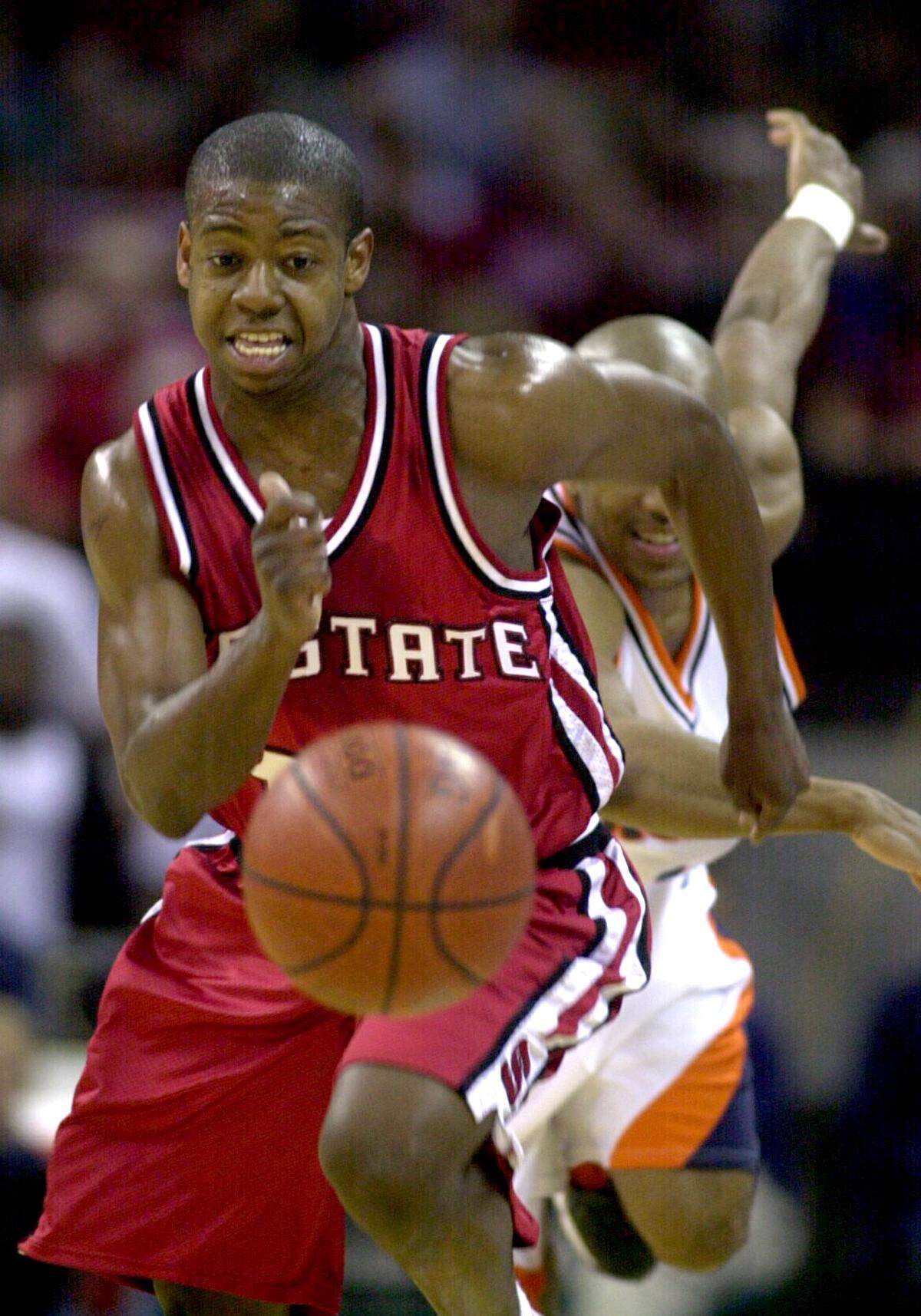
It was around that time, Gainey said, that he began to understand what he needed to do to be a star in his own skin.
“I remember feeling like, ‘OK, I know my role, man,’” Gainey said. “I know what I need to do when I’m out here. Take care of the basketball, get other guys involved, really guard and let the offense take care of itself.”
Nearly three decades later, Gainey is back in Raleigh in a different role — but with many of the same principles. Since he replaced Will Wade as N.C. State’s men’s basketball coach, Gainey has emphasized substance over splash and relationships over rhetoric. He’s leaned on lessons from years spent under coaches like Barnes, as well as the same steady approach that defined him as a player.
“It’s kind of reflection of who I was as a player and who I strive to be,” Gainey said. “If you look at my career path, it’s been a long journey to get to here, and so you just had to continue to just work at it and be steady at it.”
At his first ACC Spring Meetings, Gainey sat down with the N&O to discuss roster-building, how mentors like Barnes shaped his coaching philosophy, and his “reunion” in Raleigh. Some answers have been edited for clarity and length.
Q: How much of the style you promised in Raleigh — playing hard-nosed, physical basketball and an emphasis on the fundamentals — comes from your playing career versus your mentors?
A: “It’s a combination of both. My mentors — Coach Barnes, Herb Sendek, Shawn Miller — were defensive-minded guys early on. When they started, when they built their culture and the foundation of who they were and what they were, it started on that side of the ball. As I’ve studied really good coaches and my mentors throughout my career, that’s been the common denominator. You got to establish that culture first of being tough.”
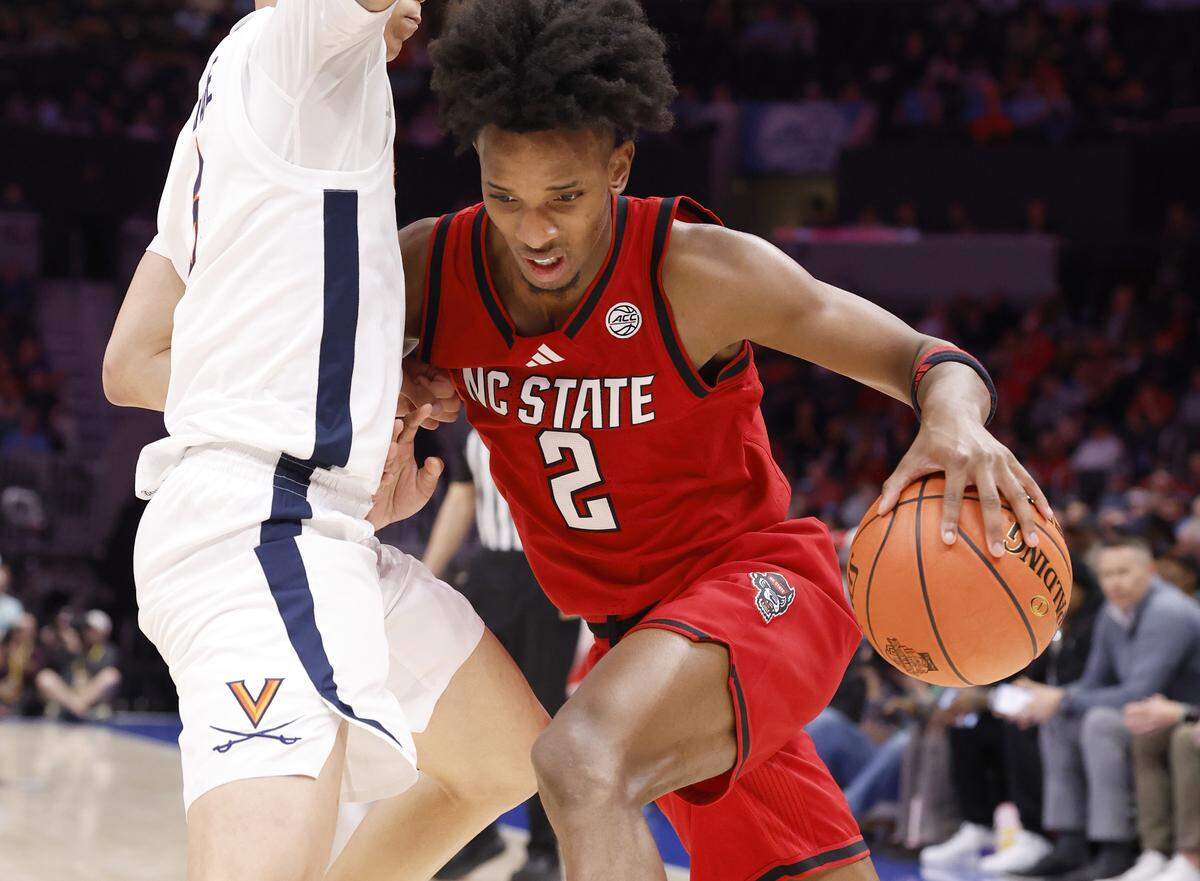
Q: Keeping Paul McNeil was a priority. Tell me about the conversations you had with him and why retaining him mattered.
A: “We had a lot of in-depth conversations. It was bigger than basketball. I’ve known Paul since, man, ninth grade or 10th grade. When I was at Tennessee, we were his first offer. So I’ve been tracking him for a long time. I saw his game. I saw him develop through the years. And so, although we hadn’t been in contact the last few years, there was a relationship that had started and it has now rekindled.”
“It did take time. I respected his process that he went through. He gave me the opportunity to present myself in front of him and for him to listen to, ‘Hey, this is why I feel like this will be a great move for you.’ And so I’m excited that he’s back. At my press conference, I made no bones about it: I want to keep that North Carolina talent home. I think it’s a lot of talent there. I think it’s a sense of pride that comes with it. So I was intentional in stating that.”
“That was my first priority — to retain one of the best shooters to ever wear an N.C. State uniform. He’s in rare company when you talk about shooting. From Rodney Monroe to Scott Wood, he’s in that elite company and doing something at a high level. I’m excited to have him back. I’m excited for him. I really am. I think he’s going to have a great year. He’s one of us. He is N.C. State.”
Q: What happened with Matt Able?
A: “By the time I got there he wasn’t even on campus. It wasn’t really a recruitment process or a recruiting battle. He had already made his decision to test the NBA Draft waters. He’s a really good player and I wish him the best.”
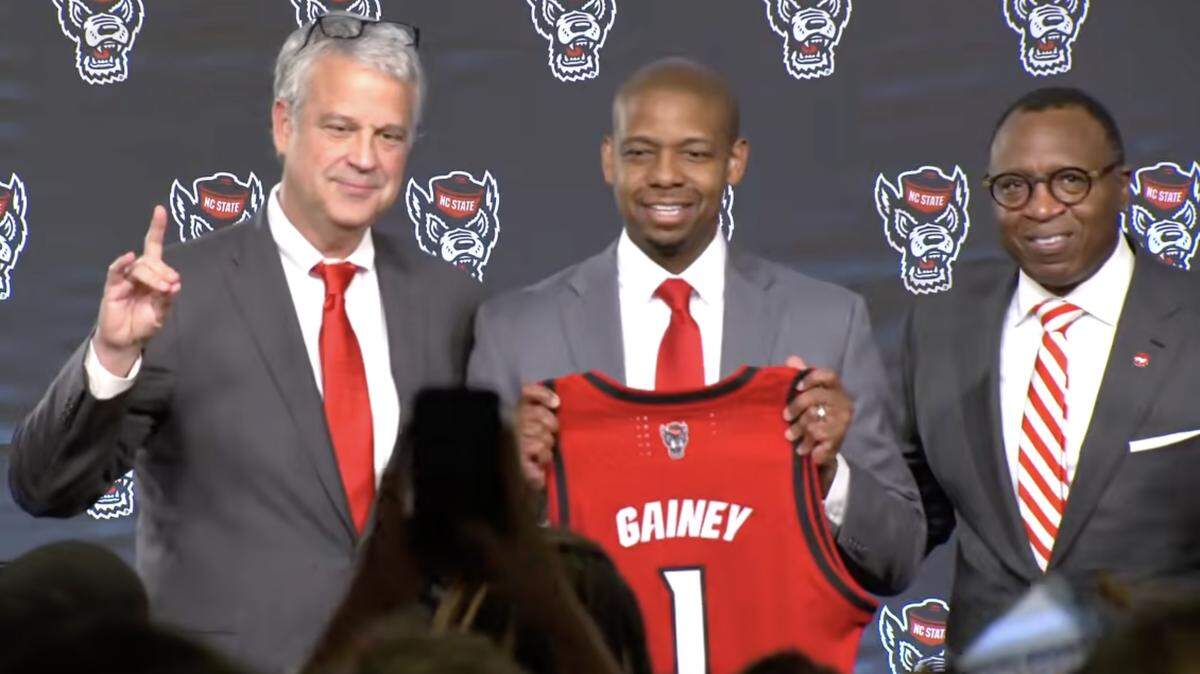
Q: How has the move back to Raleigh been?
A: “It’s been great. Campus is so much different than when I was last here. Harrelson Hall is no longer. The Brickyard and Hillsborough Street look different with all the construction and everything going on. But it’s been amazing. Chancellor (Kevin) Howell, Boo Corrigan, Michelle Lee have been just amazing in helping this transition of coming back. And the excitement is real. It’s been great to get back home.”
Q: How has working with donors and the Wolfpack Club been different as head coach?
A: “It’s been pretty smooth because a lot of them were already familiar with me from playing days or from my prior roles at N.C. State. It was more of a reintroduction, a reunion. It was seeing everybody again. Ben Broussard and the Wolfpack Club staff have been great getting me reintroduced and reacclimated.”
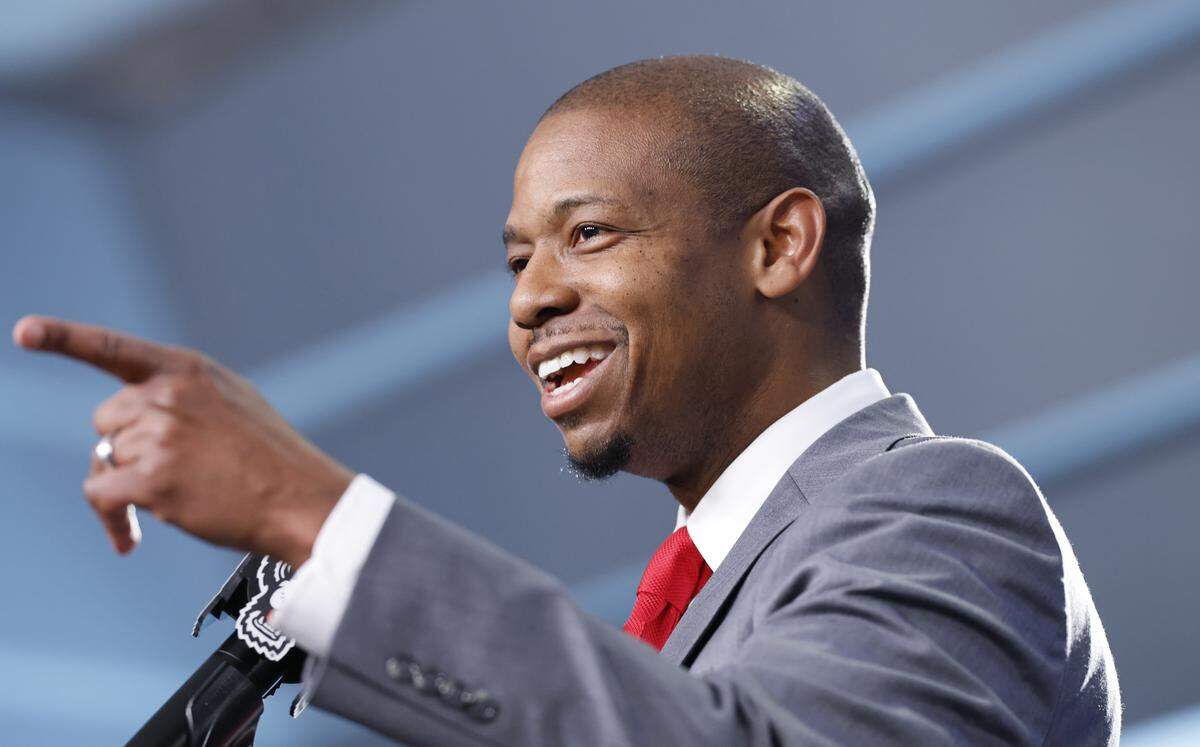
Q: What were your roster-building priorities and challenges navigating the process as a first-time head coach?
A: “We went into roster-building with the mindset of building a program, not just a team. We wanted guys that we felt would represent N.C. State like we felt it should be represented. And I thought we did a great job of doing that.”
“During the process, we were able to get a lot of guys with multiple years of eligibility. That was big in the process of laying a good foundation. Now, you fight for retention to keep those guys back, but you could build on top of it.”
Q: How did you balance recruiting veteran players in the portal versus guys you can develop over multiple seasons?
A: “You want to get talent. Whether they got two years, or one year, or whatever. So we were focused on getting the best talent we could get. And it just so happened that those guys did have multiple years as well, so it ended up working perfectly for us.”
“All those guys, when we talked, they were all about winning. They were all about the right thing. They wanted to build something that stood the test of time, build something that they could look back and be proud of. And so it was energizing for me.”
Q: Give us one word or a takeaway from some of the head coaches you’ve worked with.
A: Sean Miller: “Intense. Every day I got on the court, he brought it. He never lacked energy. He was really intense in everything he did.”
Herb Sendek: “Meticulous. He was just meticulously detailed.”
Rick Barnes: “Toughness. Everything about him is tough. Whether it’s how he grew up, or his path. When you watch his teams, you think toughness.”
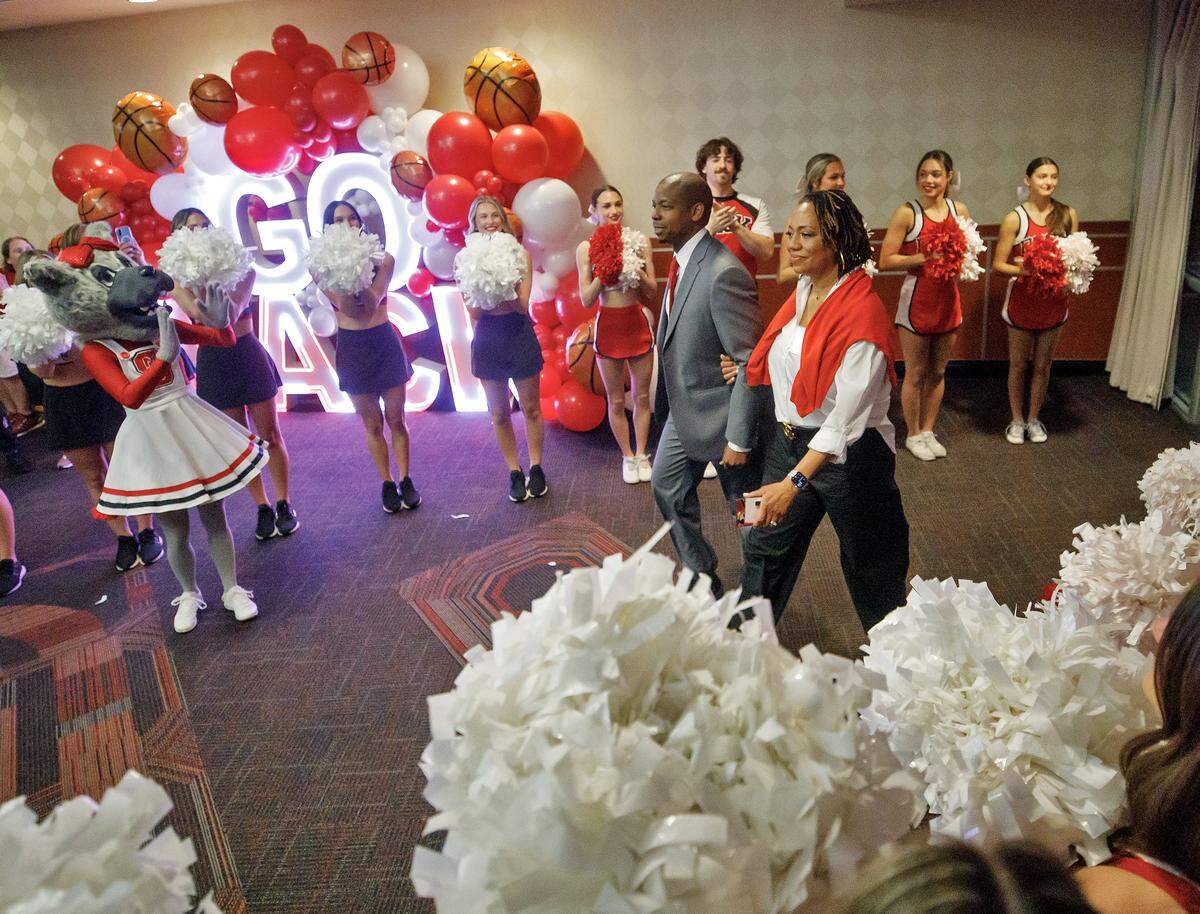
Q: At one point in your introductory press conference, you spoke directly to your children. What have your kids and family taught you?
A: “Having kids changes your whole perspective on life. It’s no longer about you. Everything you do is for them. You stop making decisions based on how you feel. It’s more about the life that you’re setting up for those individuals. My wife and kids have been super influential in everything I do — every decision I make, every kid I recruit, how I talk to every kid. They’ve been so influential.”
Q: What do you remember about that win over Clemson on Feb. 1, 1997?
A: “I wonder why they put me back on the bench after that! I’m gonna send that to Coach Barnes too. Because he always claims they beat us.”
This story was originally published May 12, 2026 at 5:30 AM.