After (another) late collapse, UNC nearing (another) crossroads under Hubert Davis
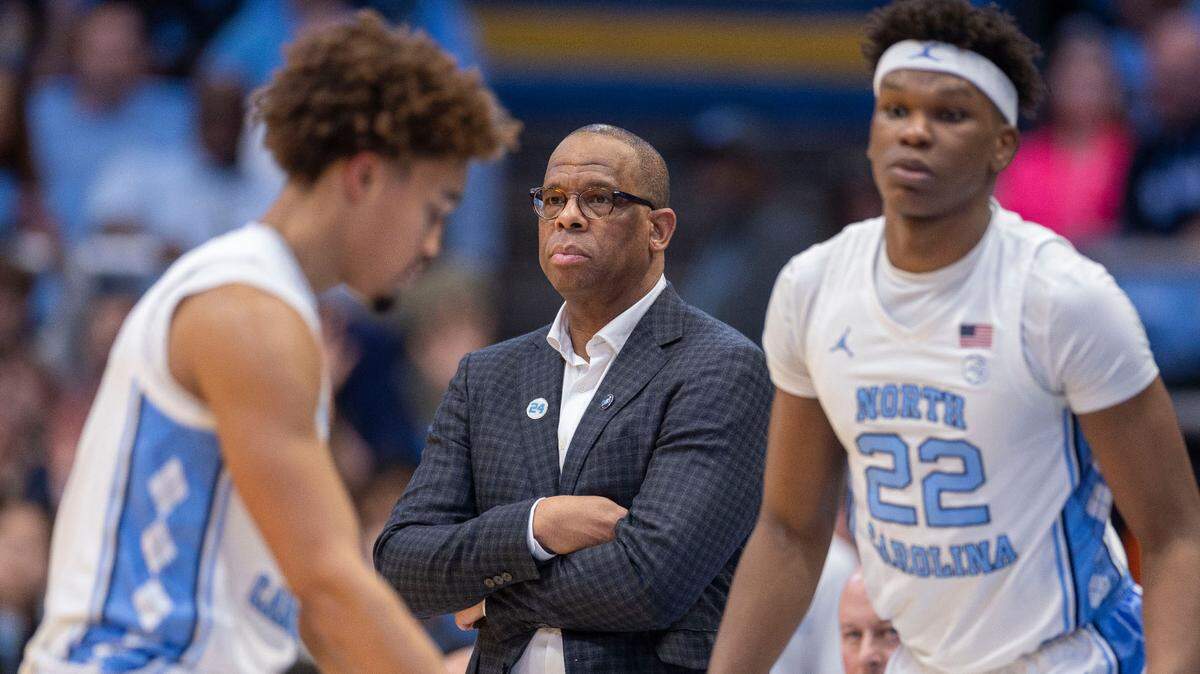
North Carolina’s 73-65 defeat at Pittsburgh on Tuesday night had been over for about 40 minutes when Hubert Davis at last emerged from the locker room for his regular postgame press conference, this one held in an impromptu kind of way against the wall just outside the locker room door. It was almost midnight.
His players had long trudged out, themselves. The boxed dinners that waited on a table for them had long been picked up, the pile dwindling. The bus was waiting to take the Tar Heels to the airport, where they’d board a plane for a quick flight back home, but Davis appeared in no particular hurry. It was as though he wanted to digest this before talking about it. As if he had to.
It wasn’t a unique scene, necessarily. Davis, in his fourth season as the Tar Heels’ head coach, and now surrounded by a heavy and pervading sense of pressure and angst, takes his time after games. Win or lose, it almost always takes him at least 30 minutes to collect his thoughts before appearing in front of the cameras and microphones; on Tuesday night it took a while longer.
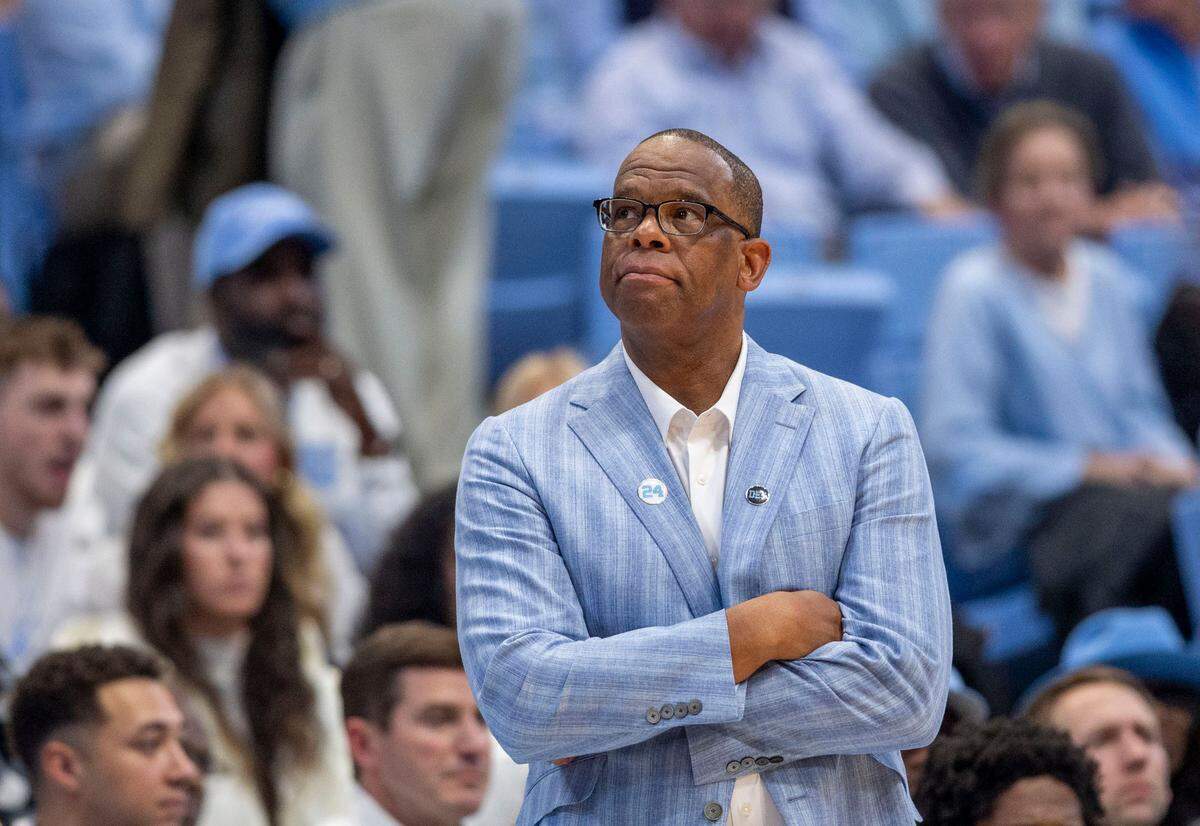
When he arrived, at last, he had the look of a man in search of answers, but one disillusioned by their stubborn elusivity. There had to be comfort, at least, in the familiarity of it all. His team on Tuesday night succumbed in the final minutes the way it had succumbed several other times this season.
There were empty possessions. Rushed shots. Bad shots. Missed shots. A failure to find stops, defensively.
And it all came, for any UNC supporter, with that gutting feeling of here-we-go-again. With that foreboding sense that it was happening, again. With the knowledge that on this night, like several other nights over the past few months, the Tar Heels would not — perhaps could not — produce the winning plays when they most needed to make them.
“It’s kind of like the same movie over and over again,” said RJ Davis, the senior guard.
“I don’t know what it is,” Seth Trimble, the junior guard, said of his team’s enduring inability to close out games, adding that “it keeps happening, over and over again.”
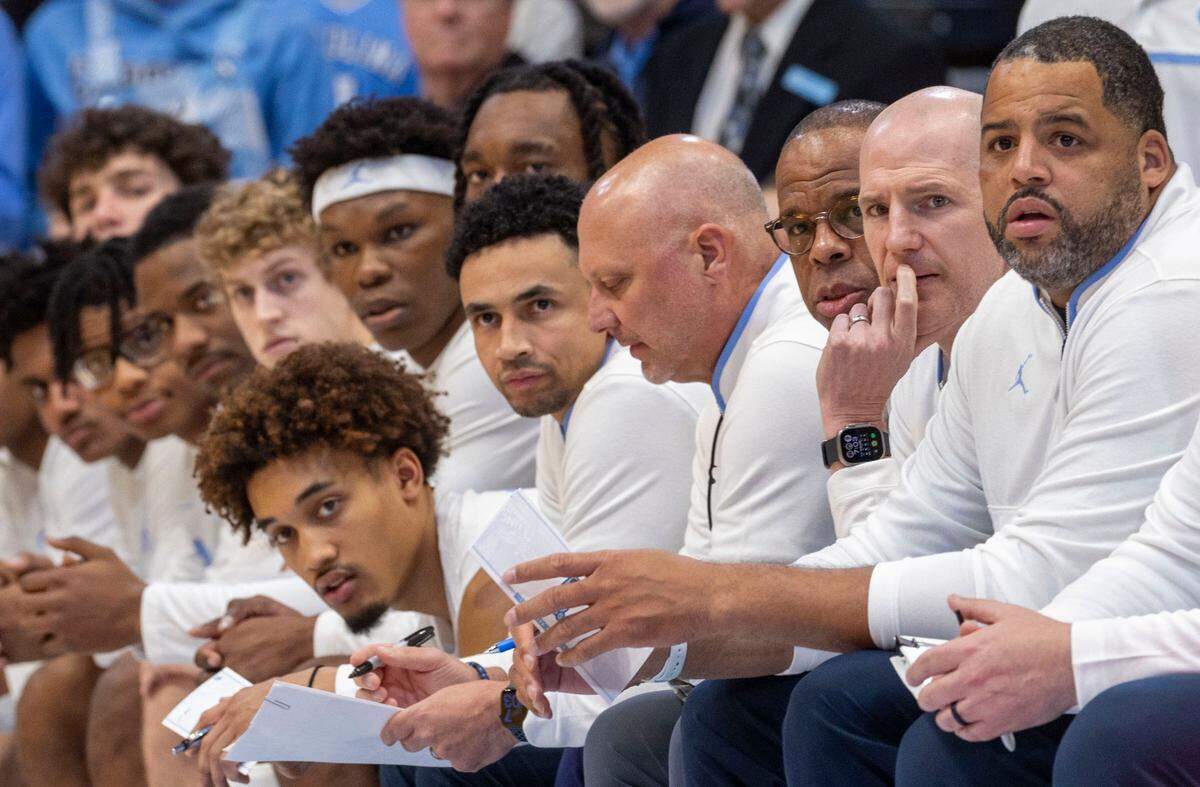
Hubert Davis undoubtedly understands the why and how of these untimely collapses, but how to prevent them has been another matter, entirely. On the sideline Tuesday night, with his team again in a precarious position in the final minutes and again laboring to create efficient scoring opportunities, he conveyed a look of exasperation. He has undoubtedly been over these things with his players.
The carelessness with the ball. The inattention to detail.
Amid empty possession after empty possession Tuesday night, Davis’ reactions told the story of a coach who’d been trying everything he knew how to try, only for his team to falter in the same kind of agonizing ways. At times he stared blankly. In others he folded his arms and shook his head. In others he pulled off his glasses as if he couldn’t bear to watch anymore.
What happened at Pitt wasn’t a one-time thing or an isolated relapse, but the continuance of a discomforting pattern. The Tar Heels are developing an identity, but hardly the kind to which any coach or team aspires. It’s an identity of fragility. Of falling apart in difficult moments. Of meeting adversity with a sense of resignation.
It has to be agonizing especially for Davis, whose attempts at projecting positivity and optimism have been tested, again and again, by his team’s inability to finish. In his years as a player at UNC, Davis went from a lightly-recruited project of a prospect to an integral part of Dean Smith’s program in the early 1990s.
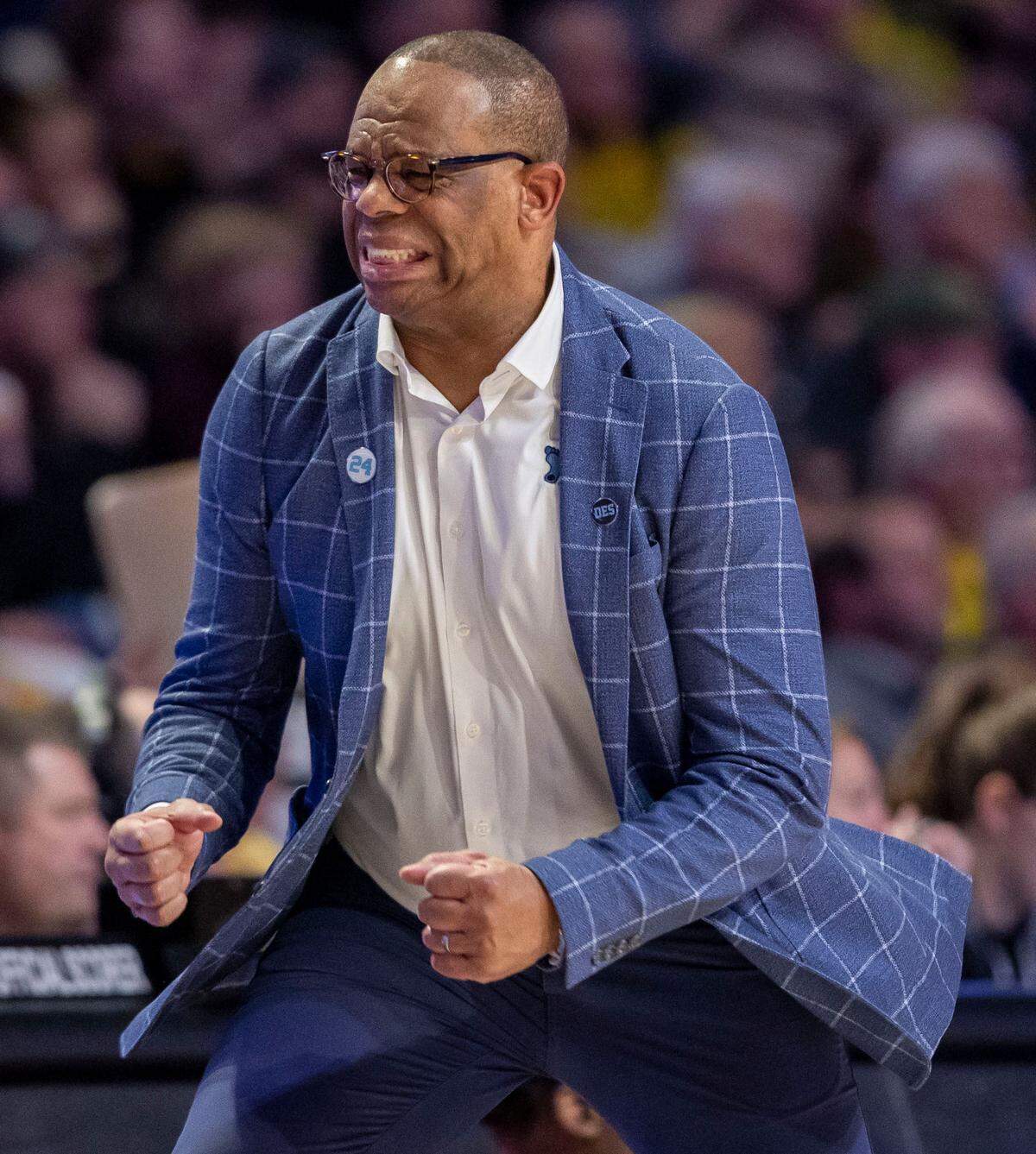
He played with a tenacity and toughness that he has tried to impart on his players. And yet outside of the comeback victory on Saturday at home against Boston College — against one of the ACC’s worst teams, and one that arrived in Chapel Hill as a 20-point underdog — the Tar Heels continue to be at their weakest, and least tenacious, in those moments when the stakes are highest.
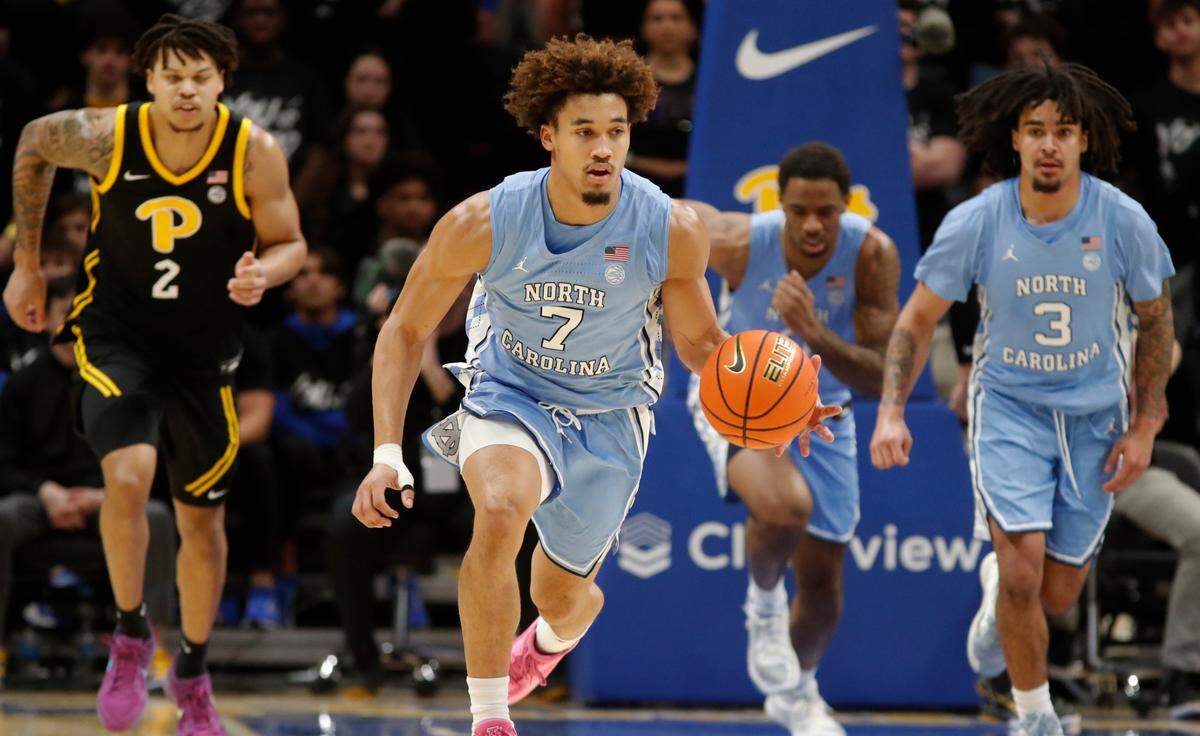
What happened Tuesday night inside Pitt’s Petersen Events Center only solidified that pattern. The Tar Heels often found themselves one-on-one, and dribbling too much, after Pitt began switching on screens in the second half. The Panthers had an uncanny ability to turn UNC turnovers (14) into points (22). Zack Austin, Pitt’s 6-foot-7 senior guard who himself was a lightly-recruited player out of Winston-Salem, played much bigger and finished with 15 points and five blocks.
The Panthers made the winning plays in the final minutes. Hubert Davis, meanwhile, had seen this show before. Anyone who’s followed UNC this season is becoming familiar with it.
Still, he said, “I wouldn’t look at it in (terms of) late-game situations. I would characterize it for the entire game.” He was talking about the 10-point lead the Tar Heels nearly squandered before halftime, when Pitt’s late — and quick — 8-0 run made it a two-point game at halftime. And about the seven-point lead the Tar Heels gave away early in the second half, after Pitt responded with another 8-0 run.
The Panthers kept on coming back and coming back. And now the Tar Heels must prove their resiliency.
Can they? Is this a team that has that sort of inner strength?
Outside of the Boston College game, which was about as close to a moral defeat as any victory can be, it’s fair to question whether UNC can muster the sort of resolve it must now find. Hubert Davis, for one, said Tuesday night that maintaining a sense of togetherness, and hope, is “the easy part.”
It has not appeared all that easy. UNC travels to Duke on Saturday and then has about a week off before playing Pitt, again, in Chapel Hill. Then there’s road games at Clemson and Syracuse. This is the Tar Heels’ toughest five-game conference stretch of the season, for a team that hasn’t proven to be particularly tough. They now must summon those qualities that have eluded them so many times in the final moments of close losses: resilience, calm. Togetherness.
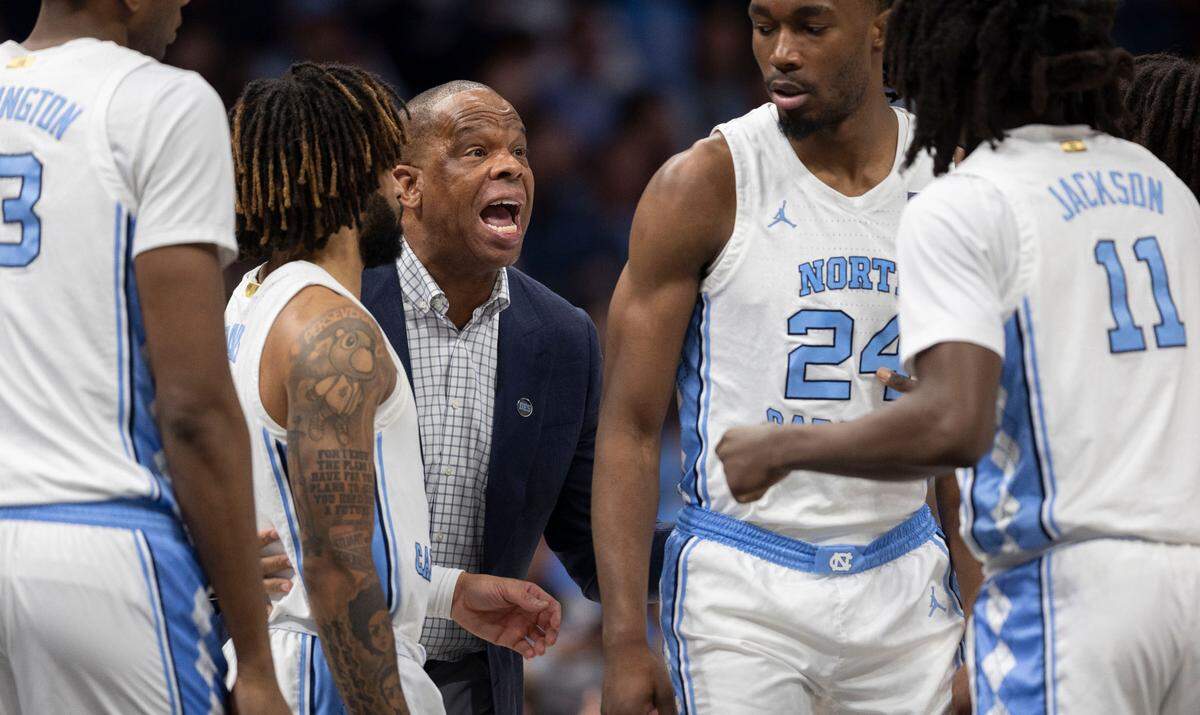
“I love these kids,” Hubert Davis said, his back against a literal wall as the clock neared midnight Tuesday in Pittsburgh. It was windy and freezing outside, and the rivers surrounding the city were frozen, and all around there was a growing sense of foreboding about where this team was headed.
But, Davis said, “I love this team.” And of the question of how he keeps this team together he posed another one: “What choice do you have?”
“It’s a great lesson for this group and this team,” he said. “It’s a great lesson for life. And I really believe that there is no choice. The choice is to get back up and step forward and continue to competitively fight and prepare and continue to improve. I just don’t even think there is a choice.”
The Tar Heels have been here before, at least, throughout Davis’ first four seasons. His first team wobbled for a while, in 2022, before finding itself and spoiling Mike Krzyzewski’s farewell at Duke and then ending his career in the Final Four; UNC ended that season on the final Monday night of the NCAA Tournament. The next year, it started No. 1 only to miss the tournament. Inconsistency has become consistent. An inability to finish has become the norm.
UNC at Pitt lost a prime chance to earn a Quad 1 victory, but this is a team and a program whose concerns are deeper than a shaky NCAA Tournament resume. These Tar Heels have now lost nine games before February, and it’s the how of those defeats that’s most troublesome. It’s the familiarity of them. It’s the lack of surprise when what has happened so often happened again in Pittsburgh, as if it was to be expected.
And now Davis and his players find themselves at another crossroads.
This story was originally published January 29, 2025 at 9:42 AM.