
Beyond Boo-Yah: How Stuart Scott’s friends carry his memory to this day
AI-generated summary reviewed by our newsroom.
- Friends and colleagues recall Stuart Scott’s voice, humor and deep personal care.
- New 30 for 30 documentary revisits Scott’s career and cultural impact in 2025.
- Close friends keep rituals, stories and phrases to sustain Scott’s living legacy.
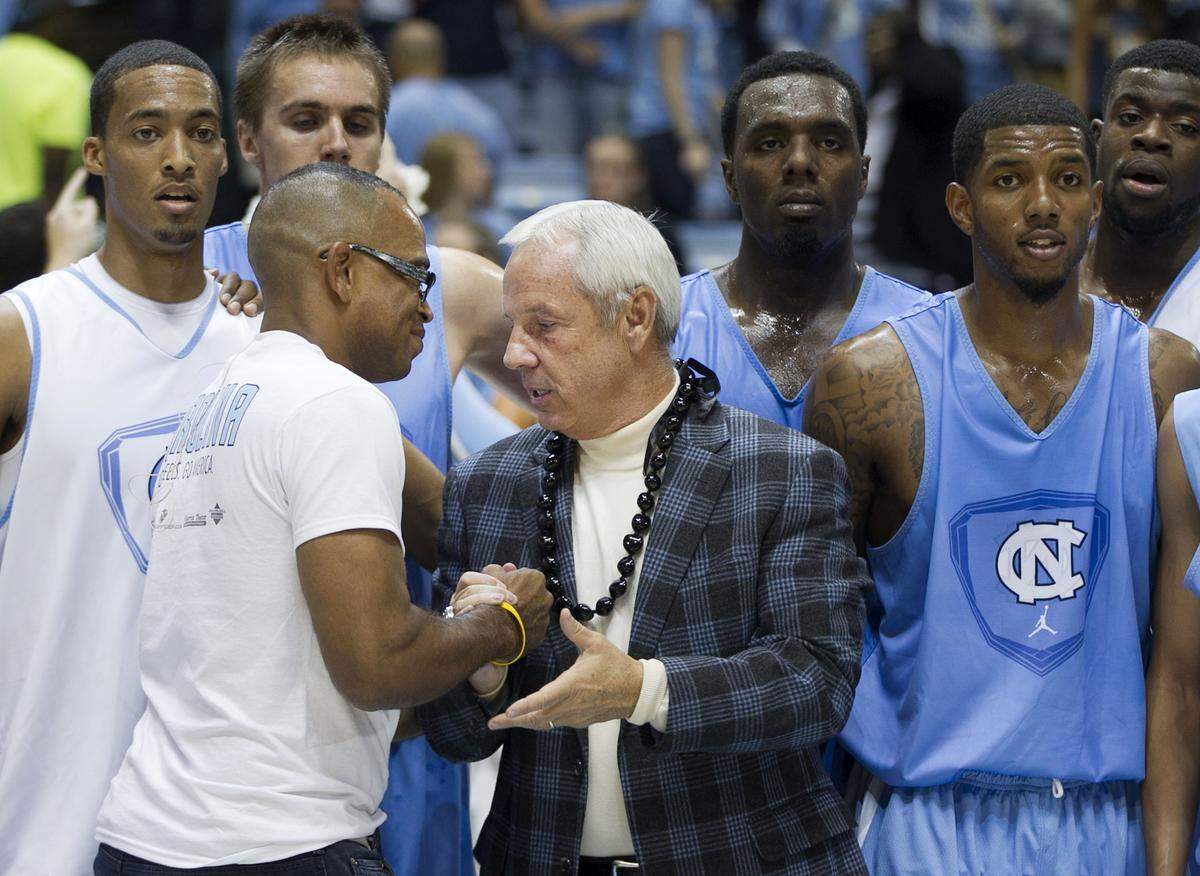
What comes to mind when you hear the name Stuart Scott? For Roy Williams, it’s as simple as a smile.
“That’s the best thing... that’s a pretty good legacy to have,” Williams said.
Now 75, Williams has met thousands of reporters and stood in front of every kind of microphone. Scott was different. His passion felt real enough to trust. He was a broadcaster, and then friend, who somehow made Williams feel like the only person in the world when he spoke to him.
“When you were with Stuart,” Williams said, “you got Stuart.”
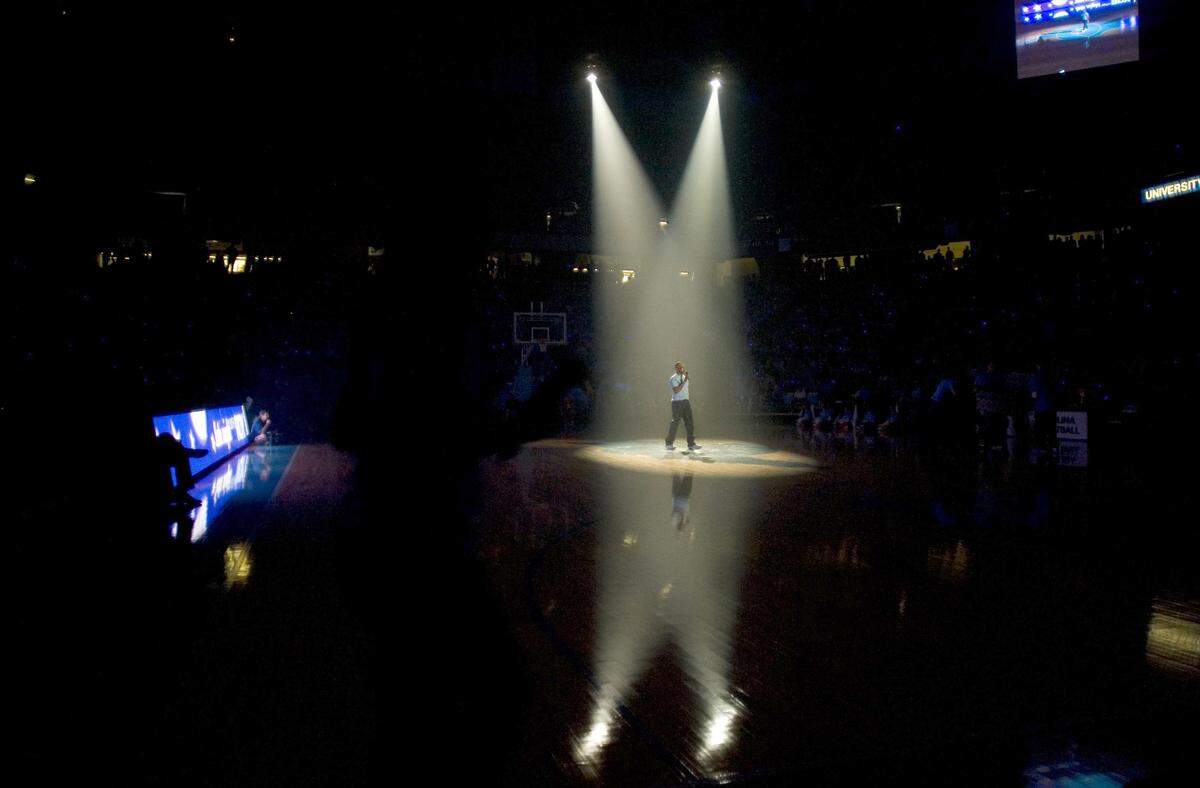
When Williams wakes in the night and flips the pillow to the cool side, he thinks of Scott. His voice caught a little when recounting their memories together this past Sunday at halftime of the UNC-Georgetown game. Sitting in the tunnel outside the players’ lounge, Williams pointed to the middle of the Dean E. Smith Center court. He pointed to the same spot on the hardwood, right at the interlocking “NC” where, in 2004, Scott bellowed, “That’s what it’s all about, right there! That’s on the floor! That’s on your shirt! That’s in your heart!”
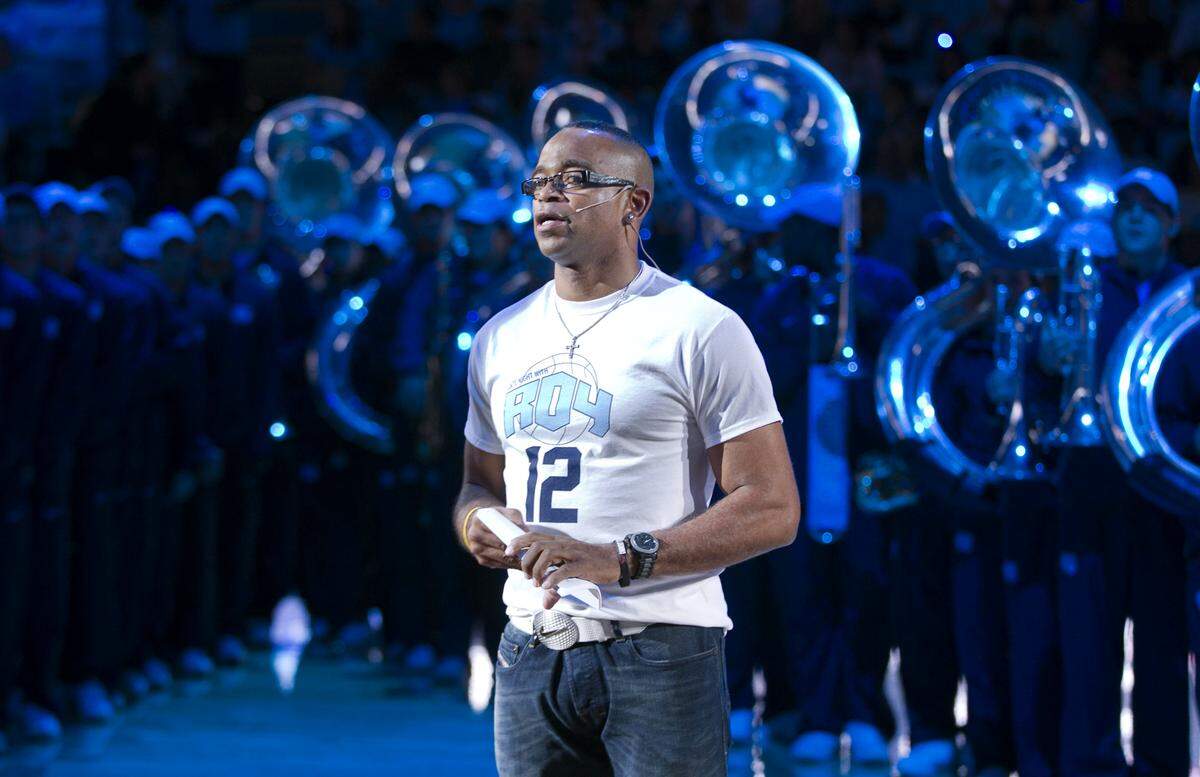
At 9 p.m. Wednesday, ESPN will debut “Boo-Yah: The Story of Stuart Scott,” a 30 for 30 film directed by Andre Gaines that revisits the late anchor who reshaped sports television and left a legendary imprint when he died in 2015 after a long battle with cancer. The documentary promises to trace the arc of his career from a young reporter to a cultural icon.
But, to Scott’s friends, he was just a man who cared — deeply and fully.
How can you capture the essence of someone who meant so much, to so many, in under 80 minutes? It’s impossible, although Gaines surely tried his best. This week, the world will be reminded of the anchor, the father and man Scott was.
Scott’s loved ones will be reminded of that, yes, but also what he continues to be.
‘That’s my big brother’
“You know how best friends seem to always share an inside joke, even if they can’t really define what it is? They just have a sensibility in common and operate together on an altogether different wavelength? That was me and Fred from the start.” — Stuart Scott, Every Day I Fight
Fred Tindal and Scott’s friendship began, fittingly, with laughter.
Tindal was in the weight room at R.J. Reynolds High School in Winston-Salem one day in the early 1980s, struggling to bench 135 pounds.
“That’s not what football players do,” Tindal said. “So he was kind of giving me a hard time about that. And, of course, I took offense to it.”
The two hit it off immediately. Even though Tindal was a year his senior, Scott felt like the “older brother.”
“He was always there looking out for me instead of the other way around,” Tindal said.
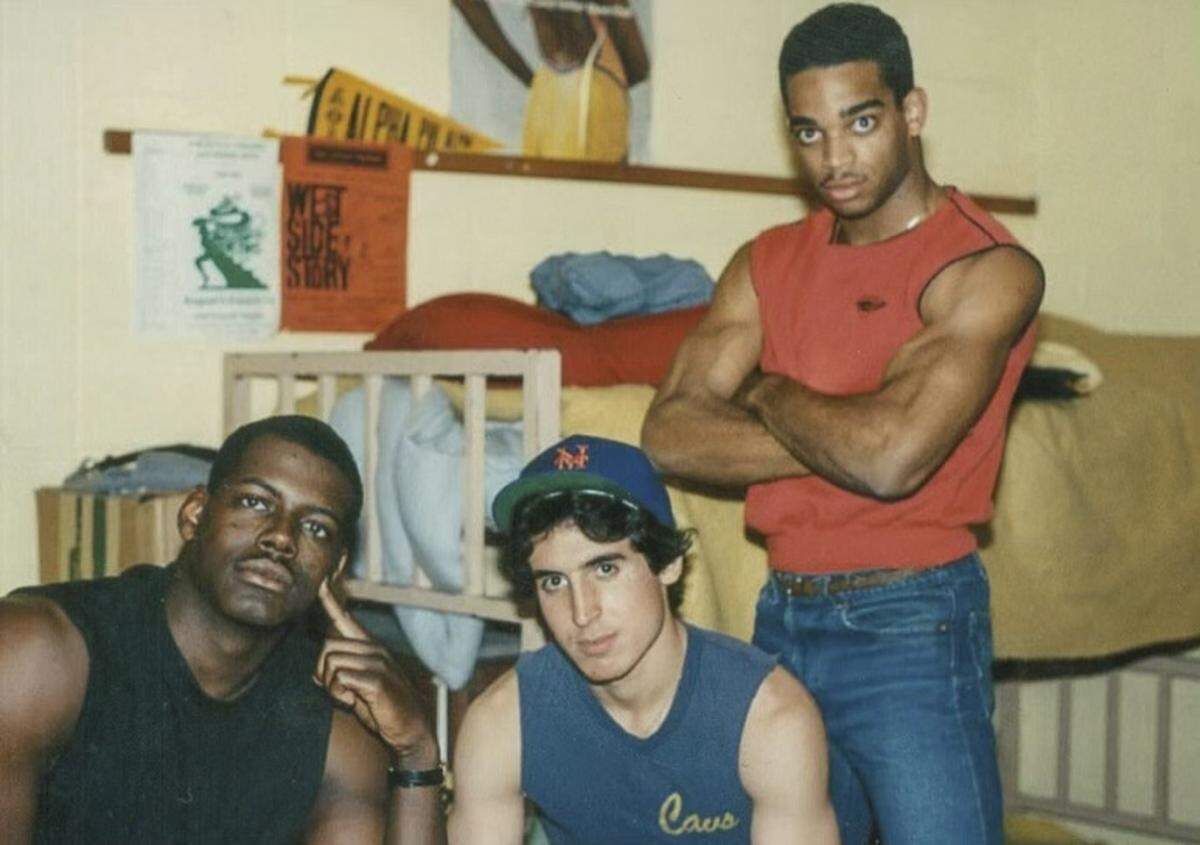
And Scott was, simply, always there. Inside the school grounds. On the football field. At church. When Scott arrived at UNC a year after Tindal, he insisted on rooming together.
Scott marched into Tindal’s dorm room in Ehringhaus Residence Hall one Friday, looked at Tindal’s roommate — whose father had custom-built a bunk bed for the room — and told him he’d need to move out by Monday.
“The guy goes, ‘Well, I think we got to talk to the RA to make that happen,’” Tindal recalled. “And Stuart said, ‘I already talked to the RA.’”
Scott was funny like that. Aside from playing football together in high school, Tindal and Scott also acted in theater productions like West Side Story and The Wiz. Scott, an excellent wide receiver for R.J. Reynolds, refused to be boxed into one identity — even if it meant catching flak in the locker room for his dance belt or drawing an odd look from Tindal’s father when he showed up at their home in tights.
At UNC, the two kept that flair for the dramatic going.
“At the library, we would fall down the steps and roll over top of each other — like we tripped at the top of the stairs — just to get attention, see who was paying attention,” Tindal said. “Stu was obviously big into acting, and so we did a lot of stage fighting, you know, like ‘Gunsmoke’ and ‘Bonanza’ and those cowboy shows… try to make it look as realistic as possible.”
Later in their lives, Scott might bolt out of a store on Rodeo Drive, look both ways down the street, and take off running. Just to see who would follow him. Or he might jump out of an elevator and sprint down the hallway. Just to see how folks might react, peeking into the lift to see who — or what — he was running from.
You kind of had to be there, to know Scott, to understand it.
“It was about making people laugh, bringing a smile to people’s face,” Tindal said, “and whatever method we had to do that — stage fighting, falling downstairs, acting crazy, running up and down the street.”
Tindal and Scott played club football together at UNC. The former high school teammates had considered walking on at North Carolina, but decided it was “a whole bunch of pain for, maybe, no good results at the end.”
So, naturally, they strapped on battered hand-me-down pads to face off against other in-state club teams every Sunday. The two took hits on the early generation of artificial turf — which amounted to, essentially, “outdoor carpet laid across some concrete,” Fred says. They’d limp into fraternity meetings on Sunday nights — they both pledged Alpha Phi Alpha — bruised and bandaged, their skin covered in strawberries from the turf burns.
“Braces and bad days all over us,” Tindal said. “And we just got picked on for doing that for the four years. But it was a lot of fun.”
‘I was clueless’
As they grew into adulthood, Tindal and Scott’s lives continued to braid together. They both became girl dads: Taelor Scott was born, followed five years later by Tindal’s daughter, Cydney, and two months after that, Sydni Scott.
Tindal and Scott joked people might think they coordinated so they could have daughters with the same name. Then came the second beat, maybe a shared shrug. Who cared?
They loved playing make-believe games with their young daughters, pretending they were FBI agents roaming through the house. When they became older, their hangouts took on more structure in a daddy-daughter week. For roughly a decade — until Stuart’s death in 2015 — they carved out a full week each year to travel and spend time together. It might be Aspen one year, Nantucket the next.
“Every year when I was in the military, I would take my 30 days off, come to San Antonio, pick Cydney up,” Tindal said. “And then it was, ‘OK, Cydney, let’s go find Stu.’”
Fatherhood was not something Tindal stepped into with confidence. He grew up in a foster home. His adopted parents were at least 60 when he was born.
Tindal didn’t know what being a modern father looked like. He struggled with leaving his daughter behind when he was stationed overseas.
“I was clueless... he helped me out with that a lot, you know, give me some lessons learned from his daughters,” Tindal said.
Tindal absorbed everything. What to expect at different ages. How to approach problems. How to show patience, even during teenage tantrums.
“I would have straight up missed the boat on that one if it hadn’t been for his lessons learned,” Tindal said.
What was the biggest lesson?
Tindal took a deep breath and chuckled softly before replying, “I can put it in one word, just love.”
‘We were dad’
Scott Organ first met Stuart Scott at a Fourth of July party. They started talking golf and, pretty soon, went out to play a round.
Scott asked for help tracking his drives. He had trouble with his vision, so he sometimes lost the ball in the air. Organ agreed and, when he picked up Scott’s ball, he saw the letters T and S scrawled on it.
Organ hesitated. Stuart Scott… T S?
Finally, he asked, “What’s with the T and S?”
The answer was obvious to Scott: “Taelor and Sydni.”
“It hit me…that was sort of the first, ‘Yeah, this is good people,’” Organ said. “That’s one of the earliest memories I have.”
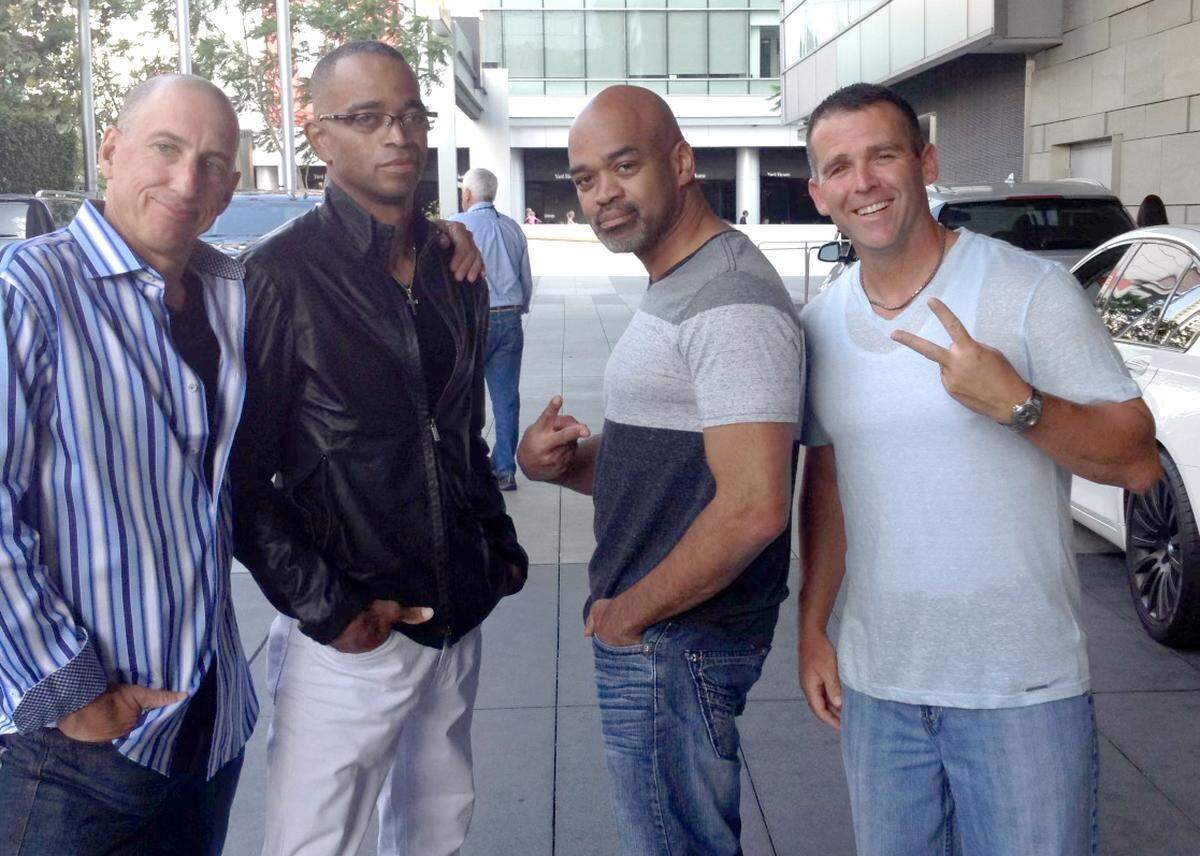
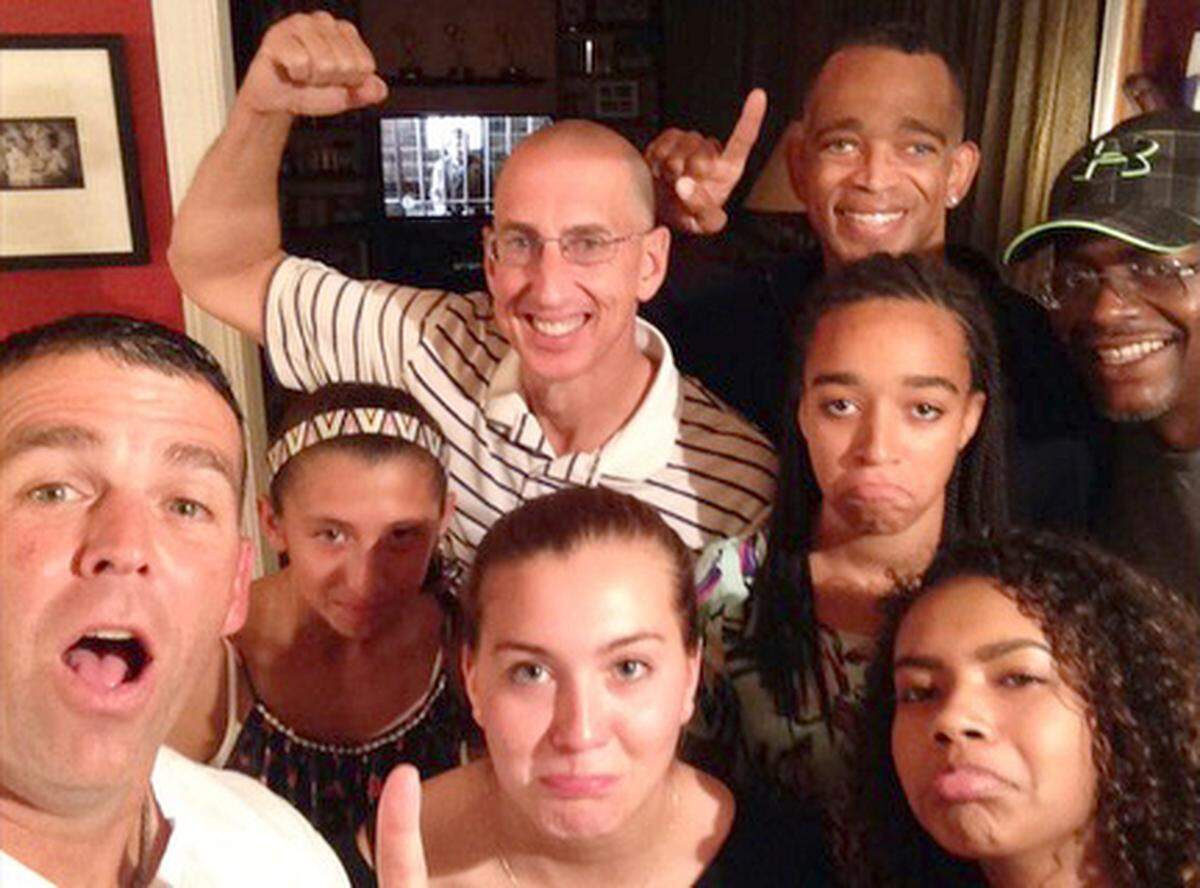
Parenting, as it was with Tindal, proved to be a glue between Scott and his closest friends in his adult life, including Organ, Brian Gallagher and Suzy Kolber.
“We would have incredibly deep conversations from the get-go,” Organ said. “About how we were parenting and what our messaging was.”
Scott loved his own girls fiercely, and he also loved everyone’s kids. Organ’s. Gallagher’s. Kolber’s daughter.
Once, when Organ’s teenage daughter had a boyfriend coming to pick her up, the boy — a big Stuart Scott fan — asked if he could come up to the condo to meet Scott.
When he knocked, Scott and Tindal answered the door. They went full Bad Boys on the kid. What are you doing with her? What are your intentions?
“They grilled this kid and it was absolutely hysterical,” Organ said.
“Wanted to do it with our daughters but Scotty O’s daughter came up first,” Tindal added. “We played nicer with that fella but would’ve come harder if it was one of ours.”
But Scott’s care went beyond silly ‘bad cop’ routines. He gave his friends parenting books. He took pride in being a father and, like his broadcasting work, was always striving to improve.
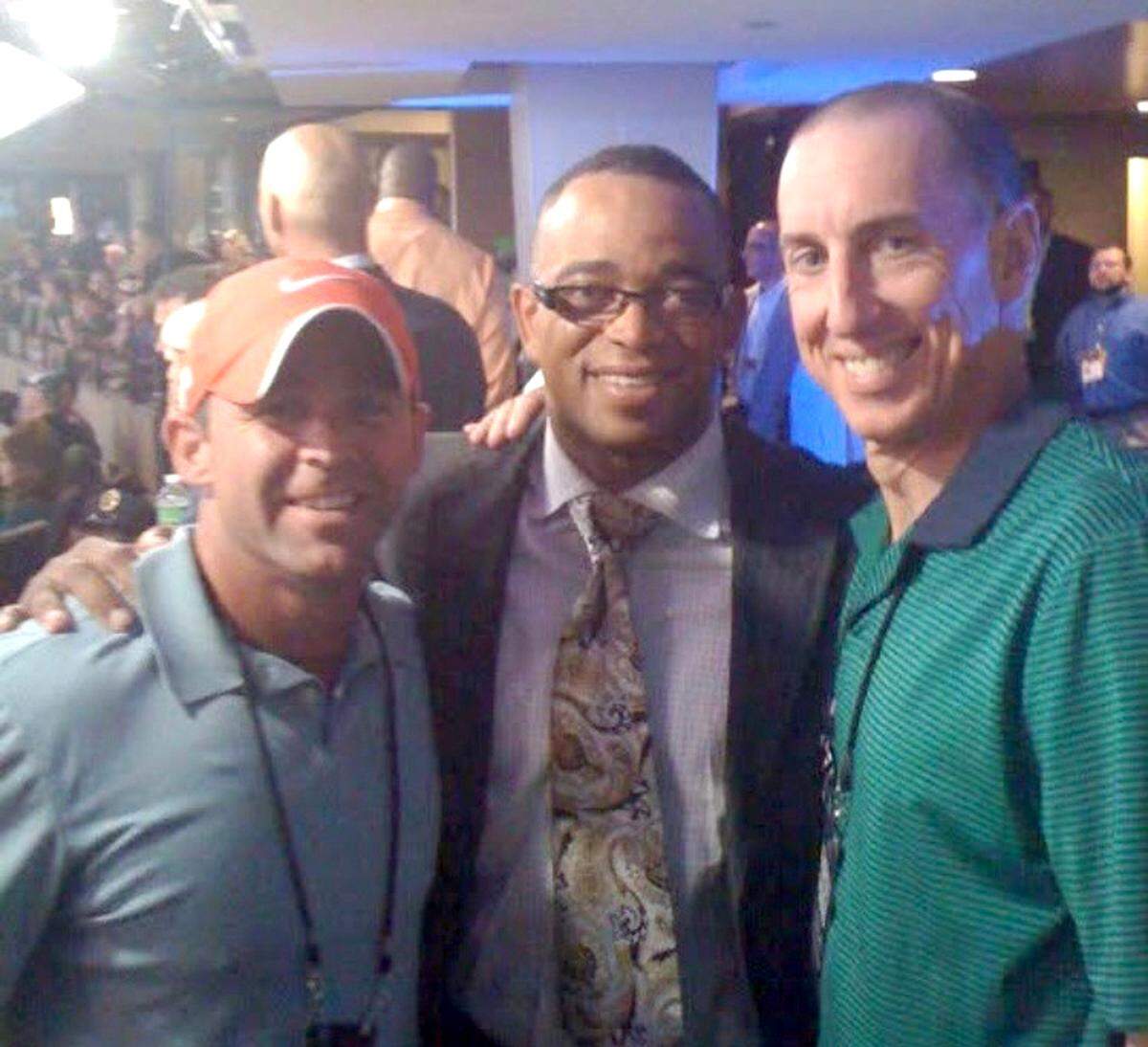
Organ, Gallagher, and Scott often dined at Chili’s with their kids. One night, a mom glanced at the table — three fathers, a cluster of daughters — and said something like, “Oh, babysitting tonight?”
“It really upset him,” Organ said. “We didn’t see ourselves as an occasional parental figure who might take the kids off mom’s hands for a couple hours.”
“Stuart would take offense, like, ‘What do you mean?’” Gallagher added. “We’re fathers. This is what we do… we weren’t playing dad. We were dad.”
‘He always had that ‘it’ about him’
Ask Tindal where Scott’s confidence came from — the certainty with which he moved, the unshakable instinct to be himself — and he’ll tell you he wishes he knew. Tindal is pretty sure “a lot of it came from his dad,” an all-business federal postal inspector who carried a gun, cuffs and plenty of life lessons.
But part of Scott’s “it” factor is still indescribable, even for his closest friends.
“I wish I had just a little bit of it myself,” Tindal said. “I did not. He pushed me more than any one person or a group of people in my entire life. He always had that ‘it’ about him.”
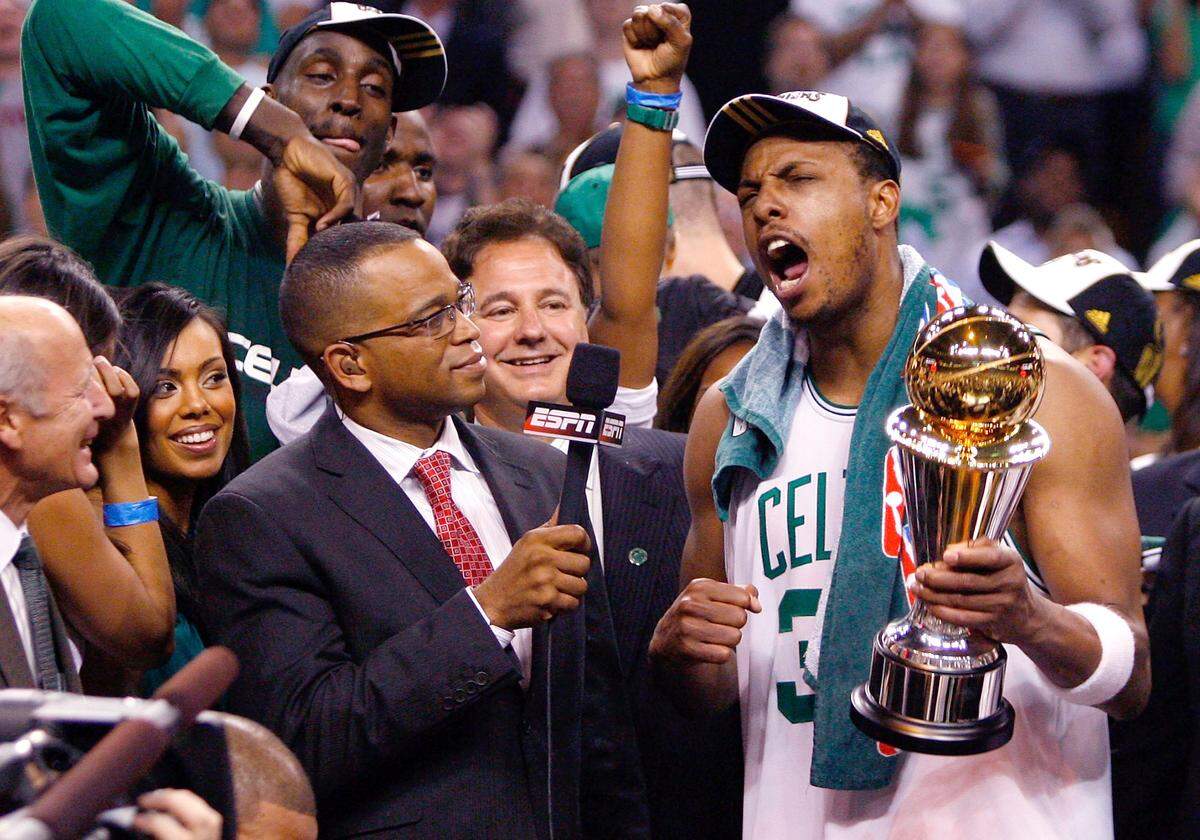
When Scott worked at the ABC affiliate, WPDE-TV, in Florence, South Carolina, Tindal was stationed at Fort Bragg and would drive down on weekends. The station was small enough that nobody cared if they tossed a football around on set. Scott would go live and, as Tindal says, “act a fool.”
In other words, he was given the leeway to be authentic. And he carried that authenticity with him during early career stops in Raleigh and Orlando — and all the way to ESPN.
“I was really witness to adversity that he faced at ESPN for wanting to be the true, genuine Stuart on TV,” said Kolber, his colleague and friend. “And there was resistance to that, and he refused to back down from it... he had such a strong conviction to the person he was and what he wanted to represent on TV. He refused to conform. Stuart was going to be Stuart.”
Scott often called Tindal from Bristol, Connecticut, trying to remember a Luther Vandross lyric or a line from a rap song — something he thought might fit the feel of some punch line he was planning. He slipped phrases from their childhood, like “Boo-Yah,” into his highlight reads. Sometimes he reached back into family vernacular, borrowing from things he’d heard his parents, grandparents, uncles or cousins say.
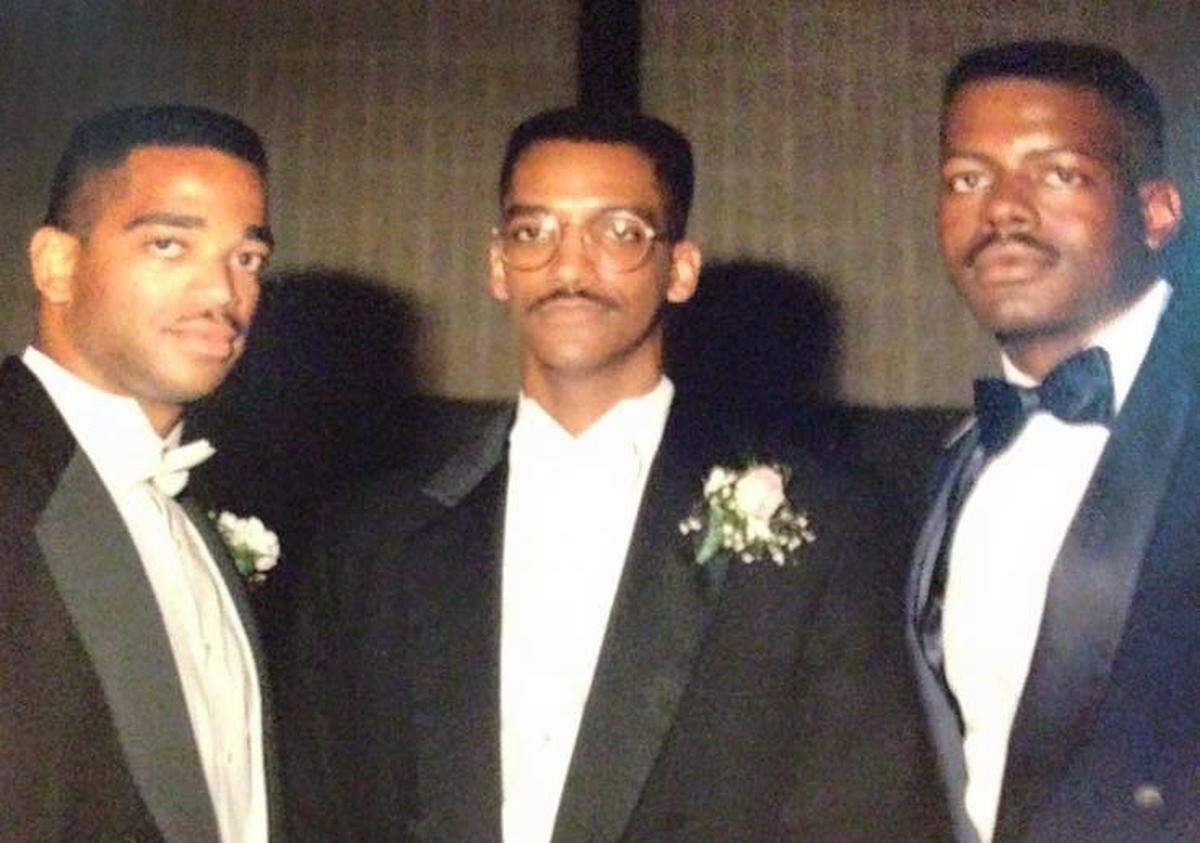
But those other catch phrases? Like cooler than the other side of the pillow? That was “all Stu,” Tindal said.
Scott took risks and got pushback. Tindal held back laughter when he recalled the time the rapper Luke Campbell (AKA Uncle Luke) invited Scott to appear in his music video for “Raise the Roof!” Scott told Tindal he was recording in front of a green screen. Tindal pushed back: Stuart, I don’t know about that. Are you looking to get suspended?
“Lo and behold, when it came out, that green screen was not green anymore,” Tindal said. “It was a whole bunch of strippers, dancers and things like that. So he bought a three or four day suspension without pay for that one. But, yeah, he caught it [flack] a lot, but he was true to himself. He believed that sport should be fun. And, if he’s doing it, he’s going to do it his way.
His way is fun, and that’s what he did.”
The brutal journey begins
On Nov. 26, 2007, Scott was preparing to host Monday Night Countdown in Pittsburgh when he felt an unusual pain in his stomach.
By the time Gallagher, a big Steelers fan, arrived from Scranton for the game, he was greeted by an envelope in his hotel room with the tickets. Scott also left a voicemail: Hey, I’ve had a stomach ache. I may have appendicitis, so I’m going to the hospital to get it looked at. Enjoy the game.
Tindal was overseas. He noticed Scott wasn’t on the broadcast — not on the pregame show or at halftime. Oh, that ain’t cool, he thought.
Kolber was on assignment that day.
“They were getting ready to toss to me, and the producer said, ‘Stuart’s not here,’” Kolber said.
The game carried on in miserable fashion. Dreadful weather and terrible field conditions made a quagmire of Heinz Field. Everything about the game was ugly. The Steelers trudged on to a 3-0 win.
Meanwhile, at the hospital, what was supposed to be a minor surgery dragged on for hours. Gallagher had to drive his friends back to work in Scranton and left around 6 a.m. the next morning.
Later that day, Scott called him. They had found cancer.
‘A willpower like no other’
Growing up, Scott had a slight lisp. Nothing dramatic. Even some close high school friends didn’t notice it. But Scott did. He understood if he wanted to major in Radio, Television and Motion Pictures at UNC — if he wanted to be in front of the camera for a living — he’d have to get that lisp under control.
“He would set [the boom box] up on the counter there in the dorm room and he would play his tapes,” Tindal said, recalling the drills. How, now, wow, cow. Over and over for eight months to a year. Until he felt confident enough to move on.
“To be honest with you, it was still there a little, but he worked on it,” Tindal said. “Once again, when he set his mind to doing something, it was about getting it done. And that’s what he did.”
He approached his treatment the same way. When Scott fought cancer, he literally fought. He followed up four- or five-hour chemotherapy treatments with gym sessions. Alongside Gallagher, he bench-pressed 225 pounds and ripped off a hundred push-ups. He later took on P90X and mixed martial arts.
He would never call out the cancer in front of Gallagher, but often talked to himself. You got this! You got this! A completed rep was followed by Scott jumping up and yelling, “Yeah! Yeah! Yeah!”
“A lot of people would do that when they would get PRs… honestly, like, when you’re with him, you kind of forget that he’s still battling because he never changed,” Gallagher said. “He was always energetic. And I don’t know how he could do it. He just had a willpower like no other. He really did.”
“I think Stuart, you know, was always super, super competitive,” Kolber added. “Great athlete, super competitive and he brought that same fight. He was going to battle it in every imaginable way. That never changed.”
Even card games became a test of will and strength. Gallagher always carried a pack of cards when he traveled with Scott so they could play “push-up poker.”
“Unfortunately, the winner is the loser. They’ve done the most push-ups,” Gallagher said. “And he thrived on wanting to be the loser.”
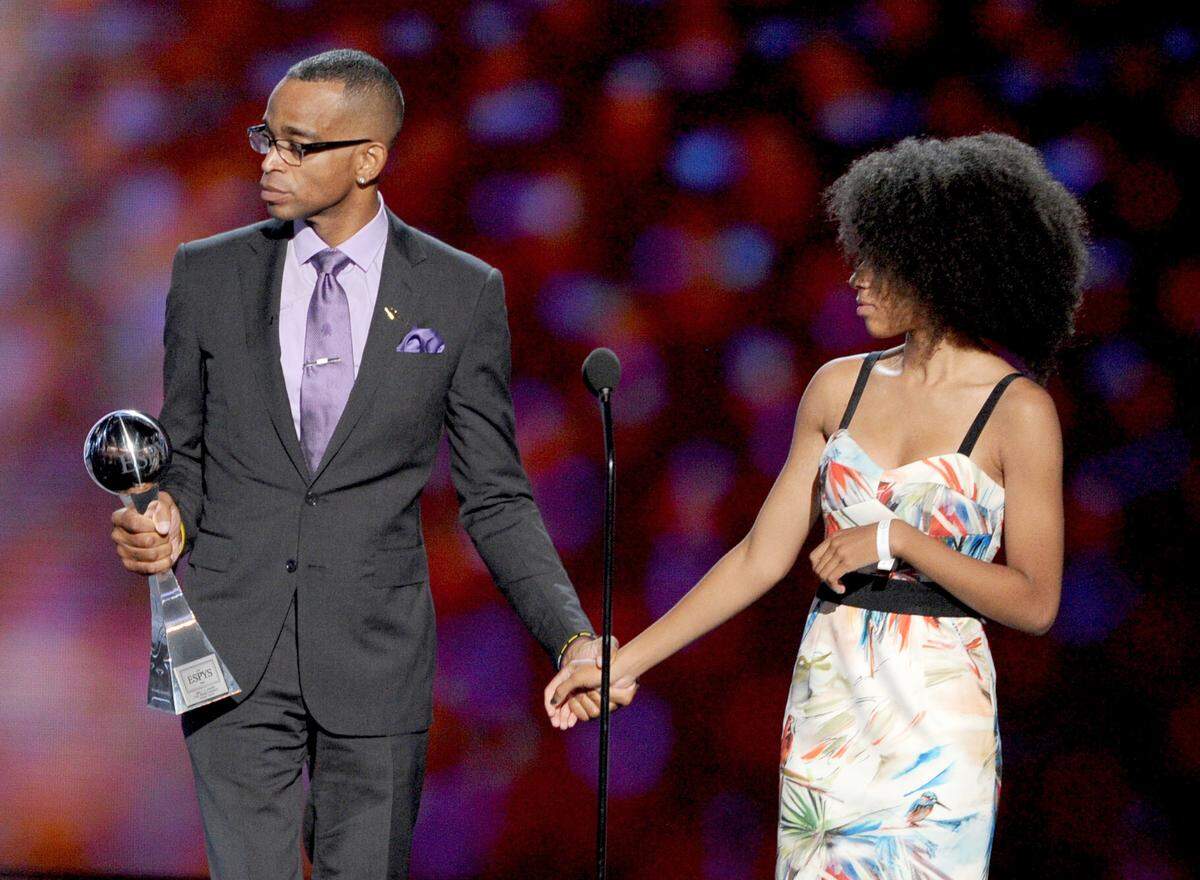
Scott played “push-up poker” at awards shows and at the Super Bowl. He played with the likes of Joe Montana, Nomar Garciaparra and Trace Armstrong. The morning of the 2014 ESPYs, he played “push-up poker” with Michael Sam and the former defensive lineman’s partner.
Later that night, Sam received the Arthur Ashe Courage Award, while Scott was honored for the Jimmy V Award for Perseverance.
Scott had to persevere just to be there that evening. The week prior, he endured four surgeries and a kidney failure. Gallagher recalls being in the hospital alongside Scott and his girlfriend Kristin Spodobalski when, days earlier, they explained he might not make it to the ESPYs.
“Stuart and God, they made a deal… to allow him to be able to make it,” Gallagher said. “And not only did he make it and give that legendary speech, but he still performed. Even at pushups.”
The speech
Tindal was stationed in Dubai when Scott called him a few months before the ESPYs and asked, “Have you bought your plane ticket yet?”
He hadn’t.
“Don’t come,” Scott said. “I don’t think I’m gonna make it, so you’ll be wasting your money.”
Tindal didn’t argue. He never pushed Scott where Scott didn’t want to go. Tindal told him he’d stay put, they’d catch up later, and that was that.
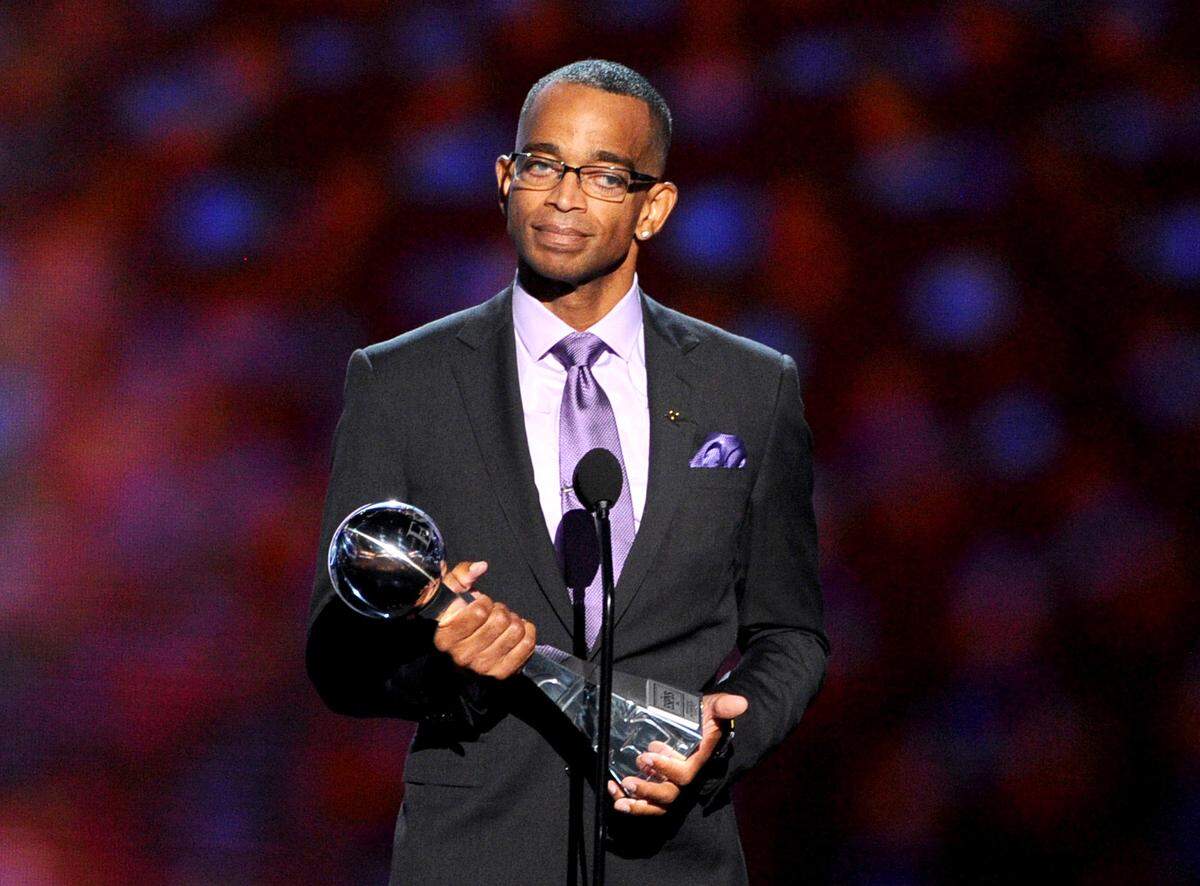
Then, days before the show, Scott called again — this time with a burst of energy.
“Hey man! I feel great,” Scott said. “Can you get on a plane and come to the ESPYs?”
“Hell no,” Tindal replied. “I can’t just leave work like that… I guess I’ll just watch it on TV.”
Tindal’s phone rang, again, the day of the ESPYS. Another call from Scott.
“Don’t watch it,” Scott told him. “Record it.”
Tindal obeyed and hit record. The next day, Scott called. Tindal queued up the broadcast in Dubai while Scott did the same on the other side of the globe. Together, they pressed play. Scott paused at different points to explain what he was thinking — why he said certain things, what moments meant to him, what he hoped people would take away.
Tindal can’t recall what Scott said, only that it was “pretty intense.”
“I was listening,” Tindal said. “I was thinking. But I swear to you, I couldn’t quote anything from the conversation — other than just pure, heartfelt emotion.”
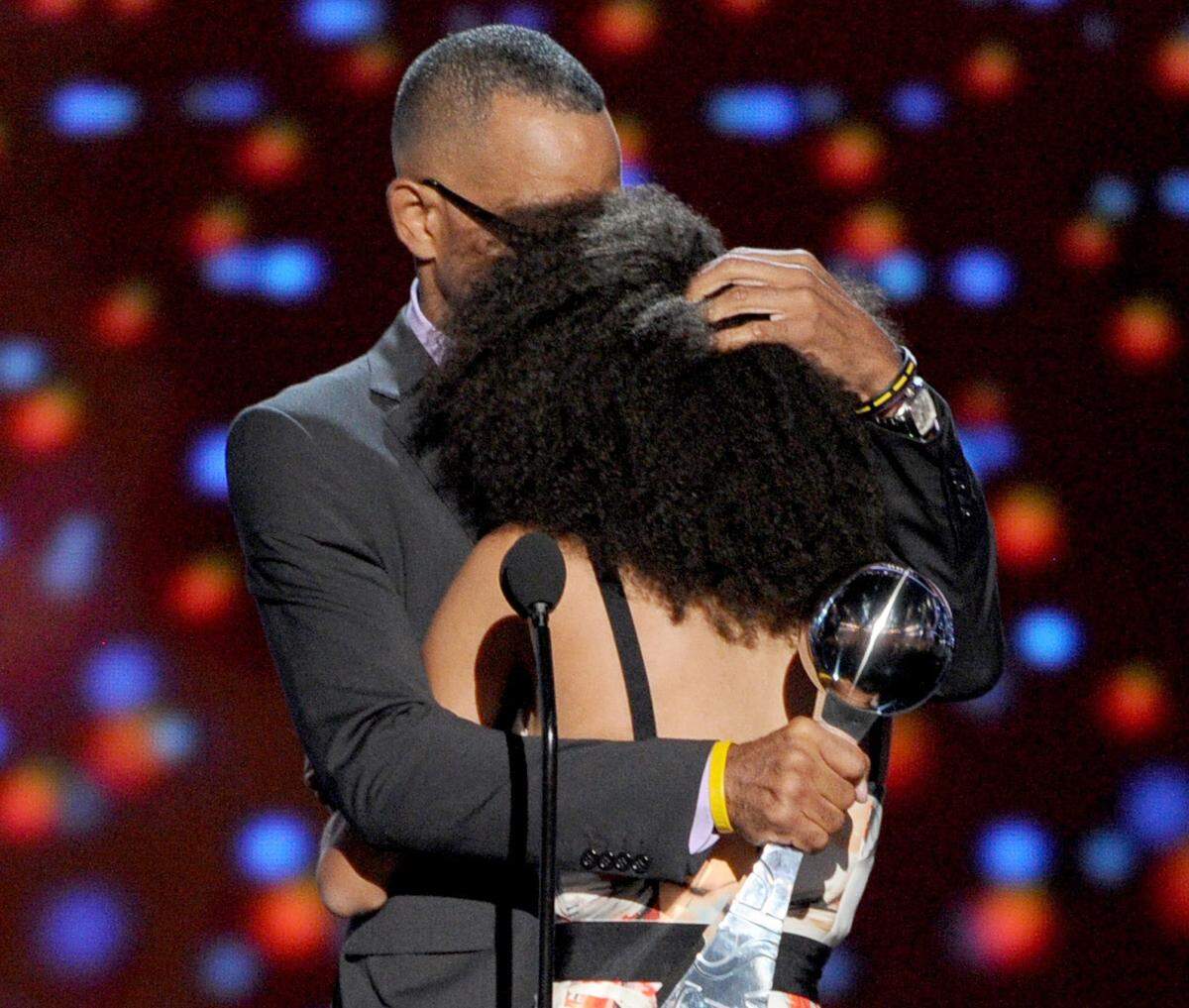
For Gallagher (who attended the ESPYs) and Kolber (who couldn’t make it), the speech stood out for the same reason.
“Nobody knew it was the last time he would speak publicly… somewhere deep inside he was aware of that,” Kolber said. “This is the message. This is the legacy I’m leaving.”
“I was in denial for years because I couldn’t tell him it’s OK to move on,” Gallagher said. “I couldn’t tell him it was OK to give up or to stop and just heal and rest… and in that night, it hit me. It took that speech to hit me.
I understood that was him saying goodbye to the world.”
The fighter
Over the years, Scott’s battle with cancer took on a similar arc to the boxing movies and shows he loved so much. He fought it, beat it, but even when the disease was on the ropes, it found a way to get back up and punch back.
Gallagher was at the movie theater with Scott in 2010, watching “The Fighter” with Christian Bale and Mark Wahlberg, when Scott told him he wasn’t feeling right. Stomach problems. Bowel issues.
Scott knew the signs and contacted his oncologist for a checkup.
“They found that it came back,” Gallagher said. “That was a gut punch. That one hurt. That one hurt a lot.”
Scott had a way of compartmentalizing his friends and what he needed, said Tindal, even when they wanted to do more.
“I’m telling him, ‘Hey, I wish I could take some of that (expletive) for you,’” Tindal said. “And he goes, ‘I wouldn’t let you. That’s my burden. I got it.”
When he was with Tindal, Scott didn’t want to talk about his cancer. He wanted to talk about the good things: their friendship, their past, how much fun they shared over the years. He wanted to talk about their daughters and their future.
“That’s what I need from you,” Scott told him. “I need for you to be Fred. I need for you to make me laugh. I need for you to treat me like I don’t have cancer.”
But there were times they sat down and had deep conversations about the disease. Tindal would visit Scott, go to chemo with him and see what it was like. One time, he took him to the emergency room for an issue with his catheter. Man, did Scott hate that catheter.
Eventually, the disease became impossible to ignore.
“He got to the point where we couldn’t go out and play golf… we couldn’t go out in the street and throw a football,” Tindal said.
That didn’t stop him from trying. During one of their last summers together — Tindal isn’t sure if it was 2013 or 2014 — Scott mustered the strength to join Tindal and their daughters outside.
He interrupted their soccer session to tell Tindal, “OK, I got one more in me.”
Scott wanted to run a route. He did just that — a perfect pattern. For one last moment, it was like their old days. Tindal at quarterback. Scott at wide receiver.
“I overthrew him and kind of laughed,” Tindal said. “He goes, ‘That’s so typical. You never could throw.’”
That same summer, as Tindal recalls, they took the golf course together for the last time. The goal was to play nine holes at the local course in Connecticut. They made it through three.
Tindal took Scott inside, getting his friend some tea and water.
“I can’t drink this either,” Scott told him. “Take me home.”
Tindal swears he didn’t pick up a golf club for eight or nine years after that. He just couldn’t do it. Gallagher didn’t golf again for a decade after Scott’s death.
It was only a couple years ago, Tindal said, that he returned to the course.
“Still,” Tindal said, “it’s not the same… that was when I realized that he wasn’t going to be around.”
But Scott showed up as best he could.
In September 2014, just months before Scott died, his daughter Sydni was suiting up for her first high school varsity soccer game.
“He was down that he wasn’t gonna be able to see it,” Gallagher said. “And I’m like, ‘You’re gonna see it.’”
Gallagher grabbed an iPad, drove to the field, and put Scott on FaceTime.
“Magic happened,” Gallagher said. “Sid was a rock star.”
She scored. Then scored again. Then again. A hat trick in her first game.
“I DIDNT miss it,” Scott posted online at the time. “A friend I love … FACETIMED me all game. Saw my daughters 3-goal “HATRICK” in a 3-1 win. I was cryin & yelling... nurses came in worried.”
‘I need more time’
In December 2014, the month before Scott’s death, Spodobalski called Tindal and told him, if he wanted to see Scott alive, he had to do it soon.
“I’ll be on a plane tomorrow,” Tindal told her.
It was right before Christmas, and Tindal had to be back by Christmas Eve, so he couldn’t stay long — despite Scott’s pleading.
Tindal promised to be back next month. They’d watch the Super Bowl together. That was their thing.
“Fred, you know as well as I do,” Scott told him, “I’m not gonna be around for that.”
“Come on man,” Tindal said. “Why do you say that?”
“We’ll see,” Scott replied.
Christmas came and went. Scott was able to spend it with his family. On New Year’s Eve, Gallagher visited Scott at his home to watch football.
“We just had some alone time… the angriest I’ve ever seen him at cancer was that day,” Gallagher said. “He had a luncheon earlier in the week with Taelor, and Taelor really opened up to him. When she did, he broke down with me. He’s like, ‘I need more time. I need more time for her.’”
Gallagher shared this moment during his interview for the ESPN documentary. Taelor Scott was in the room, listening.
“I did want Taelor to know that he and I talked,” Gallagher said. “There was a certain phrase that Taelor said to him at that luncheon that I know would ring a bell, like would hit her. It was the word quirkiness. She said, ‘Dad, you’re the only one that would understand my quirkiness. What am I going to do?’ So that hit him terribly, and he needed more time. So when I told that story… there were tears flowing.”
Taelor Scott and Gallagher hadn’t spoken for, Gallagher estimates, eight years prior to that interview. But, within a matter of days, she reached out.
Uncle Brian, can we meet?
Of course they could. She invited him to a coffee shop in West Hartford, Connecticut. Cafe Sofia. The same place she and her dad had the luncheon.
Taelor Scott and Gallagher sat down and talked. She wanted to return the photos he’d brought for the documentary — pictures of her and her father when she was young, photos of Gallagher and Scott and their 20 years of friendship.
“And the one thing Taelor wanted to know,” Gallagher said, “was she asked me about his last day.”
Uncle Stuart
Scott’s last day began and ended with Gallagher carrying him.
Gallagher was coaching his son’s basketball team when Spodobalski called him on Jan. 3, 2015. She was concerned Scott was hurt. Gallagher drove to their apartment after finishing the game.
“He was being medicated at that time,” Gallagher said. “He was probably on morphine or something. So he was kind of not there totally. But his leg, his right hip, kind of opened up in a way that was abnormal.”
Anytime you touched his leg, Scott was in pain. And Scott had enough senses, Gallagher recalled, to know he was in trouble.
“He just kind of mumbled,” Gallagher recalled. “He whispered, ‘B, What do I do?’”
Scott didn’t want an ambulance. So Gallagher scooped him up and placed him in the backseat of the car with plenty of pillows and blankets.
“A bad snow squall came in,” Gallagher said. “We had two or three inches. It was a really bad, treacherous day that morning. So I picked him up, and I carried him downstairs into the car, and then Kristin was in the back, holding his hands.”
Gallagher had been to the hospital with Scott more times than he could count, but nothing prepared him for the chaos of that morning. The snowstorm had turned the ER into a zoo. They’d arrived expecting a private room upstairs. Instead, they were wedged into the frantic belly of the hospital, surrounded by an overflow of crash victims.
Without fail, Spodobalski forced order out of the chaos. She always carried a briefcase stuffed with years of scans, reports, lab results — his entire medical history condensed into a portable archive. Every time a new resident began asking the same questions, she simply opened the case and handed over the documentation.
When they were eventually moved upstairs — the place they’d expected to start — the shift felt like “night and day,” Gallagher said.
“You could hear the music playing,” Gallagher said. “You can hear the nurses talking. It was just a moment where I sat out in the hallway and Stuart was on the gurney and they were talking, and I was just watching Kristin talk to the nurses and the doctors. When I say Kristin was an angel, I truly mean she’s an angel. I felt like there was an ambience of light around her, the way she was handling that situation.”
The doctors wanted to wait for assistance to place Scott in bed. Gallagher waved it off.
“I carried him down the stairs,” he told them. “I put him in the car. I’ll put him in the bed.”
And so he lifted Scott — lighter now than he ever should have been — and laid him down to rest. Then he leaned down for a hug and a kiss on the cheek.
“I said I love him,” Gallagher recalled. “And he said, ‘I love you too, B.’”
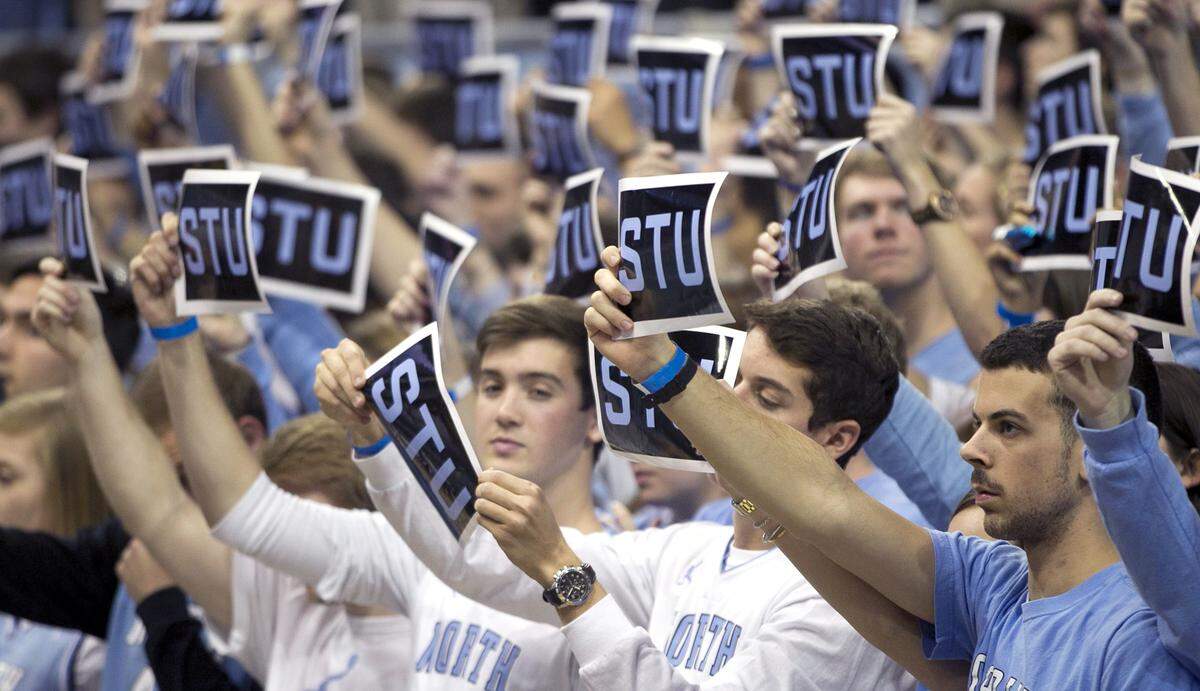
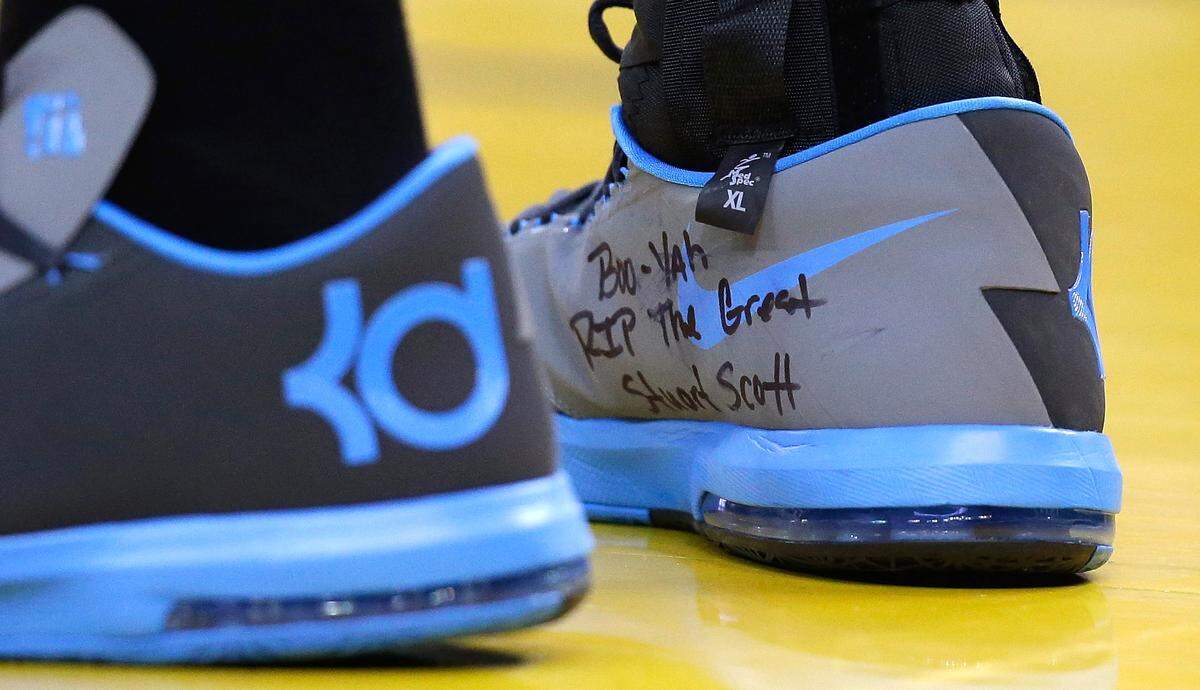
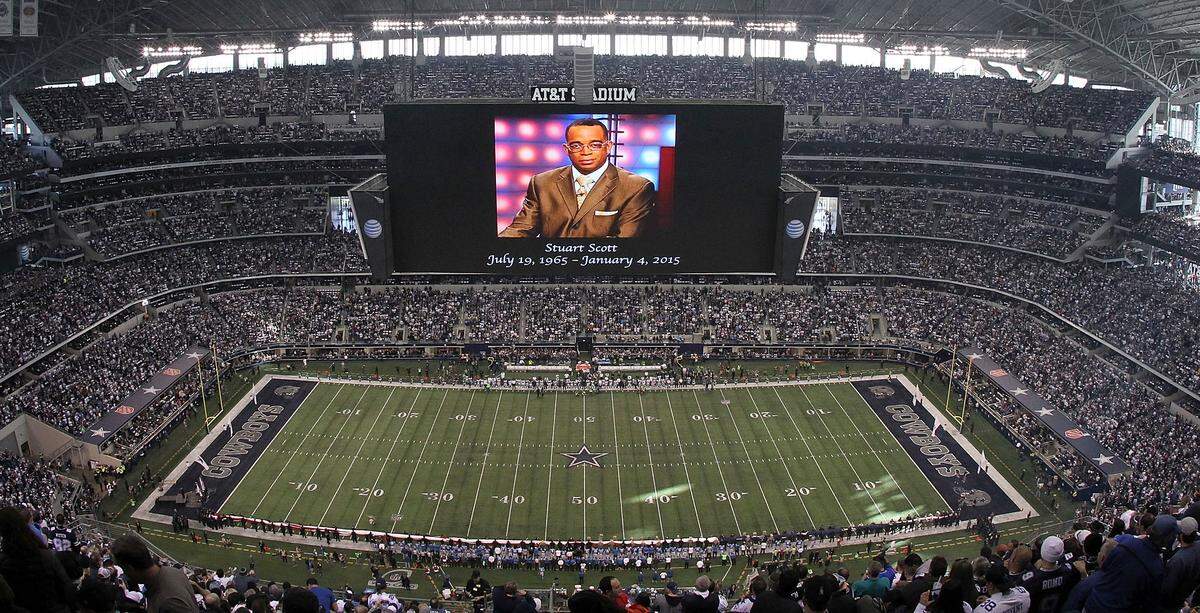
Early the next morning, on Jan. 4, 2015, Scott was pronounced dead. News spead quickly. Soon, the entire sports world knew. Every NFL playoff game, every NBA arena held a moment of silence.
“I’m looking at my kids looking at the TV,” Gallagher said. “And that was the moment that it wasn’t Uncle Stuart. That was the moment they realized what Uncle Stuart meant to the world. How much he’ll be missed.”
‘He’s always there’
After completing his 30 for 30 interview, Tindal walked out into the California sun, thinking over the conversation he just had about his best friend.
“I wish I could do some of those questions over,” Tindal recalled telling his daughter. “I didn’t answer them right. I didn’t. I didn’t. I didn’t get everything out that I wanted to... I just felt like I needed more time on some of the answers.”
If he was asked the same questions the next day, he reckoned, the answers would be “pretty much the same.” But they’d be different, too.
How do you sum up the essence of Stuart Scott in a single sit-down interview? You can’t.
More than a decade has passed since Scott’s death. But ask his friends and they’ll tell you: he’s still there. He’s part of their routines, their rituals, their small moments.
“There is not a day that I don’t say hello to him,” Gallagher said.
Gallagher wears a Carolina-blue V Foundation wristband. He also sports Scott’s old black belt with the silver buckle when he dresses up.
When Gallagher isn’t feeling well, he still works out. That’s what Scott would’ve done.
When one of Gallagher’s friends has a baby, he’ll show up with a McDonald’s bag for the new dad. That’s what Scott did. Scott taught him the joy of little gestures like that.
For Kolber, the lessons show up in life and at work.
“He always knew how to find the right balance and combination of working hard, but also really enjoying life and having fun,” Kolber said. “I always felt like, geez, I need to do a little more of that. I was a little more like, head down, work hard. So, so serious. And I always really admired his ability to make sure you have fun along the way. I always remind myself of that.”
And the group that Scott pulled together — the “core four” of Kolber, Gallagher, Spodobalski and Organ — has stayed intact. They gathered just this week, traveling to New York City for the Jimmy V Classic on Tuesday night.
“It’s always a soul-refreshing, soul-filling experience when we get together,” Organ said, “and it’s very similar to the conversations I would have with Stuart. The four of us could sit down and… hours and hours and hours can go by. And if it wasn’t for the fact that we all had to go to sleep, maybe it wouldn’t stop.”
Scott’s presence, they say, hasn’t faded. It lingers. It guides. It shows up in ways that feel unmistakable. They recall a memory of Scott and one of his favorite songs comes on the radio. They open their closet and a ‘Boo-Yah’ shirt is staring them in the face. They think of him, and they smile.
“He’s always there,” Gallagher said. “He really is.”
This story was originally published December 10, 2025 at 5:30 AM.