No. 14 UNC men’s basketball upset by Stanford, Ebuka Okorie on the road
AI-generated summary reviewed by our newsroom.
- UNC defense surrendered scoring surges as on-ball guards exploited switches and gaps
- Ebuka Okorie delivered a 36-point breakout and dished nine assists to lead Stanford
- Tar Heels generated seven assists total and failed to close late leads in Palo Alto
Stop me if you’ve heard this before. The Tar Heels have a comfortable, double-digit lead in the second half. It’s only a matter of time, surely before North Carolina puts this opponent away.
Insert your prototypical opposing guard. He’s shifty, quick and ready to exploit UNC’s switches. First it was Michigan State’s Jeremy Fears Jr., then SMU’s Boopie Miller. Wake Forest’s Nate Calmese and Juke Harris nearly had their way on Saturday night and, come Wednesday evening in Palo Alto, it was Ebuka Okorie’s turn.
Okorie dropped a career-best 36 points to help the Stanford Cardinal upset No. 14 North Carolina, 95-90, at Maples Pavilion in the first of two West Coast tilts for UNC this week.
“I feel like we just have to take pride in playing defense and playing one-on-one matchups overall,” UNC center Henri Veesaar said. “If somebody scores 36 points, that ain’t, like, a one-man job... it’s a whole team. We got to be more in the gaps. We got to be more helping. We got to just rotate better, be quicker.”
The Tar Heels (14-3, 2-2 ACC) were 2,700 miles from campus and up 12 points in the second half when Okorie decided to take them to be school. To be clear, he’d already scored 17 in the first half.
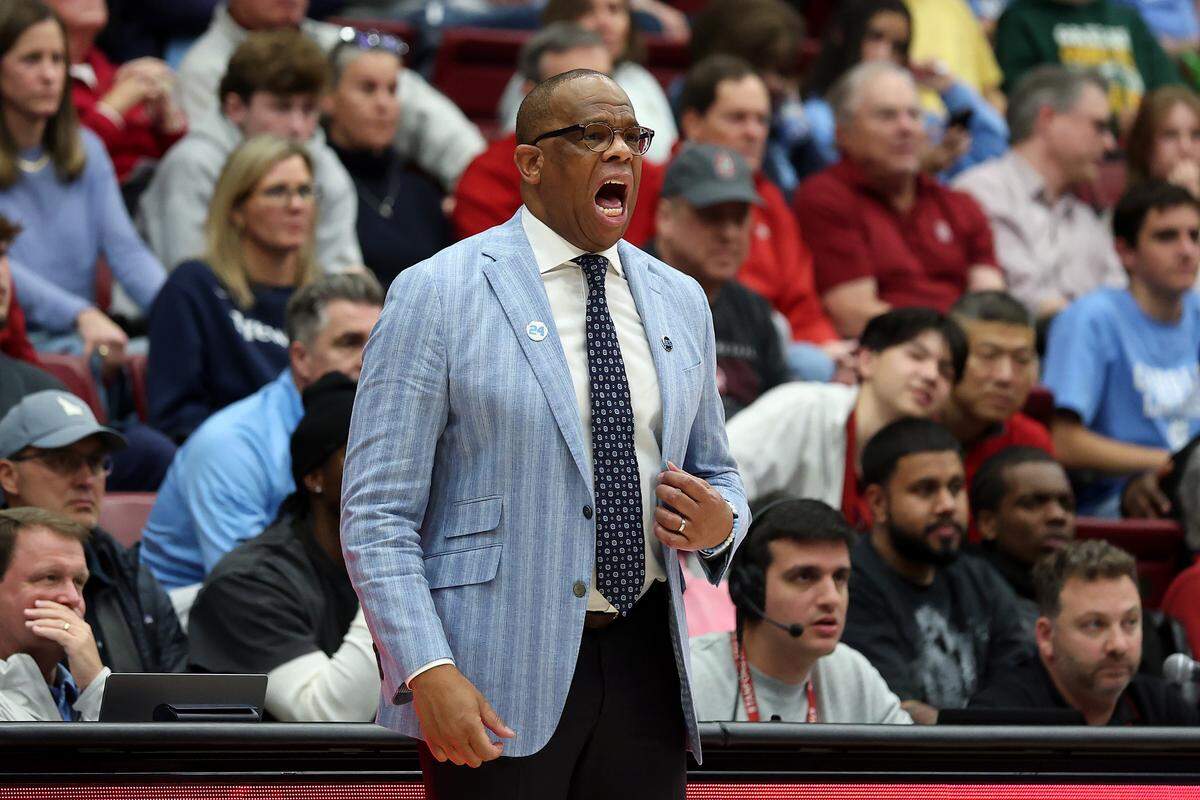
Then, in the second half, he made two straight layups to help cut Stanford’s deficit to eight. UNC coach Hubert Davis pointed down his bench and put Jaydon Young into the game. The Virginia Tech transfer immediately picked up Okorie and fouled him. Okorie then drained a 3-pointer to go up to 27 on the night.
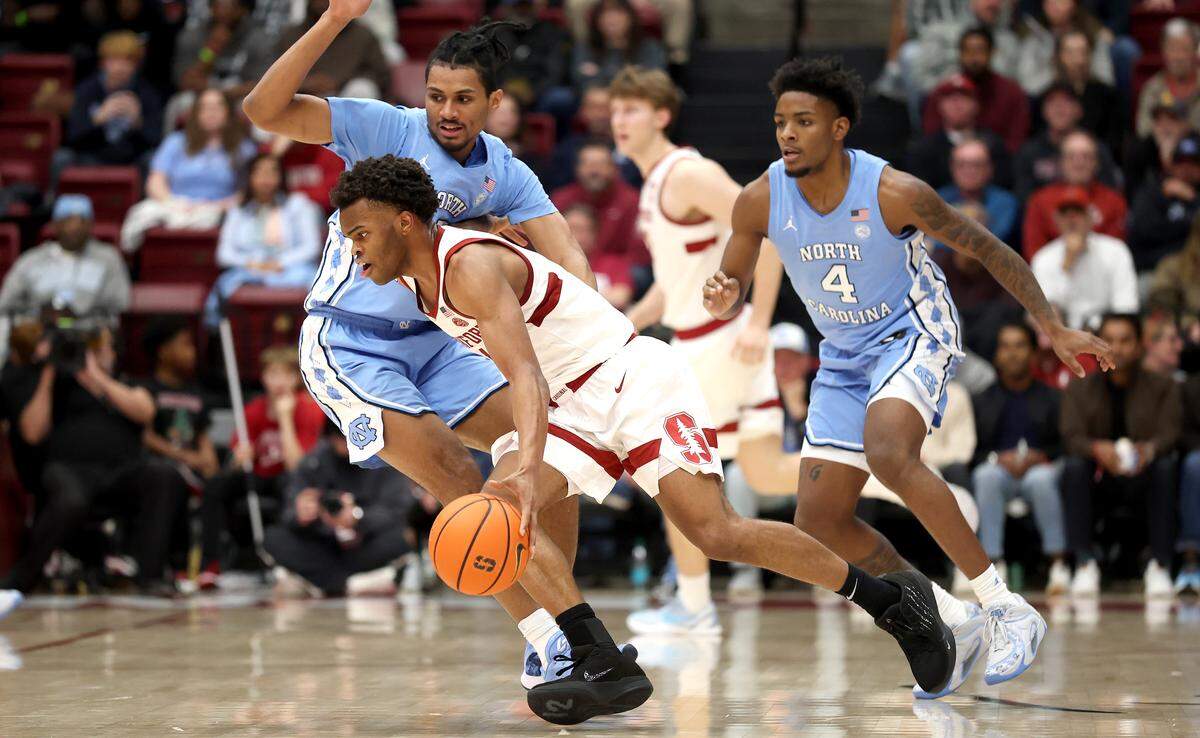
Caleb Wilson’s 20 points helped UNC keep Stanford (14-4, 3-2 ACC) at bay for most of the second half but Okorie — or his teammate Jeremy Dent-Smith — always seemed to have an answer.
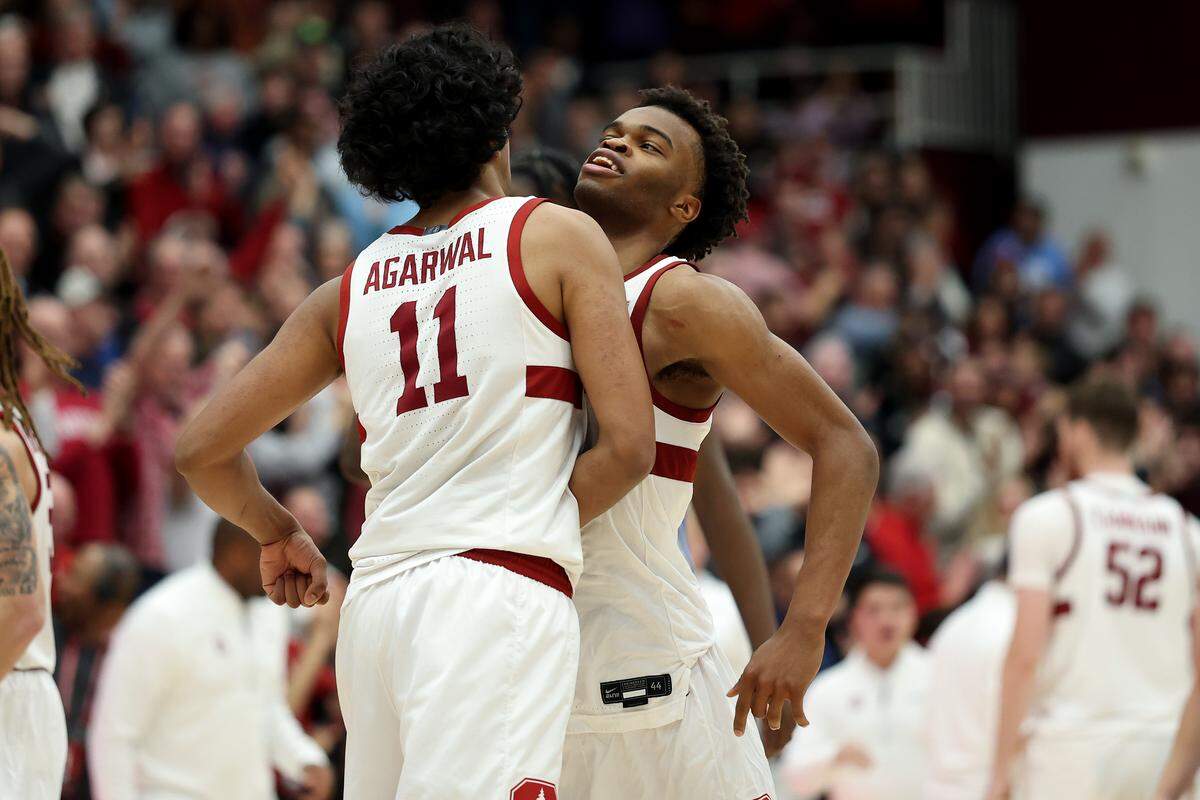
Dent-Smith’s fifth 3-pointer of the second half (on six attempts) finally put the Cardinal out in front. Redshirt junior Ryan Agarwal followed that up with a triple of his own to put Stanford up, 91-87, with 32 seconds remaining.
North Carolina’s offense was, as a whole, stagnant. The Tar Heels registered just seven assists to 20 for Stanford. Okorie had nine, more than UNC’s entire roster.
So, in honor of Stanford’s thrilling halftime show that saw members of its student section compete in a multiplication tables challenge to win a Chess.com membership — yes, really — here’s a pop quiz to assess the Tar Heels’ performance in Palo Alto:
Can the Tar Heels slow Okorie?
The Tar Heels have struggled to contain players at the top of the scouting report.
Outside of North Carolina’s first game — a 94-54 blowout of Central Arkansas — opposing teams’ leading scorers have reached their scoring average or higher in every game. Davis is well aware of this fact, even pointing it out on his Monday radio show.
Wednesday was no different.
With the Cardinal’s Chisom Okpara out due to a lower-extremity injury, the Tar Heels could focus more closely on Okorie. At least, in theory. The standout guard entered the game averaging roughly 22.1 points per game (eighth nationally and third among freshmen) and finished with 36.
Okorie continually attacked downhill off on-ball screens — exploiting the Tar Heels’ switches — to great success. He also got his teammates involved, with his nine assists helping his backcourt teammates Agarwal and Dent-Smith record 20 a piece.
“Obviously, he’s a really gifted player... he’s an elite and a willing passer as well,” Davis said of Okorie, “So it’s not just, he can get fouled and get to the free throw line. We put a number of different defenders, our best one-on-one defenders [on him].”
“He had a big night,” Davis later added, “but there were others that stepped up and did the job.”
Will North Carolina show improvement on defense?
Another negative here.
In North Carolina’s first two games in 2026, the Tar Heels ranked 363rd in effective FG % defense, allowing opponents to shoot 65.3%. Only Wofford and Florida State managed worse marks over that stretch.
Things didn’t look much better to start Wednesday night. UNC shot 52% from the field in the first half — including 71% from 3-point range — yet carried a two-point advantage into the locker room. The Tar Heels allowed the Cardinal to shoot 57% from the field over that stretch, including six 3-pointers.
The second half spiraled further out of control, with Stanford shooting 57.1% from the field and 66.7% from deep after halftime.
The Cardinal shot 57.7% overall, making 16 of 28 3-pointers.
And that’s without Stanford’s second-leading scorer, Okpara, available.
What more can Veesaar do for this team?
It’s hard to say.
Through 16 games, Veesaar has arguably become the most indispensable player on this Tar Heels roster.
Veesaar entered Wednesday night shooting 51.2% from behind the arc with 21 on the season. He added two more in the first half against the Cardinal, part of 16 points he poured in before halftime. The rest of North Carolina’s starters had 22 during that stretch.
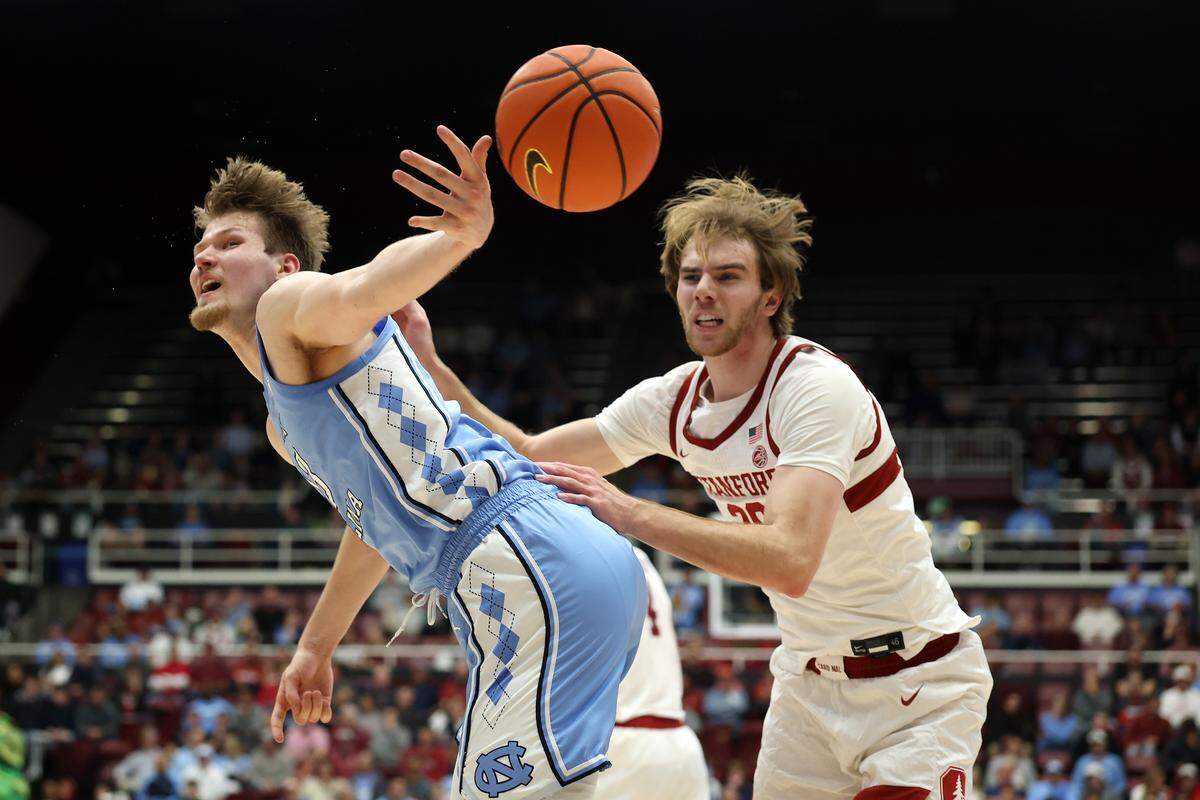
Veesaar and Wilson helped limit Stanford’s starting frontcourt of Donavin Young and Oskar Giltay to a combined two points on the game.
Veesaar finished with 26 points on 9-of-12 shooting, including 6-of-11 shooting from the line. Besides knocking down a few more free throws, what more can UNC ask the Arizona transfer to do?
Can UNC keep Wilson involved?
The issue on Wednesday night wasn’t so much keeping Wilson involved on offense — as was the case against Michigan State, SMU and Wake Forest — but getting him going in the first place. The freshman had seven rebounds at half, but only six points — a far cry from his usual production rate.
North Carolina seemed intent on getting the Atlanta native going in the second half and, at least in this respect, was successful on Wednesday. Wilson quickly made a trip to the foul line — knocking down one of two attempts — and finished inside for three points in roughly a minute and a half.
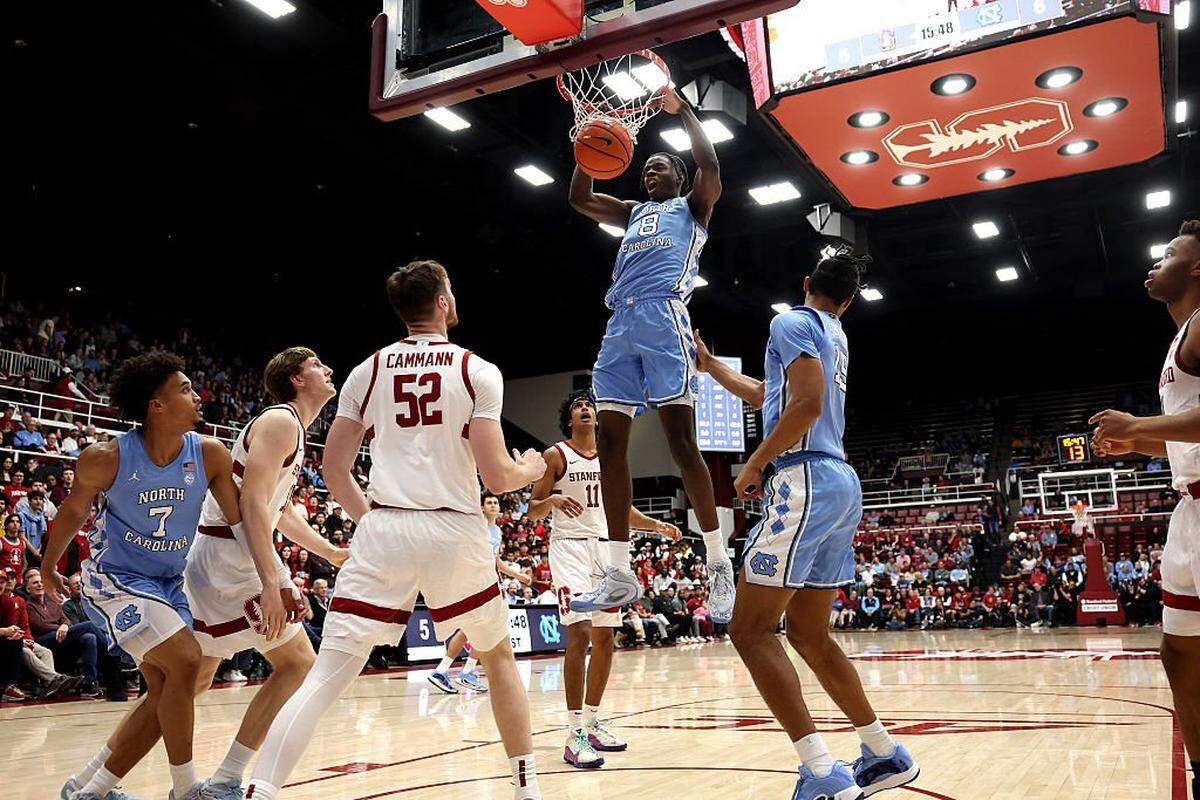
Then two straight steals by Trimble led to two more scores for Wilson. Suddenly, UNC found itself up by 10. Stanford coach Kyle Smith called a timeout.
But, yet again, North Carolina couldn’t extend its lead and close out the game. And that’s not for a lack of production from Wilson, who led all Tar Heels in the second half with 20 points on a perfect 8-of-8 performance from the field.
“I’m frustrated,” Wilson said. “I hate to lose and I hate losing when we don’t have to. So that’s all I can say.”
This story was originally published January 14, 2026 at 11:42 PM.