
Defensive lapses haunt No. 14 UNC again in upset loss to Stanford
AI-generated summary reviewed by our newsroom.
- UNC defense lapses allowed Stanford guards to score at will and win.
- Caleb Wilson and Henri Veesaar produced 52 points but couldn't stop runs.
- Okorie scored 36 and spearheaded Stanford’s offense.
With mere seconds on the clock and facing a five-point deficit, UNC threw the ball into Caleb Wilson on the post — the Tar Heels hoping they could squeeze a little more production out of their frontcourt.
At that point, No. 14 North Carolina’s upset at the hands of Stanford was all but inevitable. The sign held by a fan that boldly read “OKORIE > MJ” no longer seemed so laughable. The display of fandom was inherently quixotic, of course, but well-placed — Okorie seemed untouchable on Wednesday night, his season-high 36 points placing UNC firmly on the ropes.
And so to Wilson the ball went. He spun, contorted his body and fell to the hardwood. The buzzer soon sounded and made the final score — 95-90, Stanford — official. Wilson walked off gingerly, careful not to trip over a broadcast cable snaking across the floor to capture the scene as Cardinal students rushed the court.
Wilson joined the handshake line and walked silently with his teammates to the visitor’s locker room. Minutes later, he sat beside Henri Veesaar — with whom he’d combined for 52 points — staring at the stat sheet until the first question came.
“We just gotta make ’em miss,” Wilson said.
That’s easier said than done, clearly.
Another poor UNC defensive effort
Once again, UNC’s defense — an early-season strength that’s become a glaring weakness — undermined the best parts of its roster on Wednesday. Wilson and Veesaar have given the Tar Heels historic production inside, but every time this team looks like it might be coming into its own, the defense collapses — producing historic performances of its own.
Okorie became the latest guard to have a career night against UNC. He entered Wednesday averaging about 22.1 points per game, then torched the Tar Heels for a season-high 36. Per CBS Sports research, he became just the second freshman in the last 30 years to score 35 or more points with eight or more assists against a ranked team.
Okorie powered a Stanford team that made 16 of 28 3-point attempts — the most 3-pointers scored by an opponent in the Hubert Davis era — including 10 after halftime.
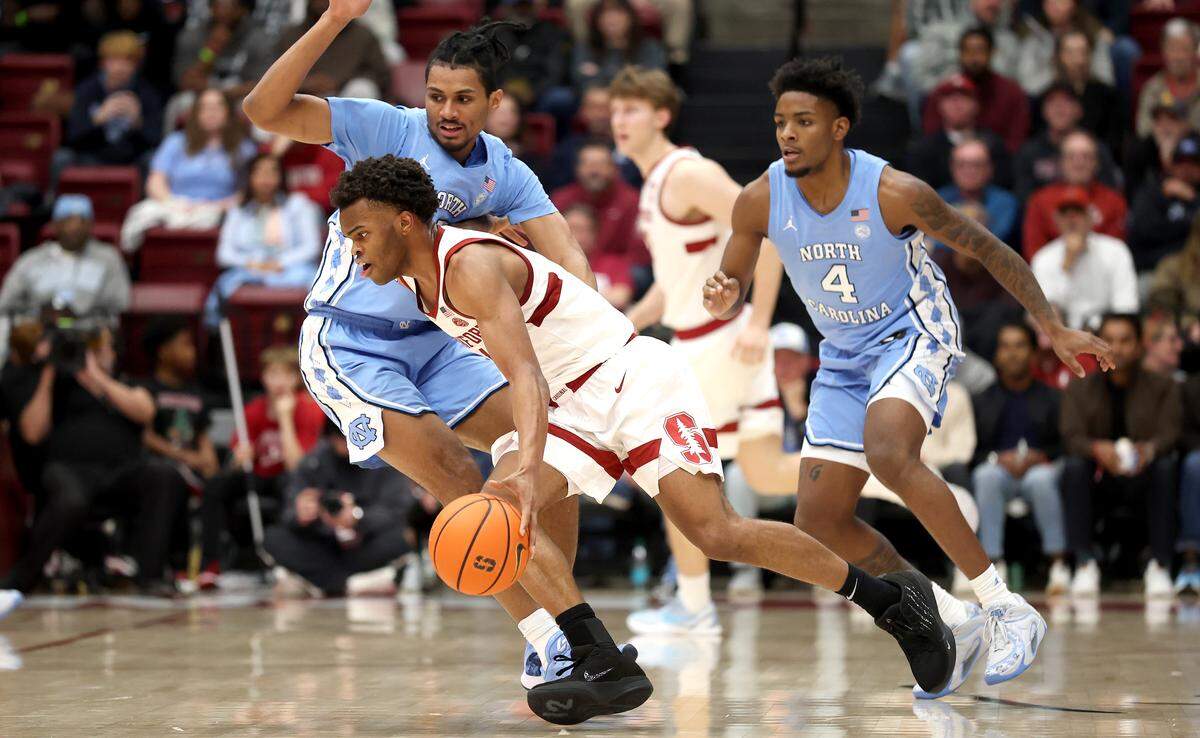
When asked about his team’s struggles in defending the perimeter, Davis didn’t point to one specific weakness.
“It’s coming from a number of different directions,” Davis said. “Not getting picked up in transition, short closeouts, no pressure on the ball, late rotations, kickouts from offensive rebounds — just a number of different directions.”
Oh my, Okorie
But Okorie was the main bruiser. Quick off the bounce and confident from deep, he carved up North Carolina’s switches and closeouts.
Stanford coach Kyle Smith described the offense as simple in theory: disguise horn sets, get Okorie touches, move the ball when the defense collapses.
“Our offense? This kid,” Smith said with a laugh, pointing to Okorie. “Pretty simple. It thought we had one of the best players in the gym tonight.”
North Carolina’s struggles weren’t limited to Okorie, though. Over its last three games, the Tar Heels have allowed 99 made field goals, including 44 from three. Its ACC opponents are a combined 56-for-130 (43%) from beyond the arc.
Stanford guards Ryan Agarwal and Jeremy Dent-Smith scored 20 apiece, on Wednesday night. Even without second-leading scorer Chisom Okpara, Stanford’s offense stayed fluid. Okorie said the defense was “helping more than usual.”
Defensive adjustments needed
It may have been, in part, due to UNC’s inability to adjust. After the game, Wilson pointed to Stanford’s repeated use of its horns set.
“They ran the same play pretty much every time down the court... they stuck to exactly what was working,” Wilson said. “They ran the same play over and over again. It wasn’t like they were doing anything special.”
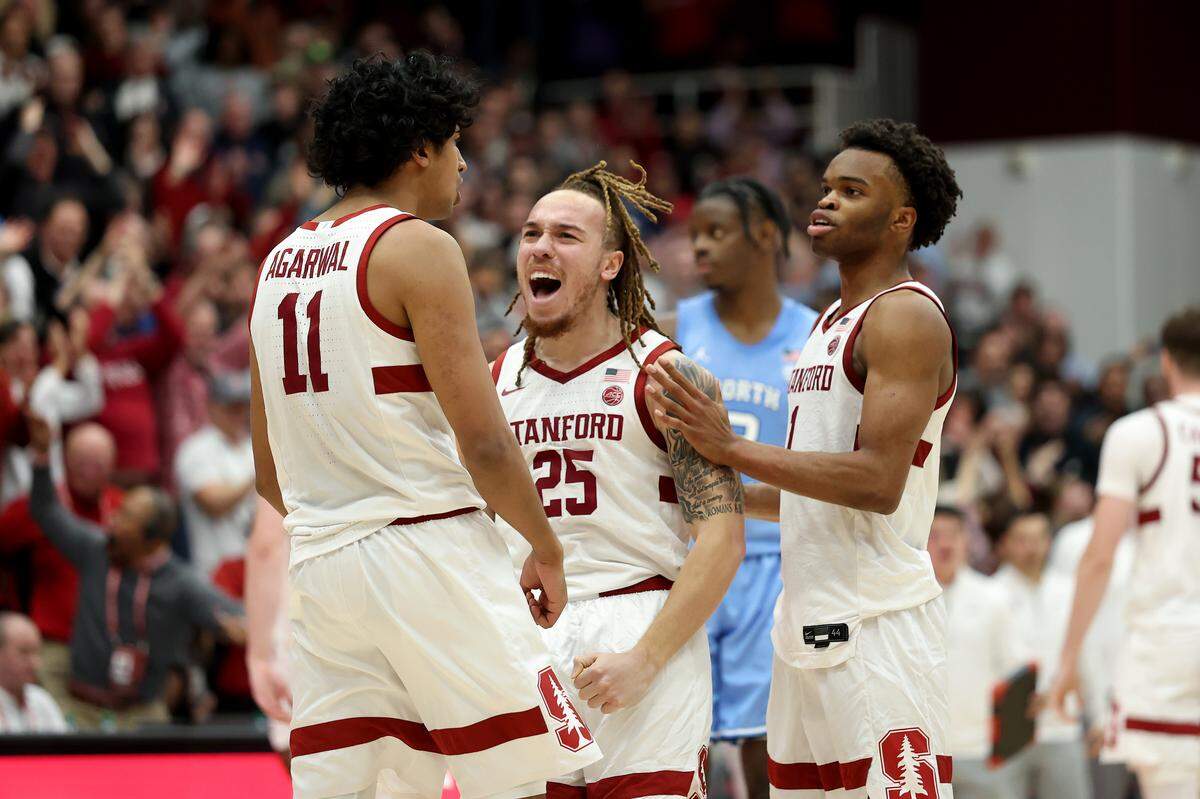
Davis, though, said Stanford’s scoring came from a variety of actions — threes in transition, off isolation, ball screens, etc.
UNC’s defensive regression, no matter the exact source, shows in the numbers.
Since the start of the calendar year, North Carolina has posted some of the worst defensive analytics in the nation. The Tar Heels rank next-to-last in the country in effective field goal percentage defense in 2026, just behind Florida State.
“I feel like we just have to take pride in playing defense and playing one-on-one matchups overall,” UNC center Henri Veesaar said. “If somebody scores 36 points, that ain’t, like, a one-man job... it’s a whole team. We got to be more in the gaps. We got to be more helping. We got to just rotate better, be quicker.”
UNC’s failings at crunch time
Late-game execution remains an issue, too.
UNC committed four turnovers in the final 4:55, unable to close against a Stanford team hitting shots freely.
“Whoever’s gonna get a couple stops in a row is probably gonna win that game,” Smith said, “And we were able to find a couple.”
UNC entered Wednesday 3–0 in games decided by two or fewer possessions. It seemed like, in the second half in Palo Alto, the Tar Heels could make it 4-0.
North Carolina appeared ready to pull away when Wilson sparked an 8–0 personal run out of halftime, pushing the lead to 10 before Stanford responded.
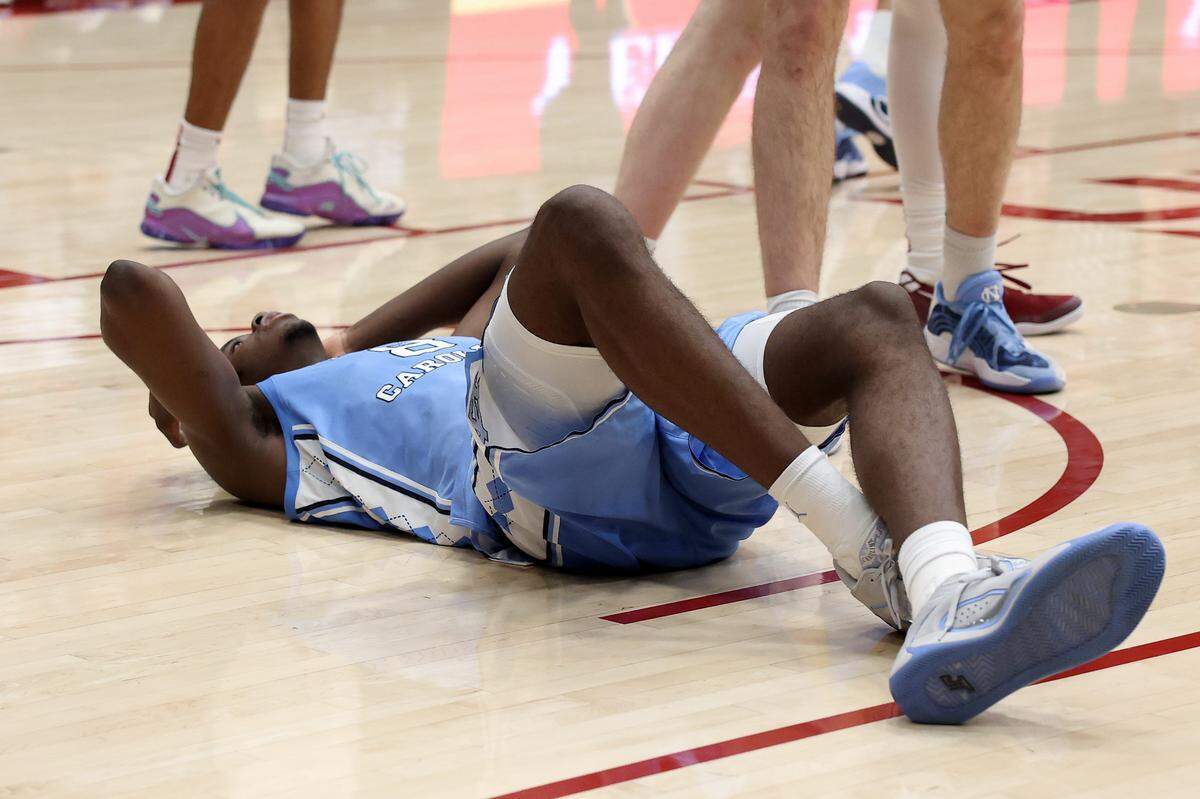
Veesaar finished with 26 points on 9-of-12 shooting, continuing his emergence as, arguably, UNC’s most indispensable player. Wilson added 26 of his own, 20 coming in the second half.
But it wasn’t enough.
As UNC looks ahead to Saturday at California, the questions linger: Can the defense muster some resistance? Can the backcourt support the frontcourt? Can this team close?
North Carolina’s offensive firepower remains undeniable. But until the defense regains its early-season identity, opposing guards will continue to thrive — and the Tar Heels will continue make folk heroes out of players like Okorie.
That’s a dangerous story for a team with championship aspirations to keep telling.
This story was originally published January 15, 2026 at 5:30 AM.