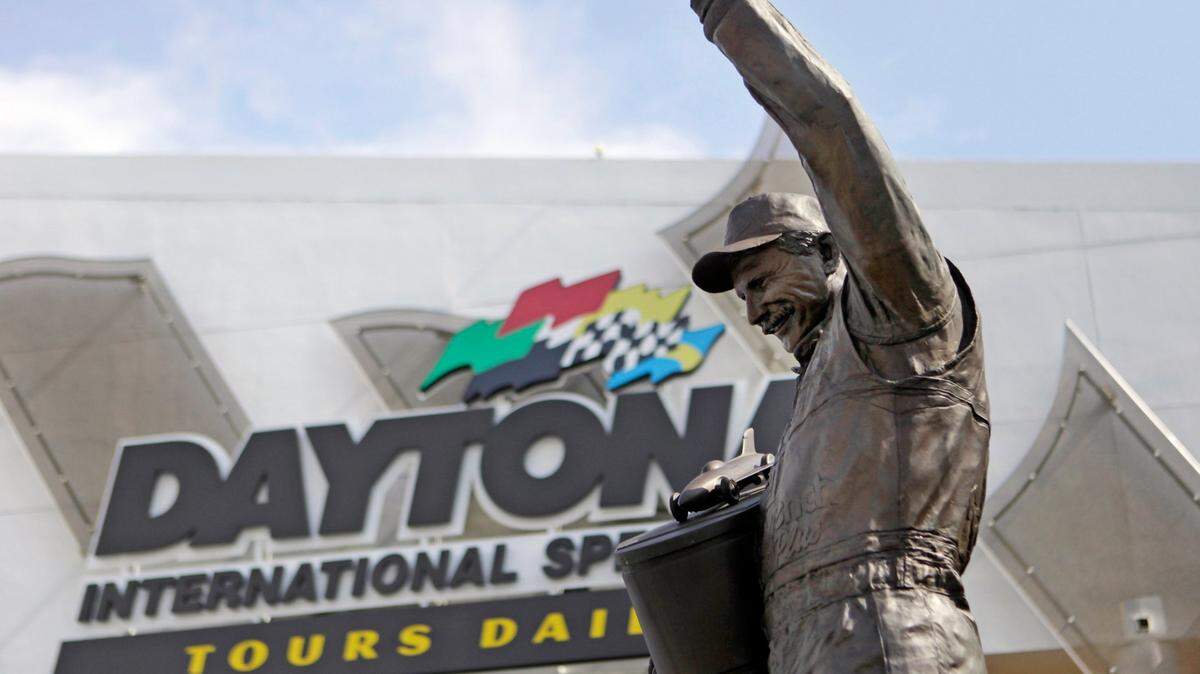
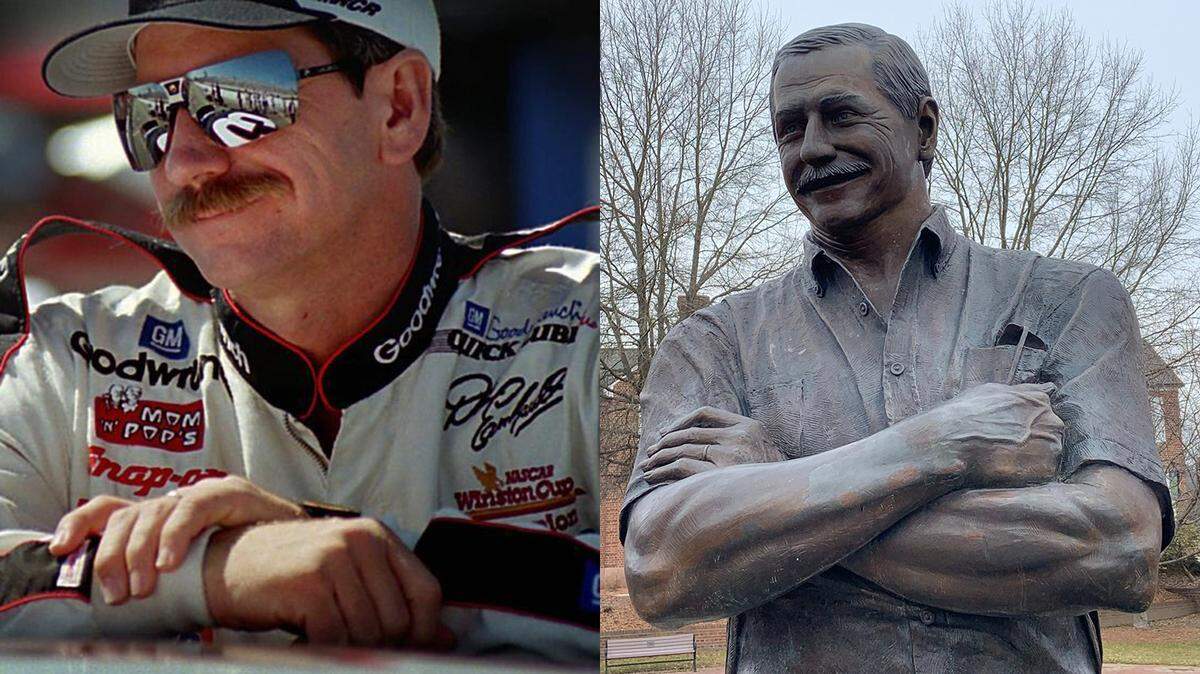
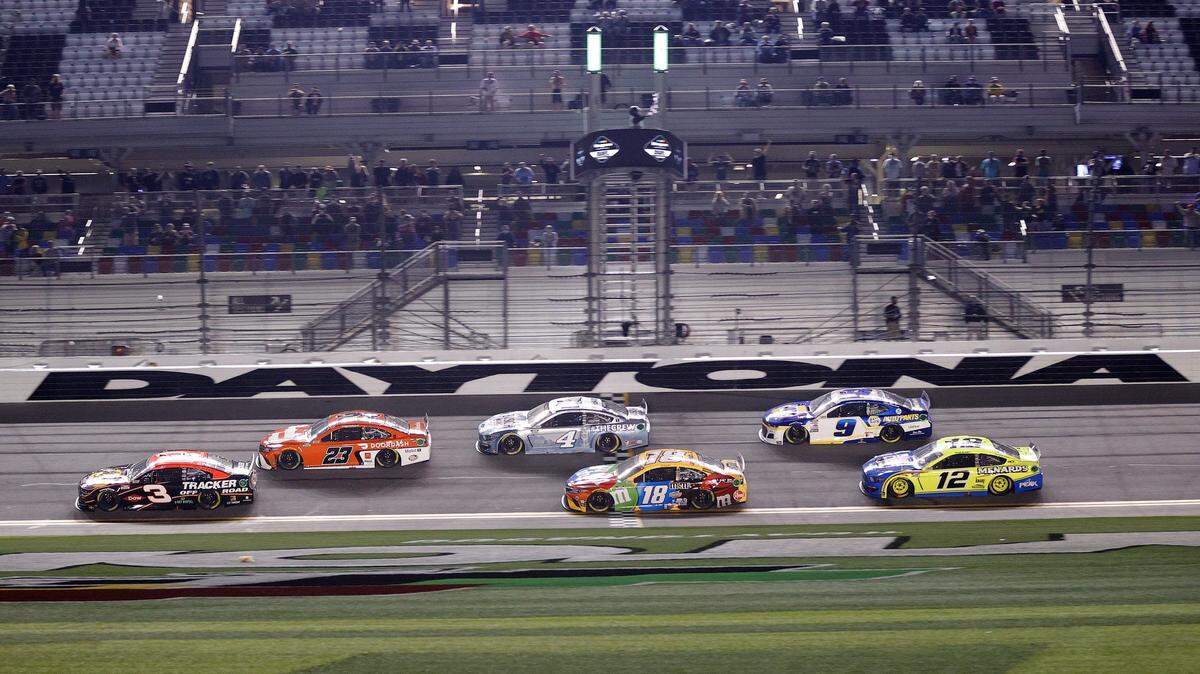
What Dale Earnhardt did for NASCAR: A lasting legacy and safer sport
READ MORE
More from the Daytona 500
Expanded coverage from The Observer of 2021’s Great American Race
Expand All
Richard Childress couldn’t pick out a single moment when Dale Earnhardt Sr. most resembled Superman. There were too many to choose from.
“His career was unbelievable,” Childress said.
The NASCAR team owner, Childress, and driver of the No. 3 Chevrolet, Earnhardt, won the 1998 Daytona 500 together. Childress said the race was a highlight from his time spent with Earnhardt, a seven-time Cup champion, and indicated that it was a milestone achievement for the driver who had come so close to winning it so many times before.
Other memorable Earnhardt moments included his final win at Talladega in 2000, in which he drove from 18th to first in the final five laps of the race to claim his 10th Cup victory at the track, a record that still stands. There was also an incident during the 1997 Daytona 500 when Earnhardt’s car flipped coming down to the final 10 laps. He exited the ambulance he was riding in for his mandatory trip to the care center to return to his car and finish the race.
“I said, ‘Man, the wheels ain’t knocked off that thing!’ ” Earnhardt said after the race. “I got out of the ambulance and went back to the car.”
Pushing the limits was his norm. “Grit” is a word commonly associated with his name. To many, he was invincible.
“He loved to show you that he was the Intimidator, that he owned that racetrack,” said four-time Cup champion and former Earnhardt rival Jeff Gordon. “It was his space and you were just playing in it.”
So when Earnhardt was killed in the final lap of the 2001 Daytona 500 — a track and event he had once conquered — it didn’t feel like reality to the racing world.
“I thought, ‘That’s a pretty severe crash, but nothing that Dale Earnhardt couldn’t walk away from,’ ” Gordon said.
Gordon ran the first 178 laps of the 200-lap race before an accident sidelined him. He said he watched the finish of the race on television. What he and 17 million other viewers witnessed was Earnhardt’s car careen almost directly into the outside wall of Turn 4 after contact with Sterling Marlin. Ken Schrader’s car was pulled into the wall by Earnhardt’s, but Schrader was able to get out of his vehicle. He went to Earnhardt’s window after the accident and quickly motioned for the arriving medical crew to attend to the driver.
Three hours later, NASCAR president Mike Helton delivered the news.
“This is understandably the toughest announcement I’ve ever had to make,” Helton told a stunned press corps. “We’ve lost Dale Earnhardt.”
NASCAR COMMUNITY SHAKEN
Helton’s words shook the NASCAR community. Earnhardt was supposed to be celebrating with his drivers, Michael Waltrip and his son Dale Earnhardt Jr., who finished in first and second place, respectively, for Dale Earnhardt, Inc.
“Everybody was in shock,” Darrell Waltrip said. “NASCAR was in shock. The racing community was in shock. … They couldn’t believe that Superman had died.”
Waltrip couldn’t believe it either.
“I had to go to the hospital and basically see it for myself before I even believed it,” he said.
Waltrip, a former driver and friend of Earnhardt’s, had called the race for Fox Sports. It was the first race in a new contract deal between NASCAR and the TV network and an earlier wreck, “The Big One,” took out names like Tony Stewart and Bobby Labonte to set the race up for an exciting finish. And it was. Waltrip watched his younger brother, who many doubted before the race, win his first Daytona 500. In the next moment, though, Waltrip said he watched a replay of Earnhardt’s crash and felt sick to his stomach.
“On the outside of the fence, it was a great day for the Waltrip family,” Waltrip said. “Inside of the fence, down in the garage, throughout the sport, it was the worst day that we could have ever imagined.”
A LINE IN THE SAND
While Earnhardt’s death was as unbelievable as his career, “there were signs,” according to Kyle Petty.
Petty’s 19-year-old son Adam was killed nine months earlier during a NASCAR racing session for what is now the Xfinity Series. Petty’s throttle supposedly got stuck and he hit a concrete wall at New Hampshire.
Other drivers were killed in NASCAR racing accidents in the nine months leading up to Earnhardt’s death, including Kenny Irwin Jr. and Tony Roper, all of whom were determined to have suffered the same basilar skull fractures at the base of the neck caused by extreme head whip upon impact.
Head and neck restraint systems (HANS devices) were recommended by NASCAR then, but the sanctioning body didn’t require them in the cars. That changed after Feb. 18, 2001, along with NASCAR’s safety policies and procedures, and how those in the sport viewed safety.
“I think if we draw a line in the sand and you say, ‘What’s the difference between NASCAR from that day and what’s the difference before that day?’ NASCAR reacted before that day,” Petty said.
After Adam Petty and Kenny Irwin died, NASCAR introduced an emergency “kill switch” on the steering wheel on its cars to instantly shut down the vehicle, but the sanctioning body was facing criticism leading up to the 2001 Daytona 500. The sport was still racing without massive safety reforms, mandated head-and-neck restraints or energy-absorbing walls instead of the hard concrete at its tracks.
“If something happened, they would react and make a rule change,” Petty said. “If a throttle hung, they reacted and they fixed it. When my dad (Richard Petty) crashed in the ‘70s and his arm came out the window, they reacted. They added a window net.”
CULTURE CHANGE
After Earnhardt’s death, NASCAR commissioned an outside investigation to look into the crash and recommend preventative measures to its cars and racetracks, a divergent move for the sport that more frequently marketed its big wrecks than publicly addressed the danger. According to Fox Sports, NASCAR spent $250,000 to study belt systems and researched more than a dozen crash tests in the months following the accident.
The biggest safety advances revolved around the HANS device, which NASCAR mandated in the fall of 2001. It still took another fatal accident after Earnhardt’s — Blaise Anderson died from head injuries sustained in an ARCA crash in October — for NASCAR to require the systems, but by that point, many teams were already opting to use them.
“The day after (Earnhardt) got killed, we as a sport made the cars — if there’s a percentage, number, you could put on it — it would have to be 75% safer the next day,” said Andy Petree, RCR vice president of competition and Earnhardt’s former crew chief.
Petree said in the multi-car organization he then owned, Andy Petree Racing, the change was instantaneous.
“We changed the seats. We changed the way we mounted seat belts. We changed the headrests,” Petree said.
He also said teams became more receptive to the feedback from outside safety consultants like the ones commissioned by NASCAR.
There was a culture change among drivers, too. Gordon said he had tried the HANS device with Hendrick Motorsports before, but there was “no way” he was wearing it in races because it felt so restrictive.
“I just didn’t see how I was going to run for 500 miles with this thing over my shoulders,” Gordon said. “But after that day when Dale passed away, it wasn’t even a thought to me.”
“It was, OK, I’ve got to figure out how to make this thing work,’” Gordon said. “I’ve got to make it fit me and incorporate this into my safety routine.”
Other major advancements NASCAR has made since then included adding SAFER barries to its tracks. The Steel and Foam Energy Reduction Barriers are designed to absorb and redistribute energy to reduce the severity of crash impact. The sanctioning body also required that belts connect at the groin rather than the lap to provide greater security in the cockpit, and implemented safer mounting systems and carbon-fiber material for seats.
CONTINUING ADVANCES
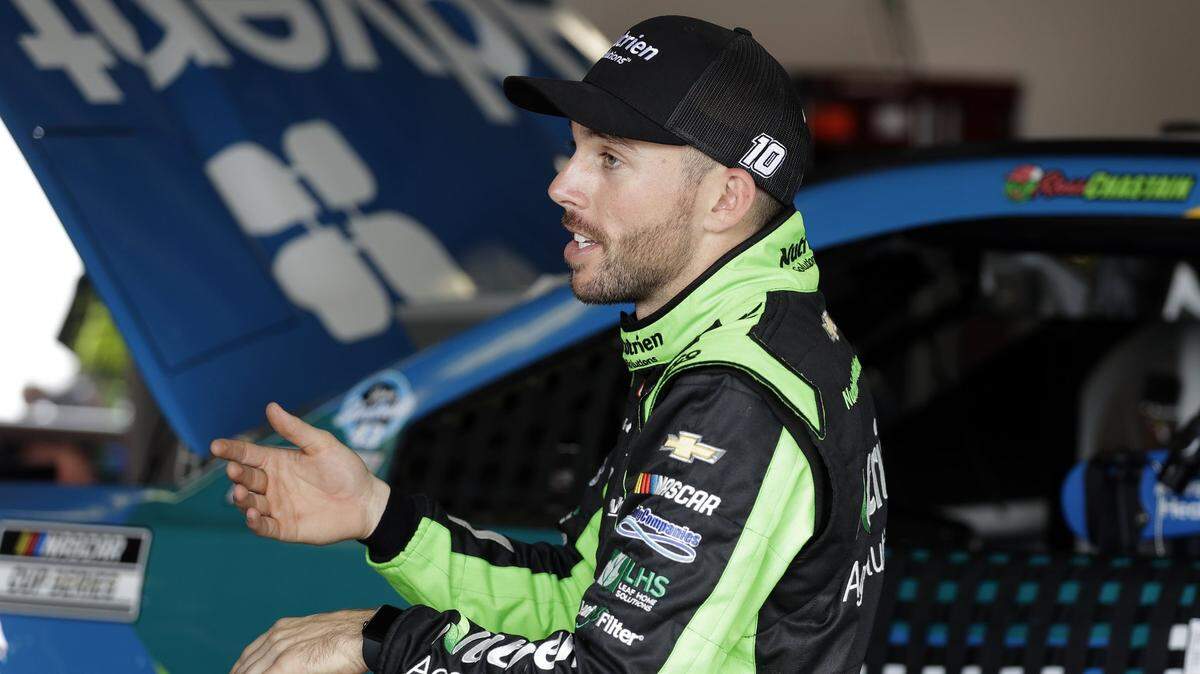
Drivers and teams became more vocal advocates for their safety as well. Ryan Newman’s death-defying accident at last year’s Daytona 500 served as another marker in safety for the sport, but because of his limited injuries, the narrative was written around reflecting on NASCAR’s efforts in safety rather than criticizing them. Newman walked out of the hospital two days after his wreck with a minor brain injury.
“NASCAR promotes close, tight racing and in order to do that, we’ve got to have safe cars,” NASCAR’s chief racing development officer Steve O’Donnell said of Newman’s accident. “And we believe we do have that, and we put the drivers in position to go out and race the way NASCAR racing’s all about. From our perspective, it’s one of those things you never want to see happen.”
An investigation was launched while still at the track last year by NASCAR’s safety and R&D team. Three months later, NASCAR released updates to its car requirements, including changes to the roll cage bars and roll bar padding specifications, as well as the aero ducts, throttle bodies, oil reservoir tanks and slip tape.
Newman said ahead of this year’s Daytona 500 that he continues to communicate with NASCAR about safety enhancements to the cars and track barriers. While the nature of topics discussed may have changed, becoming more granular, the level of communication between the sanctioning body over safety hasn’t since Earnhardt’s death.
“I feel fortunate that my book, or at least that chapter, didn’t end that way for me,” Newman said. “We did learn a lot from what happened to him. We collectively have kept so many drivers alive since then because of the adjustments that have been made in the safety of our sport.”
Newman entered a handful of Cup races for Roger Penske in 2000 and 2001, and made one competitive Cup start against Earnhardt before he passed. Newman’s rookie season in Cup was the following year in 2002. Another current Cup driver, Kevin Harvick, won Rookie of the Year honors in Cup the previous year after he replaced Earnhardt as a driver at RCR.
“The impact that he has had after his death on the safety of the sport has been something that’s just far greater than would have happened with anybody else,” Harvick said. “ … Some (drivers) at this particular day in age might not even realize the impact that he’s had on the safety side of it.”
Harvick noted the power Earnhardt had to “move the needle” in NASCAR while he was living, the recognition his name brought to sport and the large shadow that was cast over Harvick in the early years of his Cup career.
“We all miss Dale, the fans, all of us do, I know his family does,” Childress said. “But I think what he’s left behind is the memories that many, many race fans have got of all of the races that you can sit back and talk about.”
Childress called Earnhardt’s death was a “wake-up call” for the sport. A badly needed one.
“It’s saved so many lives I think,” Childress said. “(It’s) so sad to see it have to be losing him though.”
In the 20 years since Earnhardt’s death, no driver has died during a major NASCAR event and no national series driver has suffered a fatal accident since 2001.
“Since that day, NASCAR has been incredibly proactive. They look. They search. They dig. They excavate. They try to find why this happened. Let’s fix it now and it’s never gonna happen again,” Petty said.
“I think that’s the legacy that Dale leaves,” Petree said. “ … I think it was just a moment in time where things really changed in the sport. It got way safer and the drivers today can look back on that as a real turning point.”
This story was originally published February 14, 2021 at 7:00 AM with the headline "What Dale Earnhardt did for NASCAR: A lasting legacy and safer sport."