
Breaking the ice: PWHL Takeover Tour brings professional women’s hockey to the Carolinas
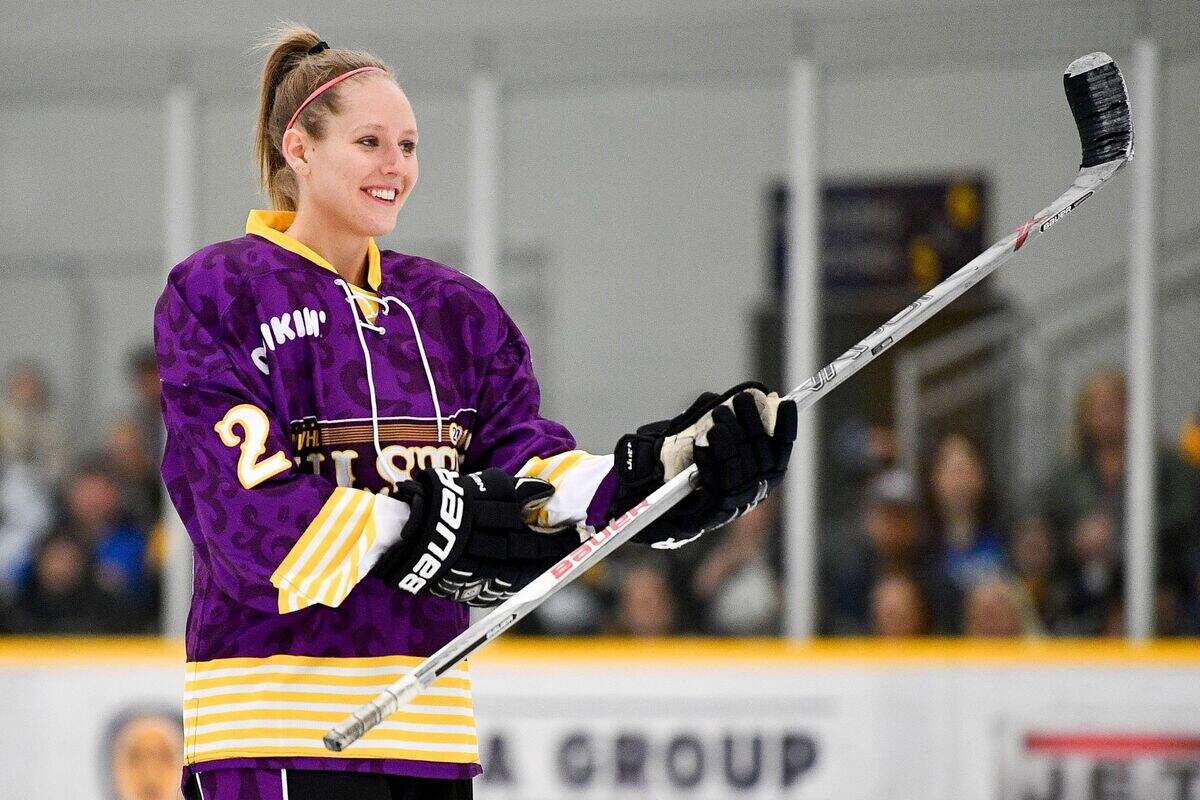
Alyssa Gagliardi Sleasman always had to explain herself.
Raised in Raleigh since the age of 10, ice hockey wasn’t exactly the typical path for a young girl in the Triangle. Even when she made it to the professional ranks in the Canadian Women’s Hockey League — becoming one of the first women from Raleigh to do so — the reality of women’s hockey was nothing like the NHL dream so many young boys took for granted.
“I would go back home, and these girls were like, ‘Oh, you play pro,’” she said. “And I’d be like, ‘Yeah,’ but it’s nothing like what they’re envisioning… it’s not like the NHL. It wasn’t this glamorous thing at the time.”
In 2019, the CWHL folded. Sleasman, like so many others, had her career cut short in her prime.
“It was kind of a pause,” she said. “It was a lot of players connecting with each other and just being like, ‘Hey, we need to all take a step back if we truly want to make an impact on this game… we’ve got to put our foot down here.’”
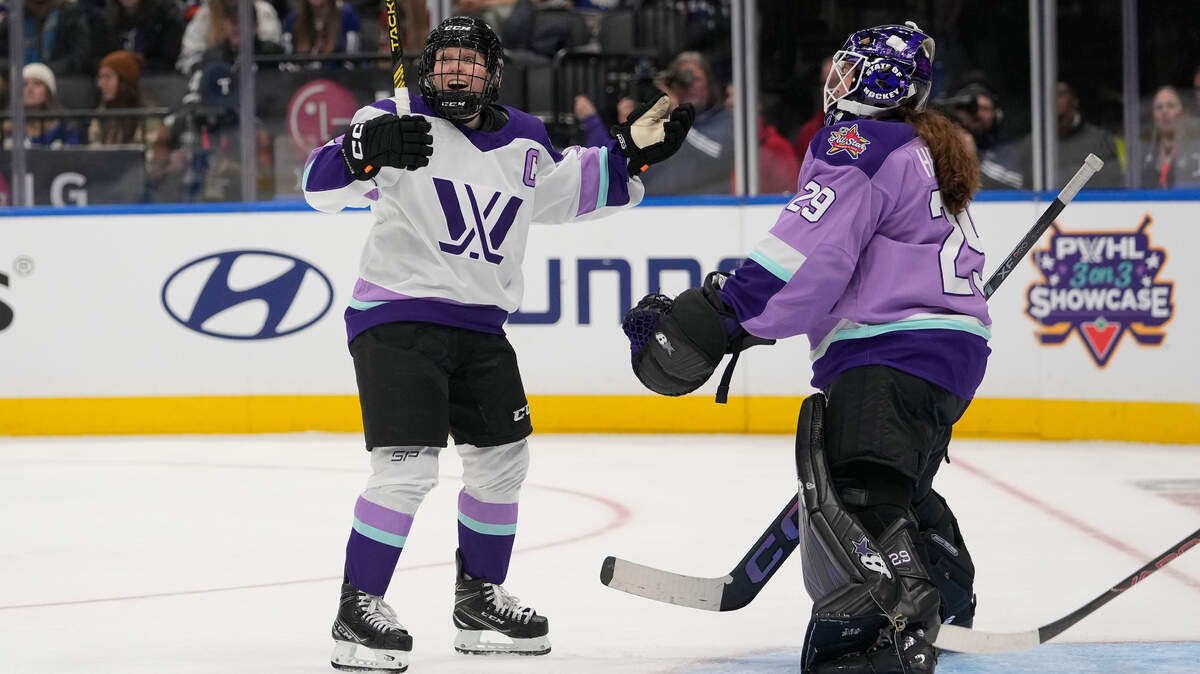
Just a few years later, the sport has changed entirely. The Professional Women’s Hockey League, in its second season, isn’t just surviving — it’s thriving. And Friday, for the first time ever, professional women’s hockey is coming to Raleigh. The Minnesota Frost, the defending Walter Cup Champion, and Ottawa Charge will take the ice at Lenovo Center as part of the PWHL Takeover Tour, a series of neutral-site games bringing the league to new markets.
For women like Sleasman, it’s almost surreal.
“It’s kind of crazy to wrap your head around that,” she said. “There’s going to be a professional women’s hockey game in Raleigh.”
‘We needed to be unified’
The rise of women’s hockey didn’t happen overnight. It took years of advocacy, investment and a dedicated community of people working behind the scenes to grow the women’s game — many of them right here in the Triangle.
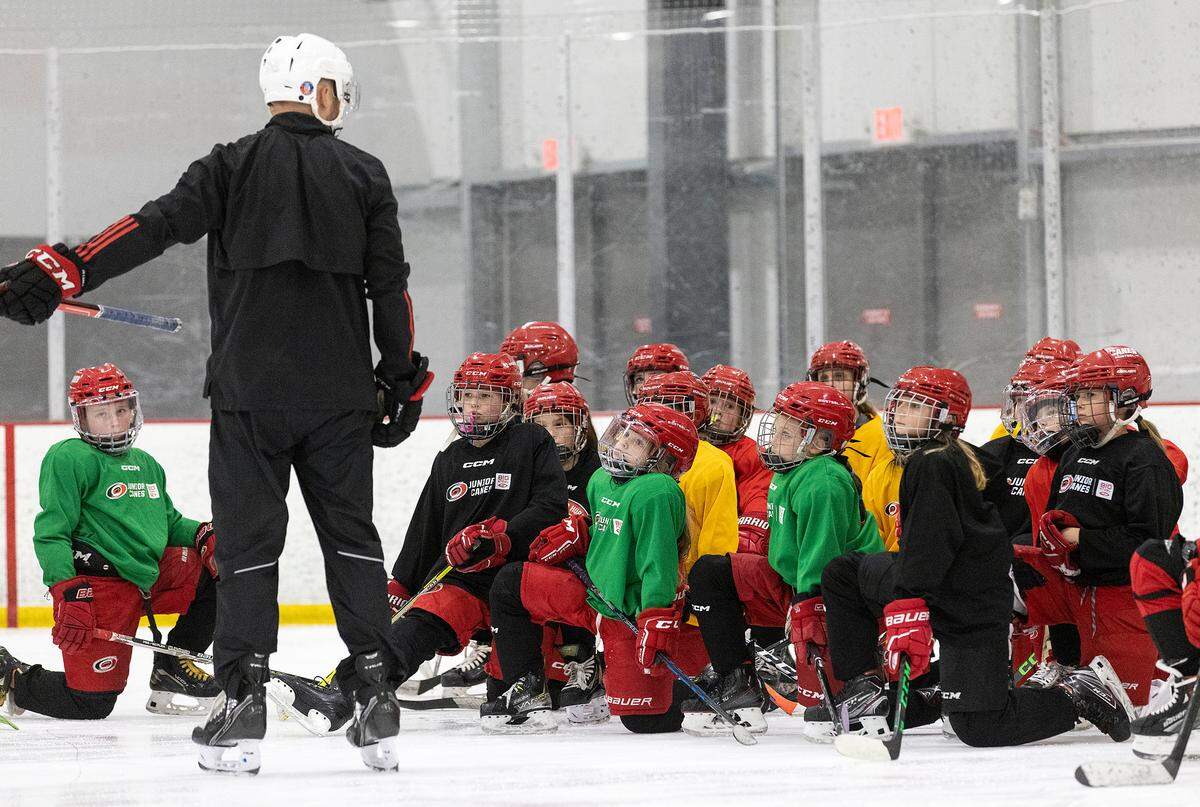
Sleasman credits people like Shane Willis, a former NHL player and the Carolina Hurricanes’ youth and amateur hockey coordinator, and those involved with the Junior Hurricanes program, like Sarah Antonelli and Tim Healy, for their commitment to building a stronger foundation for girls’ hockey in the state.
The first step, Willis said, was cohesion.
When he started in his current role in 2009, girls’ hockey in the area felt fragmented. If a parent had a daughter who wanted to play, Willis said, they’d create a girls’ team in whatever organization they were affiliated with — but there was no unified system to support long-term growth.
“At the time, we didn’t have the numbers to be broken,” Willis said. “We needed to be unified.”
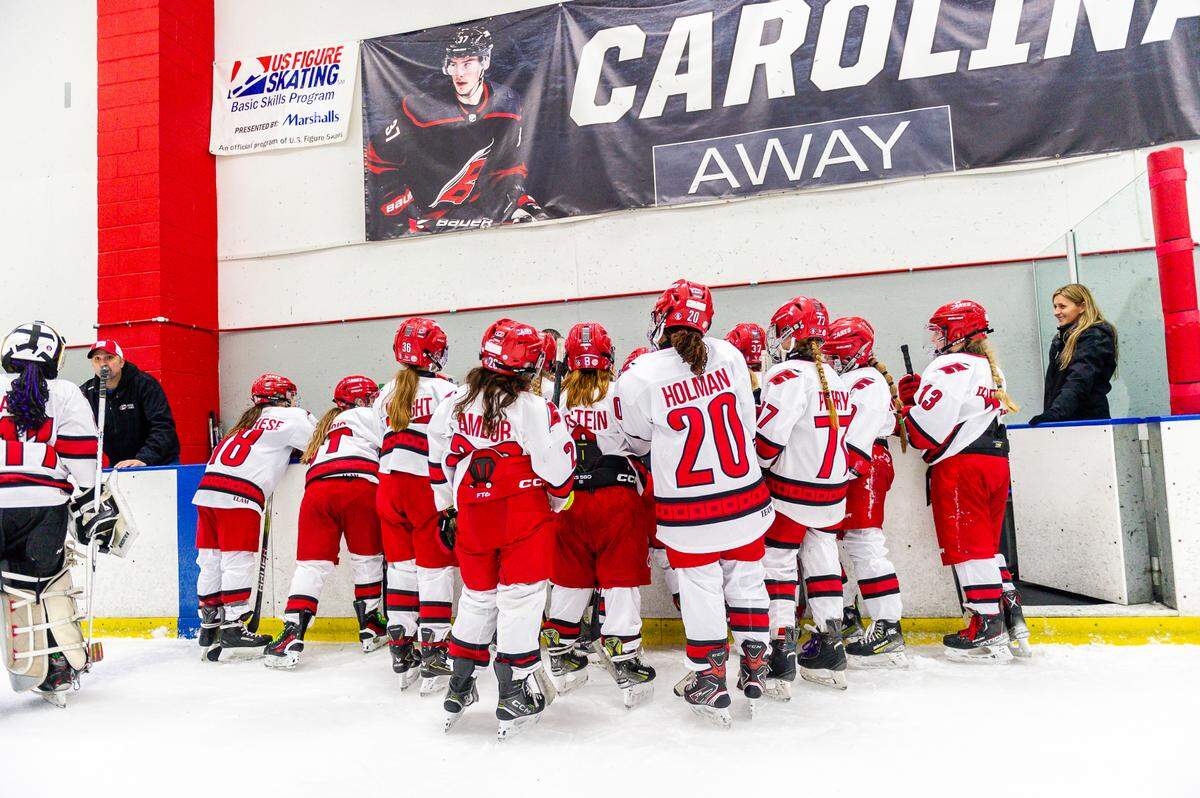
The real shift came when youth organizations consolidated, with the Junior Hurricanes taking the lead in running and managing girls’ programming in the area. In 2019, Sleasman was hired as the first girls’ and women’s youth and amateur hockey specialist for the franchise, with Antonelli taking over in 2022. Since Sleasman’s hiring, Willis said the Hurricanes have developed a structure and culture necessary to not only support existing players, but also encourage more parents to get their daughters involved.
Their efforts are paying off.
According to registration reports from USA Hockey, the number of girls playing ice hockey in the Southeastern District in recent years has increased at a rate of about 100 players at each age group per season — a steady growth that mirrors national trends.
In North Carolina specifically, 894 girls registered in the 2023-24 season. Triangle Youth Hockey of North Carolina reported its highest-ever percentage of female players this season, with significant growth at the 14U level and above.
Bruno Baudet, inaugural head coach of the newly established UNC women’s club hockey team, credits early introduction from initiatives like the Hurricanes First Goal Program..
“If we onboard them early [and] we introduce it to them early,” Baudet said, “we increase the chances that there’s going to be a higher interest level — both from the parents as well as from the girls coming into the program.”
‘It doesn’t have to be figure skating’
When the inaugural UNC women’s hockey team skated onto the ice for its first scrimmage this season, they had yet to practice as a team.
The reason? They couldn’t find ice time.
Leah Shafer, co-founder and vice president of UNC women’s hockey, said the process of finding available ice this season has been a “bummer.”
“I feel like we would have been so much more confident on the ice and really built up a lot more skills if we had those on-ice practices,” she said.
Securing adequate ice time is a persistent challenge for women’s hockey teams, say local coaches. This scarcity — a result of limited rink availability and, in some cases, the prioritization of male teams — limits practice opportunities and impedes skill development.
“The obstacle here in Raleigh is that there’s not enough ice,” Antonelli said. “So now we’re creating all these opportunities but the barrier is, everybody wants a ton of ice now… and there’s just a lack of ice across the Triangle area.”
But one of the biggest challenges for women’s hockey isn’t just access — it’s perception. The sport has long been viewed as male-dominated, aggressive and physical.
Efforts are being made to change that.
“[Girls] are not going to let themselves be told I can’t do this or I can’t do that,” Baudet said. “I think when it comes to really breaking that barrier down, it’s going to the parents to say, ‘Hey, if [your daughter] is interested in skating, it doesn’t have to be figure skating.’”
Healy, who has served as the director of the Junior Hurricanes’ girls U10 and U12 levels for six years, said the representation the PWHL provides is important. In his role, Healy is working to develop not just the fundamentals, but also a love for the game.
Now, when Healy plays with his daughter in EA Sports NHL, she can pick up a controller and transform into one of the women on Team Canada or Team USA. When Healy breaks down film for his players, he can do so with clips of women’s professional players.
“The final piece of that is being able to see women’s players at the highest level in their home arena,” he said. “If you’re a male hockey player, you can go see the Canes at Lenovo… this is the first time our girls are able to go see women’s professional players on that ice.”
‘It’s just something that really excites us’
The excitement surrounding the Takeover Tour is only part of the story. Jayna Hefford, executive vice president of hockey operations for the PWHL, hopes this Raleigh stop does more than just tap into an emerging market.
“Knowing all the work that the Hurricanes have done to grow the property in that market, and the success at the youth level, it’s just something that really excites us,” Hefford said, “knowing that there’s a team there that is fully bought into growing the game. We think we can be a big part of that as well.”
The bigger question remains: What happens next?
Baudet believes UNC is at the “infancy” of its women’s hockey program and that events like the Takeover Tour can help accelerate the growth of the sport in the area.
“I think that the Takeover Tour brings to light a professional league that few people know about,” he said. “When we’re looking at a population of families, girls or women who are already in college, seeing that such a league exists should be motivational. We’re trying to strip away the idea that hockey is nothing but a violent sport, that it’s all about fighting… it’s a wonderful sport.”
The long-term goal is clear: more girls playing hockey, more teams at every level and a fully supported women’s program at local universities like UNC. The growing number of young female players in North Carolina, combined with the visibility of the PWHL through events like this, could be the perfect formula to make that happen.
Sleasman won’t be in Raleigh on Friday to see the Takeover Tour. She’s working in Rochester, New York, where she now coaches, but remains ecstatic for her family to experience everything for her.
As the puck drops in Raleigh on Friday, the hope is that it won’t just be a game — it’ll be a turning point for women’s hockey in the Carolinas.
“There’s still a long way to go,” Sleasman said, “but now you can actually look at these little girls and truly be like, ‘Hey, there’s a professional option that you can aim for.’”