With NWSL reform and USWNT equal pay settlement, Jessica McDonald championed moms in sport

READ MORE
Payback: The Jessica McDonald story
For striker Jessica McDonald, the U.S. women’s national soccer team’s ongoing legal battle for equal pay is just the latest fight she’s determined to win. A teen runaway who became a single mom, McDonald tells us for the first time how she used two stints of soccer in North Carolina to rise from a broken home to the pinnacle of her sport. Now, she’s using her voice to battle systemic inequalities in soccer. We hope you’ll explore these articles as well as a motion-graphic novel, plus listen to our 10-episode narrative podcast all spring.
Expand All
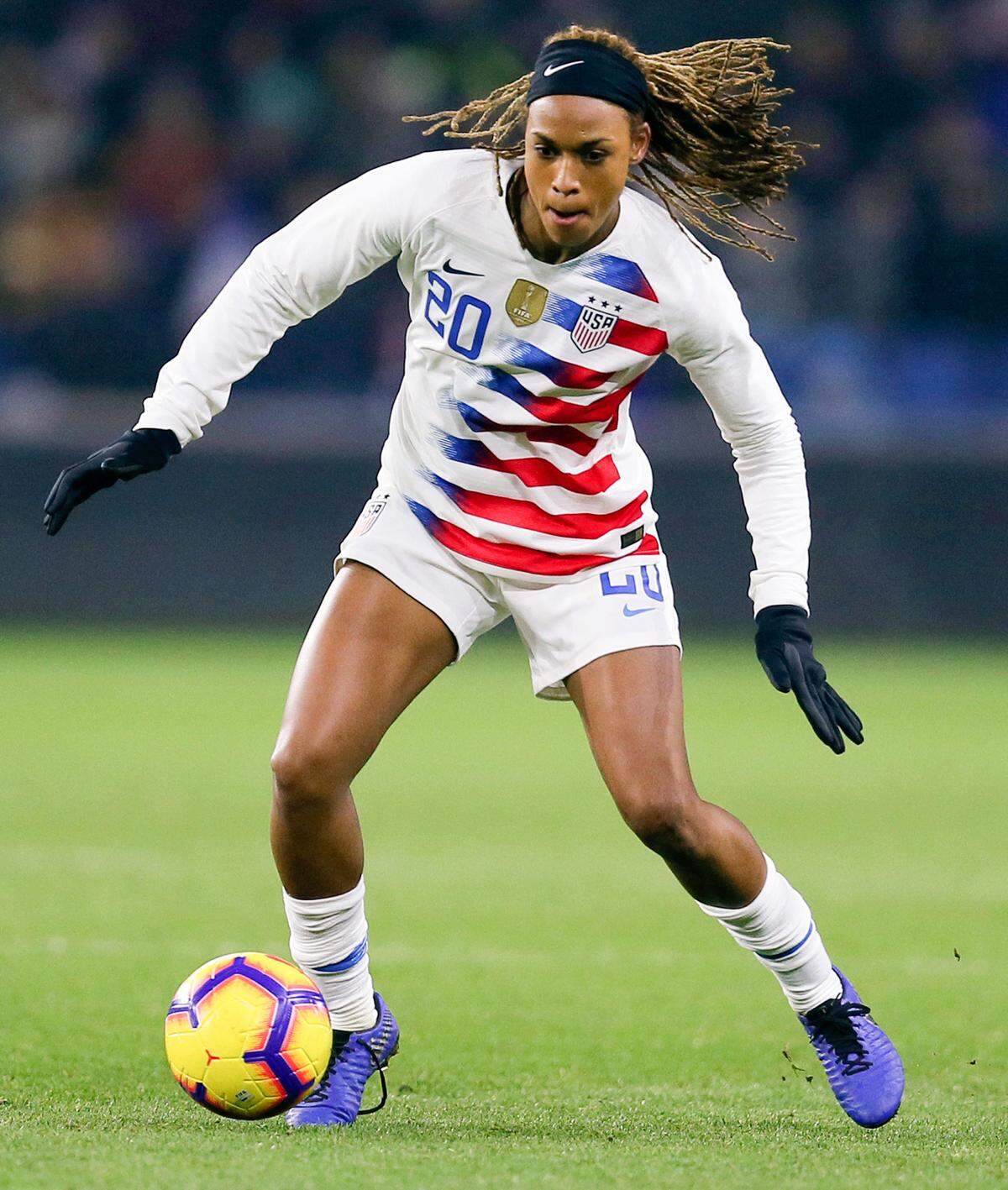
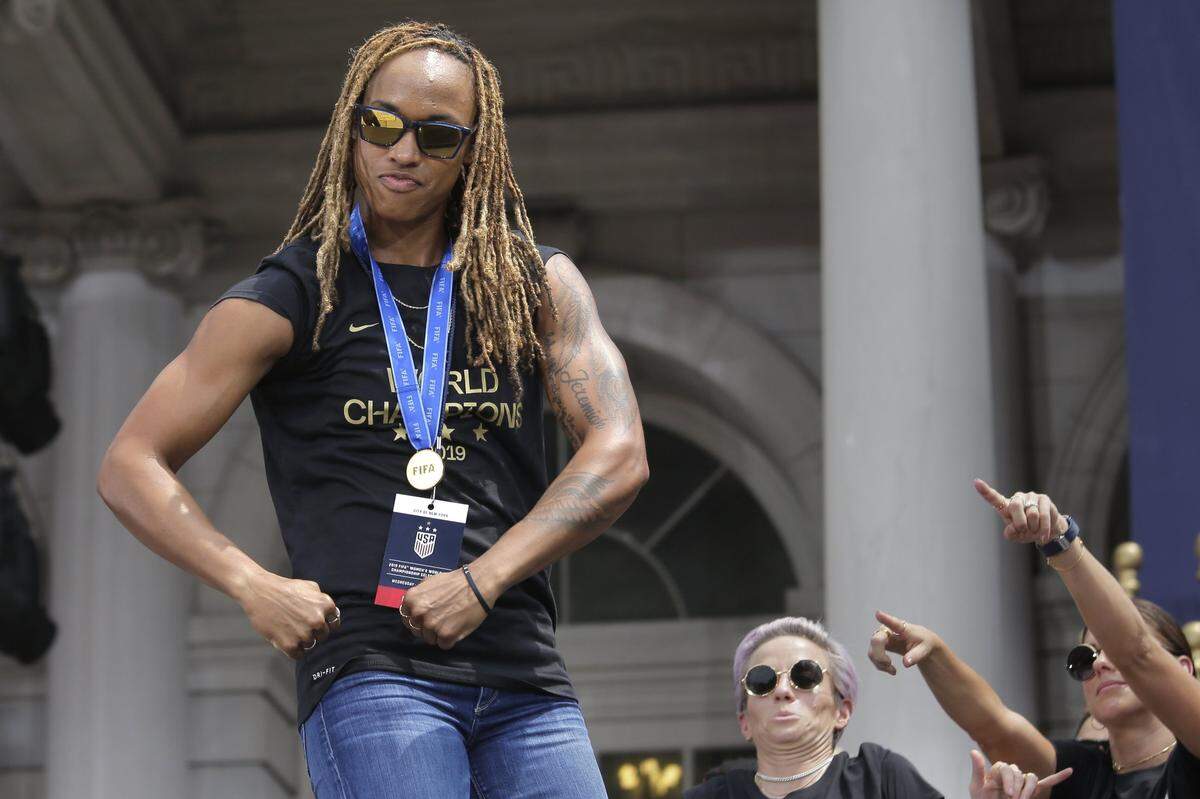
When Jessica McDonald made the U.S. women’s national soccer team, becoming one of the faces at the forefront of a social movement for pay equality in women’s soccer was not top of mind.
At the time, she was just focused on trying to make the team that would go on to win a FIFA Women’s World Cup. Largely, so were her teammates, even as a simultaneous battle brewed off the field.
Jessica was relatively new to the roster compared to others in 2019, but she said that there was little hesitation when star forward Megan Rapinoe approached the group about suing their parent federation over wage discrimination.
“Pinoe is really the one that really stood up and was like, ‘Look, this is what’s happening,’ ” Jessica said. “We all knew, kind of, what was happening already, and then she was like, ‘Look, we’re filing this lawsuit. Everyone on board?’ ”
Jessica said that she didn’t hesitate to sign on, but her situation differed from a portion of the other 27 players in a key way. She was not allocated, meaning the U.S. Soccer Federation didn’t pay her annual salary while she played in the National Women’s Soccer League, as it did for other players through the 2021 season when that system ended.
Jessica’s regular paychecks have come from her club teams in the domestic league, which until this year, she said never exceeded $42,000 annually.
“This is for everybody, every female out there who deserves equity and equality, whatever their workplace is,” Jessica said.
The lawsuit that was filed in March 2019 accused the USSF, a nonprofit, of “institutionalized gender discrimination” under the Equal Pay Act and Title VII of the Civil Rights Act. Claims about working conditions were settled out of court in December 2020, and the two sides announced that the equal pay suit was settled late last month for $24 million.
As part of the settlement, players are set to receive a payment of $22 million to be distributed in a manner proposed by USWNT players and approved by the District Court. USSF will also send $2 million into an account to benefit players in their post-career goals, and charitable efforts for girls’ and women’s soccer, with each USWNT player eligible to apply for up to $50,000 from the fund.
After Jessica’s team won the Women’s World Cup in France, the stadium, Parc Olympique Lyonnais, erupted in chants for “Equal Pay!” The slogan is an oversimplified version of what was a nuanced legal battle, but years later, the lawsuit inspiring those chants is nearly resolved.
Settlement ‘a win for women in general’
The settlement is contingent on USWNT players ratifying a new collective bargaining agreement. The players and federation have described it as a collective win.
“It’s a win for U.S. Soccer, for the players, for women’s sports,” said Cindy Parlow Cone, president of USSF who was recently reelected. “It’s a win for women in general. I’ll be the first to admit that the Federation has made mistakes in the past.”
Cone was a former U.S. women’s national team player who was an assistant coach at the University of North Carolina when Jessica played there. The two have a strong relationship, which didn’t seem to fracture despite the longstanding battle in which they sat on opposing sides of the legal issue.
Jessica said that she’s not yet sure how much she or other players in the lawsuit stand to gain personally, but at this moment, she said that her quality of life as a professional soccer player has improved thanks largely to reforms in the NWSL.
She’s experienced significant strides in her team salary. This year, with her latest Racing Louisville team, she said that she’ll make $75,000 for the season, which will rise to $80,000 next year, and includes bonuses.
“I’ve never had bonuses in my contract ever before,” she said. “Bonus every time I have an assist. Bonus every time I score. The list kind of goes on with pretty much anything that I help contribute to the team. And so I was like, ‘Wow, finally, like, where’s this been my whole career?’ ”
Now, Jessica said that she’s renting home of her own, which includes four bedrooms — one for her 10-year-old son Jeremiah, one for herself, an office and a guest bedroom — and a massive backyard where her two dogs and son can play. That was important, she said, because she described her son as an “outdoorsy kid.”
He said that he loves to climb trees, even after a scare when he was 7 years old when he fell while climbing and broke his arm. He remembered that his mother showed him a scar on her knee to teach him a lesson about overcoming his fears.
“I told him a few times that it sucks going through these things,” Jessica said. “But just to know these (hard) moments and things don’t last forever. There’s joy and happiness that comes out of these things (and to) just keep pushing forward. Never be scared of anything.”
Jessica reminded her son about the knee injury that caused her scar and how she responded after the setback.
“You still kept going and playing soccer,” Jeremiah said.
“Exactly,” Jessica said. “And after you broke your arm, what did you do?”
He answered: “I still kept climbing the tree higher and even higher.”

This story was originally published March 15, 2022 at 9:00 AM.