Maliq Brown was hoping not to play. Duke needed him, and may again against Alabama
READ MORE
2025 NCAA Tournament
The latest results, news, notes and analysis from the 2025 NCAA Tournament.
Expand All
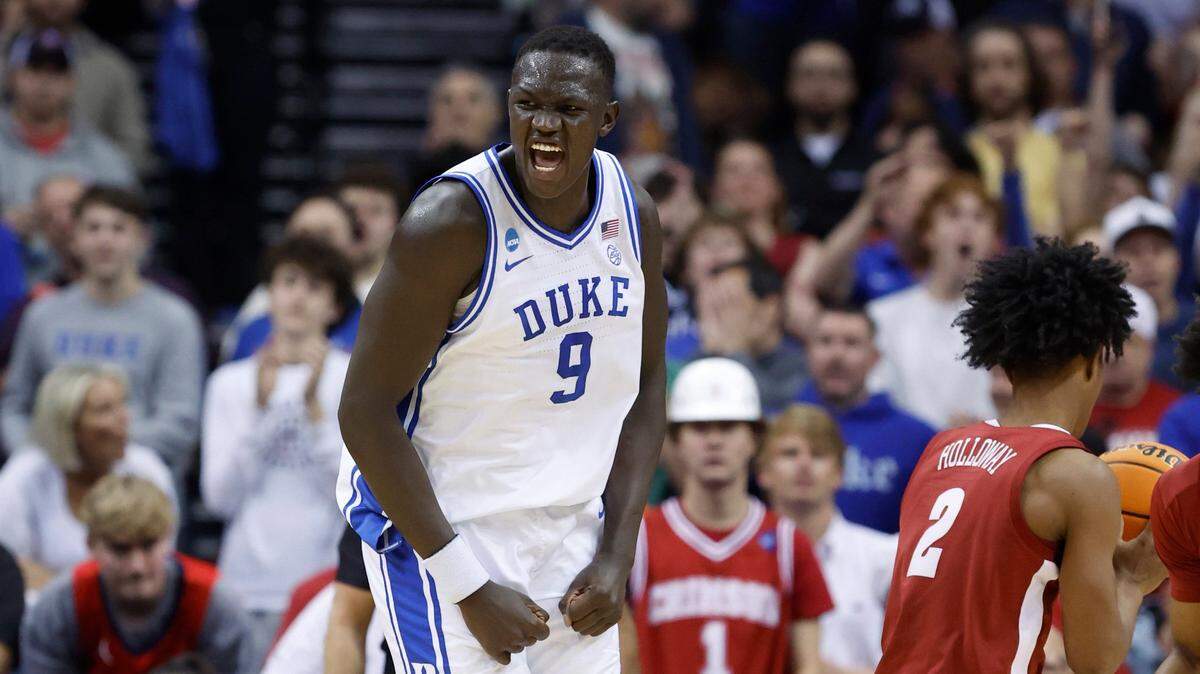
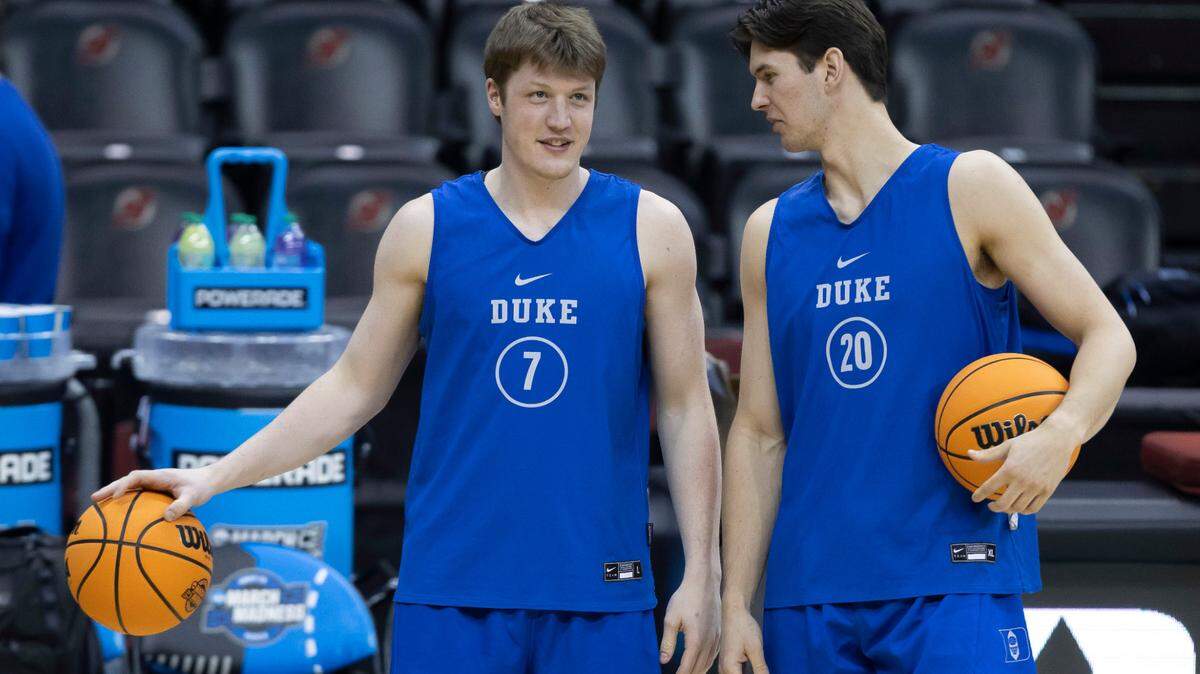
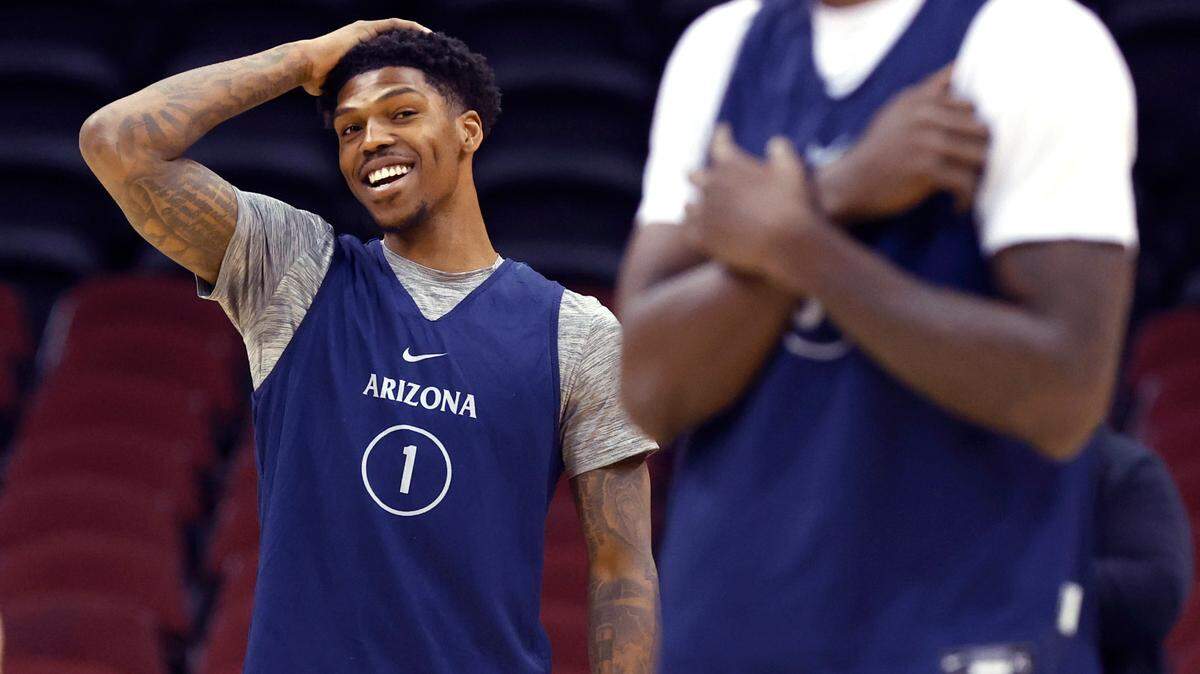
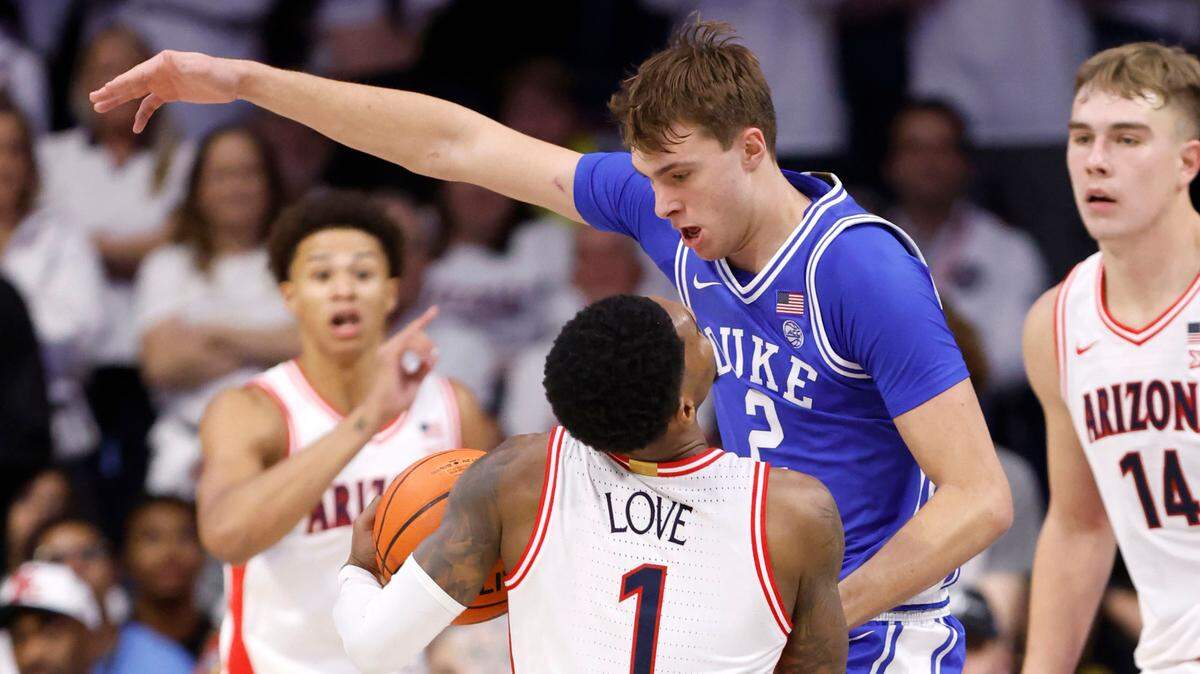
Maliq Brown was a human contingency plan: In case of emergency, remove warmups. Cleared for action, back at practice, ready to play but very much hoping not to be needed, Brown watched most of the first half of Duke’s win over Arizona on Thursday from the bench.
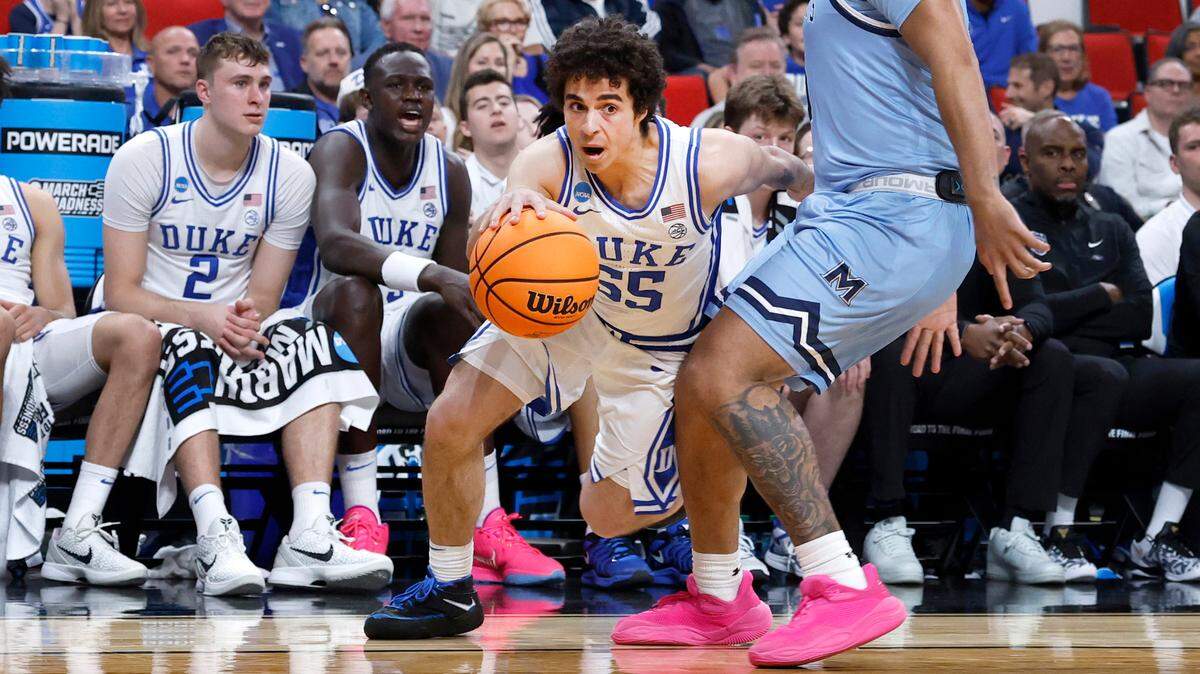
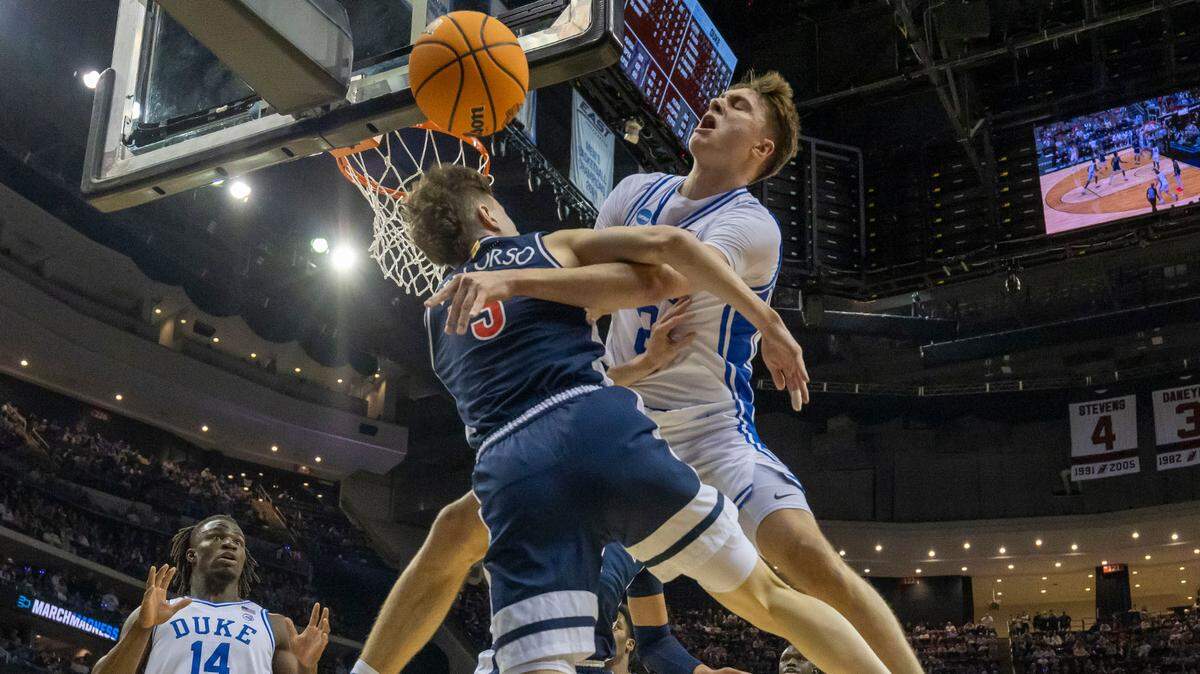
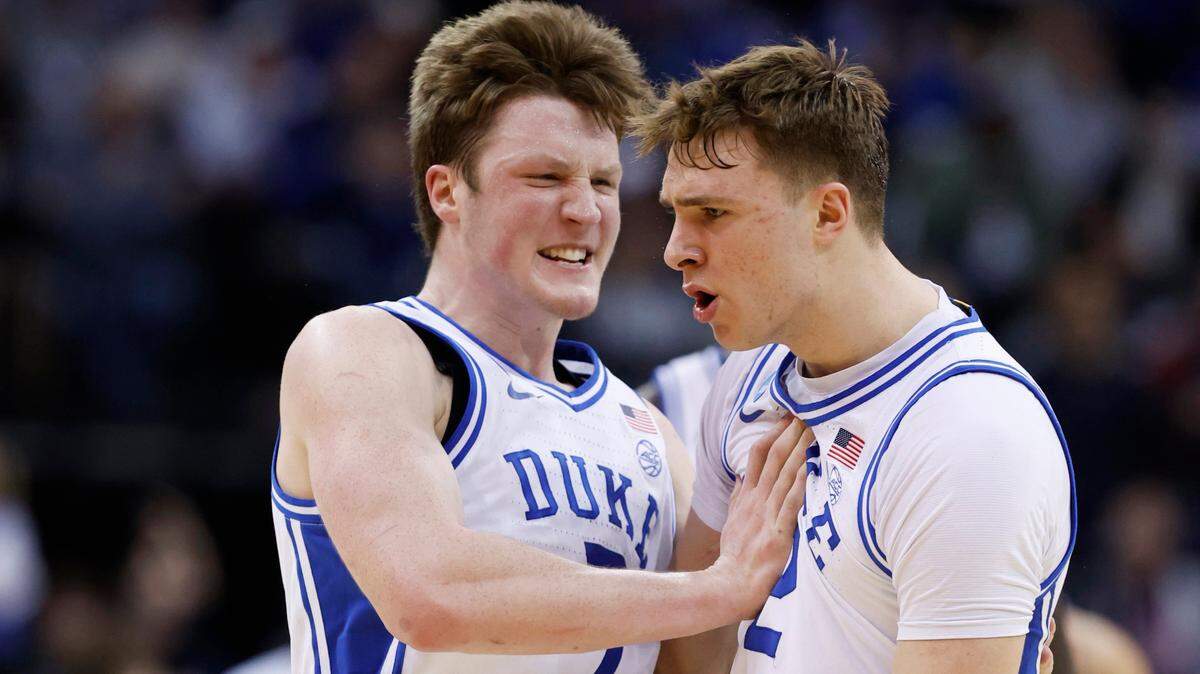
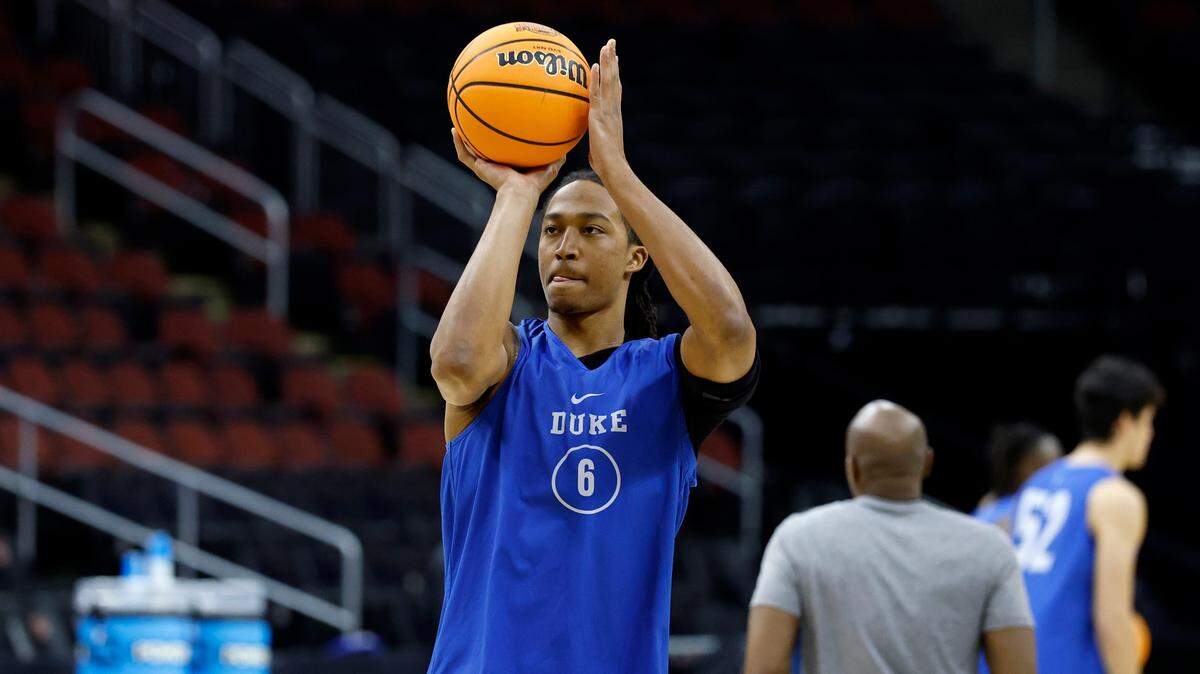
The emergency arrived more quickly than Duke expected. Khaman Maluach picked up his second foul a little less than nine minutes in. Eighteen seconds later, Patrick Ngongba had two. The Blue Devils were running out of big men.
Only two weeks removed from re-dislocating his shoulder during the first game of the ACC tournament, Brown was in uniform but Duke coach Jon Scheyer had every intention of holding him in reserve as long as possible. When Ngongba picked up his third foul with just under eight minutes to play in the first half, the Blue Devils could delay no longer.
“Obviously not knowing if I was going to play or not yesterday, just talking to coach Scheyer and the coaches, do my game-day routine and be ready if anything happened,” Brown said. “And obviously it did.”
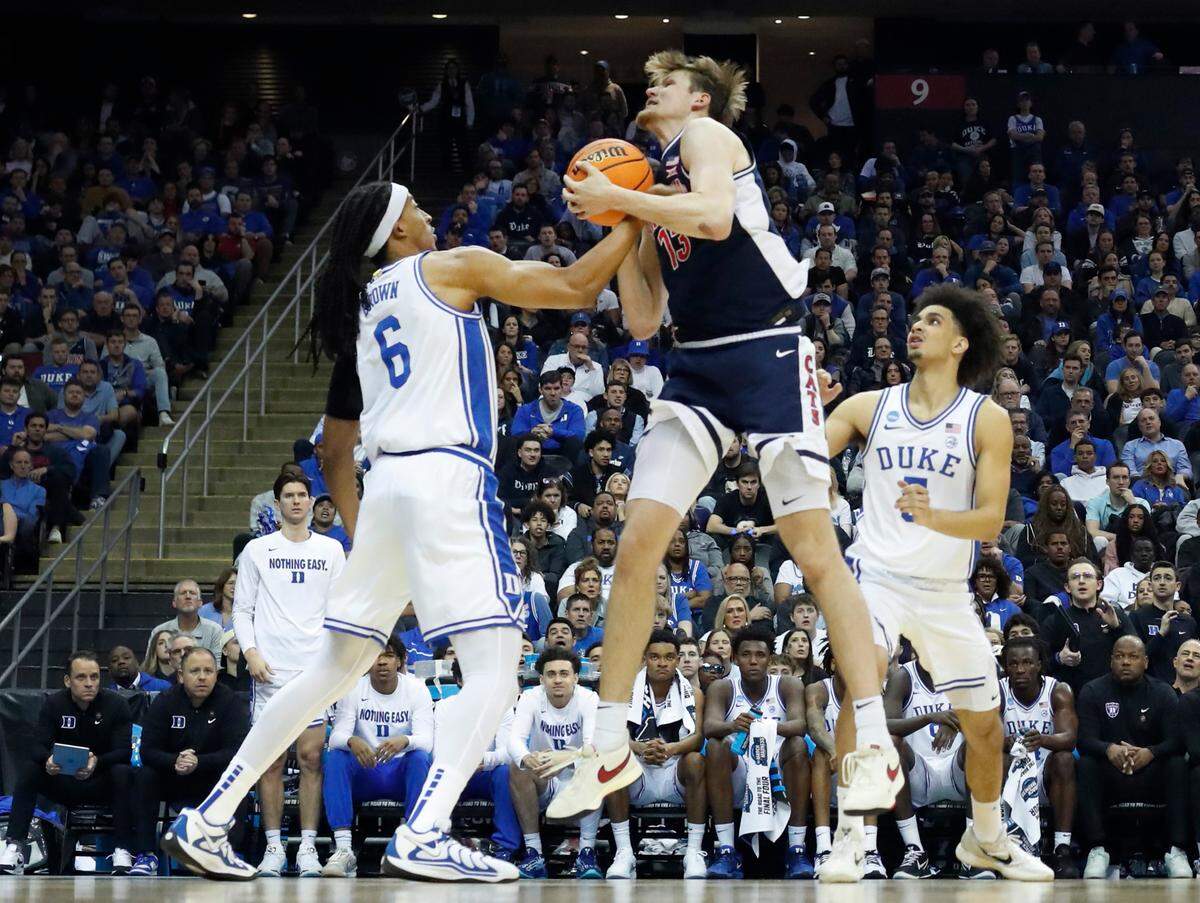
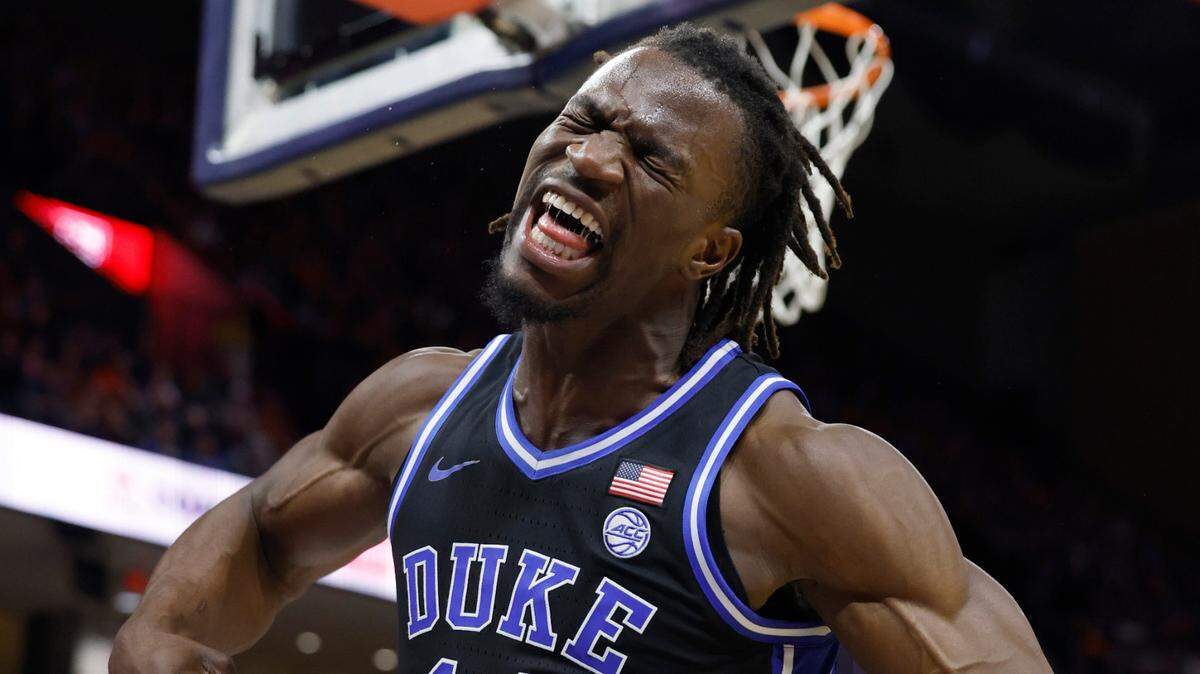
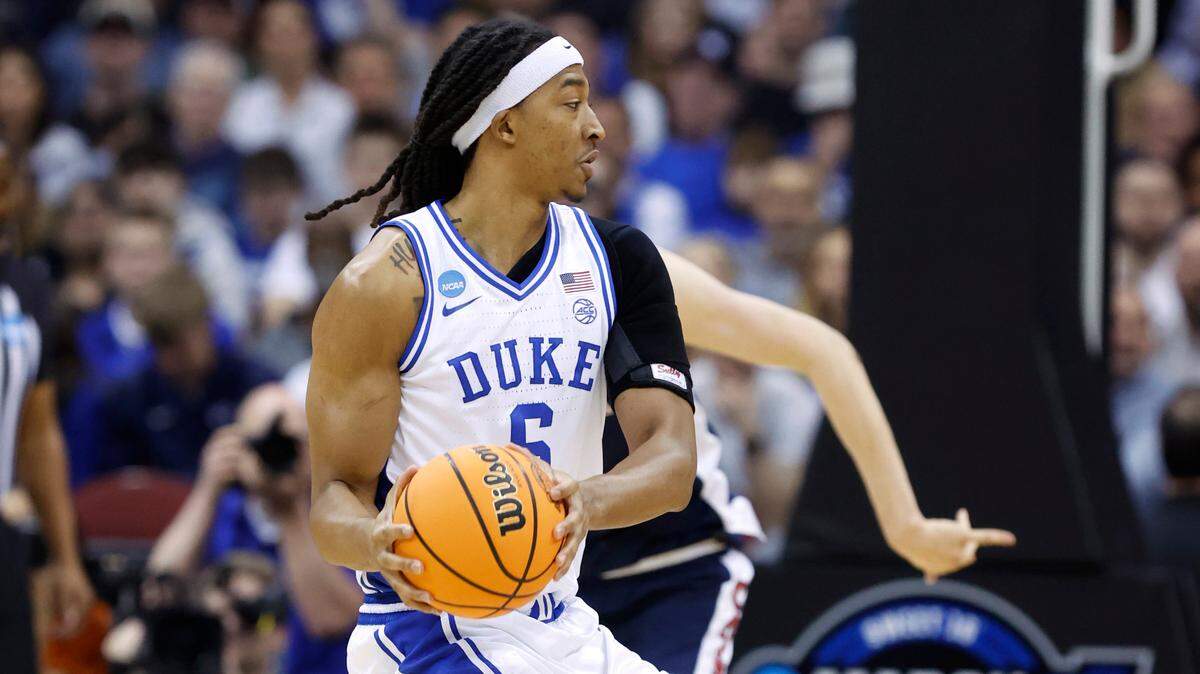
His left shoulder wrapped in a black harness, Brown entered to do battle with Arizona’s Estonian center, Henri Veesaar. When Brown was at his best this season, he was a defensive wild card, a disruptor and deflector, a force multiplier because of his ability, like Cooper Flagg, to guard any position, in the post or on the perimeter.
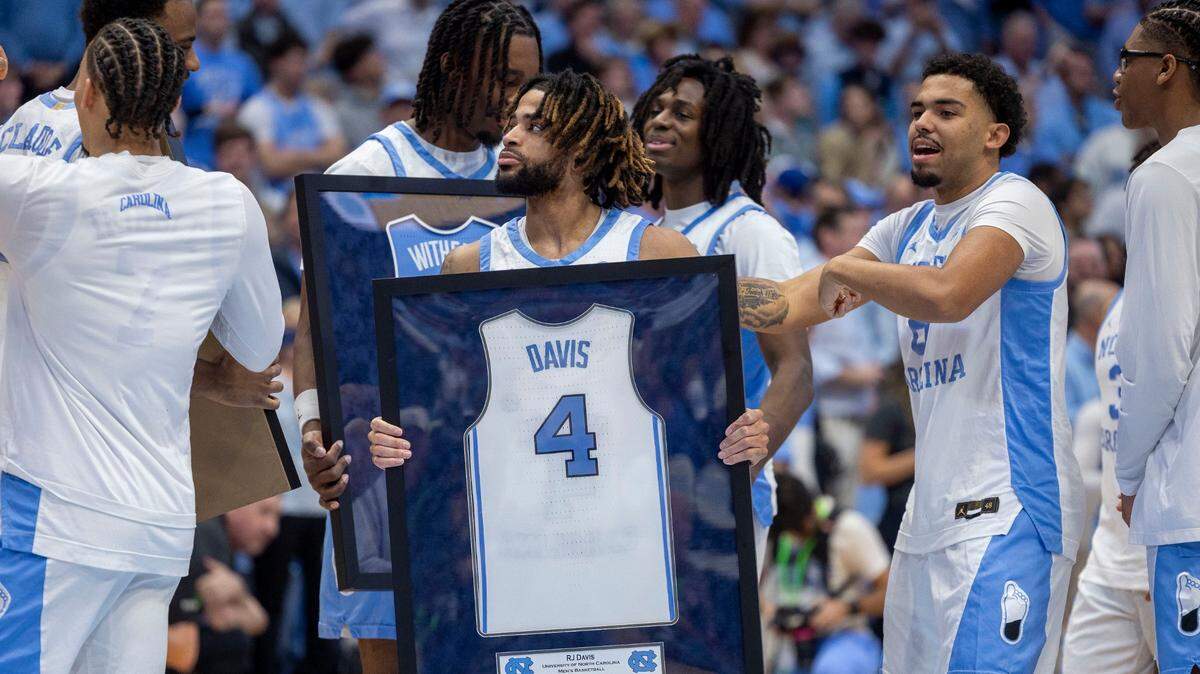
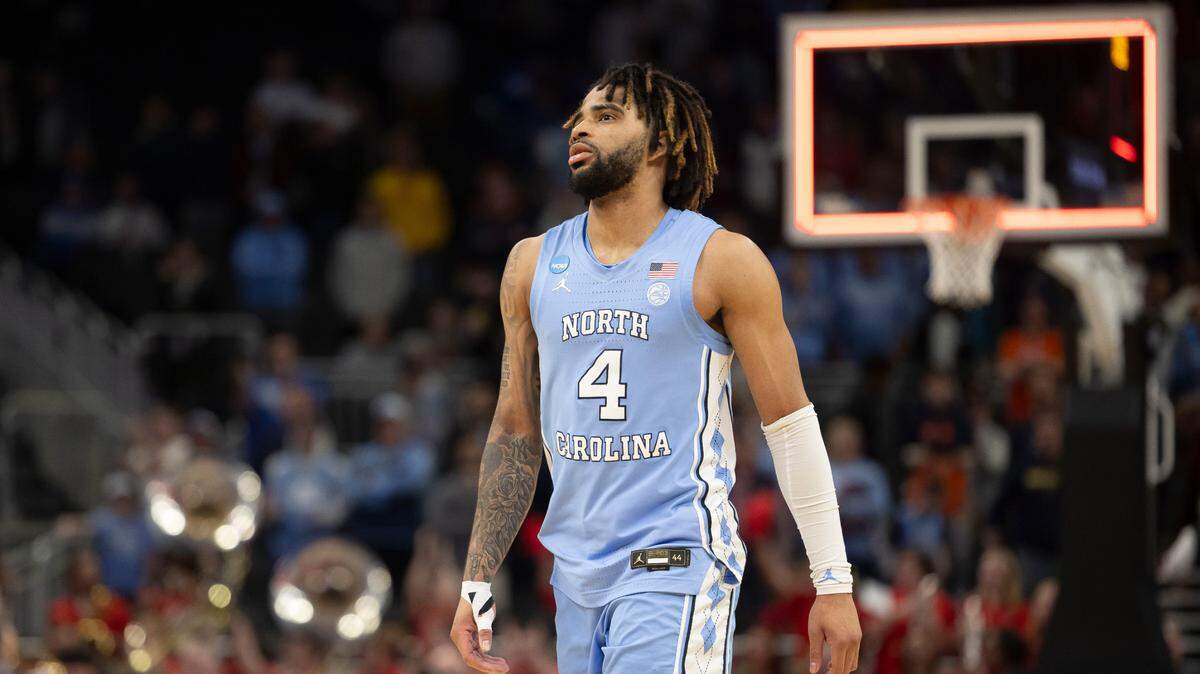
If his impact wasn’t obvious throughout the season, he drove the point home in his first return from injury, at North Carolina, when he came in to help shut down a white-hot R.J. Davis.
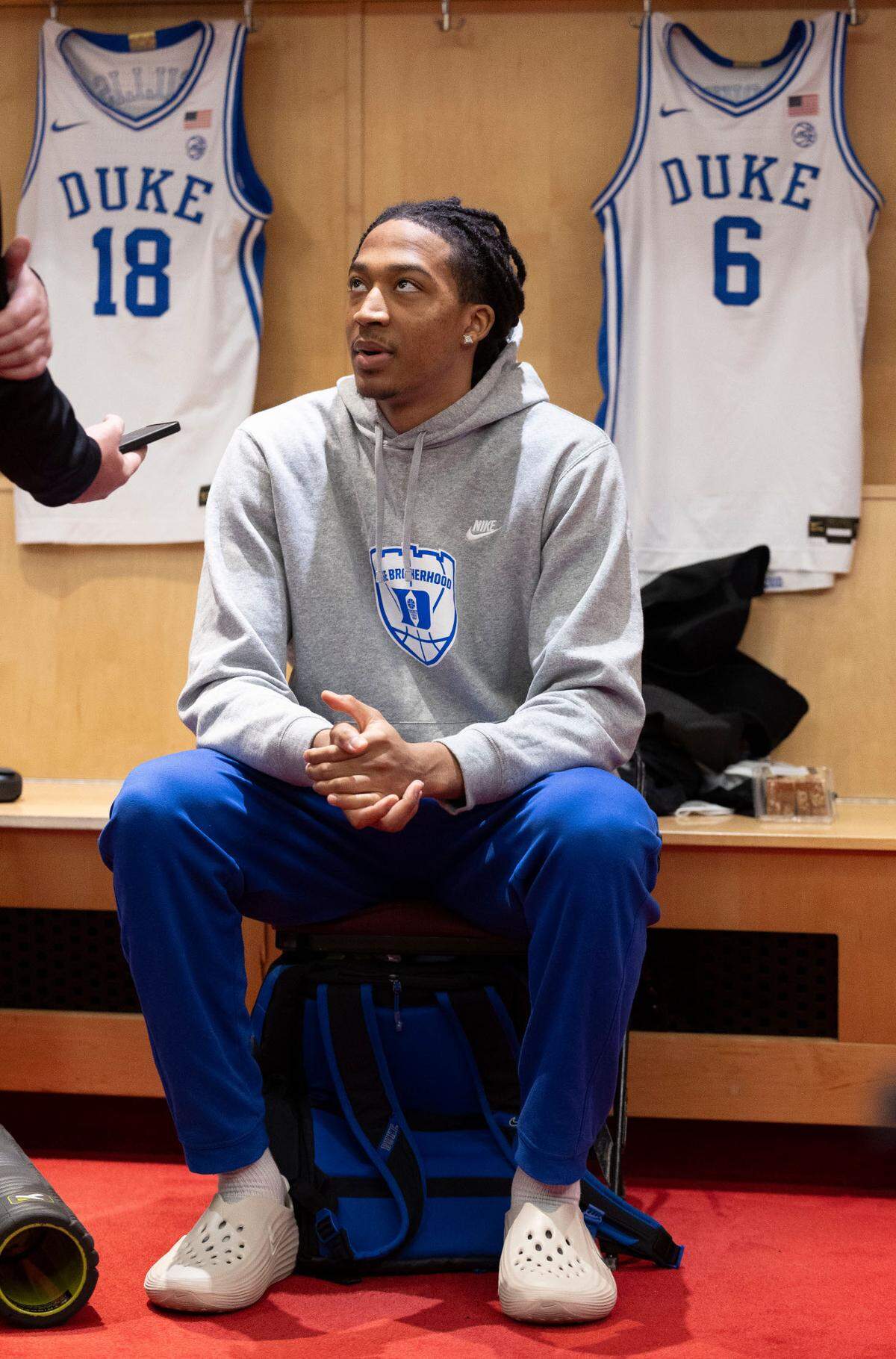
“He has the best hands I’ve ever seen, of anybody,” Flagg said. “The way he’s able to get steals, get deflections, poking the ball loose – I’ve never seen anything like it. The intensity that he brings, being able to switch 1 through 5, guard guards, he’s been a huge part of our success this year.”
His cameo Thursday was a more routine assignment: Hold down the post and steal enough minutes to get Maluach and Ngongba through to the second half, in a back-and-forth game where Duke held only a tenuous lead.
Brown played four minutes and five seconds. He had one rebound, one steal, one assist. He got Duke through to the under-4 timeout when Maluach came back in. And he was every bit the Maliq Brown that Duke remembered, a defensive cheat code who makes the other four players on the floor better.
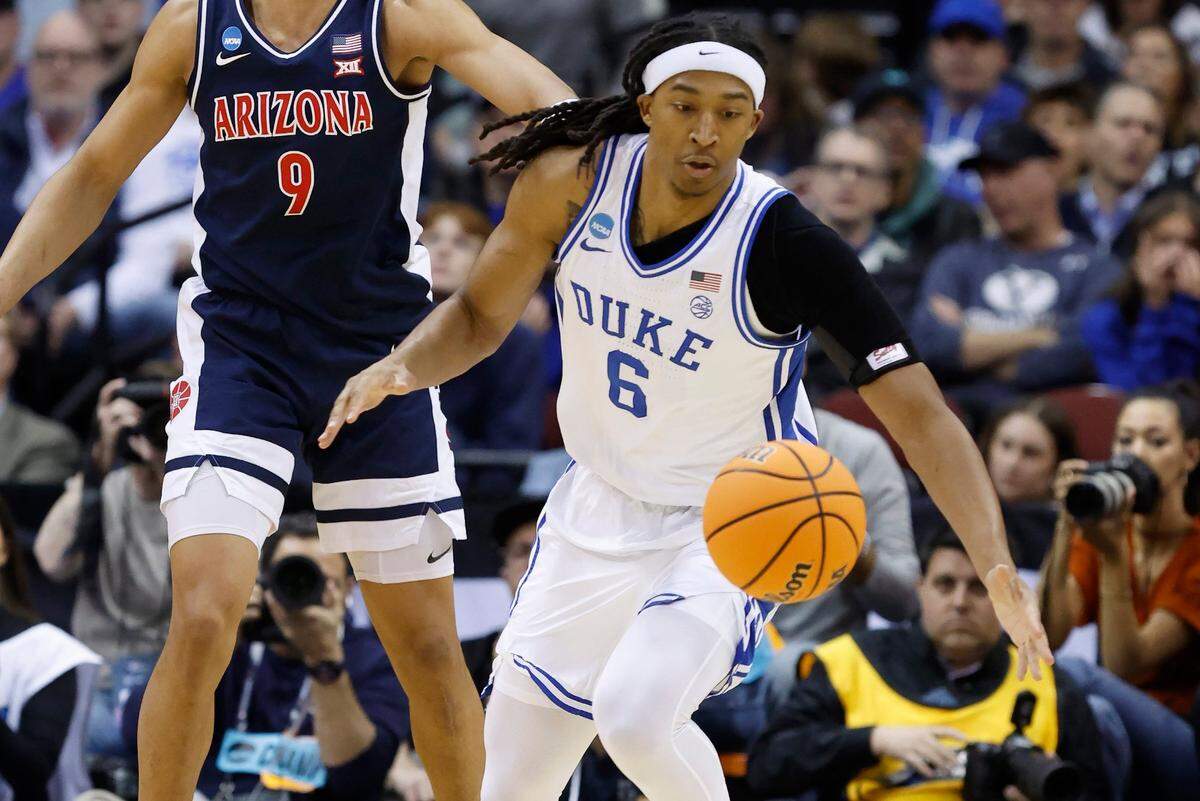
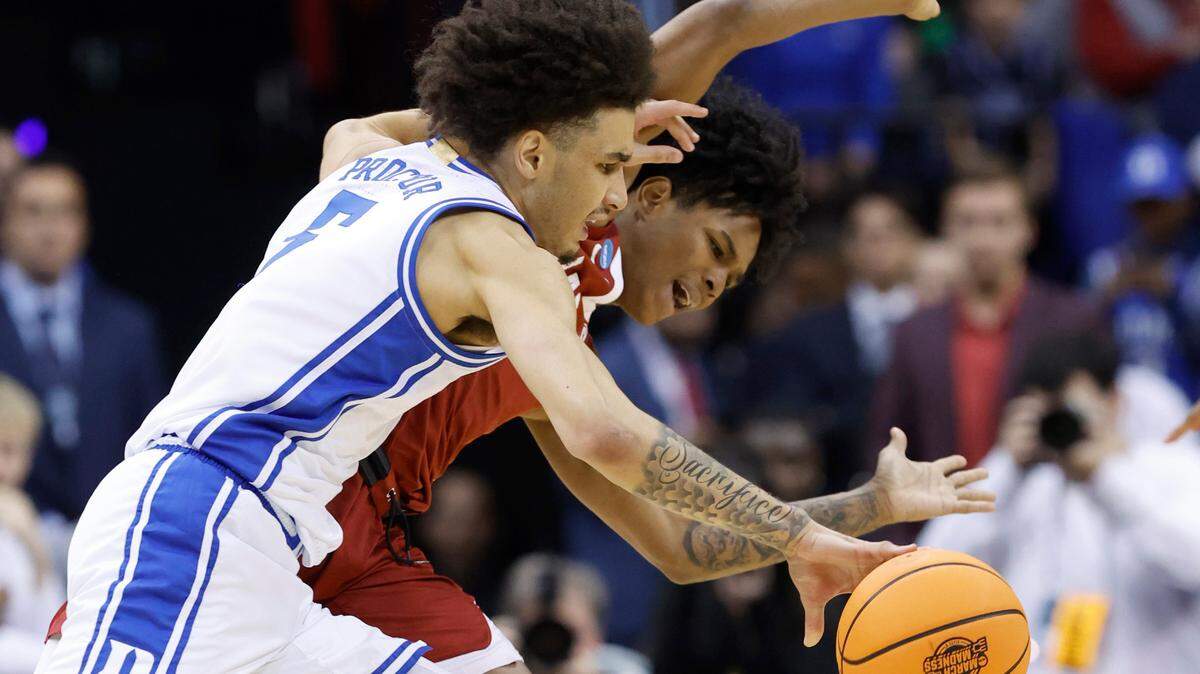
“He came in and got a steal straightaway,” Tyrese Proctor said. “He had my back. I was supposed to crack down, I sort of have in between the corner and the block, and he swiped the ball straight out of bounds the second he got in again.”
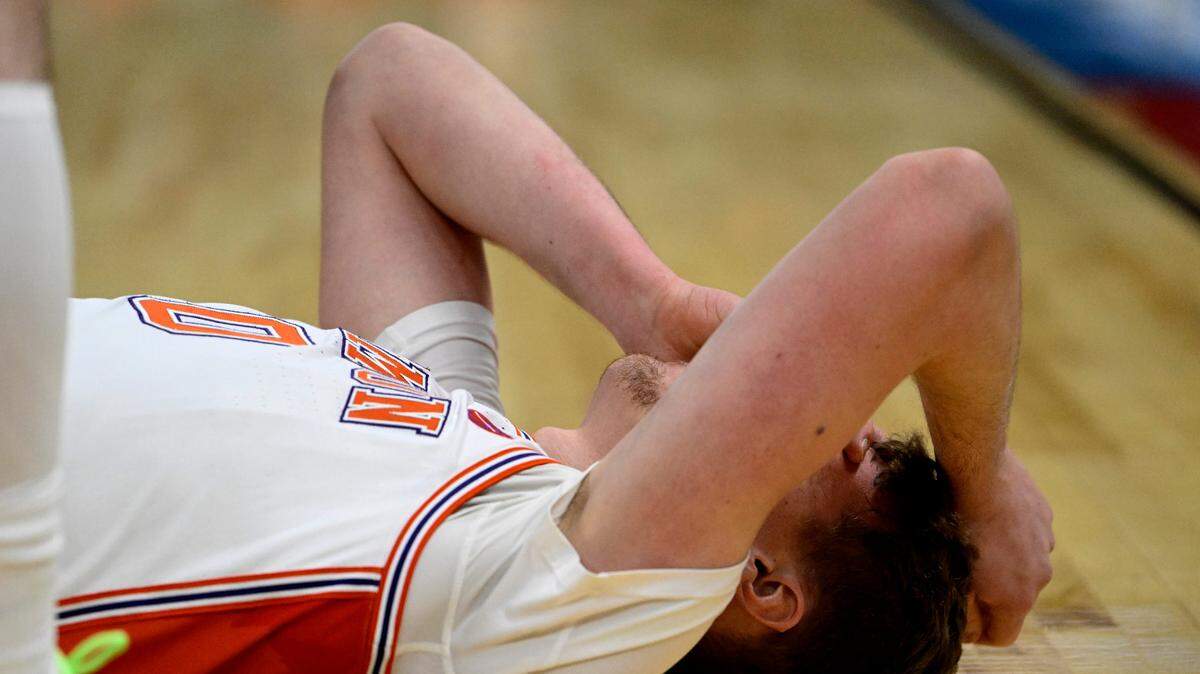
It was exactly what the Blue Devils needed from Brown, but there was risk in it. Brown missed three weeks the first time he dislocated his shoulder, then played a total of 16 minutes before it happened again against Georgia Tech.
.JPG "RAL_DUKEGATECH-SP-031325-RTW_1 (1).JPG")
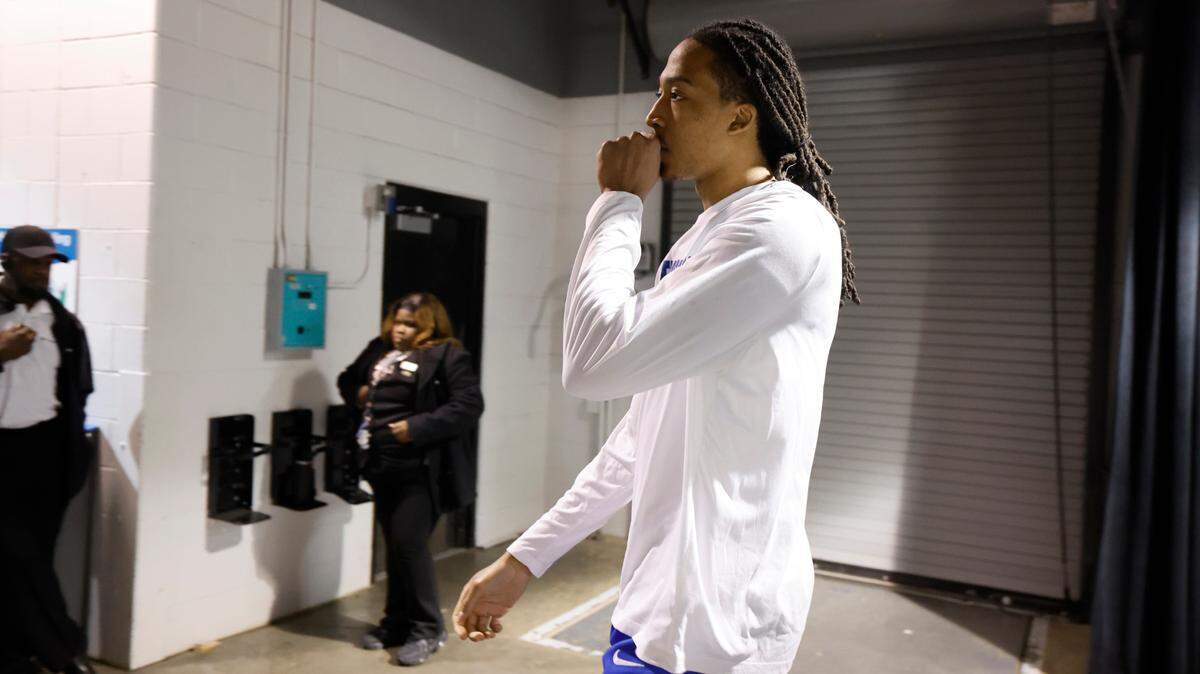
Brown was in such pain he was briefly hospitalized in Charlotte, but even beyond that, he was trapped in a web of uncertainty, wondering if he’d get a chance to play again. Wondering if he’d get to play in the NCAA tournament, an opportunity that eluded him in two years at Syracuse before transferring to Duke. Wondering if his season was over.
“When it happened the second time, just not knowing what was going to happen, especially with the MRI results and the X-rays,” Brown said, his harness unspooled in his locker behind him, feet of black neoprene piled up like a Mobius loop. “Just not knowing and being ready for that.”
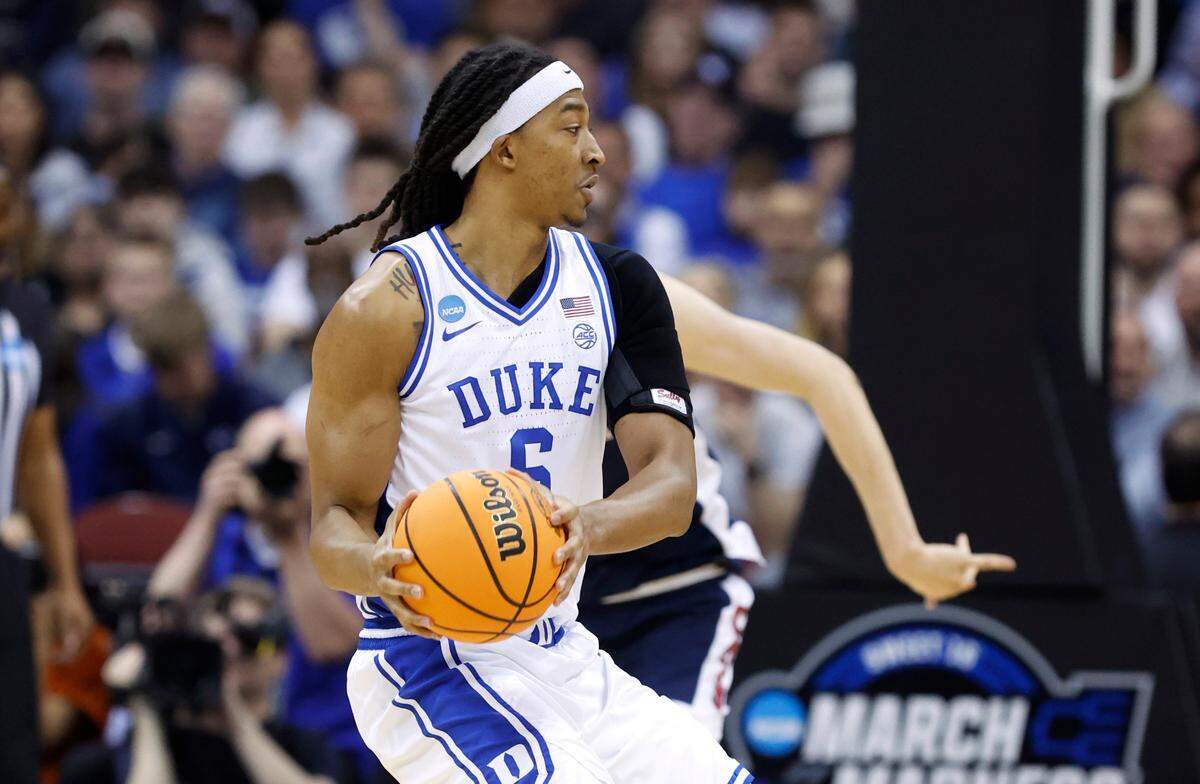
The good news with a dislocated shoulder, such as it is, is that a second injury tends to be less severe than the first, since so much damage to tendons and ligaments and the infrastructure of the shoulder has already been done. The bad news is all of that often makes reinjury progressively more likely — taken to its most extreme, it becomes the famous “trick shoulder” that can be popped in and out on command. Great to show off at parties, not so great for an athlete.
Which means that the clock is ticking on every minute Brown plays, and there may be a finite amount of use Duke can get out of him, and the longer Duke can hold off, the more likely Brown will be available when the Blue Devils truly need him.
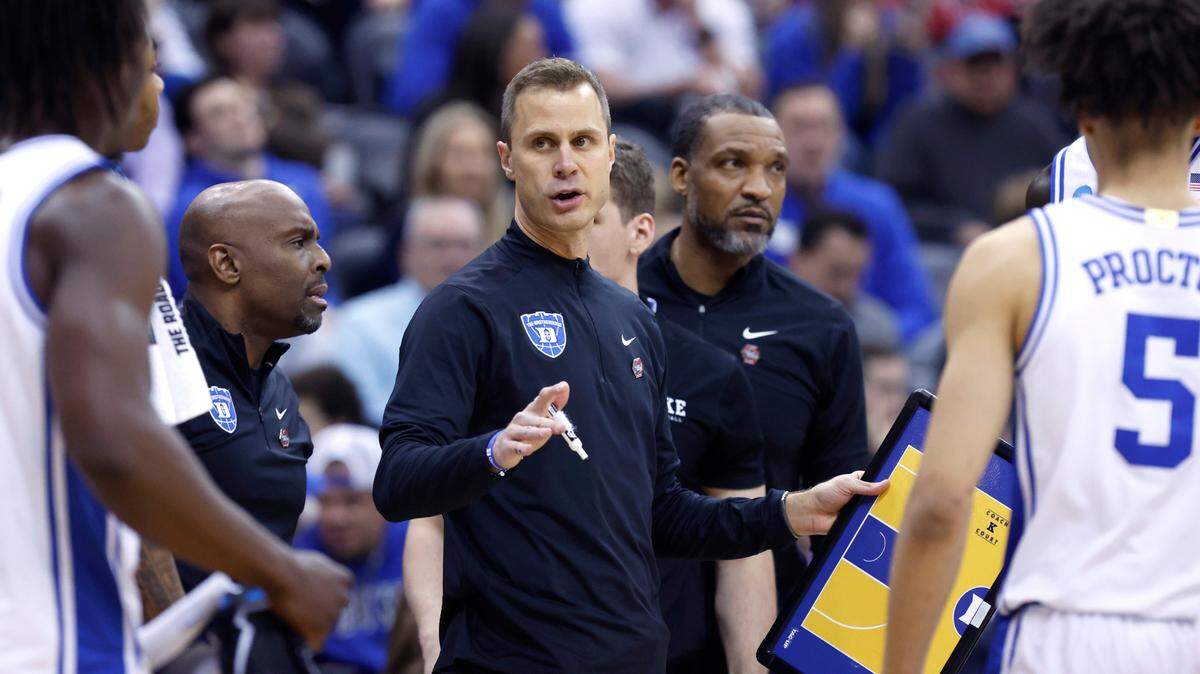
“He just wanted to give it a shot for us, and I think that says a lot,” Duke coach Jon Scheyer said. “We want to protect him at the same time, and you’re balancing when he’s fully ready with also, the time is running out for the season.
“So that’s been a balancing act for me, to be honest. It’s been something we’ve struggled with. But the fact that his mindset is to do whatever to help us win, I think is an incredible thing as a coach to have a guy that thinks that way.”
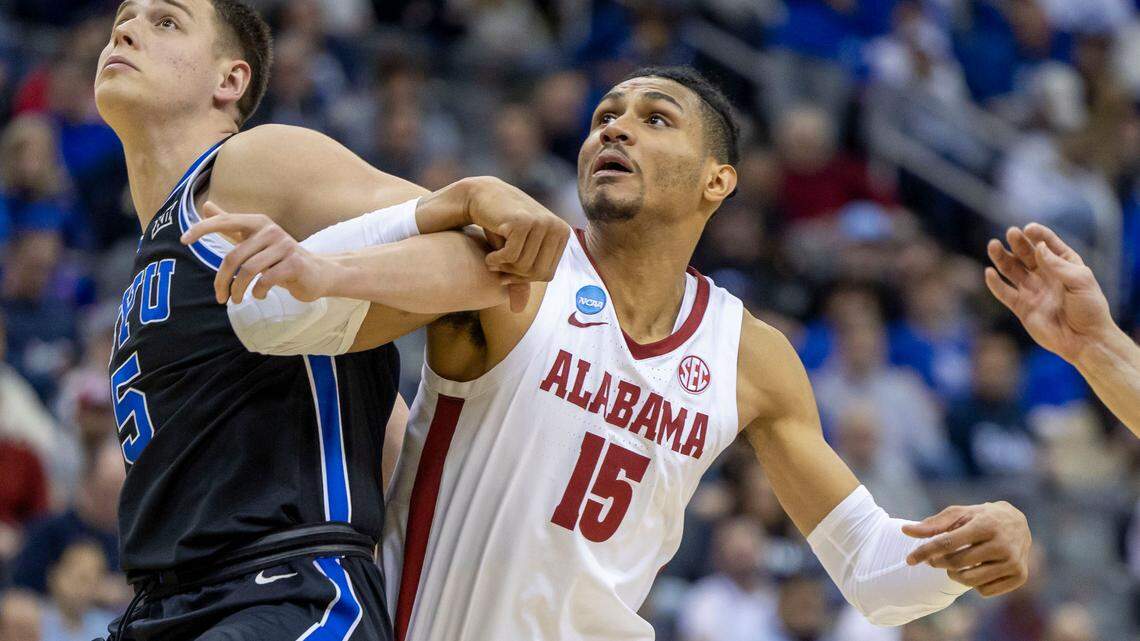
With the lead Duke built at halftime, Brown’s further services were not required. But based on the way Alabama played in the early game Thursday, hanging 113 points on BYU, that moment may have arrived.
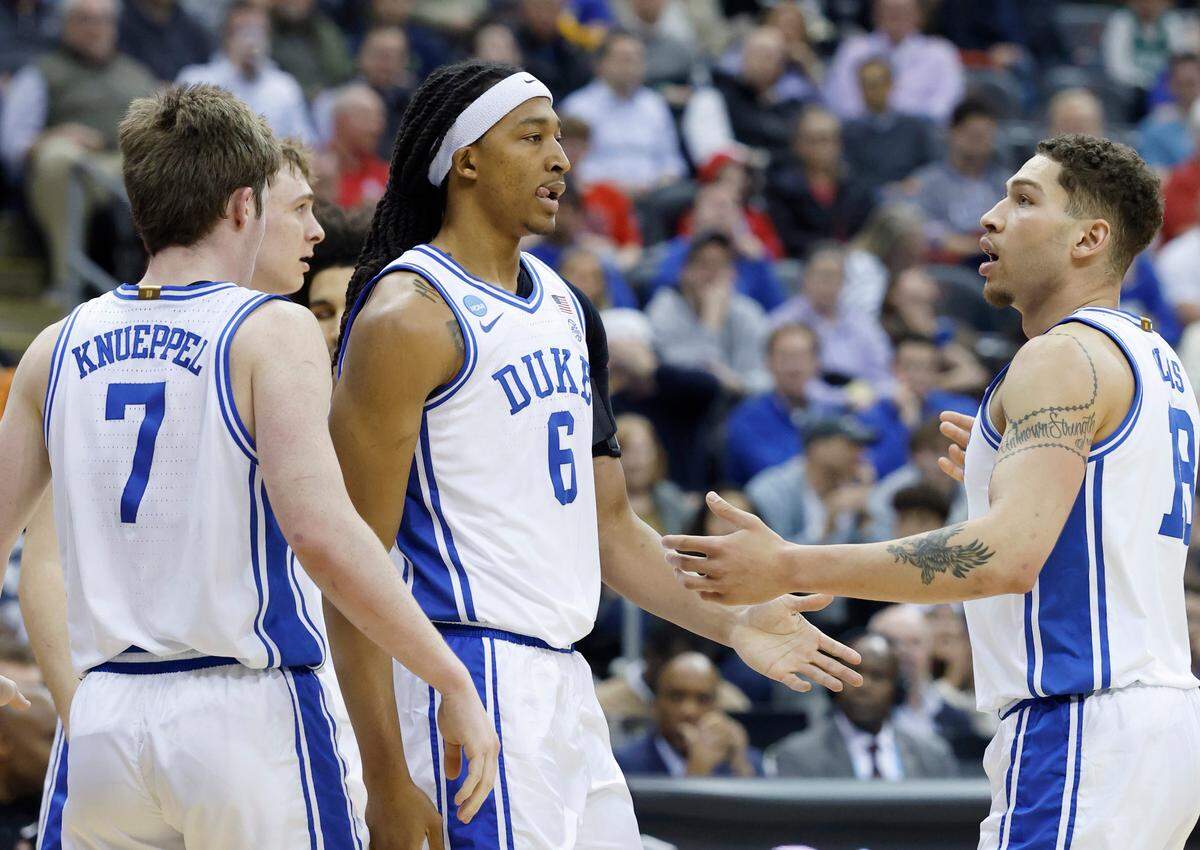
The Crimson Tide is athletic, long, dangerous and exactly the kind of team where Brown’s ability to switch all five positions could be the curve ball Duke could need Saturday night. Especially if Alabama maybe isn’t expecting it?
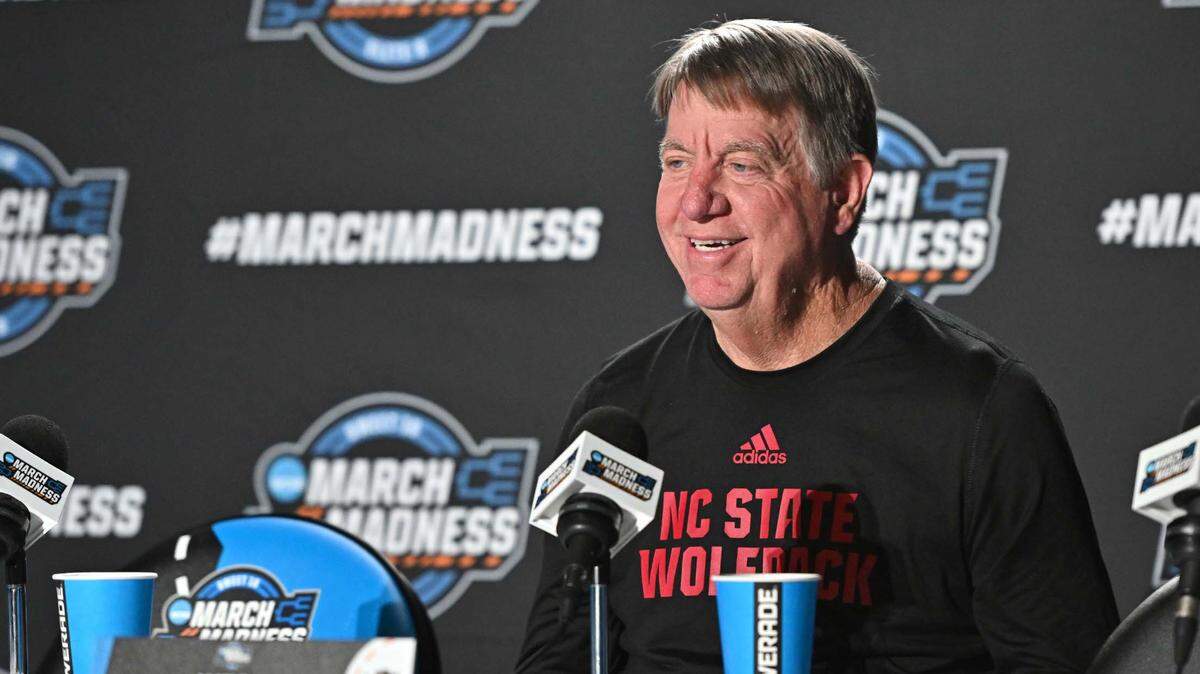
“I’ve looked at their games lately and he hasn’t played much here lately, so I haven’t seen him play a ton, and I know he’s got a shoulder injury from what I’ve read,” Alabama coach Nate Oats said. “He’s definitely switchable, can move, athletic. A little different.”
All true. Brown is ready, available if needed. Duke would prefer not. Once again, it may not be entirely up to the Blue Devils.
Never miss a Luke DeCock column. Sign up at www.newsobserver.com/newsletters to have them delivered directly to your email inbox as soon as they post.
Luke DeCock’s Latest: Never miss a column on the Canes, ACC or other Triangle sports
This story was originally published March 28, 2025 at 5:03 PM.



.JPG)
.JPG)