Place your bets, NC: The smart money is on making widespread sports gambling legal
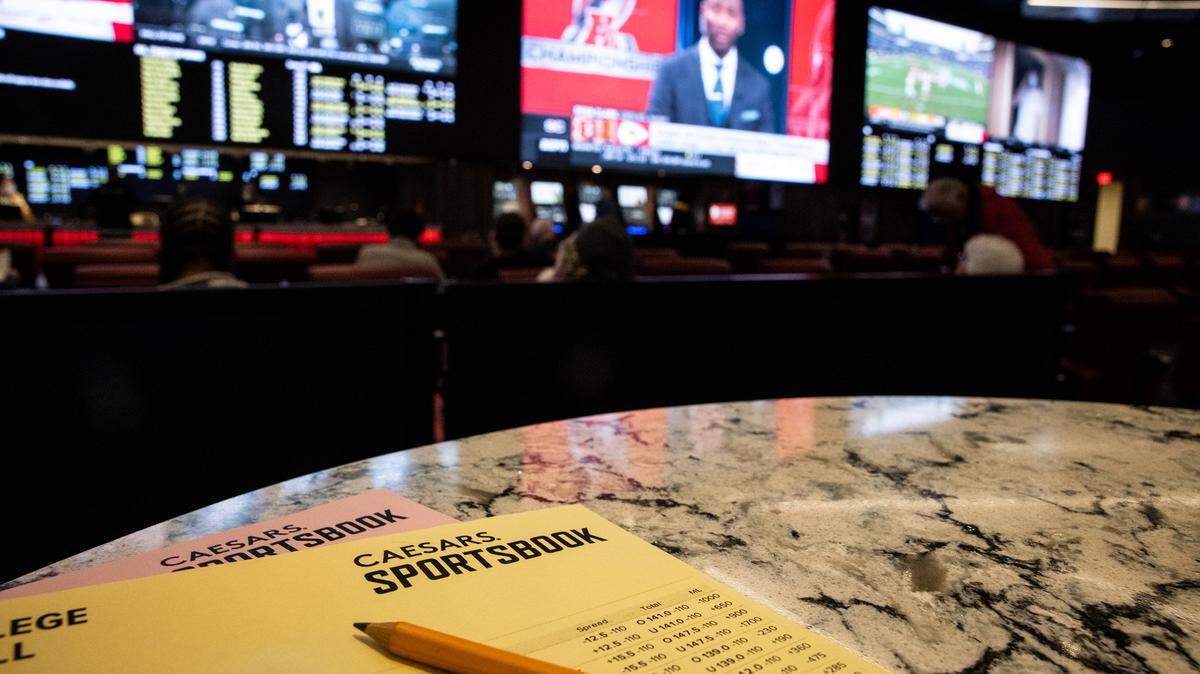
Here’s the thing: People will find a way to bet on sports.
They have done so for thousands of years, dating back to the chariot races in Rome. For many people, it is a human characteristic to want to gamble on a live event. This isn’t our most admirable trait as a species, but to pretend it’s not there is naive.
Given that people are going to find their way to offshore sportsbooks or local bookies regardless — that’s what they do now — widespread sports gambling in North Carolina should be legalized and legislated.
Bring it from the shadows into the sunlight. Extract as many tax dollars as possible from it. Set aside a generous sum to help problem gamblers.
But make it happen.
More than 30 states have already authorized sports wagering, including about a dozen in the past year, according to The New York Times. More than 20 of those states have gone live. In North Carolina, sports gambling legislation has already passed the state Senate and appears poised to pass the House sometime in 2022.
All that activity has come after the Supreme Court’s decision in 2018 to strike down the federal law that had banned commercial sports betting in every state other than Nevada.
If California — mired in a complicated sports gambling fight of its own — authorizes it, too, nearly two-thirds of Americans will live in states that allow or regulate sports betting, according to The Times.
Let’s be honest: Sports betting isn’t coming to North Carolina. Sports gambling is here.
All it takes is an Internet browser and a credit card and you can place a bet on just about anything already — it’s just not technically legal. And you can play daily versions of games like fantasy football or basketball on sites like FanDuel legally. So people are already learning the lesson by the thousands every day that the house never loses.
You’ve never gambled, you say?
Well, if you played in a March Madness college basketball pool with prize money, you have.
If you’ve played fantasy football with your friends for a little cash, you have.
If you were a ninth-grader in Spartanburg, S.C., and you used to bet 25 cents each on the outcome of three upcoming NFL games with your friend at lunch every fall Friday (OK, this one was me), you have.
In an ideal world, sports gambling doesn’t exist. The lottery doesn’t exist. Bingo halls don’t exist. Casinos don’t exist. People don’t have any urge to gamble anymore.
In that ideal world, alcohol doesn’t exist, either, because think of how many millions of lives it has decimated. But this isn’t utopia. Alcohol is sold one aisle over from the milk in my grocery store. Our country’s foray into Prohibition in the 1920s wasn’t a success for anyone except the Mafia and the moonshiners.
You were never going to erase alcohol. People wanted it too much. Instead, the best compromise was regulation, as the state does today.
The same goes for sports gambling. As with alcohol, in moderation, it can be a pleasant diversion. As with alcohol, if it becomes addictive, it can be deadly.
That’s where state governance comes in, with real support for problem gamblers — and it has to be more than a 1-800 hotline number in tiny print. But we also aren’t suddenly going to turn into a state full of gambling zombies, all of us placing dozens of bets every day on our mobile phones, if this legislation goes through. (The idea we would have an epidemic of point-shaving is similarly overwrought).
Most gamblers aren’t addicts. But most are going to find ways to bet on sports. It’s always been like that.
When I was in college in North Carolina in the 1980s, I wrote a long story for the campus newspaper about sports gambling among students. It existed in a very primitive, yet popular, form. You had to have a bookie, and you had to actually call him (and it was always a “him” back then) to place your bet, and the bets were mostly restricted to whether a team could beat the point spread or not.
If you didn’t pay off your debt, the bookie had to come collect himself. In one memorable example I was told about, the bookie came to one of the student’s dorm rooms and took several of his textbooks as collateral because textbooks — even back then — were expensive and the kid was also deathly afraid of failing his classes and flunking out.
There was a burgeoning underground operation in Chapel Hill in the 1980s, and that’s before anyone even knew what the Internet was.
As prescient “Jurassic Park” scientist Jeff Goldblum once said: “Life finds a way.” Gamblers find a way, too.
If you’re the state of North Carolina, you need to regulate sports gambling, and charge organizations a ton for the privilege of setting up the games, and then do as much good as you can with the money.
That’s the best compromise here. Because you’re sure not going to stop it.
This story was originally published January 30, 2022 at 6:00 AM with the headline "Place your bets, NC: The smart money is on making widespread sports gambling legal."