
He’s ‘scaling up’ to help the poor in Wake County
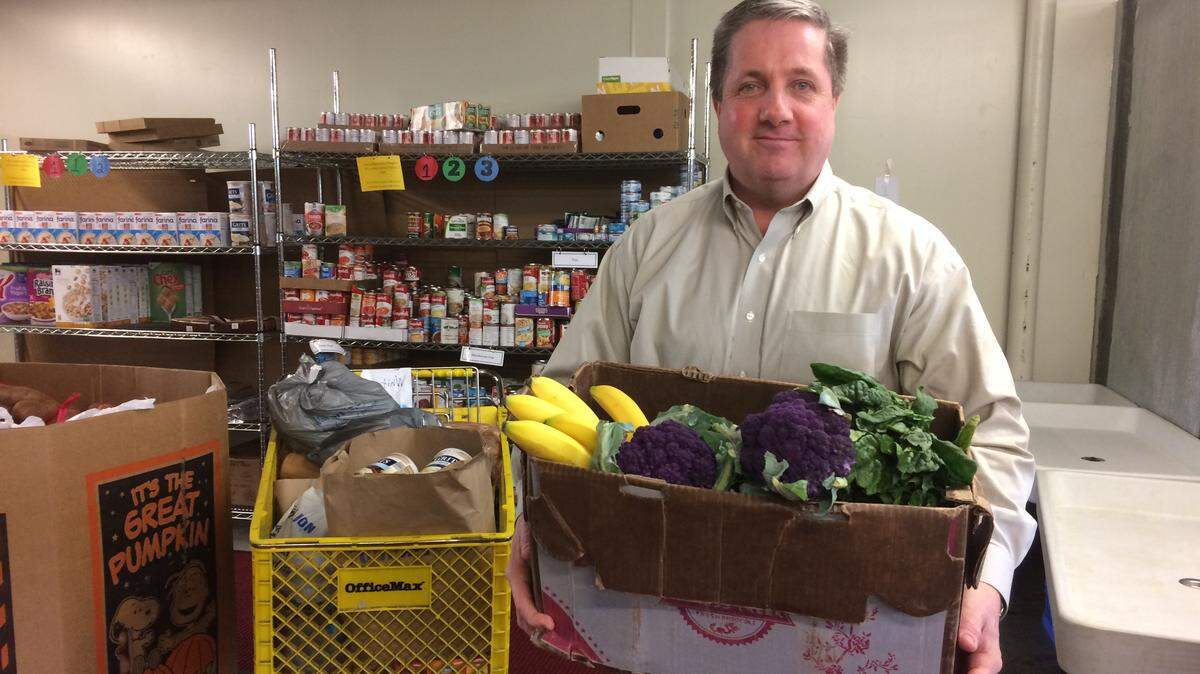
When John Welch signed on as director of development for Urban Ministries of Wake County in 2013, the nonprofit was facing a $300,000 revenue gap. Today, it’s on solid financial ground and looking to ramp up services. Welch, 54, talks about ...
Q: It can be tough to get a nonprofit back on track financially. How did you do it?
A: I wouldn’t want to take all the credit. Peter Morris,the executive director, is brilliant. We arrived at the same time and together have done a good job of living into the budget. Some of it was a matter of focusing our relationships and doing a better job with individual donors and businesses, and some of it was taking a hard look at expenses by cutting costs where we could . And that was hard; nobody wants to do that.
Since then, though, we’ve never had to use the line of credit for the organization. Each year we’ve been able to put extra away so now the organization has about three months of operating reserves, which is the sign of the healthy nonprofit.
Q: Urban Ministries tackles three major areas: health care, homelessness and hunger for the Triangle’s working poor. How do you assist with healthcare?
We process about 44,000 prescriptions a year for people who have no health insurance and also run the Open Door Clinic on the second floor. We know for a fact that we’re exceeding national standards with A1C levels, which are measures for diabetes and blood pressure. Now we’re looking at how we can scale that up because there are way too many people in Wake County who don’t have access to a doctor.
Q: That need to “scale up” has you considering a move to house more beds in the your homeless shelter for single adult women, the Helen Wright Center. It’s not official yet and the deal might not happen, but what can you tell us about it?
A: It’s close to the old Tower Shopping Center, and the building is 11,000 square feet. It looks like we could go from 36 to 75 beds. If we could pick up other space at that location we could create a campus where people could pick up all the services in one location. Right now we’re in two locations (shelter is on Cabarrus Street and food pantry and clinic is on Capital Boulevard). We’d be more accessible to people who need us since we’d be on the bus line.
We’ve put a deposit down on the building, and it looks like in March we’ll probably go to closing; the building will allow us to double the size of the shelter.
Q: Last spring you made changes to the food pantry to eliminate waste; tell us about that.
A: We serve more than 31,000 people annually at the food pantry. We made the conversion to a self-choice pantry or priceless grocery to allow people to shop for themselves. So now our clients come in and do what you and I take for granted.
They have a say in what they’re going to take home and feed their families. It produced a very different atmosphere; there’s a lot more smiling and laughing and sharing recipes.
We know from research there was waste in the old model that doesn’t exist in this model because they’re getting home and what’s coming out of the bag is food they chose for themselves.
Q: You’ve worked in both the private and nonprofit sectors and have chosen the nonprofit career path. Why?
A: It feels good to go to a job where you’re working with a team. Doing that in the nonprofit sector means you’re focused on something that’s hopefully making your community a better place to live and work. I feel like the nonprofit sector is the answer to a great many woes in our society, and I feel honored to earn a living that feeds my family and takes care of them but also does so much for everyone else.
John Welch — Tar Heel of the Week
Born: Dec. 18, 1963, in Long Island, N.Y.
Residence: Cary
Organization: Urban Ministries of Wake County, urbanmin.org
Family: Wife, Leslie, and two sons
Education: Bachelor's degree in economics and business management from N.C. State; master’s degree in public administration and economic development from George Mason University
Fun fact: He named his beagle “Sammie” after Sam Adams beer
Hobby: “Fixing stuff”
Awards: 2017 Outstanding Fundraising Professional by the Triangle NC Chapter of the Association of Fundraising Professionals
This story was originally published March 9, 2018 at 5:05 PM with the headline "He’s ‘scaling up’ to help the poor in Wake County."