
New development prompts concerns about flooding in Cary neighborhood
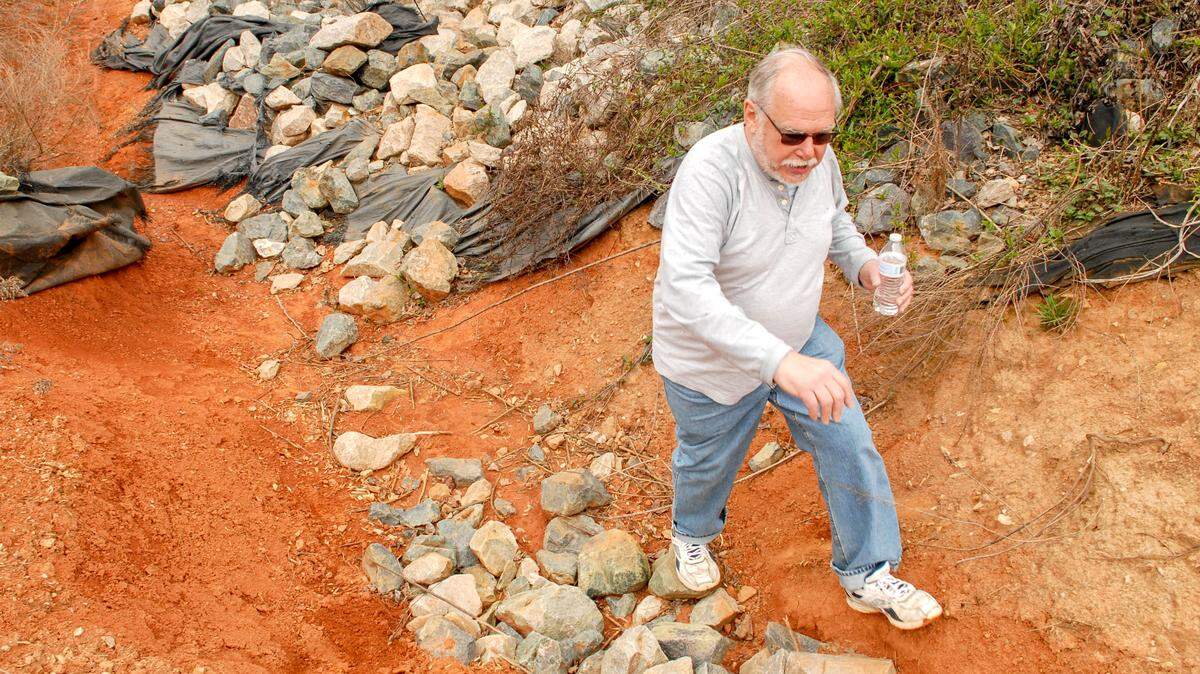
The backyard of Marshall Dietz’s home has flooded every spring for the 20 years he’s lived there. Sometimes, only the back of the property is affected; other years water has risen up to the crawlspace.
Dietz lives in Wellington Park, a community built in a gully southwest of the Crossroads shopping plaza in Cary. The area already receives runoff, and Dietz worries new development up the hill will make for even more flooding.
“They’re not dealing with their own water, they’re just moving it downstream,” Dietz said. “They’ve altered the topography so much it’s almost impervious ... and there’s erosion already. What do you think is going to happen when they add more water from these new developments?”
Cary officials say developers are following the rules in terms of water drainage. But some residents downstream worry that the removal of vegetation and an uptick in major weather events will make the small dams near their properties fail.
Several people reported regular flooding at Kids Together Playground at Marla Dorrel Park, saying the site has even been closed due to excess water.
“When (the) park floods, it looks like the Colorado River moving through there,” said Rich Walker, who also lives in Wellington Park. “The basketball court looked like a pond.”
Cary officials did not immediately respond to inquiries about flooding at the playground.
“Each situation is unique in regards to building and residing near dams, streams or other impervious surfaces,” said Ruth Merkle, president of the Wellington Park Homeowners Association. “The approach I would take is ‘buyer beware.’ Any potential developer or homeowner should check with their town, HOA, or previous owners regarding any potential flooding issues.”
Billy Lee, the stormwater engineering manager for Cary, said he inspected the Lake Wellington Pond dam and others last year. While he saw no red flags, he said he encourages all property owners to be aware of the dams in their area.
“It can be muddled from the property owner’s point of view, but we will try our best to help where we can,” Lee said.
It's important for residents to learn about dam safety and to ask questions about the dams they may be responsible for, said Bridget Munger, a spokeswoman with the N.C. Department of Environmental Quality.
“A lot of times developments will have dams and there’s often a lot of confusion about it,” Munger said. “If anyone has questions about a dam, who it belongs to, or what they are responsible for, or guidance for maintenance — a lot of those are things we can help citizens with.”
Recent high-profile dam failures across the state have added to residents' fears.
Hurricane Matthew in 2016 burst at least 17 dams around the state, including one in Fayetteville at the north end of J.C. Keith Lake, which spilled roughly 6.5 million gallons of water into surrounding neighborhoods.
The Woodlake Dam in Moore County was damaged severely enough during the storm that the state seized the property by court order last year to begin breaching the dam.
Hurricane Floyd in 1999 caused 40 dams to fail.
The state keeps close watch over the nearly 3,500 North Carolina dams included in the Army’s national dam inventory. Of those, 2,770 are privately owned and almost 1,500 are considered to have high hazard potential.
But those numbers only reflect the medium to large dams. Some dams are too small or too old to be on official lists.
Many of the small dams now near subdivisions were originally built as part of family farms, and a few date back to before the Revolutionary War. The age of a dam can lead to more problems than just its materials breaking down.
“There are a lot of dams, and one of the challenges that comes up a lot is when it’s an old farm dam,” Munger said. “Some of them have been there as long as anybody can remember, and it can be a jolt to people when they find out they’re responsible for it.”
Many privately owned dams, both old and new, are now under the purview of homeowners associations.
The Lake Wellington Pond dam only holds back 6 to 8 acre-feet of water, and is too small to be included on the official N.C. Dam Inventory. Other nearby dams are also too small to be listed.
The Wellington Park HOA installed an emergency spillway after Dietz and others in the neighborhood raised concerns a few years ago, and the HOA has the dam professionally inspected each month. But Dietz still regularly checks the dam for signs of failure.
Extensive information about North Carolina’s Dam Safety program, dam locations, dam emergency plans, and educational materials are available online at https://deq.nc.gov.
A national inventory of dams can be found at:http://nid.usace.army.mil.
This story was originally published April 3, 2018 at 4:03 PM with the headline "New development prompts concerns about flooding in Cary neighborhood."