
6 get pardons from Gov. McCrory
On his way out of office, Gov. Pat McCrory pardoned six people who had been convicted of crimes including forgery and assault, some decades ago.
He also opened the possibility of parole for a woman who set a fire that killed four people in an apartment complex in Greensboro.
McCrory signed the clemency orders Dec. 30 but did not publicly announce his actions. Gov. Roy Cooper took office Jan. 1.
Pardons are uncommon in North Carolina. McCrory issued 10 of them during his four-year term.
Last month, the outgoing Republican governor issued three pardons of forgiveness, two unconditional pardons and one pardon of innocence. The pardon of innocence went to Horace Lee Shelton, who spent four years in custody for a crime he didn’t commit.
Shelton was arrested in 2010 on charges of forging three checks in Buncombe County and was held in jail until he was convicted in 2012. He was sentenced to 13 1/2 years in prison due to previous drug- and theft-related convictions. He spent two more years in prison before a judge vacated his conviction and dismissed the charges after it was determined someone else committed the crime.
He lost a lot when he was wrongfully convicted of these charges.
Attorney Lauren Miller
“Mr. Shelton is really grateful that Gov. McCrory found the time to pardon him before the end of the year,” his Prisoner Legal Services attorney, Lauren Miller, said Thursday. “He is certainly excited for the opportunity to expunge his name off the record. That should help him with getting more meaningful employment and help him restore his life.
“He lost a lot when he was wrongfully convicted of these charges.”
Shelton, 58, was released from prison in 2014, and Miller filed a pardon application soon afterward. Shelton and Miller met with McCrory in mid-December, she said.
Shelton plans to apply for state compensation. Up to $750,000 can be authorized for wrongful conviction compensation claims.
There are three kinds of pardons in North Carolina. A pardon of forgiveness is the most common; it is simply an official acknowledgment that a convicted criminal has been pardoned and forgiven, and requires the recipient not commit any new crimes. Unconditional pardons are generally requested to restore the right to own a firearm and come without conditions.
Pardons of forgiveness and unconditional pardons do not erase convictions from the record. A pardon of innocence does expunge convictions and allows those wrongfully convicted to seek compensation from the state.
Sentence commuted
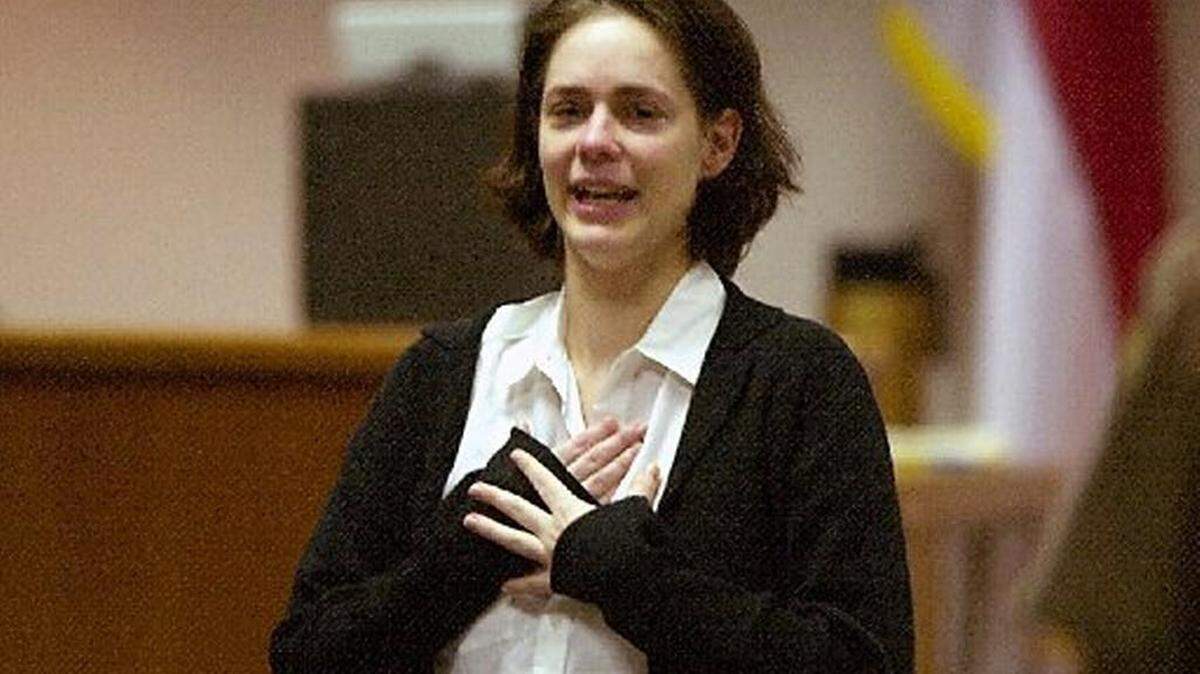
Janet Danahey had been serving a life sentence without the possibility of parole since pleading guilty in 2002 to four counts of first-degree murder and one count of first-degree arson. McCrory commuted her sentence to make her eligible for parole in 12 years.
She was 23 when she started a fire at an apartment complex near the UNC-Greensboro campus, later claiming that she had meant it as a prank on her former boyfriend. The blaze spread quickly and four young people died.
Danahey petitioned then-Gov. Bev Perdue for clemency in 2012, but Perdue left office without making a decision in the case.
Danahey is now 38.
Bob Harris long ago forgave Danahey, he told the Greensboro News & Record. Harris’ daughter, Elizabeth Harris, was 20 when she died in the fire. “I still have a big, empty hole in my heart,” he told the News & Record.
He said he would have preferred Danahey had immediately been paroled in December.
Other pardons
Other clemency moves:
▪ Matthew Taylor Watts received a pardon of forgiveness. He pleaded guilty in Wake County Superior Court in 2003 to felony larceny and was sentenced to six to eight months in custody.
The pardon says he has demonstrated “responsible civic behavior and community service.” A condition of a forgiveness pardon is that the recipient cannot commit a felony or misdemeanor and be “of general good behavior.”
▪ Janet Evett Taylor received a pardon of forgiveness after pleading guilty to misdemeanor drug- and prostitution-related charges between 1988 and 1994 and serving time in Forsyth County.
▪ Terry Devern Norton received a pardon of forgiveness after being convicted in Onslow County in 1975 of assault with a deadly weapon. Norton was sentenced to four to six years in the county jail.
▪ Alfred Morrison Lewis Jr. was granted an unconditional pardon. He pleaded guilty in Mecklenburg County in 1973 and 1977 to drug charges and was sentenced to five years in prison.
▪ David Matthew Freeman pleaded guilty in 2002 in New Hanover County to drug charges and was sentenced to 35 to 42 months in prison, with 24 months of that suspended, and he was placed on probation.
Craig Jarvis: 919-829-4576, @CraigJ_NandO
This story was originally published January 13, 2017 at 3:19 PM with the headline "6 get pardons from Gov. McCrory."