
Will these state hires ease North Carolina’s hospital ER bottleneck?
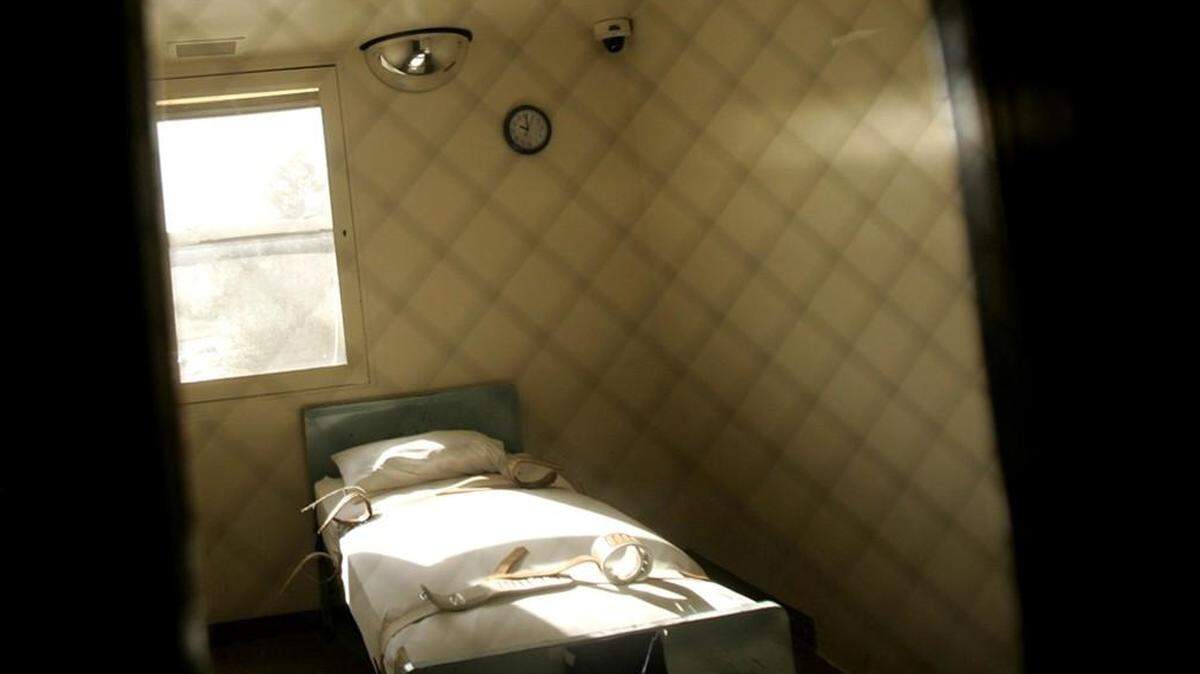
The state has hired more doctors to work in two of its psychiatric hospitals, and the newest hospital is using more of its patient beds, a move that may help move patients more quickly out of local hospital ERs and into mental health treatment.
Cherry Hospital in Goldsboro has begun using 48 previously vacant beds in its new building, said Mark Benton, deputy secretary for health services at the state Department of Health and Human Services.
More doctors and more usable beds could reduce the amount of time people spend waiting in local emergency rooms that can’t properly treat their mental illness. It’s unclear whether the newly available beds at Cherry Hospital have cut delays for admission.
Mentally ill patients waited in hospital emergency rooms an average of 74 hours for admission to Cherry, according to DHHS information for the fiscal year that ended in June. Cherry had the lowest average wait time of the three state hospitals. DHHS said more recent data is not available.
Cherry Hospital serves severely mentally ill people from 38 counties in the eastern part of the state.
Between Oct. 1, 2016, and Sept. 1, 2017, Vidant Medical Center in Greenville sent, on average, less than one patient per month to Cherry, according to an email from a Vidant spokesman. “Even if the numbers were significantly higher, it would be difficult to draw conclusions about wait times due to other variables,” he wrote.
In 2016, the state opened the new, 313-bed Cherry Hospital, which was meant to increase capacity from 196. But the hospital did not start using the extra space until this year.
The changes followed articles in The News & Observer this year about unused space at Cherry, hiring of psychiatrists, and work inequities among the state’s three hospitals.
The new, larger hospital is part of a years-long effort to restructure public mental health care in the state. Central Regional Hospital in Butner opened in 2008. A replacement for Broughton Hospital in Morganton, delayed by construction problems, is set to open next year.
Here’s what Benton said has happened since spring:
▪ Cherry has hired three psychiatrists – two in early August and a third in September. The hospital will need more psychiatrists in order to use the 51 beds still left unused, he said.
▪ DHHS Secretary Mandy Cohen directed the supervising psychiatrists at Cherry to see patients.
▪ Broughton hired two more psychiatrists, and entry-level salaries for that hospital’s psychiatrists went up to $230,000 a year to match starting salaries at Cherry Hospital. Nine full-time psychiatrists at Broughton received raises on June 1 that ranged from $16,307 to $39,321 to bring them to the $230,000 base.
▪ UNC Health Care agreed to do an assessment of clinical and administrative operations at DHHS facilities. In addition to the psychiatric hospitals, DHHS runs developmental centers for people with intellectual disabilities, drug and alcohol treatment centers and long-term treatment centers.
“We run a health system,” Benton said. “While we believe that we do things well, there are things we could learn from another health system.”
▪ To more accurately account for their work hours, Cherry has begun using a software program to keep track of employee time. Cherry psychiatrists were taking “flex time” during the work week. Some were using that time to work second jobs. Psychiatrists are supposed to make up the time, but their hours were recorded on time sheets using the honor system and were not being closely monitored.
Better tracking of doctors’ work hours will help show if they are able to take on additional patients, Benton said.
Current doctor-to-patient ratios at Cherry puts the hospital in the middle, compared to Broughton and Central Regional.
Leza Wainwright, CEO of Trillium Health Resources, the state’s regional mental health office that covers more than two dozen counties in eastern North Carolina, said children with mental illnesses, and children with mental illnesses and developmental disabilities, are still waiting long hours for admission to hospitals. Though they are a small percentage of patients, their needs are “highly complex” and “the resources aren’t there,” she said.
Adults who live in the counties Trillium covers have alternatives to Cherry, Wainwright said, because four general hospitals in the region have inpatient psychiatric beds.
About 850 people in the Trillium region waited for space to open at Cherry in the last fiscal year, according to DHHS data, and they waited an average of about 62 hours.
There is a general concern, Wainwright said, that more people in state hospitals are there under court order – some of whom have been found not guilty of crimes by reason of insanity. As the percentage of those patients rises, she said, “the percentage of beds available for the general population decreases.”
Lynn Bonner: 919-829-4821, @Lynn_Bonner
This story was originally published November 7, 2017 at 9:43 AM.