
NC lawmakers' push for 'In God We Trust' is part of untrustworthy pattern
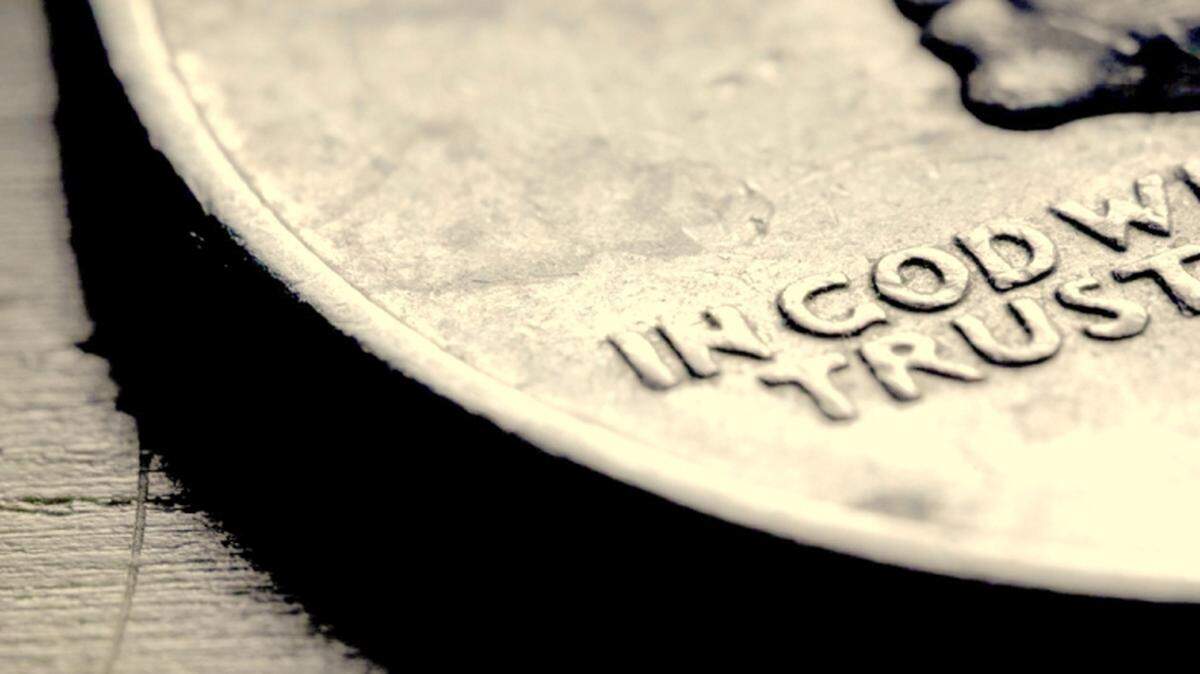
This headline appeared recently: “NC lawmakers back ‘In God We Trust’ signs in schools. They say it’s not promoting religion.”
Government by subterfuge, Raleigh’s specialty, is growing tiresome.
House Bill 965 will require that all public schools place a sign displaying both the national motto and North Carolina's aspiration “To Be Rather Than to Seem” in a “prominent place” on campus. The bill’s sponsors, co-chairs of the NC Prayer Caucus, reportedly deny the new law will “promote religion in general or Christianity in particular.” Rep. Larry Pittman adds: “In God We Trust” merely “acknowledges a very important factor of our national history.” Pittman, who last year explained that “Lincoln was the same sort of tyrant (as) Hitler,” is always ready with a history lesson.
For perspective, can anyone imagine the NC Prayer Caucus rushing, in short session, to place America’s traditional motto, “e pluribus unum,” which has appeared on the Great Seal of the United States since 1782, in the foyer of every public school? Why would they possibly do that? That wouldn’t put God in the schools.
HB 965, like much of the General Assembly’s work, originated elsewhere. It’s a first stage of the Congressional Prayer Caucus’ “Project Blitz” — seeking to flood state legislatures with motto bills as part of a broader strategy to assert and depict “Judeo-Christian values and beliefs in the public square.” Motto laws, they accurately predict, will be difficult to oppose. When passed, they will lay the groundwork for more fruitful prizes like teaching the Bible and offering prayer in public schools.
“In God We Trust” certainly sounds like a religious endorsement. Treasury Secretary Salmon Chase introduced it onto coins during the Civil War saying “no nation can be strong except in the strength of God.” President Eisenhower endorsed the adage as our motto in the 1950s indicating it would “constantly strengthen those spiritual weapons which will forever be our country’s most powerful resource in peace and war.”
And placing it in our schools carries the attempted exclusion common to efforts at establishment. The “we” in “In God We Trust” cannot mean all Americans, for that is surely untrue. It suggests instead, religious Americans, the ones who count.
But my point, oddly, is not that the new motto law will be declared unconstitutional; though it should be. Our establishment clause jurisprudence is an unholy and largely indefensible mishmash of contradictory rulings. My point is an ancillary one. Though our legislators claim the law is not designed to promote religion, that is, in fact, exactly, precisely and singularly what it is meant to do. Why dissemble? Why the deceit?
The principal reason is, I suppose, obvious. Much of what our General Assembly has sought to accomplish over the last six years is unconstitutional. Our leaders seem to be at war with the fourteenth amendment and the broad array of rights it incorporates. That makes it impossible, frequently, to confess what they’re up to.
It is unconstitutional for a state to promote religion, so that can’t be what’s happening. No matter how contrary to the obvious facts, another purpose must be invented. Thus the new interest in historical billboards.
At almost the same moment that the House passed the motto bill, it adopted a new measure to eliminate early voting on the last Saturday of an election cycle – a practice used very disproportionately by African-Americans. The surprise addition was not, of course, meant to suppress black turnout. That would be impermissible. Lawmakers merely sought to create “a uniform platform.” Rep. David Lewis’ “surgical precision” had, yet again, been deployed to the detriment of black voters. But that was just bad luck.
These new duplicities join an impressive and endlessly expanding list.
We passed an unconstitutional voter ID law to combat non-existent fraud. Now we apparently need a state constitutional amendment for the same fanciful reason. We repeatedly racially gerrymandered both our state and federal legislative districts, lawmakers said, for other, neutral reasons. The federal courts determined they lied.
We passed HB2 to protect girls from assaults that never happened. Local elections in Wake County and Greensboro were overturned under the demonstrably false banner of democracy. A restrictive abortion bill was passed by anti-choice hardliners who explained they made “no effort to restrict a woman’s right to terminate a pregnancy, only to make her (medical) care competent.” A religious exemption for magistrates unwilling to perform same-sex marriages was said to have nothing to do with antipathy to gay rights – though we surely wouldn’t allow the same officials to opt out of interracial unions. Deception, made habitual.
What sort of political ideology requires its adherents to rule through pretense?
Gene Nichol is the Boyd Tinsley Distinguished Professor of Law at the University of North Carolina.
This story was originally published June 22, 2018 at 9:31 AM with the headline "NC lawmakers' push for 'In God We Trust' is part of untrustworthy pattern."