
At Christmas, I don’t think of frankincense. I ponder ‘Frankenstein’
You may wonder why this season finds me re-reading so unlikely a book as Mary Shelley’s “Frankenstein,” a classic of the Romantic Age that remains suggestively contemporaneous. But bear with me.
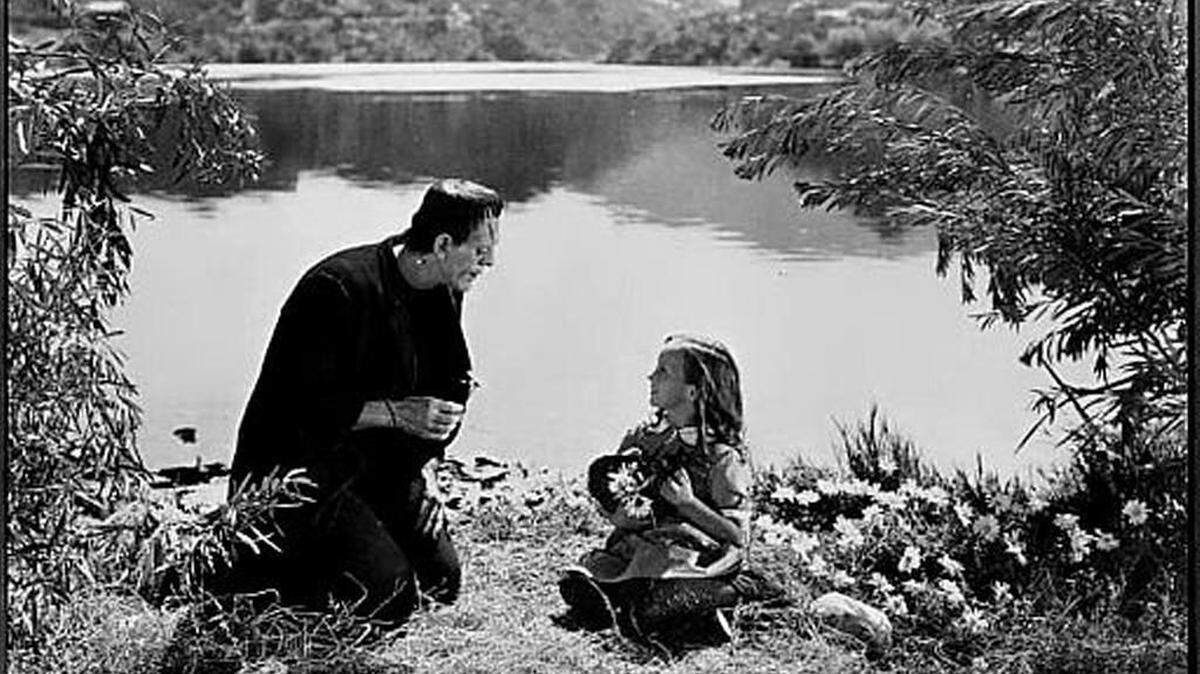
The popular memory of this tale of human presumption was long obscured – for me, at least – by youthful viewings of the famous 1930s movie starring Boris Karloff, a horror story pure and simple featuring Karloff’s ominous stilted gait.
But the original 1818 tale of Dr. Frankenstein’s “monster” is neither satirical, nor is it a conventional horror story. As told by Mary Shelley (as she soon became when she married the poet Percy B. Shelley), it is a sophisticated interrogation of a permanent human story: When does intellectual aspiration – a perennial passion – trespass into realms of “forbidden knowledge”? And if there is such knowledge, where are its boundaries?
Dr. J. Robert Oppenheimer, the physicist who supervised the development of the first atomic bombs in the New Mexico desert in 1944-45, said later that its architects had “known sin” – and in a way that transcended “vulgarity”: an odd phrase in scientific discourse.
Oppenheimer was not only a brilliant physical theorist; he had a well developed literary and mystical side. He seems to have meant that in fashioning a weapon that drew its unparalleled power from the ultimate structure of matter, he and his colleagues had in some sense violated the taboo that young Dr. Frankenstein challenges as a student at Inglestadt University in Shelley’s tale. Frankenstein’s folly is driven by scientific curiosity. But the American creators of the atomic weapon were driven by the fear that Adolf Hitler might win the race to the bomb’s creation. Hitler’s evil propensities were well known.
From limbs and organs of inanimate matter, some gathered from graveyards, Frankenstein sews together a robust superhuman figure eight feet tall and equips this “monster” with great strength and a soaring eloquence. The animation of the creature, merely hinted at in the story, seems to involve electric shock, whose modern mechanisms of resuscitation Shelley could hardly have foreseen. The geographic setting is appropriately icy, and much of the story unfolds in polar regions.
Shelley’s is high Romanticism, and many early readers found it “impious,” modeled as this post-Christian tale of intellectual daring was on the myth of Prometheus who stole fire from the pagan gods and was enchained and tortured for doing so. That age, however, entertained a confident view of the fixity of “Nature,” both human and material. Our own view is under constant challenge from modern medicine and surgery, and in every laboratory, and we are less confident of its limits.
If Mary Shelley’s powerful legend offers any thoughts for a holy season, they lie in the rituals associated with Advent and Epiphany, not the frantic intervening season of Christmas, which is rarely conducive to reflection. The Frankenstein parable casts its light on the two seasons of renewal – Advent, with its messianic prophecy, and Epiphany, the last of the days of Christmas and a customary time of renewal and resolve.
Dr. Franksenstein, an idealistic creator, releases a force that exceeds his powers of control and costs the life of his wife, his friends and kin. His creature, an aspiring marvel of self-education and articulation, ultimately turns “fiend” when Frankenstein refuses to create a mate for him. “Make me happy,” his creature pleads. Frankenstein is initially inclined to meet the request and sets to work on a lonely Scottish island; but then he thinks better of it, fearing that the two trans-humans might breed a race of “devils.” He correctly suspects his creature of murder. Both the “monster” and his hubristic Creator die in a final display of poetic justice. But not before Shelley’s precocious story touches on enduring issues of life, love and fate. Mary Shelley conceived a parable not for two or three icy winters in the polar regions but for all seasons, even now – perhaps especially now. The legend of Dr. Frankenstein and his creature may offer no final answers; but its fame is far from idle, and it certainly addresses difficult questions fit for a season of special reflection.
Edwin M. Yoder of Chapel Hill, the former editorial page editor for the Washington Star and a winner of the Pulitzer Prize for Editorial Writing, is a contributing columnist.
An earlier version of this column stated that Lon Chaney starred as Frankenstein’s Monster in the 1931 film. He starred in The Ghost of Frankenstein.
This story was originally published December 20, 2017 at 10:26 AM with the headline "At Christmas, I don’t think of frankincense. I ponder ‘Frankenstein’."