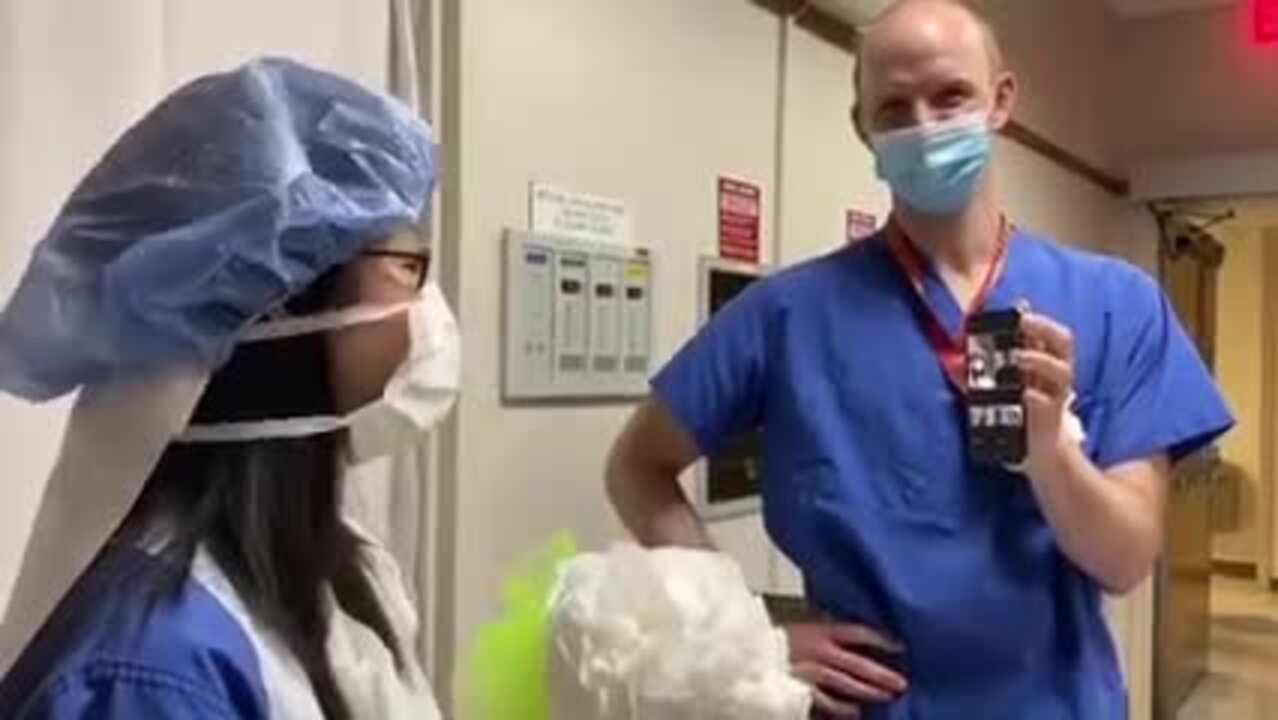
When NC healthcare workers play music together, it’s the coolest virtual concert you’ll see
READ MORE
Healthcare Heroes
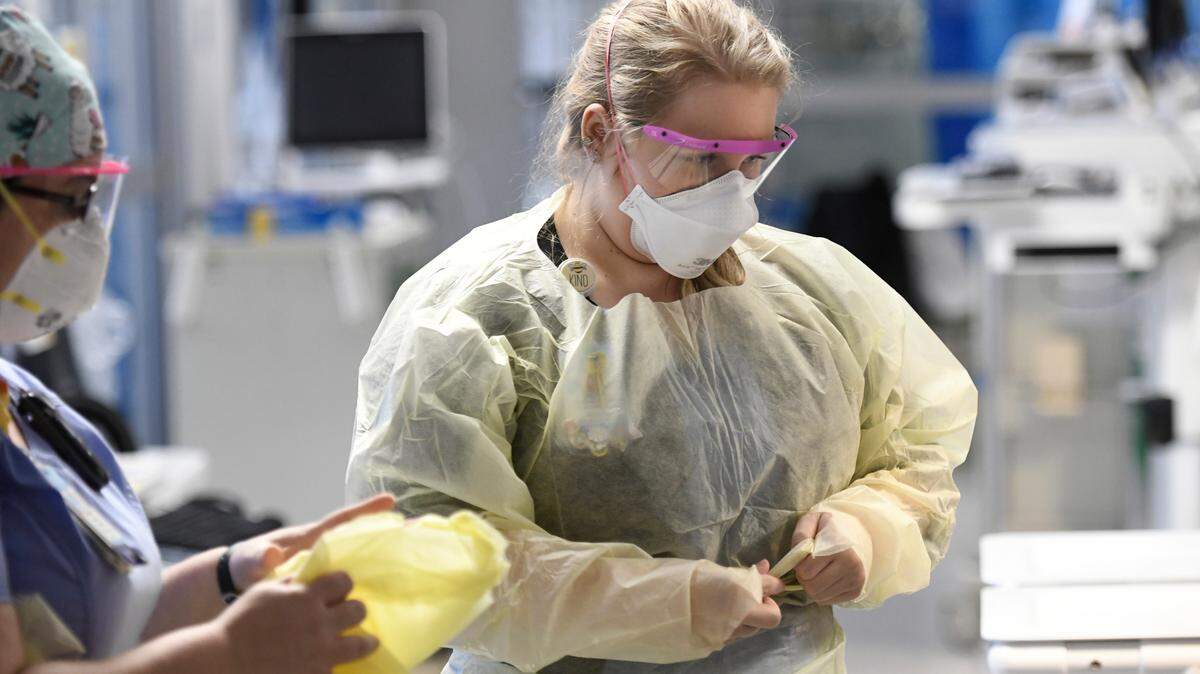
The News & Observer is telling the stories of “Healthcare Heroes,” those on the frontlines of treating coronavirus patients. Others are managing the equipment that allows those patients to be treated safely. These workers are putting their own health and the health of their families at risk every day so they can help others. Here are their stories.
Expand All
For many people here and around the world, music has been a refuge as the COVID-19 pandemic has taken its toll.
For members of the Durham Medical Orchestra — health professionals on the front lines of the crisis — their love of music has powered a remarkably ambitious project.
Earlier this month, 40-plus members of DMO collaborated on on a premiere performance of “The Machine Awakes,” a musical piece from Durham composer Steven Bryant.
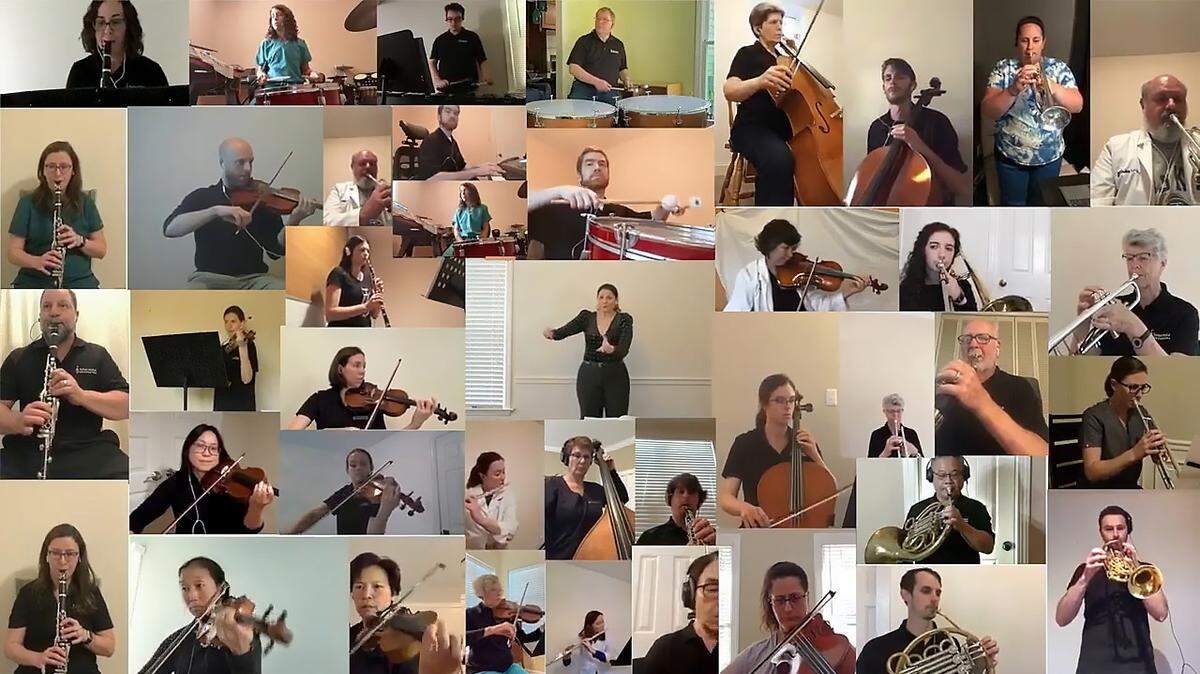
But instead of introducing it in a concert hall, “The Machine Awakes” had its grand debut in an unconventional way — online. While there may have been less fanfare, the resulting video features a 35-piece orchestra performing together by way of smart phones, webcams, editing software and three weeks of meticulous, exacting collaboration.
The final video is a compelling piece of work, a kind of collaborative illusion of musicians performing together, but from dozens of different locations with many still in their scrubs and uniforms. It’s like the coolest Zoom meeting you’ve ever seen.
The Durham Medical Orchestra, founded in 2010, is a full community symphony orchestra open primarily to musicians in the Triangle who work in the health sciences field — doctors, nurses, med school students and others. The orchestra has hosted dozens of performances over the years, often benefit concerts for charitable causes. The DMO’s spring concert this year was intended to be a grand 10th anniversary celebration.
As with so many other spring events, the COVID-19 pandemic put the kibosh on that. DMO conductor and artistic director Verena Mösenbichler-Bryant had an idea.
“In those first few weeks, there were all these musicians doing virtual performances online,” said Mösenbichler-Bryant. “We decided we wanted to do something like that.”
The DMO musicians soon found out that coordinating a virtual orchestra is precisely as complicated as it sounds.
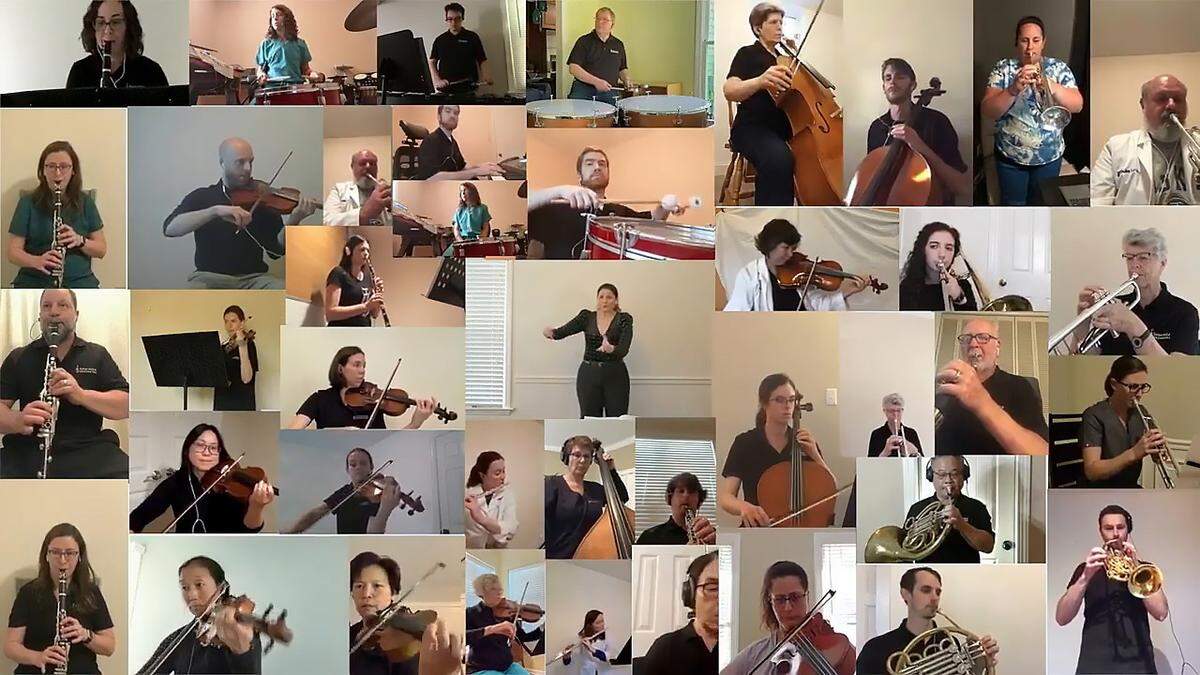
How to bring an orchestra together online
The recording process began with a video of Mösenbichler-Bryant conducting the piece — solo, in her living room — along with a click track, a kind of digital metronome for synchronizing sound recordings.
The video was then distributed via email to orchestra members, who were tasked with playing and recording their own individual parts on the five-minute composition. Each musician had to juggle several pieces of the final puzzle: the conductor video, the sheet music, the click track, plus additional devices to record audio and video of each individual performance.
“It was complicated,” said clarinet player Nick Bandarenko, a pathologist with Duke Health who also is president of the DMO. “I ended up doing my part in my laundry-slash-bathroom.”
After listening to a recording of the music several times in row, Bandarenko set up in front of a light background and spent an evening recording his virtual orchestral part.
“I had to keep the memory of the piece in my mind, then the video of the conducting helped as a visual assist,” he said. “I was just hoping I wouldn’t have to re-do it because, like, the dog barked.”
Once the individual musical parts were collected, it fell to Mösenbichler-Bryant and her husband, Steven Bryant, who composed the piece, to stitch together the musical and visual elements. Using commercial editing software and home computers, the couple spent weeks carefully tweaking and synchronizing the separate audio and video tracks into an orchestral whole.
“You can do a lot with the software,” said Mösenbichler-Bryant, who is also an associate professor of the practice of music at Duke. “You can adjust every pitch, the length of notes, you can stretch it, you can adjust intonation.”
For the video, Mösenbichler-Bryant had to manually layer in each performance and make sure both audio and video were properly synched.
“It’s a little complicated because, in iMovie, you can only do one video at a time,” she said. “You import one video, export it, adjust it, bring in the next….”
A welcome break for healthcare workers
For the musicians, the project provided a welcome respite from the chaos and tragedy of the last few weeks.
Liz Vaughan, a nurse at Duke Children’s Health Center, normally works in a pediatric clinic. But she has been working shifts at Duke hospital’s drive-through COVID-19 testing center.
“I think we put 175 people through our tent yesterday,” said Vaughan in an interview. “It’s been so different. Instead of working directly with kids and families, we’re in the situation where we can’t even touch people.”
Vaughan, who plays trumpet for the DMO, recorded her part after working at the testing center. Playing for the virtual concert helped her reconnect with her passion for music and medicine.
“There’s a healing quality of music, something that kind of just transcends everything,” she said. “It doesn’t matter if you’re the one making it or appreciating it. There’s just something about music that helps.”
The virtual concert also furthers the orchestra’s mission of serving the community through music, Bandarenko said.
“And we’d love to hear from the people that listen,” he said. “Feedback really helps close the circle. Ideally, music is a dialogue.”
In addition to the virtual concert, orchestra members have put together a classical music playlist with recommendations from the orchestra.
“We want to give some guidance on what to listen to, as a way to cope with the virus situation,” said Mösenbichler-Bryant. “I know that many people are under a lot of stress, and I think music can certainly help.”
Online
Go to dmomusic.org for more on the orchestra.
This story was originally published May 5, 2020 at 9:43 AM.
.jpeg)