Ricky Moore, a mentor and champion of fresh NC seafood, is the Tar Heel of the Year
READ MORE
Tar Heel of the Year 2022
Ricky Moore grew up fishing in New Bern and Havelock and brought his love for North Carolina seafood to his restaurant and the people of the Triangle. Meet Moore, the owner of Saltbox Seafood Joint and The News & Observer’s 2022 Tar Heel of the Year.
Expand All
As a kid, Ricky Moore used a lantern to light the river bottom, looking for the sharp glint of eyes in the powdery muck. At the evening’s low tide he and his friends would wade out in the shin-high water of the coves around New Bern and Havelock and collect unsuspecting flounder like they were blueberries from a bush — a quick poke behind the eyes with a pronged spear, a splash then a settle — stringing together a half-dozen or so before walking their heavy boots to the shore.
The next day, his family would have fried flounder with coleslaw and pork and beans, a dish not that different from one diners can order at Saltbox Seafood Joint, the counter-service Durham restaurant that Moore owns and dedicated to the North Carolina coast.
There won’t be pork and beans at Saltbox, but there will be obsessively fresh seafood caught not that far away, fried with care, seasoned for flavor and served as a story of the place where you ate it.
Moore sometimes talks about his 30-year culinary career as “this food thing,” as if it’s a passing interest and not the lifelong pursuit that’s taken him around the world, through fine rooms and fine kitchens and built a legacy in Durham.
His whole life, Moore has known food as the centerpiece of any moment that mattered, planting the seeds of a chef with Eastern North Carolina, whole hog barbecue and fish stew and church lunches.
“This food thing came about growing up here in Eastern North Carolina, where everyone has a barbecue sandwich in their restaurant, everybody makes barbecue when someone dies, everyone makes barbecue when there’s a wedding,” Moore said. “It’s also fish and crabs, fish stew, those are the celebratory meals that feed a lot of people. Church is a big deal, you’d think the Michelin guide was coming to church.”
For that dedication and talent celebrating the seafood and foodways of North Carolina, changing diners’ perceptions of popular and unpopular fish, lifting up and mentoring a new generation of Black chefs and business owners and becoming only the fifth chef in the state to win a James Beard chef award — the top honor in the restaurant industry — Ricky Moore is The News & Observer’s 2022 Tar Heel of the Year.

“When you come up through the ranks on your culinary journey, you have to be focused on who you are,” said chef Joe Randall, an icon in Southern food and mentor of Moore’s.
“Who you are is that person who’s all your experiences coming together. If you care about your home and care about your region, you’re bringing recognition back to where you came from. That was a goal of his, to talk about the food and seafood he knew growing up.”
Randall said that famed New Orleans chef, the late Leah Chase, gave him a piece of advice 30 years ago that defined his career, and he passed that advice on to Moore: “Instead of trying to be somebody else, be who you are; take that and make it work for you.”
“Ricky could have stayed in Chicago or D.C. and would have made money and eventually opened a place of his own. But he listened and went back home and dedicated himself to the food of his youth.”
A son of the water
By the time he was seven, Moore had lived in Germany and Texas and Kentucky, moving with the stations of his Army father, but home has always been New Bern. Growing up in New Bern — wedged at the meeting of the Neuse and Trent rivers, where traffic sometimes stopped for the clanging bell of a drawbridge letting a sailboat pass by — was a life by the water.
Moore fished with his grandmother, armed only with a hook, line and a bamboo pole. He’d crab with his friends, pulling out dozens of blue crabs using chicken backs as bait. He’d swim where it was shallow and deep.
“The water meant peace, it meant crabbing, it meant something to do, it meant fishing, it meant finding a spot to go swimming,” Moore said. “It was an anchor and as a kid, I needed it. You grow up around it and then all of a sudden you figure out you need it, that it’ll be there for you.”

New Bern was a sleepier town then and Moore had the run of it. He had a paper route tossing Sun Journals on downtown porches and spent Sundays at the movie theater watching martial arts matinees.
“I had a wonderful upbringing. You think of Opie Taylor in ‘Andy Griffith,’” Moore said. “This place was as wholesome as it needed to be.”
In high school, Moore was the art kid, remembered by classmates at his 35th New Bern High School reunion as creative and humble and sweet. He even had a partial scholarship to East Carolina University to study art, but Moore said he was restless for something new.
“I didn’t want to sit in a classroom,” Moore said, instead following the path of his father and enlisting in the Army. “I knew I was not going to be a lifer (in the military), but I needed to see some different things and define what I wanted to do and how I wanted to do it.”

Moore was a paratrooper and Army cook, embracing an identity in his military call sign: “The Chef.” The move changed his life in every conceivable way, including meeting his wife Norma as they were both stationed in Hawaii.
In the Army, Moore learned how to take a leap of faith.
“I think about jumping out of the airplane the same way as opening my business,” Moore said. “You’ve got to jump out, and sometimes you’ve got to build your parachute coming down.”

Becoming a top chef
In the early 1990s, chef and cookbook author Joe Randall organized the dinner series Taste of Heritage as a showcase of the most talented Black chefs in the country. He started the series after asking a reporter why Black chefs were rarely featured in food media.
“He said he only writes about people doing something,” Randall said. “So I started doing the Taste of Heritage dinners to show him what African-American chefs were doing.”
One of those chefs was a 25-year-old culinary student named Ricky Moore.
Coming out of the Army, Moore knew he wanted to be a professional chef wearing the tall toque hat and the white jacket. The best place to do that was the Culinary Institute of America in Hyde Park, N.Y., then and now considered one of the country’s top cooking schools. As an older student coming from one of the most dangerous jobs on the planet, Moore said he thrived at CIA in the kinds of regimented, repetitive tasks of cooking school.
“It was easy for me,” he said. “It fit me like a tee.”
Randall said Moore stood out as completely dedicated to developing his craft.
“The thing was, if you weren’t serious, chefs didn’t waste time on you,” Randall said. “Ricky was committed to learn what we were trying to share. That’s the name of the game. You work for good chefs and you take a bit from each of them, then those are the chefs that take over.”

Training in fine dining
When he graduated CIA, Moore took the route countless others in fine dining have taken, doing tours in Europe, where he worked briefly in some of the world’s great kitchens in Paris and Northern France, Italy and then back in New York. While in New York he staged at places like Le Bernardin, renowned for its seafood, and at Daniel from Daniel Boulud.
“I was chasing these places,” Moore said. “I wanted to know what made them great. What I learned, it’s a cultural behavior, it’s a discipline. It wasn’t necessarily about the food, it was a behavior. I learned one thing right away: it’s simplicity. It’s never anything overly complicated.”

Moore found connections in the larger food world and the foods he knew from his childhood. He recognized the classic French technique confit — the cooking and preserving of something in its own fat — in the kitchen of his grandmother, who would hold sausages in grease to fry up when needed. In falafel, he thought of hushpuppies.
“I found the common denominator,” Moore said. “Food as I understand it is universal. I can make connections and I brought who I was to the table.”
He later worked on the opening staff of Gray Kunz’s Washington, D.C., outpost of Lespinasse, a famed New York restaurant blending French and Asian flavors and considered one of the best of its generation. Moore said it was the top kitchen in D.C. at the time, operating at the height of the country’s idea of fine dining, the type of place where there was one person whose entire job was to pick and chop the herbs, plucking tiny thyme leaves and slicing chervil just so.
“It was one of the best kitchens I ever worked in,” Moore said. “It was super intense. You had to bring your A-game. There was the competitive nature of that level of cooking.”
Wanted: A good fish sandwich
The shift in Moore’s career began with a craving and a question. One day, Norma, now his wife of 30 years, asked where she could get A Good Fish Sandwich. Nothing came to mind.
By that time, the couple had been back in North Carolina for two years, with Moore leading kitchens at places like Glasshalfull and Giorgio’s in Cary — the kinds of upscale fine dining restaurants he’d thrived in his whole culinary career.
It was 2009 and Moore had cooked in Kitchen Stadium in the TV show “Iron Chef,” led kitchens in Chicago and Washington, D.C., but had never had a place of his own.
“I had been in charge, but I was never the owner,” Moore. “I got burned out being executive chef here and executive chef there. I got bored, I needed some more excitement.”
The question of where to find A Good Fish Sandwich seemed to focus that dream down to a single dish. What convinced Moore it could work was a trip to Singapore where he ate at small food stalls staffed by one or two people, often preparing just one deeply flavorful dish.
“It was food that was simple and uncomplicated but it wasn’t lesser than,” Moore said. “A lot of people feel like fine dining is more than someone cooking something simple and that’s not necessarily true.”
Moore thought he already knew the perfect spot for a fried fish joint: an unloved shack on Mangum Street in Durham that had been various versions of hamburger and hot dog stands for years.
“I just saw the building on Mangum Street and it looked like something I grew up going to,” Moore said of the original 205-square-foot restaurant that would become Saltbox.
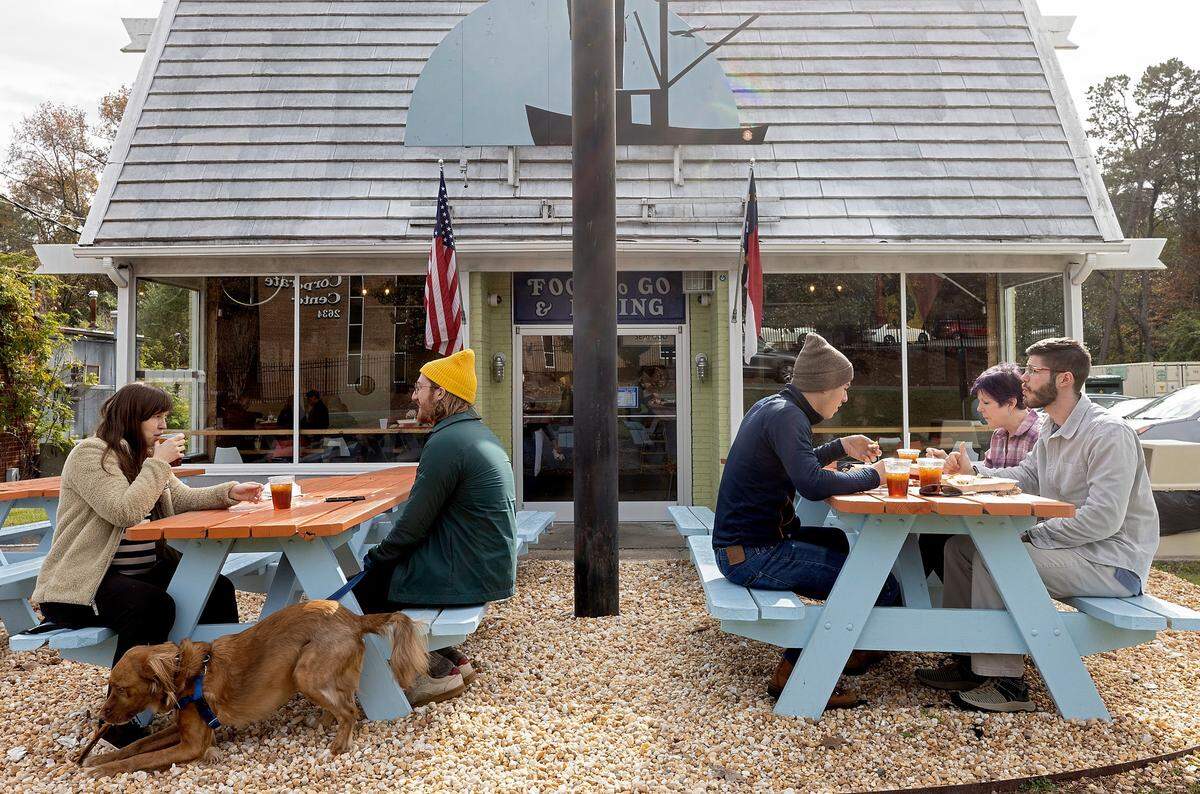
Moore painted the building and storage shed with a few friends. He spread oyster shells and pebbles around picnic tables topped with umbrellas. He stuck flyers announcing his arrival under the wiper blades of cars in the neighborhood.
For five years, Moore told himself, he would commit to being in the restaurant every day that it was open, prepping and frying the fish.
“That was the only way I was going to get any traction,” Moore said. “I had to be honest with myself. I wanted to drill all the way down to simplicity. The owner is here, the cook who is cooking your food is here. The reason Saltbox is so well anchored is because I was there every day.”
At Saltbox, local means local
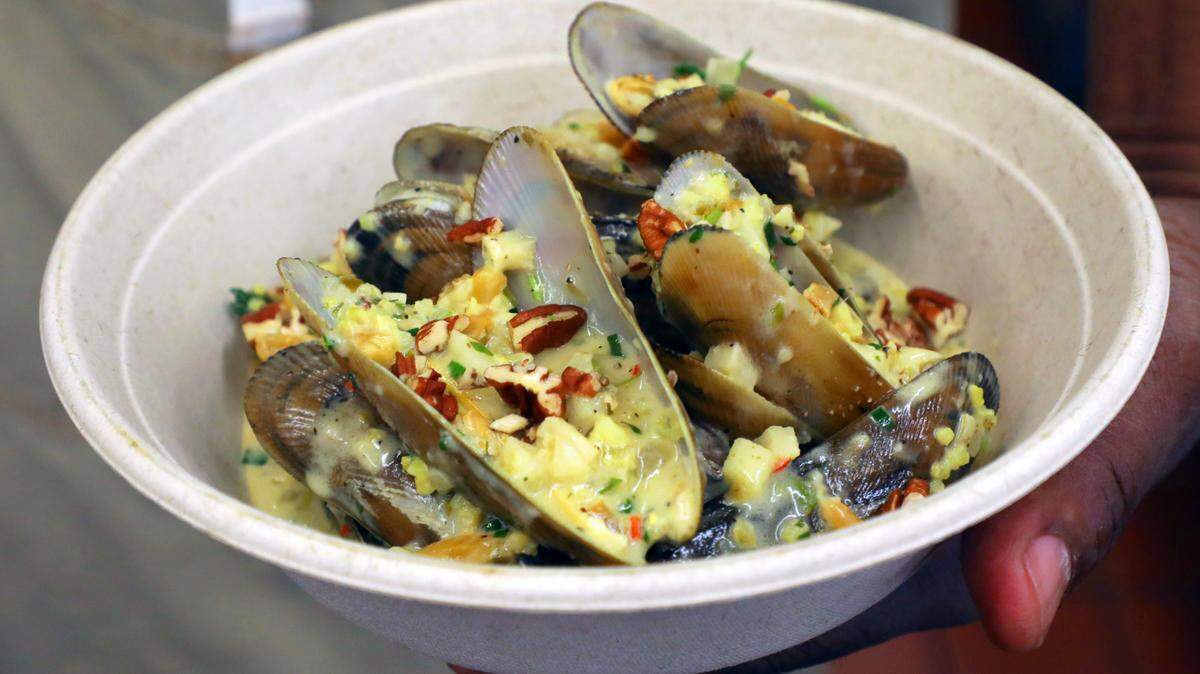
Ana Shellem of Shell’em Seafood harvests wild shellfish in the marshes near Wrightsville Beach where she lives on a boat with her husband and dogs. Clams and oysters are part of the coastal culture in North Carolina, but Shellem also harvests wild mussels, particularly briny and large and expanding many diners’ view of local seafood.
Moore buys her mussels mostly for events outside of Saltbox, where Shellem says she’s often amazed to hear what he’s done.
“His palate and abilities are endless,” Shellem said. “He looks at everything with thought and purpose behind it. You know your product will be honored in the way it should be.”
Shellem serves on the state’s fisheries commission and is an advocate for sustainability in the state’s seafood industry. Even in restaurants on the coast, “local seafood” is often more marketing than reality, she said, making Saltbox all the more special.
“I think there’s a very huge misunderstanding of where a lot of our seafood is coming from,” Shellem said. “When the tourists come they think they’re eating North Carolina seafood, but most don’t have local seafood in the building. ... Ricky is incredibly honest to the bone.”

A champion of lesser-known fish
With Saltbox, Moore partners with the whims and bounty of the sea. At his restaurant on Durham-Chapel Hill Boulevard, a larger, second location that opened in December 2017, Moore writes his menu on a chalkboard each morning based on what comes in from the coast.
In the beginning, Moore would sometimes drive to the fish markets in Manteo or Wanchese himself, picking out what was fresh and flavorful and just in off the boats.
Packed in ice and just hours from the ocean, the eyes of silvery mullet are clear and dark as the fish arrives at Saltbox’s back door, its skin shimmering blue and chrome like sunlight on the water.

Much of the fish arrives whole, butchered and scaled in the Saltbox kitchen, and smells like nothing except the salt air 150 miles away.
“I don’t like the term ‘fishy,’” Moore said. “Fresh fish shouldn’t smell like anything.”
For the 10 years Saltbox has been in Durham, most of its fish has come from Locals Seafood, a 12-year-old Raleigh fish vendor that helps get the catches from numerous coastal fishermen and women to market. In the Triangle beyond Raleigh, Saltbox was that market.
“He’s really a champion for the lesser-known species,” said Locals co-founder Lin Peterson. “Seafood is the last wild food we get to eat as consumers. It’s our duty and our niche to connect to our coastal community. Having a chef taking species and presenting it, that’s what’s going to get people eating it, the things he’s able to do with a chef’s touch.”
Peterson said the Saltbox menu was unofficially divided between “the familiars” like oysters and shrimp, and the “ask me about it” list, where Moore could make the case for bluefish, or rubyfish for fans of flounder.
Changing minds about bones
In North Carolina, fried fish goes by another name: Calabash. Named for the tiny fishing town at the southern end of North Carolina’s coast, Calabash has come to mean the platters of fried seafood piled high.
That’s the reference Moore started with, he said, having cleaned shrimp and oysters at a similar fish house growing up in New Bern, but he took Saltbox’s style in a direction that never hid the fish. The breading is thin, closer to a dusting than a dredge, letting oysters be crispy then creamy on the inside or the skin of bluefish to show through.
“I didn’t want to stray too far from Calabash, that’s regional, I never wanted to get away from that,” Moore said. “I just wanted people to come and experience something a little different.”
But the early menus had a bone to pick with the general expectations of certain fish at seafood restaurants — specifically that bones are bad. At Saltbox you’d find bone-in croaker or grouper collars, a cut that’s essentially the shoulder or neck, where prized morsels are kept within a sweeping thick bone.
“That meat is sitting there and a lot of times it gets discarded,” Moore said. “I was really trying to push the envelope and introduce people to things that maybe you don’t see on other menus.”

These bonefish can be ordered on a roll, but of course can’t be eaten as a sandwich. Instead, Moore asks diners to trust him, to filet the fish themselves, digging out the bits with a plastic fork or maybe their fingers, to use the bread as an accompaniment instead of a vessel.
It’s the ultimate sign of trust from a diner, to walk into a restaurant and order something unfamiliar. Harker’s Island oyster grower Ryan Bethea believes that’s a big reason people go to Saltbox, to put themselves in Moore’s hands and taste something new.
“Seafood in general is based on trust, seafood seems to be unique in that way,” said Bethea, who sells his oysters only to Herons fine dining restaurant in Cary, but has worked with Moore on dining events.
“People trust that what he’s going to give them will be delicious, even if they’ve never had it before. When you know everything is good you feel confident saying, ‘Yeah I’ll try that.’”
Getting to the glory
As Moore opened the original Saltbox on Mangum Street, he said neighbors who watched the new restaurant come together told him he’d be closed in two months.
“The place had a history of business failure,” Moore said. “People anticipated it. I didn’t take it personally. I had done my homework. I said, ‘Thank you so much, I’m going to keep it moving though.’”
As Moore kept moving the restaurant was a success from the start, but it was never smooth sailing.
Saltbox was broken into at least six times in its first four years, usually through broken windows of the restaurant or food truck. One time a $3,800 generator was taken along with $374 worth of seafood.
Then one Friday night in 2016 as Moore was locking up, he was held up at gunpoint. Two men pushed him back inside the restaurant and zip-tied his hands, then ransacked the place. Ultimately they made off with $900 in cash and Moore’s cell phone. He reopened the next day.
“Boom, we’re killing it the next day,” he said. “I need folks to understand, you’ve got to go through some madness. You’ve got to go through some madness to get to the glory.”
By then Saltbox was already on its way to glory.
The tiny shack was a big part of the bright and hungry spotlight suddenly shining on Durham’s food scene, which launched the city into a small circle of the country’s top dining destinations.
In 2021, Moore announced he was closing the original Saltbox at the end of August.
His lease on the building had ended and developers had plans for the space. Mangum Street was in a state of redevelopment, lined with new and planned apartment buildings. The original Saltbox had been torn down by October replaced with six new, nearly complete condos.
Moore jokes that he wants the building named “The Saltbox” in the way condo buildings sometimes are, winking to a past known by the rest of the city.
He holds no grudges, he said, and feels like he was treated fairly. But the loss of the building stings.
“I was emotionally connected,” Moore said. “When they tore that building down I couldn’t go over there for a while. I put a lot of time in that place. I didn’t own it, but still, it’s like damn.”
Restaurants anchor communities
In New Bern for his 35th high school reunion, Moore stands by the railing of the Neuse River, an ancient and constant timepiece he’s known all his life, moving only in one direction.
All around him are altered images of where he grew up. Gone is the steel bridge over the Neuse that he and his friends would cross on their bikes to pick blueberries, replaced by a concrete highway overpass running in a different direction. The empty, quiet banks of the river are now dotted with large homes and docks.
“I feel like I’m a stranger in my own town,” Moore said. “It doesn’t even look like New Bern.”
Downtown was buzzing that weekend in a way he’d never known. Tourists traipsed the downtown streets of the sleepy coastal town now filled with new restaurants, renovated buildings and Victorian homes.
As cities like Durham and New Bern change and rebuild, becoming different versions of themselves, Moore thinks about the restaurants that fill the spaces.
As he created Saltbox, he looked to places like King’s Sandwich Shop in Durham, serving 80 years of hamburgers and hot dogs. In New Bern he thought of McLellan’s, a department store with a lunch counter where Moore had his first grilled cheese sandwich, served by a woman in a crisp white uniform. He thought of Melvin’s Chicken Shack, a small cinder block building outside downtown New Bern, where a former Navy cook sold late-night fried chicken that even wrapped in foil stayed crispy the 10-mile drive back home.
Moore believes restaurants can anchor communities, and he worries about what happens when they’re gone.
“This whole food thing, it’s amazing how we’ve come full circle,” Moore said. “All the stuff I’ve seen and done, I go back home and try to find those places. First of all, you can’t find those places no more. What becomes classic now? What’s hometown? The original owners, everyone’s getting old.”
Moore had built Saltbox as one of those restaurants outside of time, to make it look like it had been there forever and still had a forever to go.
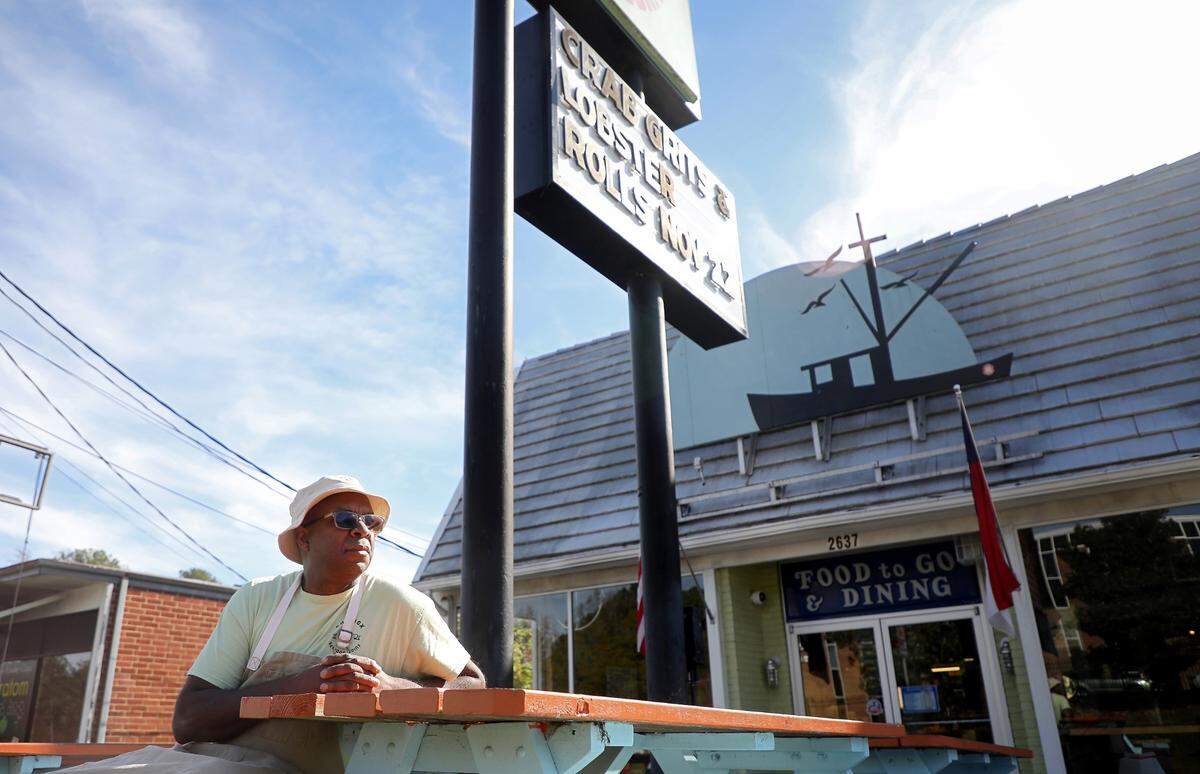
For his second location, he bought the decades-beloved Durham restaurant Shrimp Boats, another entrenched restaurant stitched to the heart of the community, which also served fried seafood along with fried chicken sandwiches.
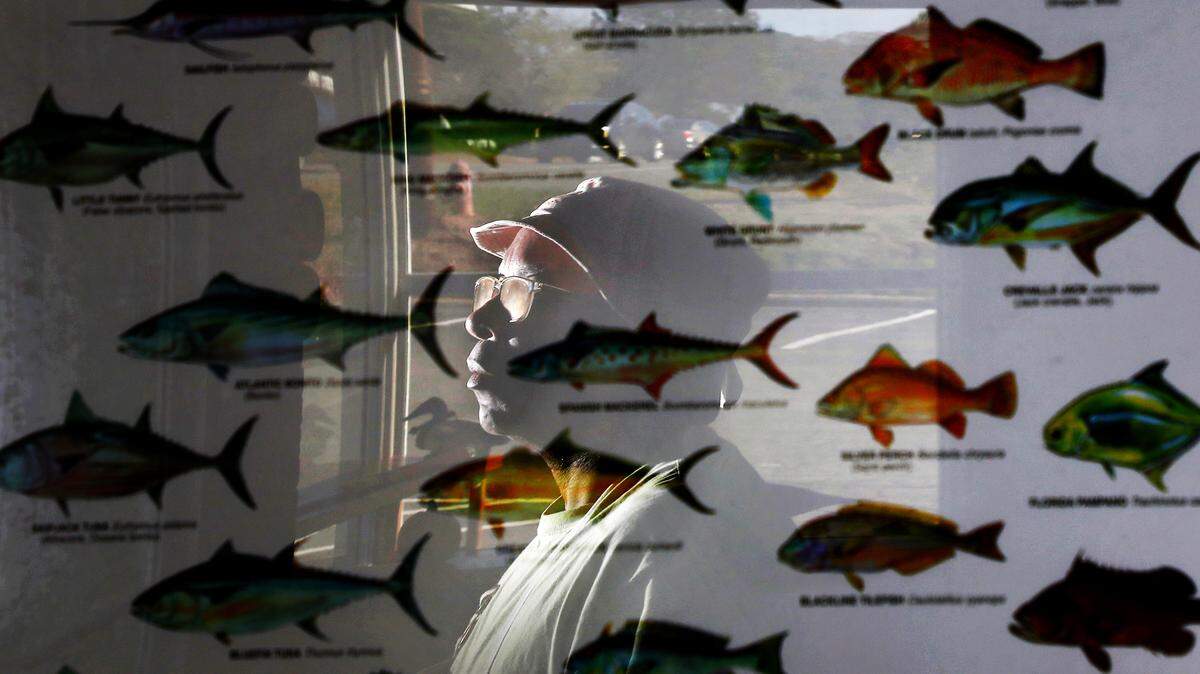
Moore turned it into a larger Saltbox with indoor seating and outdoor picnic tables. He strung crabbing baskets from the ceiling and framed a wide poster of the dozens of species found in North Carolina’s coastal waterways — a kind of menu in itself.
“I drove by this location on my way to work every day,” Moore said. “I put it out in the universe that if that place ever became available, that would be my next location.
“These places were home-cooking places. That’s my culinary DNA. I’m so thankful and blessed to have grown up eating what I ate. I go back to it a lot, I think about it and it’s what people want now.”
Winning food’s top prize
In Chicago for the James Beard Awards in June, Moore wore a gray tuxedo with black lapels. It was his first time as a finalist, and Moore confessed he didn’t write a speech.
Some chefs cherish an element of spontaneity in their cooking, but not Moore. He is meticulous and exact. When his name filled the Lyric Opera House, Moore left his words to the moment. He shouted out Durham, throwing his fists together to make bull horns, he thanked his family and God and his two grandmothers, Bernice and Lottie Mae.
Moore was the winner of this year’s James Beard award for Best Chef: Southeast, recognition not for his decades of fine dining but for a fish camp back home.
The next day back in Durham, a line of diners waited outside for the doors to open for lunch.
Saltbox’s win stands out in the history of the Beard awards for honoring a casual counter service restaurant with a chef award. It stands out even further as a Black-owned restaurant.
The Beard awards have been criticized over the years as mostly honoring white male chefs.
In 1994 the late Patrick Clark became the first Black chef to win a James Beard chef award, taking Best Chef: Mid Atlantic. Only one other Black chef, Marcus Samuelsson, would win an award in the decade to follow.
Randall said Moore’s win is part of a larger shift in recognition for Black chefs.
“Many were qualified over the years, but never won,” Randall said. “I thought (Moore’s win) was amazing. I think there’s an opening now for others.”
During the pandemic, the James Beard Foundation rewrote its criteria for awards in an effort to ensure greater representation among winners. Asheville chef Ashleigh Shanti, a 2020 finalist for Rising Star Chef in 2020, which honors the top young chef in the country said Moore and other winners show that the awards are making strides.
“Black presence has always existed (in fine dining), but it’s taken quite a while for it to be recognized,” Shanti said. “Ricky’s win has major historical significance. It’s more than just a win for the South and the Black community, it speaks to the diversity in dining. It’s a win for the small mom-and-pop counter service restaurants that are slinging casual food and doing it really well.
“I thought it was a long time coming,” Shanti said of Moore’s win. “He is one of the legends in our industry, I was happy to see him finally getting that recognition.”
To Moore, the award expands two sides of the food world and possibly connects them.
“There’s a new crop of folks introduced to Saltbox,” Moore said. “And there’s a new crop of folks introduced to what James Beard is.”
As a restaurant representing North Carolina and a tradition of standing at a counter and ordering a fried fish sandwich, Moore said the biggest surprise came as he realized how much the award meant to other people.
“I was so proud,” said Brandon Shepard, who owns Shepard Barbecue on Emerald Isle and considers Moore a mentor. “You’ve got an African American chef building his business from the ground up, doing casual food, not just tweezer food. (The award) was beyond himself. It was a win for a lot of people.”
With 30 years in restaurant kitchens and reaching the industry’s peak in his 50s, Moore said he’s still in a state of reinvention. His award may have “Best” attached to it, but Moore said “best” is boring and he still has work to do.
“I don’t want the best,” Moore said. “I want to be right on the edge of goodness all the time, just hanging out.”
This story was originally published December 21, 2022 at 6:00 AM.