HB2, COVID and Apple: An exit interview with outgoing NC Commerce Secretary Tony Copeland
Tony Copeland’s tenure as the North Carolina Commerce Secretary was bookended by two crises.
On the front end, House Bill 2, the “bathroom bill,” had frozen economic development in the state and cost North Carolina billions of dollars.
And now, the coronavirus pandemic has led to a spike in unemployment.
But Copeland, who will leave his post in January, is confident the state is in a place to recover rapidly from the pandemic.
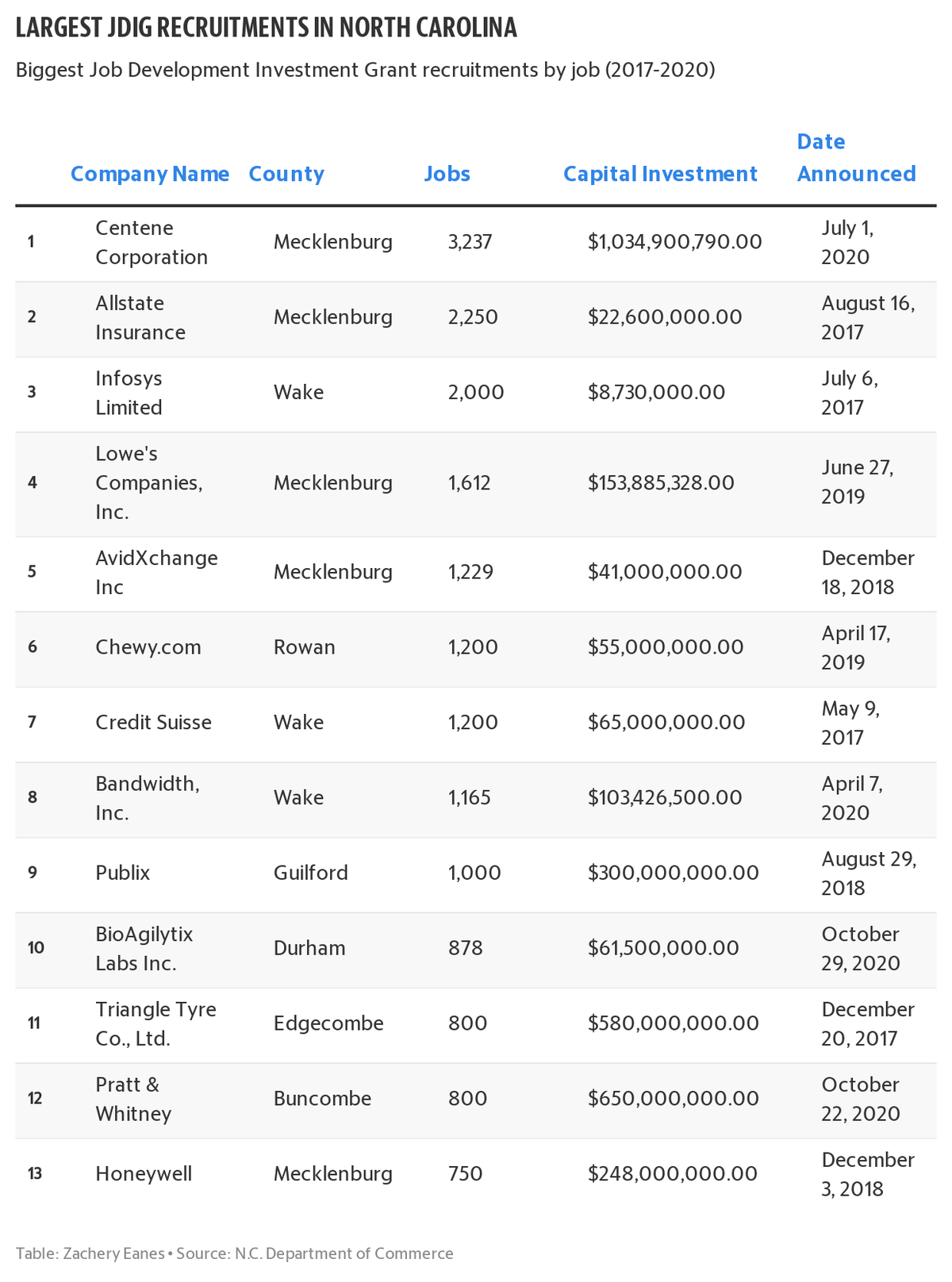
In 2020, he noted, the state has broken records for promised investments and nabbed some of its largest corporate expansions, like Centene in Charlotte and Bandwidth in Raleigh.
So why has he decided to leave?
“It’s time for me to go back in the private sector,” Copeland said.
The News & Observer talked with Copeland by phone about his time at Commerce. The interview has been edited and condensed for clarity.
Q: What was the highlight of the past four years?
A: When I came (in 2017), the governor looked at me and said, “We’ve got to bring stability back.”
We were in the middle of HB2. There was a real malaise in economic development in the state. The first thing I did, and the governor worked on, was working with members of the General Assembly in good faith on both sides of the aisle to work on the repeal of HB2.
At the same time, the governor and I had been going back and forth to New York with Credit Suisse, who were no longer going to do an expansion here unless we got rid of HB2. Well they lived up to their promises when it was repealed, and today we have 30% of Credit Suisse’s North American workforce here.
Q: Where do you think the state would be if HB2 had not happened?
A: I guess we’ll never quite know. I think perhaps we would have gotten to where we are today sooner. But I think we recovered from that, in a very short period of time. This year, we reached the highest amount of inward investment in the history of the state in the middle of the pandemic: $6.3 billion. That’s astounding.
Q: What will it take to keep that momentum, especially in light of COVID-19?
A: Workforce is No. 1. In 1950, we were the second-poorest state in the country. We transformed that through education and workforce. And as of today, 50% of North Carolinians were not born here. We are a destination place, and we are growing our workforce.
And especially in the past year, we should not omit that we’re seen as a predictable place for doing business. I think the governor’s approach to dealing with the pandemic has been reasoned, based on science. And while this is not a good situation, not one of the companies coming here has questioned the governor’s handling of a pandemic, and (they) are very confident in his approach.
Q: Why did the state’s unemployment infrastructure struggle during the pandemic?
A: As of last week, we had over 230,000 people receiving unemployment assistance. And thank goodness, the president signed legislation to continue the benefits going on. You know, you look around the country, most of these unemployment offices and departments were on the verge of collapse. Some did. Some were even using paper. Thank goodness in 2018 we at least automated Division of Employment Security
In February, I think we had 11,000 people receiving unemployment, which was a North Carolina normal. And then by the middle of March, we were having as many as 50,000 claims a day.
That’s under control now. But how do you gear up something from 3,000 claims a week in normal times to 50,000 claims a day? How you have that ready with call centers and operations? At one point during the pandemic, there were so many calls and inquiries that the network was flooded. But that’s going to be dealt with.
Q: What measures does the state need to take so that doesn’t happen again?
A: That’s to be to be seen when all of that reporting comes back. Let’s just hope we keep the political will to keep that going.
Q: Does the state need to rethink incentives?
A: I think our main incentive, the Job Development Investment Grant, has really stood the test of time. It pays for itself. And it’s not dealt with state appropriations and a loss of income to the state. But once again, workforce is the No. 1 incentive.
Q: North Carolina has long coveted landing an automobile factory. Why has that still not happened?
A: One of the things is a ready supply chain of all the manufacturing things that go into automobiles. You know, it’s been reported that 80% of the cost of an automobile is logistics. That’s moving parts in and out. I know that was one of the things that happened with Toyota, when they were looking here. We were just a little too far east for their their supply chain.
We had the workforce and although we have a huge number of people in North Carolina that make supplies for the auto industry, I think that’s some of it.
Q: North Carolina also lost out on Amazon’s highly public search for its HQ2 destination.
A: I think one of the positives of that is we looked at ourselves and looked at the workforce that we had here already. I think there was probably some inner looking like, “Do we want to be Amazon?” Perhaps, the jewel in the crown is the mix that we have now, especially in life sciences and IT in the Triangle.
No project is too big. But I think you have to look at what you give up for them. Every company comes with an ask and taxes an infrastructure and the systems that are in place. I think you have to be reflective and look at what you want to be.
Q: Apple also chose Texas over North Carolina for an expansion in 2018. Why hasn’t the state talked about that project?
A: Apple is a great company and hopefully we will see them here again someday. You know, projects that we’re still in the midst of working on are something that commerce secretaries aren’t supposed to be commenting on.
Q: But you would consider it active?
A: Yes.
Q: What does active mean to you?
A: Let’s just leave it at that.
Q: What’s the future of economic development in rural North Carolina?
A: As I travel around the world, urbanization is everywhere. You go to rural France, many of those towns have largely been depopulated. And I think what you’re seeing as the industrial manufacturing mix changes, as the education level changes, the concentration of workforce naturally congregates around urban areas.
On the other hand, the areas that are around 60 miles from urban areas are really ripe for bringing in large manufacturing projects. They already have much of an infrastructure in place that you can build on: roads, highways, natural gas, water, sewer, and the like.
It’s imperative that we continue to work with rural areas and find things suitable for them. But it’s a challenge as many of them become depopulated. We need to work with their school systems to give these kids the opportunities, and one of the things that’s really apparent is we need to have a ubiquitous broadband network in rural areas. That’s become very apparent during the pandemic.
This story was produced with financial support from a coalition of partners led by Innovate Raleigh as part of an independent journalism fellowship program. The N&O maintains full editorial control of the work. Learn more; go to bit.ly/newsinnovate