What Goodnight’s decision to keep SAS private has meant for its workers and Cary
I’m Brian Gordon, tech reporter for The News & Observer, and this is Open Source, a weekly newsletter on business, labor and technology in North Carolina.
SAS Institute turns 50 next year, and for more than half its lifetime, the media (and employees) have asked whether the giant analytics provider will ever go public.
“Personally, I don’t want the hassle of running a public company,” Jim Goodnight, SAS cofounder and CEO, told The N&O in 1995. “It would ruin my life.”
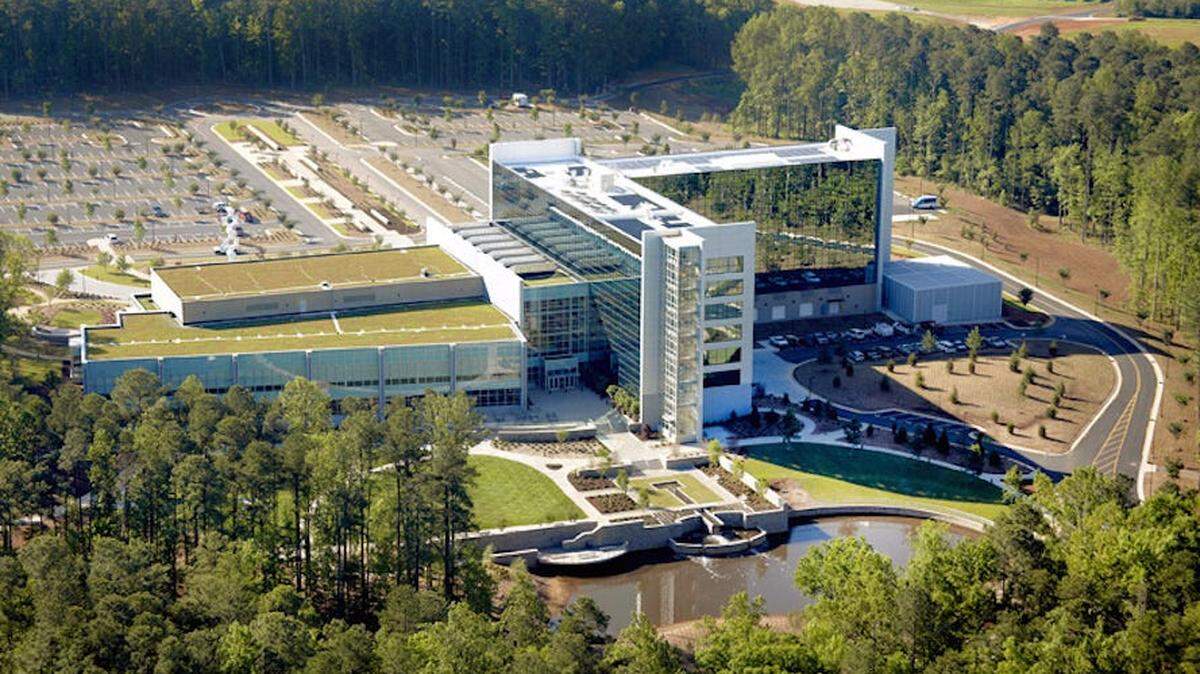
Goodnight’s ongoing decision to keep SAS private has shaped the company that — more than any other — has shaped the town of Cary. A two-thirds owner, Goodnight made his business into a model for work-life-balance, earning SAS accolades for its 35-hour work weeks, on-site child care, housing options, free M&Ms, and a resident pianist playing in the cafeteria. The company was known for hiring couples who would commute together with their kids. Former Cary Mayor Koka Booth worked at SAS, and current Cary Mayor Harold Weinbrecht Jr. spent a career there, too.
“Some employees now live, work and shop almost entirely in what some called SASland,” The N&O wrote in 1996.
Today, SAS says it’s again readying to go public, a pledge the company has made before. In 2000, Goodnight predicted the company would likely hit the market within 12 to 18 months. His motivation, he said, was to keep workers from jumping to the upstart internet companies that dangled lucrative stock options.
SAS brought in Andre Boisvert to complete the IPO and soon named him president and COO. Yet within a few months, Boisvert abruptly resigned when Goodnight’s interest in going public faded. “I wouldn’t want any of these young kids on Wall Street running my company,” Goodnight said in 2002, dismissing the appeal of the stock market.
“My goal in life is to minimize taxes — make our bottom line as small as possible,” he also said that year. “I always thought that was the American way — not inflating earnings.” Two years later, Goodnight told USA Today “we were never really close” to going public.
What was lost in this decision? A few years earlier, the IPO of the Raleigh software provider Red Hat made several local employees overnight millionaires. Some Red Hat executives then invested their windfalls to start tech companies — which spawned other local businesses nicknamed “Red Hat’s grandkids.” SAS workers have never enjoyed the financial jolt that comes with holding shares during a successful public offering.
But others argued staying private allowed SAS to remain SAS. The expenses that landed SAS on “Best Places to Work” lists — childcare, gourmet lunches, 35-hour work weeks — could have run counter to investor demands.
“It would have destroyed the culture,” Al Segars of the UNC business school said in 2004. “It was one of the best strategic decisions ever made in the software industry.”
Now, the man who never seemed that thrilled about going public once again says SAS is preparing for the stock market. Some of the reasons the company gives in 2025 are similar to what was said 25 years ago, like offering employees stock options, attracting talent and raising SAS’ profile.

In an email to The N&O, SAS spokesperson Shannon Heath said the 82-year-old Goodnight also seeks the stock market “for succession planning to position the company for long-term growth.”
“We know that we will be an attractive investment for investors,” Heath wrote in an email. “Few companies have made it to the 50-year mark, but even fewer have done it how we have, which is debt free and profitable since day one.”
When investors will get the chance to prove SAS right or wrong is unclear. A promise to IPO in 2024 has passed. A subsequent aim to reach the market this year is now unlikely.
So don’t hold your breath on SAS ever becoming a public company. Then again, SAS is starting to consider life after Goodnight — and its next step will be worth tracking.
Roche in Holly Springs is no moonshot
No economic incentive agreement is a sure bet. Far from it. Most projects North Carolina has backed with job development investment grants fail to meet their announced hiring goals. Many create no jobs at all.
But North Carolina keeps doling out incentives, emphasizing that these grants (called JDIGs) keep the state competitive and are tethered to performance, distributing taxpayer money only after recipients meet jobs and investment targets. While some JDIG recipients seem like lower-probability moonshots the moment they are announced, others — due to location and context — appear likelier to actually happen.
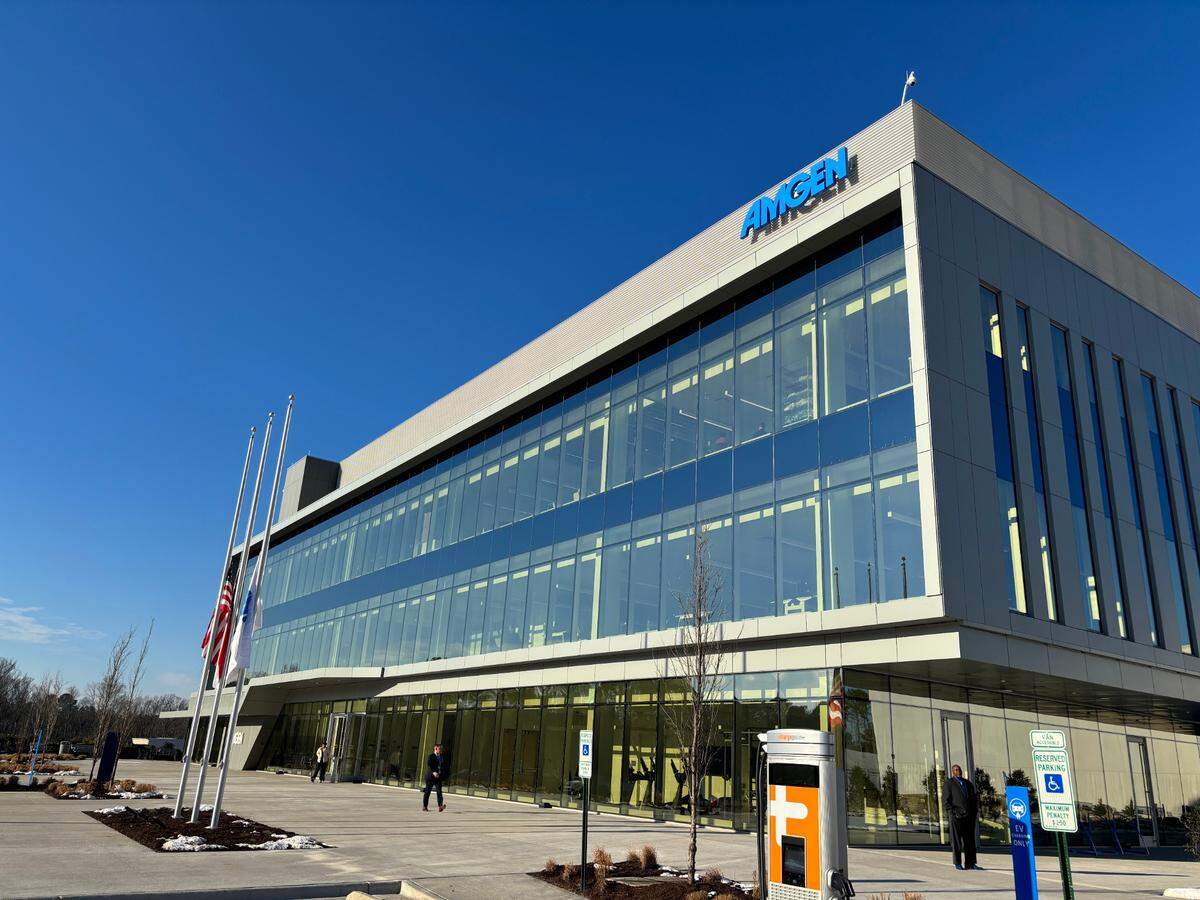
Case in point: North Carolina awarded Genentech a JDIG to build a facility in Holly Springs. A subsidiary of the pharma giant Roche, Genentech aims to hire 420 workers between 2028 and 2032 on the CaMP Helix business site in southwest Wake County. Holly Springs is cementing its status as a fast-growing drug manufacturing hub — with Roche joining incoming nearby plants from Fujifilm and Amgen.
Roche isn’t a new company projecting to build something they’ve never built before, like Natron Energy or Boom Supersonic in Greensboro. Roche is one of the world’s largest drugmakers, and it plans to produce medications in a community known for pharma manufacturing.
Nothing is certain. North Carolina also canceled a JDIG for Pfizer, which is in the middle of sweeping cost cutting. But as uncertain bets go, Roche in Holly Springs sounds pretty right.
Clearing my cache
- A new bill introduced by U.S. Sens. Thom Tillis and Ted Budd of North Carolina would allow civil supersonic flight over American airspace — so long as the planes’ sonic booms can’t be heard from the ground. Boom Supersonic CEO Blake Scholl lobbied for the legislation. Overland flight restrictions hamstrung the Concorde a generation ago, but with emerging sound-suppression technology, Boom hopes to break the sound barrier over land and water.
Based in Colorado, Scholl’s passenger jet startup hopes to open its first assembly plant at the Greensboro airport.
- NCInnovation awarded grants to fund 17 projects at UNC System schools. New and somewhat controversial, the nonprofit used public funding to establish a half-billion-dollar endowment from which it helps UNC System researchers commercialize their work. This latest grant round of $13.6 million included money for an App State researcher who uses AI to detect livestock parasites and for an NC State team working to develop non-toxic carbon fibers.
- The troubled Durham semiconductor manufacturer Wolfspeed could have a lifeline. The Wall Street Journal reported Apollo Global Management is talking with the bank Moelis about restructuring Wolfspeed’s debt.
- Epic Games CEO Tim Sweeney was one of 32 tech and business leaders in Saudi Arabia listed as attendees for a high-profile lunch with Saudi officials and President Donald Trump. Neither Sweeney nor Epic Games responded to an email about what was discussed or why he attended. The guest list included Elon Musk, Sam Altman, IBM CEO Arvind Krishna, Nvidia CEO Jensen Huang, Amazon CEO Andy Jassy and venture capitalist Ben Horowitz.
- More state incentive news: North Carolina awarded a grant Wednesday for the power transformer company Prolec to expand operations in Goldsboro with more than 300 promised jobs.
- Humacyte, a Durham company that engineers human tissues and organs for transplants, has laid off 31 workers in an effort to lower expenses. The FDA approved Humacyte’s surgical implant Symvess in December, but the approval came with warnings and regulatory disagreement.
- This newsletter has spent more time on how National Institutes of Health cuts are impacting Triangle universities, but the Trump administration has also eliminated National Science Foundation grants focused on promoting diversity, studying specific racial or identity groups, environmental hazards and combating misinformation. According to a public database that tracks the cuts, North Carolina-based organizations have lost 55 grants totally $45.5 million.
- Construction While in Progress, or CWIP, is a way for utility companies to finance new power plants by passing along costs to customers upfront. Last week’s Open Source delved into the practice, which has been proposed in North Carolina. While critics emphasize CWIP has left ratepayers in neighboring states on the hook for billions, CWIP supporters like Duke Energy and the industry lobbying group Consumer Energy Alliance argue the policy saves money.
“Since many projects take a number of years to build, this practice will reduce the amount of debt electric companies have to carry — making it cheaper and faster for companies to build,” CEA’s regional director wrote this month in the Hickory Daily Record.
- GE Aerospace says its new deal with Qatar Airways for more than 400 GE engines will benefit the company’s operations in Durham, Asheville and Ashe County. Statewide, GE Aerospace says it has close to 2,000 employees.
National Tech Happenings
- Microsoft laid off 3% of its worldwide headcount, more than 6,000 people, as the company shifts resources toward artificial intelligence operations.
- A startup from OpenAI CEO Sam Altman is bringing its eyeball-scanning identification technology to the U.S.
- The Trump administration eliminated another $450 million in grants to Harvard University. The school, in turn, expanded the scope of its lawsuit against the White House. Harvard’s president also said he’d take a 25% salary cut.
Thanks for reading!
This story was originally published May 16, 2025 at 9:44 AM.