Why Wolfspeed’s stock rose 1,700% this week — and what really happened
I’m Brian Gordon, tech reporter for The News & Observer, and this is Open Source, a weekly newsletter on business, labor and technology in North Carolina.
Say goodbye to Wolfspeed, and say hello to a brand new company named Wolfspeed.
After 38 years, the Durham semiconductor supplier emerged from Chapter 11 bankruptcy this week as a wholly different entity. It reincorporated in a new state (Delaware), appointed five new board members (as seven left), and canceled its old shares while issuing new ones. In short, Wolfspeed’s creditors forgave billions of dollars of debt in exchange for 95% of a reborn company, with previous shareholders positioned to get the other 5%.
Pending regulatory approvals, almost 40% of new Wolfspeed will be owned by the Japanese chipmaker Renesas, which was its biggest debt holder. Post-bankruptcy, the company says it remains liquid and able to deliver customers its patented silicon carbide chips.
Those watching its stock Monday would have seen something extraordinary: The company’s share price rose 1,700%, from $1.20 on Friday to above $22 a share. The New York State Exchange momentarily halted its trading due to volatility.
Was Wolfspeed the next meme stock? One of the buys of the century?
Not quite. What happened was that when Wolfspeed reconstituted, it kept its ticker symbol. The company is essentially going through an IPO under the same name, issuing shares to creditors in phases. It released 26 million initial new shares Monday, far below the 156.5 million old shares it canceled.
“The ‘huge’ price surge that we see in Wolfspeed’s ticker (WOLF) is due to differences in price between the ‘Old shares’ and the ‘New shares,’ emailed Kevin Chen, an accounting professor at Duke University’s Fuqua School of Business.
Online market platforms like Google Finance were fooled by Wolfspeed instantly becoming a low-float stock with relatively few tradable shares. Some retail investors who saw the stock soaring online may have put more money in, as did algorithmic traders who automatically buy when they detect positive stock movement.
Contributing to the confusion is that Wolfspeed never delisted. Many public companies cease trading on the stock market when they go bankrupt because, well, they don’t have money. They may get taken private or stop existing altogether. Shareholder equity doesn’t make it through to the other side.
But Wolfspeed filed for Chapter 11 protection with a large amount of cash on hand (it just had even greater debt payments on the horizon). The company filed an expedited, prepackaged bankruptcy with the blessing of its largest creditors, meaning it was confident it would exit bankruptcy court within three months.
Was any of Wolfspeed’s stock momentum real? Its share price started this week at $22, and finished Thursday at around $24.70. So a modest bump.
Aside from investor confusion, low-float stocks are inherently volatile. Recall Vinfast. Expect Wolfspeed’s market movement to calm down as it issues more shares and investors come to gauge the proper value of this new old company.
.jpg "IMG-1165 (1).jpg")
BuildOps builds up in Raleigh
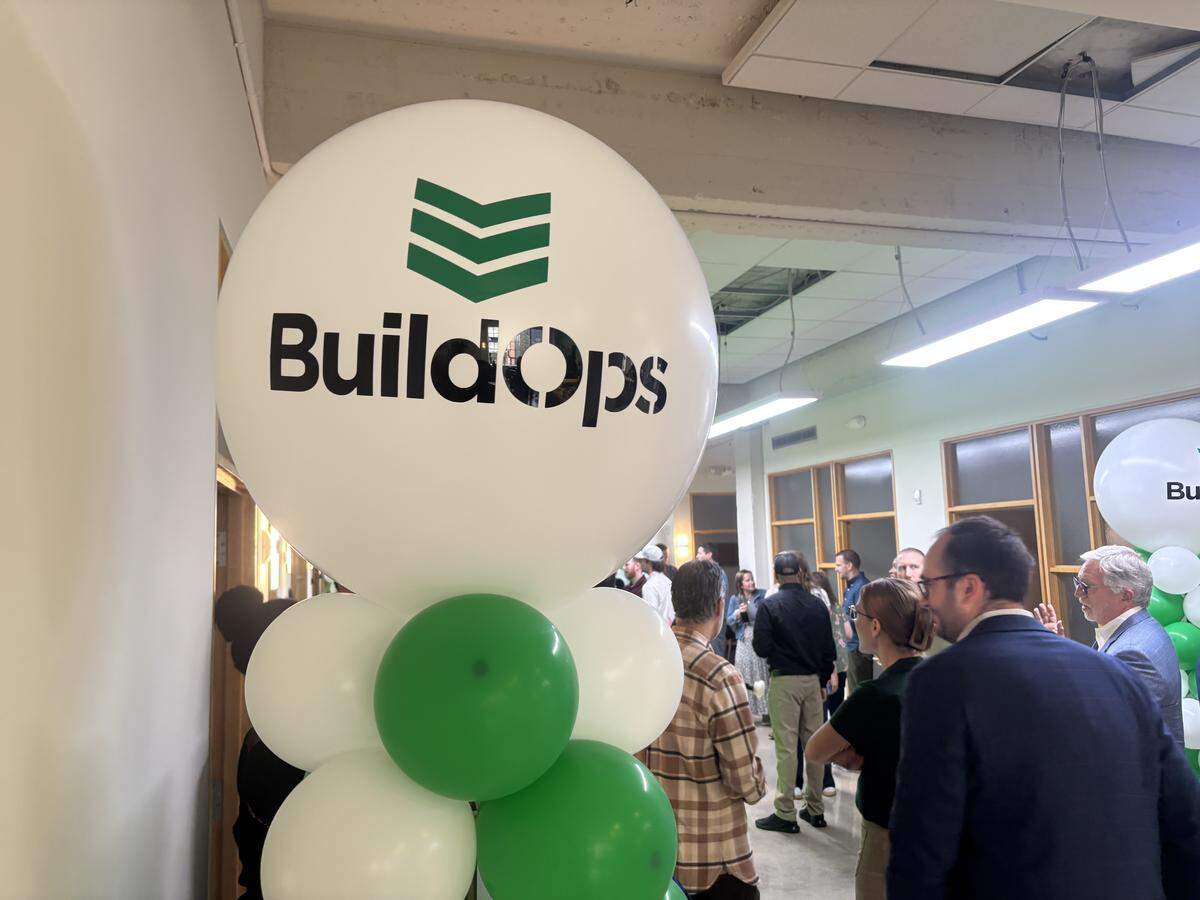
Lots of Open Source newsletter ink is spent detailing economic projects that get North Carolina incentive awards but never come close to meeting their hiring goals. But this week, a company that received state and city incentives in June opened its downtown Raleigh office.
BuildOps is a California construction tech startup valued at more than $1 billion. Its Raleigh office is its third corporate site, after locations in Los Angeles and Toronto. “There’s this youthful excitement and energy in Raleigh,” CEO Alok Chanani told me. “We just did not feel the vibe or energy anywhere else.”
The company occupies the second floor of the Creamery building, a historic two-story building on Glenwood Avenue that developers plan to turn into the city’s tallest skyscraper. So as BuildOps plans to grow — it committed to hiring 291 local workers under its state incentive agreement and says it has close to 100 — the surrounding structure may, too.
Clearing my cache
- Plantd, the Oxford, NC, startup from former SpaceX employees that aims to convert perennial grass into home building materials, raised $22 million in a Series B round.
- The state’s largest employer, Walmart, received a state incentive this week to create 300 jobs at a future fulfillment center west of Charlotte.
- An Amazon delivery contractor laid off 75 workers in Durham after it says Amazon terminated its contract. A second Amazon delivery contractor will also lay off 72 workers in the Eastern North Carolina city of Kinston.
- North Carolina House Speaker Destin Hall announced the House Select Committee on Blockchain and Digital Assets, a 10-member group (with six Republicans and four Democrats) to explore policies linked to cryptocurrencies like Bitcoin and the blockchain, which acts as a decentralized digital ledger.
- The air filtration fiber producer Mativ expects to close its Wilson plant by the start of December, impacting 50 workers.
- “In order to make North Carolina, which has completely lost its furniture business to China, and other Countries, GREAT again, I will be imposing substantial Tariffs on any Country that does not make its furniture in the United States,” President Donald Trump wrote Monday on his social media platform Truth Social. “Details to follow!!!”
The industry group Furniture for America argues this isn’t a solution, stating in April that “no amount of tariffs will bring back American furniture manufacturing back to its prior levels.” The group represents both domestic producers and importers.

National Tech Happenings
- Saudi Arabia and President Trump’s son-in-law Jared Kushner are taking the video game maker EA private in a $55 billion deal. EA produces Madden, The Sims, Battlefield and EA Sports College Football.
- The $7,500 electric vehicle federal tax credit went away this week, a victim of the broad spending and tax bill Republicans passed this summer. Dealers say EV sales rose ahead of the Sept. 30 deadline.
- Deep fake alert. OpenAI unveiled an updated artificial intelligence video/audio generator called Sora 2 that allows users to insert their own likeness into realistic videos.
- Meta will begin mining users’ AI chatbot conversations to target them with advertising.
Thanks for reading today’s newsletter. If you liked it, consider sharing it with a friend. If it was forwarded to you, sign up here.
This story was originally published October 3, 2025 at 7:00 AM.