NC startup investors on getting (and staying) hired in the AI jobs market
I’m Brian Gordon, tech reporter for The News & Observer, and this is Open Source, a weekly newsletter on business, labor and technology in North Carolina.
Attention startup founders from Murphy to Manteo: the Triangle Tweener Fund is now the NC Tweener Fund, with a new statewide mission to back 50 or so early-stage tech companies a year.
Started in 2022, the venture fund has changed its name and scope at a moment of phenomenal change for startups. And the reason for this disruption, well, you already know.
“As a founder in this AI era, you can build way more efficiently,” said Scot Wingo, a local entrepreneur who cofounded the Tweener Fund. “What you do with that is a choice.”
Artificial intelligence, Wingo said, has enabled more “seed-strapping,” where startups seek initial investments and then rely on revenue (rather than on future funding rounds) to grow. While not impossible to pull off before, seed-strapping has become more feasible for founders with powerful tools like Claude Code and Cursor at their fingertips.
Startup leaders are also keeping their small teams smaller; the average number of employees at a Series A company dropped from 22 in 2022 to 15 last year, the equity management platform Carta found. Headcounts are expected to dip further in 2026.
Venture firms demand startups stay lean by leveraging new AI tools. So, what can people do to get hired (or stay employed) at tech startups? Here’s what three North Carolina investors told me:
- One step is to find skills beyond writing code. “If you’re a software developer today, you should be elbowing to get as close to the customer as possible, and spend as much time with your customer as you possibly can,” said Joe Mancini, cofounder of Front Porch Venture Partners in Cary.
- Thanks to AI, making a product is easier than ever. That’s bad news for software developers but potentially good for those who oversee product rollouts, says Jason Caplain of Bull City Ventures. “I think a company needs more product managers to build it out,” he said. “Making sure there’s a good roadmap.”
- With his 19-year-old daughter studying computer science, Wingo says the viability question is personal. A startup founder as well as an investor, he advises her “to be the best at AI in your cohort.”
What that means, Wingo says, is to have a mastery of as many key platforms as possible. And if someone’s current job only requires them to learn one AI tool, they should aggressively take up vibe coding as a hobby.
Clearing my cache
- Apex has set a one-year moratorium on new data centers, a week after a Maryland developer halted its data center dream in the Wake County town.
- Wake County school board is considering a proposal to put cameras on the stop-arms of school bus in an effort to discourage speeding and raise revenues through fines.
- GE Aerospace promises to spend $160 million across four North Carolina campuses this year, including $20 million in Durham.
- North Carolina Attorney General Jeff Jackson is one of more than 20 AGs to object to the Trump administration settling its antitrust case with the entertainment company Live Nation.
- German biotech company Coriolis Pharma won’t, in fact, be the first tenant at the new Spark LS complex in Morrisville, as Coriolis this week instead opened a facility in Durham’s Alexandria Center.
- Raleigh marketing tech startup Levitate raised $16 million in a new funding round, bringing its total to $71 million since starting in 2017.
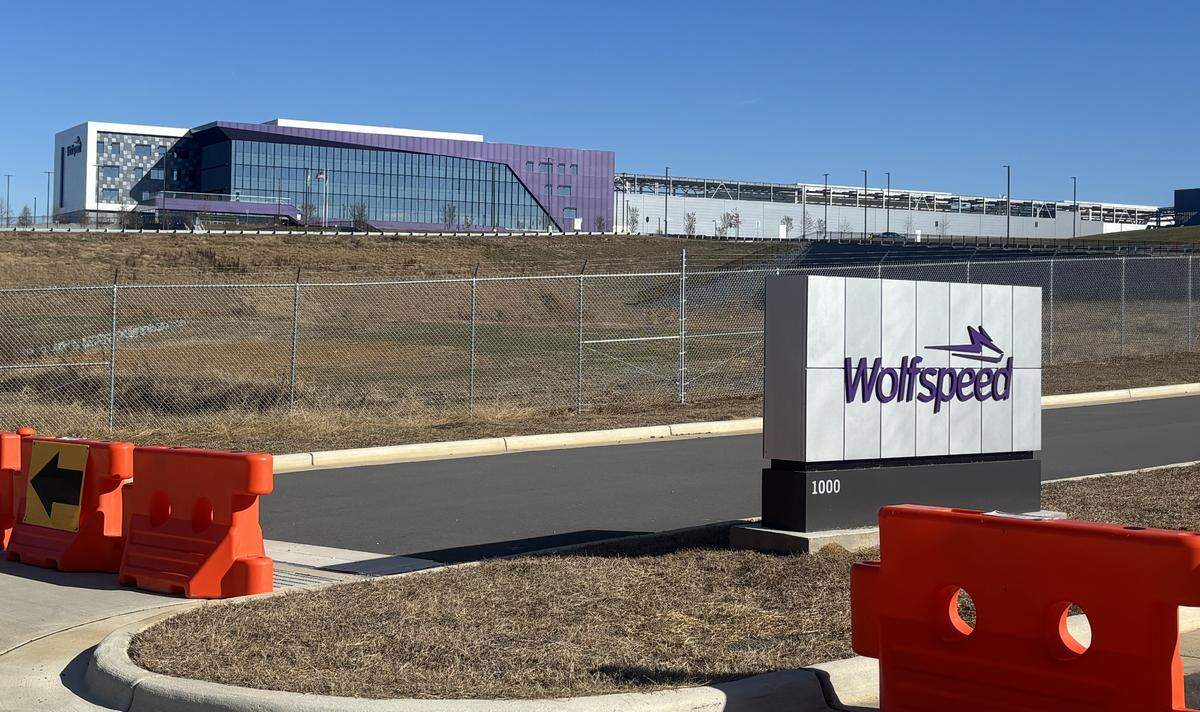
- Wolfspeed wants the White House to include silicon carbide in its AI strategy. The Durham semiconductor supplier, which makes SiC material and chips, backed a letter five Republican members of North Carolina’s congressional delegation sent to the Office of Science and Technology Policy in January advocating for silicon carbide’s place in America’s AI Action Plan.
National Tech Happenings
- Anthropic has sued the U.S. Department of Defense for labeling its technology a “supply chain risk” and requested an emergency stay from the courts.
- Protein is the moment’s hottest macronutrient. This weekend only, Buffalo Wild Wings is (truly) offering a protein-rich, wing-inspired espresso martini. 10 grams of protein! The drink might be a marketing stunt, but the U.S. protein craze is real.
- Gold prices often rise during geopolitical conflicts. Yet this hasn’t been the case during the current Iran war. The answer may have to do with inflation.
Thanks for reading!
This story was originally published March 13, 2026 at 9:24 AM.