One lake and 200 pontoon platforms are pitting NC homeowners against Duke Energy
I’m Brian Gordon, tech reporter for The News & Observer, and this is Open Source, a weekly newsletter on business, labor and technology in North Carolina.
If it looks like a dock and acts like a dock, it’s probably a dock. Right?
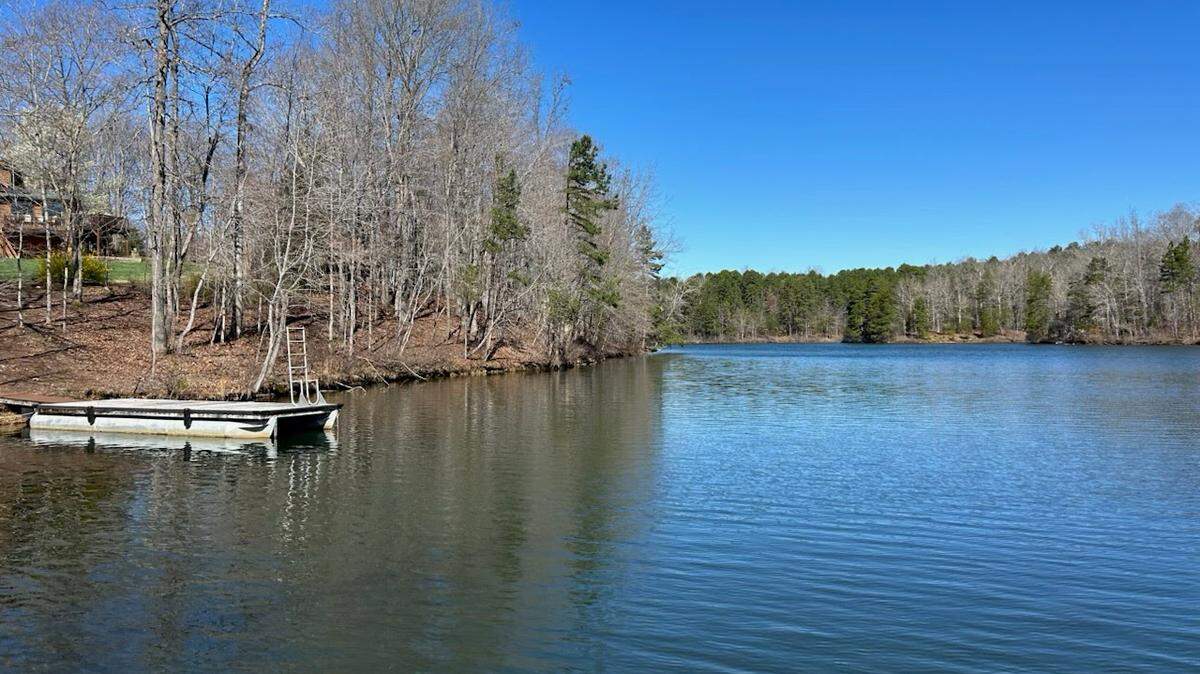
On Mayo Lake, a long, narrow reservoir with jagged offshoots that end just below Virginia, homeowners have repurposed hundreds of old pontoon boats into floating platforms. From these, they relax, dip into the water, or park their actual boats — many of which are also pontoons. Residents have done this for decades, and not by accident.
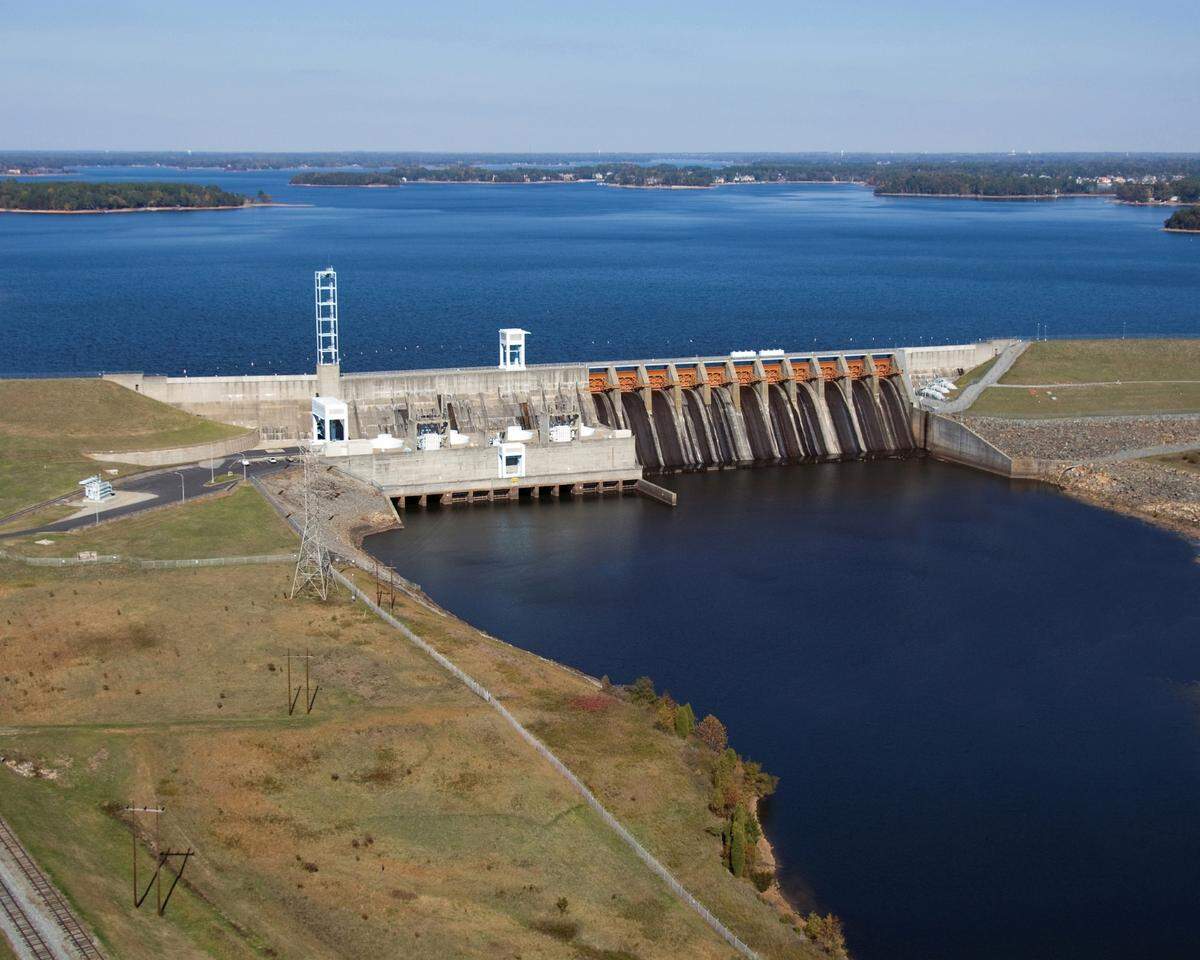
Permanent structures aren’t allowed along Mayo Lake’s 85-mile shoreline. This rule was part of an environmental impact deal the U.S. Army Corps of Engineers made with Carolina Power & Light in 1978 to dam the local creek and create a new cooling lake for its coal-fired power plant in Person County, directly north of Durham. “Natural and undisturbed” is how Jennifer Garber, a spokesperson for Duke Energy (which today owns the lake, after a series of mergers), described how the shoreline must be, per the “binding” agreement.
As a workaround to formal docks or piers, Mayo Lake residents tie converted pontoon boats to the shore. Do these platforms function like docks? Sure. Are they permanent? Yes, in the sense they never leave the water. But residents have used them since at least the 1990s. Homeowners say people bought and built lake properties with the expectation these platforms would be tolerated. The utility company in charge — first Carolina Power, then Progress Energy, then Duke Energy — never found major problems with them. Until now.
In a move that compelled community members to pack two county meetings this month, Duke Energy recently asked the N.C. Wildlife Resources Commission to enforce the 1978 license, which the wildlife commission did via a new rule in January. The Mayo Lake platforms had to go.
“It’s going to do economic harm to the county,” Dan Phillips, a doctor whose house is about 150 feet from the shoreline, told me. “All of a sudden, you can’t have a place to tie your boat up. Property valuations are going to go down. The tax base is going to go down.”
The new rule says no personal property, including boats, could stay on the lake for longer than 24 hours. “Every day we have to haul our boat out of the water,” Phillips said. “It’s not really practical.”
Mayo is one of 28 Duke Energy hydropower lakes in the Carolinas. The largest is Lake Norman, which spans four counties above Charlotte. Private property may run close to these man-made bodies of water, but North Carolina’s main regulated utility monopoly controls the shorelines. On many lakes, Duke Energy lets people obtain permits to build docks. Hyco Lake, on the western side of Person County, is one example (It was made before the passage of the Clean Water Act.) But a dozen regional Duke lakes permit no private, permanent structures.
So why did Duke Energy choose now to enforce its Mayo Lake environmental commitments? Some Person County residents said they still don’t know. “Recently there has been a need to evaluate conditions of Mayo Lake to ensure requirements of the permit are upheld,” Garber wrote in an email to The N&O.
At a March 16 county meeting, the head of Duke’s hydro licensing and lake services, Jeff Lineberger, said Duke began reviewing local shoreline activity in 2023 after the county manager asked why Mayo wasn’t developed like nearby Hyco Lake. Duke ultimately found 259 unauthorized mooring structures, a few of which were commercial-branded platforms, not old boats.
County board chair Kyle Puryear criticized Duke for not being transparent during its review. He also said he had never seen so many people, roughly 150, attend a Monday morning public meeting in Roxboro. “I think the people here are peaceful, but they are just in shock,” Puryear told the audience. Person County commissioners then passed a resolution calling on the utility company and Mayo Lake homeowners to compromise.
Any shoreline enforcement has been pushed until Oct. 1, to give space for negotiations. That means at least one more summer of pontoon platforms. The two sides plan to meet next month for a mediation session. Duke Energy, Phillips said, is paying for the facilitator.
Boom, where it is?
Since 2022, North Carolina has spent more than $100 million on a dormant factory at the Greensboro airport. That’s $35 million to build a public road to connect to the site, $15 million to prepare the land at the site and more than $56.2 million to reimburse site construction costs.
Come next year, North Carolina can decide whether the factory’s tenant, Boom Supersonic, will retain this taxpayer-funded production hangar. Boom is poised to miss an initial hiring target of 500 jobs; it might not currently have any North Carolina employees.
Should the state pull the plug on Boom and find another manufacturer to return its upfront investment? Or is Boom’s vision of revitalizing supersonic passenger air travel worth more patience, despite delays? Kevin Baker, head of the Piedmont Triad Airport Authority, said it’s still the latter — though he also said North Carolina could easily find another tenant in this emerging aerospace hub. To gauge Boom’s viability, Baker said he’ll watch whether the company advances its engine in 2026.
.jpg "IMG_5657 (1).jpg")
Does Tim Sweeney dream of 2021?
Tim Sweeney might miss the early 2020s. Driven by the global sensation Fortnite, investors valued his Cary studio Epic Games at $32 billion. Pandemic social distancing sparked enthusiasm in his vision for a virtual metaverse, where users could play, shop, watch concerts or just hang out via avatars. And flush with money from Fortnite, the iconoclastic billionaire CEO waged fights with Google and Apple over their app store policies. Plus, Epic Games purchased the old Cary Towne Center for a future headquarters.
Today, things are different: Epic Games has stopped sharing its market value. “Unrealistic” (Sweeney’s word) metaverse spending contributed to the company laying off 830 workers — roughly 16% of its workforce — in 2023. Legal costs accumulated from the protracted Google/Apple trials, even as Epic won substantial changes.
Cary Towne Center remains deserted; the headquarters plans long stalled. And, perhaps most importantly, Fortnite has lost some luster. In a notice to Epic employees this week, Sweeney announced 1,000 new layoffs — with more than 200 positions eliminated at its North Carolina headquarters. He sited a “downturn in Fortnite engagement”. A company spokesperson told me Epic has around 4,000 remaining employees, putting its latest staff reduction at 20%.
What caused a drop in the candy-colored shooter game? For one, there’s IP fatigue, said Joost van Dreunen, author of the 2020 book “One Up: Creativity, Competition, and the Global Business of Video Games.” Epic has aggressively paired Fortnite with brands like Star Wars, Game of Thrones, Marvel and DC.
It’s also difficult for games to sustain success over time, with only a handful of so-called “forever games” like League of Legends, Minecraft and Grand Theft Auto achieving sustained success. The 9-year-old Fortnite, van Dreunen said, shows that even presumed forever games may have a life cycle.

Clearing my cache
- Step aside Georgia, North Carolina now has the second most Dollar General stores in the nation.
- NCInnovation has appointed Michelle Bolas as its new CEO. The question now is whether the General Assembly will allow this nonprofit to keep its $500 million endowment.
- Olé. The Brazilian equipment manufacturer TSEA Energy promises 160 jobs at its first U.S. plant in Rockingham County, Gov. Josh Stein’s office announced.
- Charlotte could see more high-paying financial services jobs, as the state awarded Capital Group an incentive to hire 600 workers in the Queen City.
- Vulcan Elements, a Research Triangle rare-earth magnets startup, counts both U.S. taxpayers and Donald Trump Jr. as investors, a dynamic panned by liberals and libertarians alike. House Democrats recently tried to subpoena the president’s son over his investment in Vulcan, but Republicans blocked it. Vulcan forges on; the manufacturer this week announced a partnership to create a supply chain independent of China.
- Durham semiconductor firm Wolfspeed raised approximately $476 million from new and current investors to lower its debt.
- A busy week for Triangle business and tech gatherings: All Things Open welcomed more than 2,000 people to its AI conference in Durham; CED hosted its Venture Connect startup event (also in Durham); and in Raleigh, the software company Pendo held its corporate festival, Pendomonium.

National Tech Happenings
- Rough week for Meta in court. First, a New Mexico jury ruled the owner of Facebook and Instagram must pay $375 million for violating a law intended to protect children from online predators. Then on Wednesday, a Los Angeles jury found Meta and Google (but mostly Meta) were negligent in a much-followed social media addiction lawsuit.
- Nevada is the first state to ban the prediction market Kalshi, if only temporarily, over event contracts that function a lot (exactly?) like gambling. Meanwhile in North Carolina, Kalshi users can still wager on things like whether Greenville’s MrBeast will get married this year and if we’ll repeat as CNBC’s top state for business.
- Dropping the AI slop: OpenAI is ending Sora, its video generator, just months after Disney lent its characters to the platform.
Thanks for reading!
This story was originally published March 27, 2026 at 9:23 AM.