The bylines look real. But these prolific NC reporters aren’t.
I’m Brian Gordon, tech reporter for The News & Observer, and this is Open Source, a weekly newsletter on business, labor and technology in North Carolina.
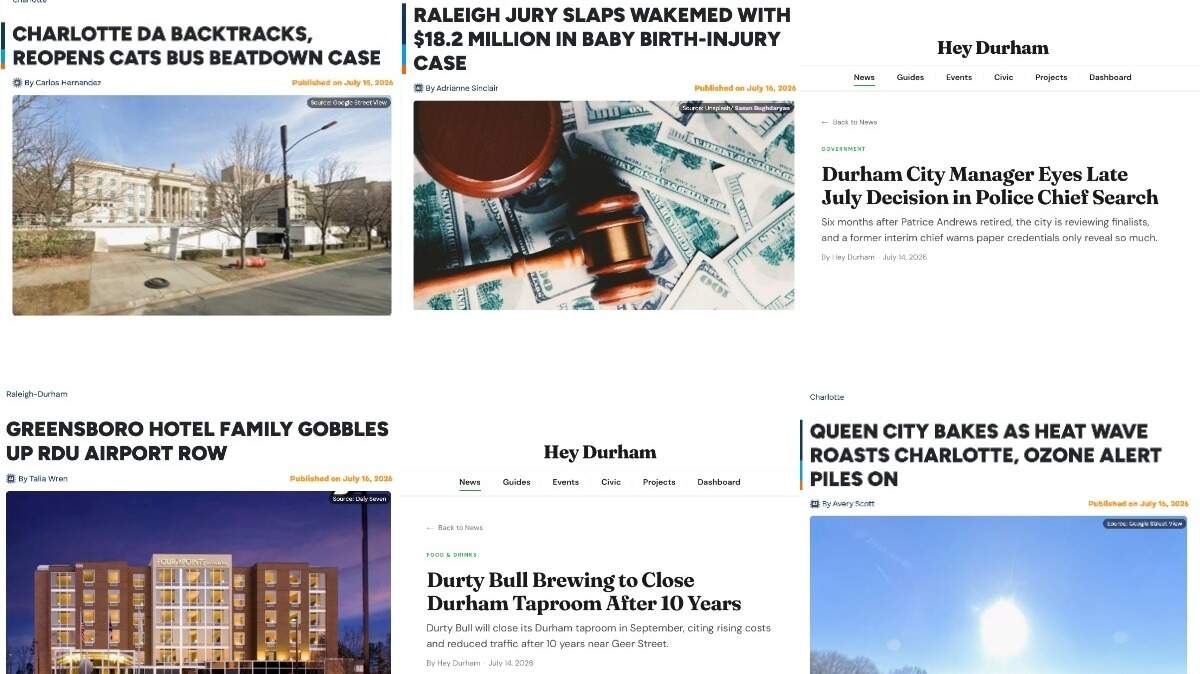
Let’s take a moment to remember Jordan Parker, who for the past year had been one of North Carolina’s most productive journalists. With as many as eight stories a day, he (it? they?) published community news for a website called “Hey Durham” that states it is “Proudly Made in Durham, NC.”
These articles lacked original reporting. They were instead rewordings of recent local coverage from outlets like The N&O and WRAL. And Jordan Parker appears to be fictitious. There is no record of a Triangle journalist with that name. And after I reached out to “Hey Durham” on Wednesday to ask about the potential AI byline, the website within an hour removed the name and replaced it with “Hey Durham” underneath all its headlines.
The outlet, whose creator is hidden in website registration filings, did not respond to my questions.
“There’s just tons of these out there,” said Tony Elkins, a faculty member at the journalism research nonprofit Poynter Institute and a board member of the NC Local news organization. “It takes nothing to pop these up.”
Artificial intelligence has made aggregating (with some attribution) or downright stealing local reporting quite easy. Teams of one can sprout up outlets within a day. The objectives of some are partisan; there is a category of AI-generated news websites often labeled “pink slime” run by interest groups. Others, like “Hey Durham,” simply republish local news broadly without an apparent agenda, except for perhaps gaining enough traction to eventually sell ads.
And “Hey Durham” wouldn’t be the only one to have invented reporter bylines.
Hoodline, a website from a California company called impress3, looks like a bizarro Axios. It has local community pages for more than 30 cities, including Raleigh, Durham and Charlotte. I formally invite any of the reporters behind Hoodline bylines to a North Carolina journalist meet-up, though I doubt any could conceivably show up.
Ryan Fletcher, Brynn Hawthorne, Nina Caldwell, Carlos Hernandez, Adrianne Sinclair, Edith Carmichael and Talia Wren aren’t real. Beside each name is a small blue icon that says “AI.”
“Boy, that’s small,” said Philip Napoli, director of Duke University’s Center for Media & Democracy. “My 56-year-old eyes didn’t notice.” Impress3 did not respond to my questions asking why it uses bylines in this way.
Napoli said fake bylines are one of several ways AI can blur the distinction between accountable local journalism and slop. My colleagues and I can be transparent in a way “Desmond Larkin” can’t.
Different kind of tariff talk at the Duke Energy hearing
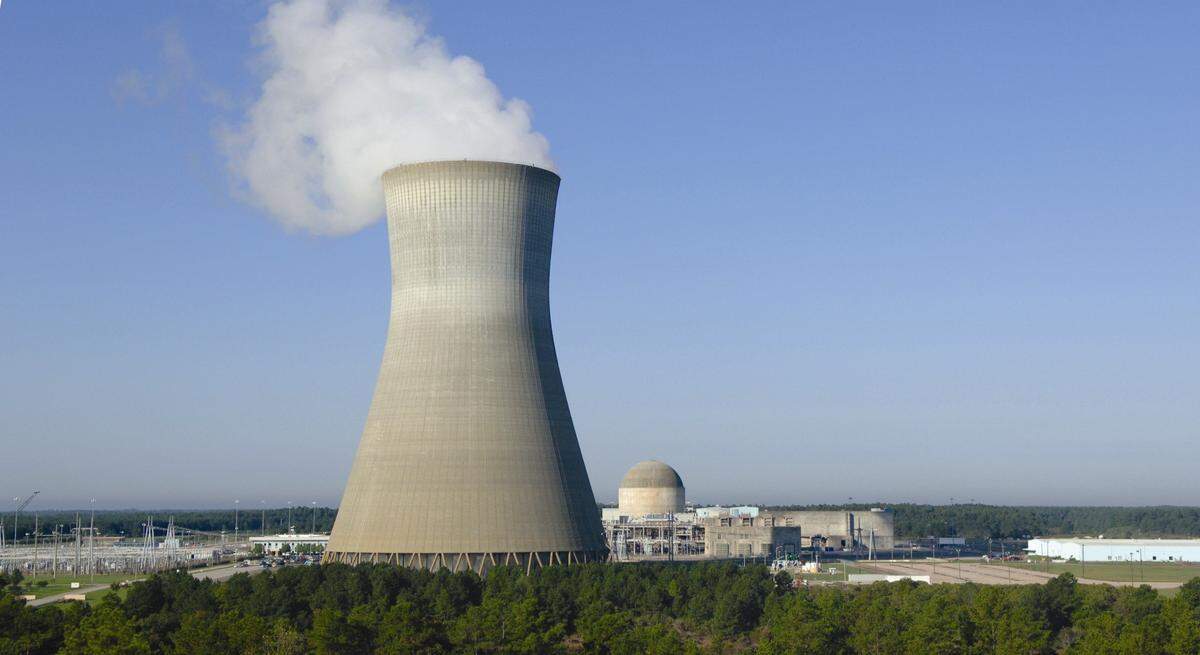
A core discussion in the ongoing Duke Energy Carolinas rate case hearing (which you can stream here) has been what North Carolina’s first-ever large load tariff should look like. In energy regulation, tariffs are rules — not import taxes. The state has never had one for large load consumers, but AI data centers are changing that.
After initially arguing a tariff was unnecessarily duplicative, Duke last month concurred with the state advocate Public Staff that unique policies for the biggest electricity consumers would be beneficial. More states have begun adopting specific tariffs for large electricity consumers to protect their grids and ratepayers. Especially if ambitious data center projects require utilities to spend a lot upfront.
“There’d be a base contract that would be modified for individual customers,” Will Scott of the Environmental Defense Fund said in a phone interview. “But the base level of protection would be something that everyone could understand.”
Duke’s and the Public Staff’s tariff proposals align in several ways: The rules would start applying when consumers seek at least 50 megawatts. These consumers would then be billed for at least 75% of the megawattage they request, even if they never ultimately use that much. There would also be an exit fee for projects that fail and minimum 10-year contracts, with even larger consumers having to sign on for 15 years.
How do their tariff plans differ? Public Staff witnesses last week testified that Duke’s exit fees would be “more lenient” than what the Public Staff seeks. A second difference between the two sides revolves around curtailment, or Duke’s right to reduce large consumers’ power usage to ensure overall grid reliability. While Duke wants the ability to control curtailment rules going forward, the Public Staff says the Utilities Commission should have oversight.
A senator and her husband’s energy company
Fraud accusations. Congressional lobbying. Income questions. A marriage that spotlights an inconsistency in North Carolina’s lawmaker disclosure laws.
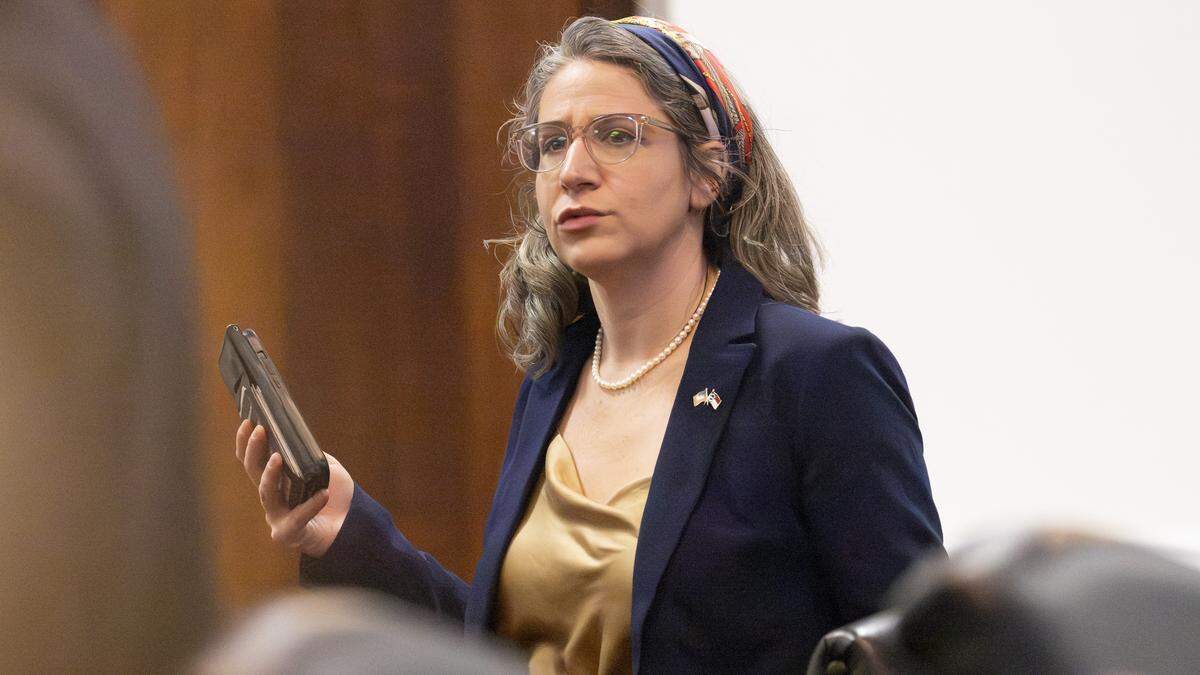
My story on Sen. Sophia Chitlik of Durham this week detailed previously unreported connections between her and her husband’s company, American Efficient, which federal regulators claim cost ratepayers hundreds of millions of dollars. The company has strongly denied it violated the law.
Why did Chitlik, several months into being legally separated from her husband and the same year she won her first primary, join him to actively advocate for American Efficient’s interests at a time when the company knew it was under investigation? “Before I became a legislator, I helped Ben navigate a situation to be a supportive friend to the father of my child,” she said.
What Chitlik didn’t explain is how she supports herself financially or if she was aware of the FERC investigation at the time of the lobbying. Legally, she doesn’t have to. That doesn’t mean some won’t want to know.
Wolfspeed gets litigious with emerging rival
On July 7, Wolfspeed sued fellow semiconductor supplier Navitas for patent infringement. Navitas is a younger publicly traded company with far fewer employees, but its market value is actually greater.
Durham’s Wolfspeed manufactures a specific semiconductor called silicon carbide (SiC). It alleges Navitas violated patents on five SiC-based products, four of which Navitas gained through a 2022 acquisition of another company, GeneSiC.
It’s been 10 months since Wolfspeed exited Chapter 11 bankruptcy with a new shareholder structure. Navitas has denied wrongdoing and vowed to defend itself in court. Both companies have seen much of their 2026 stock market gains erased over the past month amid a sector selloff.
“It’s very likely that Navitas will counterclaim and sue Wolfspeed for infringement of its patents,” Wake Forest University School of Law professor Keith Robinson told me after reviewing Wolfspeed’s claim. Robinson also spotted an interesting overlap that suggests the two companies know each other well: GeneSiC founder Ranbir Singh is a former Wolfspeed scientist.
Clearing my cache
- Research Triangle Park developers can now officially apply to build housing and mixed-use complexes in the 67-year-old business zone.
- This weekend’s World Cup finals broadcast will feature replay footage and 3D player avatars that Lenovo developed, in part, in Research Triangle Park.
- Frito-Lay is outsourcing its warehousing operations in northwest Raleigh, resulting in 65 layoffs. Pepsi, which owns the snack company, has actually been going through a financial downturn which rival Coca-Cola has avoided.
- Why Forge Nano is now ready to talk about its battery factory plans in Morrisville.
- Southern Pines-based First Bank is growing its South Carolina footprint by buying Carolina Bank for about $166 million.
- Raleigh telecommunications firm Bandwidth has had a great 2026 on Wall Street, with its share price up more than 350%. The company reported record revenue earlier this year and has momentum from AI voice tools.
- A North Carolina man convicted of co-perpetrating a $100 million New Jersey deli fraud scheme is asking to avoid prison, CNBC reports.
- Finnish electric vehicle charger manufacturer Kempower asked out of its state incentive agreement to create 300 jobs in Durham. The company cited lower EV demand and the loss of federal tax credits while saying it would continue to operate with a small Triangle workforce.
- More power talk: Dominion Energy and NextEra Energy this week filed to merge in North Carolina, Virginia and South Carolina in a $66.8 billion deal (with NextEra paying). Regulators from all three states and FERC must approve it.
National Tech Happenings
- Bad day for Big Blue: Large and historic Triangle employer IBM had its worst day ever on Wall Street this week. Its stock fell 25% Tuesday after CEO Arvind Krishna warned investors that the company’s second quarter financial performance was “worse than our expectations.”
- Taiwanese chipmaking giant TSMC vows to spend another $100 billion in the United States. The company makes advanced chips for large companies like Nvidia.
- Not taking off yet: After an initial spike last month, SpaceX stock is now trading below its IPO price of $135 a share.
- In what should have a big effect on university hubs like the Triangle: A new Trump administration order says foreign students can only stay in the U.S. for four years, unless they get government permission. Higher ed institutions have previously had the power to grant extensions, especially for graduate students whose work takes longer.
Thanks for reading!
Thank you for supporting local journalism. If you liked it, consider sharing it with a friend. If it was forwarded to you, sign up here to subscribe.
This story was originally published July 17, 2026 at 8:30 AM.