What the FERC is going on with Durham’s American Efficient record fraud charge?
I’m Brian Gordon, tech reporter for The News & Observer, and this is Open Source, a weekly newsletter on business, labor and technology in North Carolina.
Some fraud is straightforward. Consider the $100 million South Jersey deli scheme from a few years ago, for which two North Carolina men ultimately pleaded guilty. Yes, the perpetrators used technical market manipulation tactics like wash trading and match trading to mislead the public. But the shadiness of a nine-figure sandwich shop is apparent to even a layman, no matter the quality of bread. Plus, there were admissions of guilt.
Is what the Durham company American Efficient did clear-cut fraud, too? The nation’s top energy regulatory agency says undoubtedly. In a unanimous, bipartisan order last week, the five-member Federal Energy Regulatory Commission hit American Efficient with its largest fine ever. FERC penalized the company $722 million, almost two-and-a-half times greater than its next highest fine. It also demanded American Efficient return another $410 million in “unjust profits” bilked from “hard-working Americans.” One commissioner then recommended a criminal inquiry.
“The legal issues here are not particularly complex,” FERC Chairwoman Laura Swett wrote in her April 15 order. Those unacquainted with regional capacity markets may disagree. Some legal experts hint at more nuance, too.
American Efficient, which happens to be led by the spouse of a state senator, refutes any wrongdoing. The Triangle company is challenging FERC’s conclusion as well as the agency’s very right to levy such a penalty in the first place.
Let’s explore all this a bit more.
.jpeg "IMG_3401 (1).jpeg")
Into the capacity markets
In 2014, American Efficient began operating in wholesale capacity markets. These federally regulated markets cover significant portions of the U.S. electrical grid, including a small corner of northeastern North Carolina. They’ve been around since the late 1990s to help ensure grid reliability during peak times.
Entities bid to supply regional grid operators with extra capacity in the future. The bidders may never actually have to deliver this additional capacity, but they must demonstrate they can.
There are three ways to contribute capacity to the regional grids. First, there are the power generators. Easy enough to understand. These companies promise to create more energy during high-demand periods, whether that’s through natural gas, nuclear, wind, solar or coal.
Then, there are those that create future grid capacity by removing energy. One category of this is called demand response. An organization will agree to lower its energy usage during usage peaks. For example, a university or business can get paid to ease its air conditioning in the summer.
The third path to deliver capacity is a cousin of demand response. It’s called energy efficiency resources, and this is where American Efficient enters. EERs contribute to future grid capacity by continuously removing demand (not just during peaks). Imagine a company that installs 50,000 energy-efficiency lightbulbs. It can bundle and bid these efficiencies into the relevant regional market.
Calculating the true value of many tiny efficiencies is complex. “I do view demand response and energy efficiency as simply more challenging markets to police than the typical capacity market,” James Coleman, an energy law professor at the University of Minnesota, told me. “Some of these things can potentially be abused.”
American Efficient worked as an energy efficiency aggregator. It paid retail chains for the environmental rights to products like LED lights and energy-efficient refrigerators. The firm then organized these rights and sold them in the capacity markets at a profit.
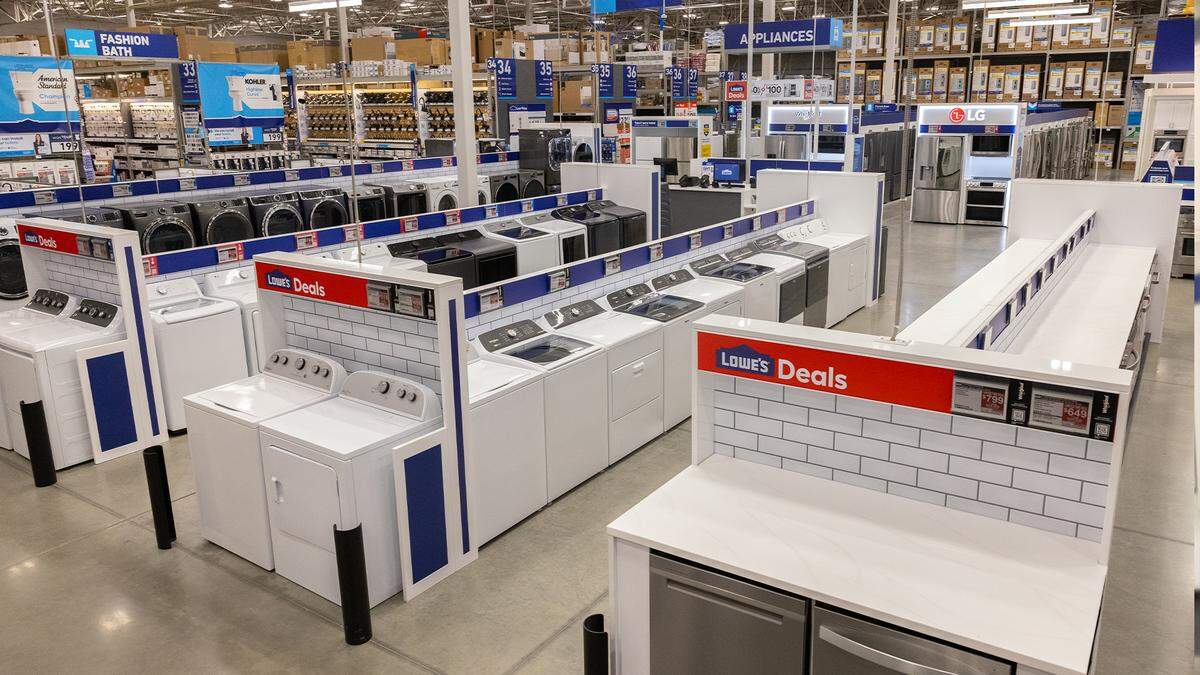
FERC says American Efficient committed “brazen” fraud. It took money from sales that would have happened regardless, the federal agency determined, in violation of regional operators’ rules to create capacity. The tiny sums they paid retailers like Lowe’s and Home Depot for their “environmental attributes” weren’t enough to incentivize the selling of more efficient appliances, FERC contends. American Efficient didn’t track if customers ever installed their purchases or if the new appliances actually used less energy than what they were replacing.
“What they did was pure chicanery,” another law professor told me this week.
‘I don’t think this case is so clear-cut’
FERC mostly charged American Efficient for breaking market capacity rules (called tariffs) for the grid operator PJM Interconnection, which covers the Mid-Atlantic, parts of the Midwest, and a bit of North Carolina.
American Efficient states it simply never did. “American Efficient has invested hundreds of millions of dollars in reliance on longstanding tariff provisions governing the participation of energy efficiency —all with the aim of creating incentives for the sale and installation of energy efficient products,” it wrote to FERC in December.
Does American Efficient have a point? The company’s stance that it had a role in “creating incentives” is weak, Coleman said, but not nonexistent. “I don’t view this as a black and white (issue),” he said. “I would say this is more like really attenuated, the claim that they have some control over (the energy efficiencies).”
Bad optics and against the spirit of capacity markets — but maybe not definitively illegal — was the position Ari Peskoe of Harvard University’s Electricity Law Initiative argued in a recent X thread.
“I don’t think this case is so clear-cut,” he wrote. FERC, he said, had penalized American Efficient based on interpretations of capacity ownership and “additionality” that are not explicitly in PJM’s rulebook.
Peskoe’s thread, like this newsletter, focused on FERC’s headline charge. The federal agency also found American Efficient misled grid operators over several years, which the company denies.
American Efficient has indicated it won’t pay its fines as it fights FERC’s case in court. It is challenging the constitutional authority FERC had to levy a penalty without going through a jury trial. This connects to a recent Supreme Court decision over administrative enforcement actions in SEC v. Jarkesy.
Legal experts say this case could gain widespread importance if higher courts take it up. For now at least, a downtown Durham business is on the line for more than $1 billion. And PJM recently stopped accepting energy efficiency resource bids.
SAS succession paths
SAS Institute turns 50 this year with a rich history and a big question about how its cofounder, CEO and majority owner Jim Goodnight will pass on his Cary software company. The narrative that SAS might soon hit the stock market has grown stale, and the company now qualifies its IPO pursuits: Rather than say it will go public, SAS told me it wants to be public-ready to give the 83-year-old Goodnight succession options.
“He’s missed the window,” one former SAS executive said of the IPO chances.
So, what are those other options? How likely is each? And what might they mean to SAS employees in North Carolina and beyond as the analytics sector faces new challenges? Private equity could be most disruptive to how SAS has functioned for the past half century. A strategic acquisition would change things, too, while a trust is perhaps the most open-ended possibility.
“A private equity exit would make a lot of sense for a company like SAS,” David Robinson, a Duke University finance professor, said. Only a handful of firms have the might to buy a business of SAS’s size.
The only thing we know is that eventually, something will have to happen. And if going public isn’t in the cards, what then?

Clearing my cache
- Add AbbVie to the list of pharma companies looking toward the Triangle. On Wednesday, the company received a state incentive to open a new 734-worker hub in Durham, near Research Triangle Park. Eight of the world’s 10 most valuable drugmakers now operate (or plan to operate) in the state, per the NC Biotechnology Center.
- The 10 letter-word North Carolina local governments are using to stave off data centers is moratorium. Orange County this week became the latest to pause data center permitting. I made an NC map of where else moratoriums have passed.
- As expected, the General Assembly is set to approve upfront funding for the promised 14,500-job JetZero campus at the Greensboro airport. The state plans to spend close to $200 million over the next four years to ready the site.
- It was Raleigh-Durham Startup Week, with more than 3,000 people attending events across the two main Triangle cities.
- Anxiety is high at Wake Tech’s video game development program, N&O higher education reporter Jane Winik Sartwell writes, after local employers Epic Games and Red Storm Entertainment laid off.
- A Greenville woman and former MrBeast company executive alleged gender bias and retaliation in a new lawsuit against the North Carolina company. Beast Industries denied the claims.
- Raleigh telecommunications company Bandwidth has some momentum on Wall Street, with its stock touching a three-year-high. Its share price remains far below pandemic-era peaks, but it’s monitoring ahead of Bandwidth’s earnings call next week. “Voice AI use cases set to ramp in 2026,” the investment firm Needham & Co. wrote in a recent company analysis.
- News from Vance County: First, the developer behind the failed Apex data center project got land rezoned for a potential new data center facility north of the Triangle, the Triangle Business Journal reports. Second, the pet products company Mars Petcare will close its 149-worker Vance County plant by the end of the year, state filings show.
National Tech Happenings
- Duke alum Tim Cook (and a member of Duke’s Board of Trustees) is leaving Apple after 15 years as CEO, to be replaced by company veteran John Ternus.
- AI job doom. Meta plans to lay off 8,000 workers and close around 6,000 open positions while Microsoft is offering its first-ever voluntary employee buyout to reduce its U.S. workforce by 7%.
- More like AI-birds. Allbirds, the once trendy, now struggling shoe brand, will shift towards making artificial intelligence infrastructure under new ownership.
Thanks for reading!
Thank you for reading this newsletter and for supporting local journalism. If you liked it, consider sharing it with a friend. If it was forwarded to you, sign up here to subscribe.
This story was originally published April 24, 2026 at 11:08 AM.