Which NC communities now have data center moratoriums, in the Triangle and beyond
AI-generated summary reviewed by our newsroom.
- North Carolina towns and counties have enacted temporary moratoriums on new data centers.
- Five towns have passed moratoriums this year, including two located in Wake County.
- Orange County set a one-year pause, while other counties are considering similar moratoriums.
When it comes to permitting data centers, a growing number of North Carolina municipalities are hitting pause.
Local government in the western mountains, around the Triangle, and along the Virginia border have in recent months delayed any new data centers by passing temporary moratoriums. Some did so following specific facility proposals; others preempted possible future projects.
This year, data center moratorium debates have packed town hall meetings where community members spoke for or against (but it has usually been for) putting on the brakes.
“There’s a freight train coming down towards us, and we need to figure out how to handle it,” one Pittsboro resident told the Chatham County Board of Commissioners during a Feb. 11 meeting to discuss a one-year moratorium, which Chatham approved.
Since then, five North Carolina towns have passed their own moratoriums, including two in Wake County. And on Wednesday, Orange County became another county in the state to set a yearlong pause in order to study how to zone for these facilities. Rowan and Swain counties set moratoriums this week too.
How long a local government can set a development moratorium in North Carolina is open to some interpretation. The law doesn’t mention a maximum length, though those hoping for multi-year moratoriums may be disappointed.
“The duration of any moratorium shall be reasonable in light of the specific conditions that warrant imposition of the moratorium,” state statute reads. “And may not exceed the period of time necessary to correct, modify, or resolve such conditions.”
The great NC data center debates
Artificial intelligence has supercharged demand for hyperscale data centers that house rows of computer servers. In North Carolina, developers have sought to build campuses in rural areas and former manufacturing towns with available water and energy capacity.
Several of the world’s most valuable tech companies operate data centers west of Charlotte, with more projects underway in the state from Amazon and Microsoft. Smaller developers are advancing sites in Edgecombe County, Stokes County and Vance County, among others. And this week, leaders in Sanford and Lee County added “data centers” to their joint land use code, opting to set noise and building limits instead of approving a moratorium.
“New data centers are going to come to this region, whether they come to Chatham County or somewhere else,” Michael Smith, president of the Chatham County Economic Development Corp., said at the February hearing. Smith, who cautioned against a moratorium, emphasized these facilities can be reliable and diversified sources of local property taxes.
But the amounts of water and electricity data centers use to run and cool servers has become a major sticking point for many residents. Others have raised noise and pollution worries. Grassroots community groups have formed to oppose data centers across North Carolina as local leaders scramble to figure out if they can block these emerging projects.
“We don’t have any rules around data centers in our development ordinances,” Apex’s mayor pro-tempore Terry Mahaffey told The News & Observer after his town set a one-year moratorium on data centers and cryptocurrency mines April 14.
The previous day, on the other side of Wake County, the town of Wendell set a moratorium through the end of the year.
“We like to be very clear with development what regulations apply, and in this case, we just aren’t sure,” Wendell planning director Bryan Coates told the town board. “Because there’s not a definition of a data center or cryptocurrency mining in the (unified development ordinance).”
The next step is more difficult
For local governments, approving a moratorium may be more straightforward than settling on long-term regulations.
In late 2024, the North Carolina General Assembly passed a law that requires municipalities to obtain written approval from all affected owners before “down-zoning” properties, which includes reducing the density or uses of land. The law also broadened the definition of down-zoning in nonresidential areas to include any rule that creates “nonconformity” — zoning which restricts certain future uses (like data centers) while grandfathering in existing properties.
“It’s really important to get (a zoning regulation) done before that first use comes in,” Mahaffey said. “Because the down-zoning law gives (property owners) a veto power over any changes that would be considered a down zone.”
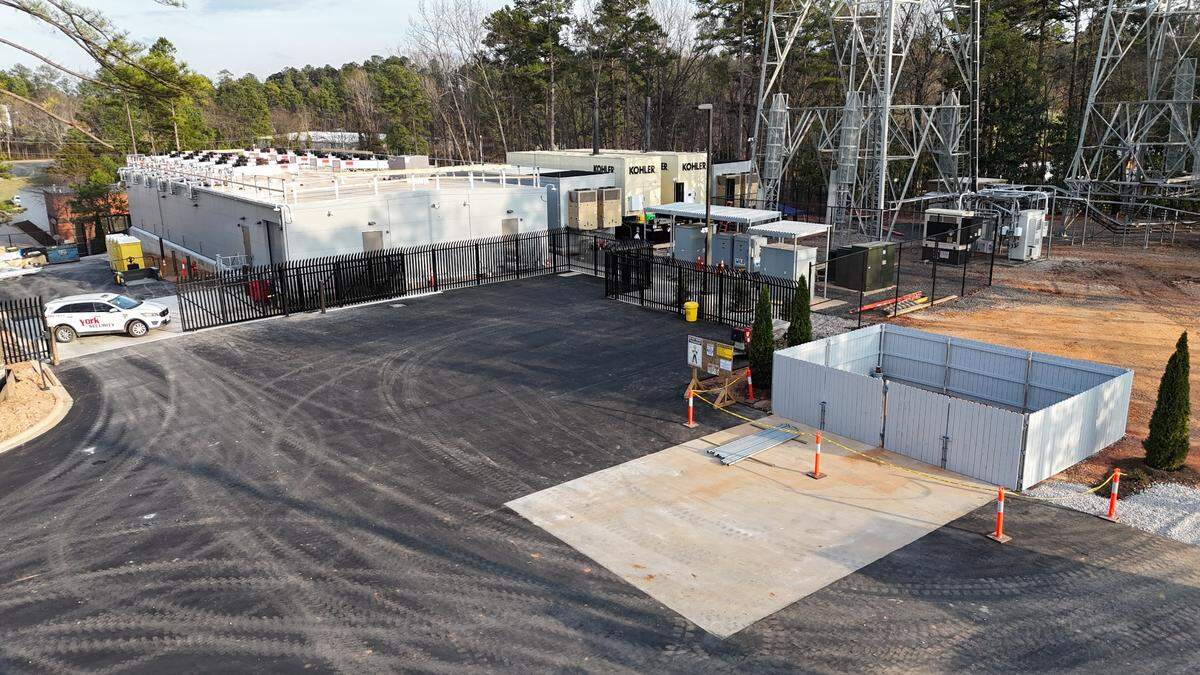
In public comments ahead of Chatham County’s data center moratorium, Patrick Bradshaw, a Pittsboro attorney representing the owners of the 339-acre Triangle Innovation Point West site in the unincorporated community of Moncure, said he would consider any permanent move to lessen the land’s uses without his client’s consent to be unenforceable under the current law.
Local governments across North Carolina have supported legislative changes to return more municipal down-zoning powers. In May 2025, the Senate unanimously passed a bill that would do this, but it stalled in the House.
Last year in rural Western North Carolina, Henderson County commissioners passed a resolution requesting the General Assembly give back more down-zoning authority in a section titled “Micromanagement of Zoning Decisions.”
Some state lawmakers still hope to change the down-zoning law this session, but it is unclear if a bill will be considered.
This story was originally published April 23, 2026 at 5:25 AM.