
NCSU leading national study using wastewater samples to measure spread of coronavirus
In order to safely reopen from lockdowns, communities will need to reliably track the coronavirus to prevent new outbreaks. A project led by researchers at North Carolina State University could help cities prepare by alerting them to the presence of the coronavirus in sewage, a sign that infected people are shedding the virus in body fluids.
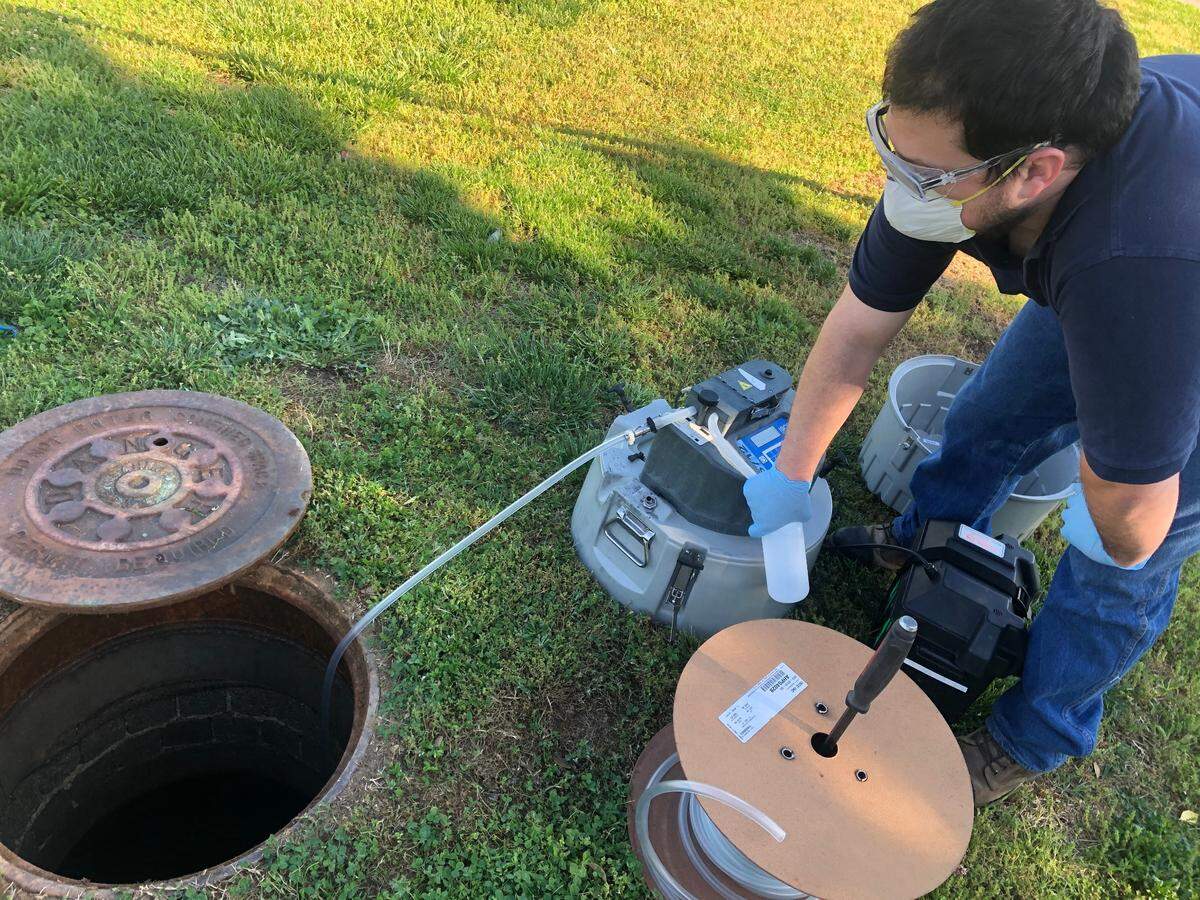
As the coronavirus spread, scientists reported that it could be found in fecal samples from patients with COVID-19. This inspired Nadine Kotlarz, an environmental engineer at NCSU. Kotlarz works with Francis de los Reyes and Angela Harris, two NCSU professors, on research using wastewater to monitor pathogens in communities around the world.
“It was a natural question to ask whether we could detect [the coronavirus] in wastewater and whether we could get information from wastewater that we were not able to get from the health care surveillance system,” Kotlarz said.
The water flushed away every day can tell a great deal about a community. Kotlarz said.
“People unwittingly give samples to their wastewater treatment plant every day,” she said. Some of the earliest work in wastewater surveillance measured the concentrations of drugs in sewage, to estimate illicit drug use.
Wastewater can also be used to help track and prevent infectious disease outbreaks. The polio virus is frequently shed in feces, and sewage monitoring is increasingly important in the campaign to eradicate the disease. Polio is commonly spread by asymptomatic individuals, similar to COVID-19.
Monitoring wastewater for the coronavirus could be helpful for several reasons. It’s a very cost-effective way to sample large segments of a community, since a treatment plant gets water from thousands of people. And since asymptomatic individuals can also shed the virus in feces, wastewater sampling can provide a more complete picture than case counts based on people predominantly seeking a test after developing symptoms.
Some cities have already begun tracking COVID-19 in water treatment plants. However, there are several questions that need to be answered for wastewater testing to become a rigorous tool beyond just detecting the virus.
De los Reyes is leading a team with his NCSU colleagues as well as collaborators from universities in Los Angeles, Houston, and Washington, D.C., sampling wastewater in their cities. The goal is to standardize the methods used to analyze and report on the virus, in a way that can work for a variety of treatment systems and populations.
There’s currently not enough data to calculate the rate of COVID-19 infections just from the amount of coronavirus material found in sewage. Researchers need to quantify how much viral material people typically shed in feces. The virus concentration can also depend on how close infected individuals are to the wastewater treatment site.
In Raleigh, the NCSU team is taking water from the Neuse River Water Resources Reclamation Facility, sample points in two smaller residential communities, and downstream from a hospital. De los Reyes credits the Raleigh Public Utilities Department for being at the forefront of implementing new technologies in water treatment.
The project will continue for a year. This should allow the researchers to track the concentration of the coronavirus before, during and after the peak of the outbreaks at the various study sites. Data from the hospital will be especially important in refining infection rate estimates, since the number of people with COVID-19 should be well-known in a health care setting.
Wastewater monitoring for COVID-19 won’t replace diagnostic tests. You can’t trace coronavirus back to the toilet it was flushed from.
Ideally, tracking coronavirus concentrations in wastewater could help predict a future outbreak. If people shed the coronavirus in feces before they show symptoms, rising levels at a water treatment plant could alert a city to implement measures to stop the spread and prepare hospitals.
Wastewater monitoring may also give people a newfound appreciation for the effort it takes to run and maintain modern water infrastructure.
“You flush your toilet and it goes away,” de los Reyes said. “If you think about the essential workers during this pandemic, the water treatment people are essential and they’re also heroes. We don’t see them, but if they don’t do their jobs, we’ll all know about it.”
Do you have a news tip? Send it securely to our journalists. Go to bit.ly/nandotips.
This story was originally published June 23, 2020 at 2:59 PM.