What’s COVID’s effect on the Triangle? Here are 7 reactions, from burned out to dismissive
READ MORE
The COVID Burnout
It has been almost exactly two years since the U.S. Centers for Disease Control and Prevention identified the nation’s first lab-confirmed case of the coronavirus. Today, COVID cases and hospitalizations continue to climb. The News & Observer recently spoke to people in the Triangle about how they are handling the stress of this pandemic. Here are their stories in our special report: The COVID Burnout.
Expand All
What’s COVID’s effect on the Triangle? Here are 7 reactions, from burned out to dismissive
Despite COVID surge, restaurant employees have to act like everything’s normal
Have pandemic questions and need advice? Ask Josh, our COVID counselor
.jpeg)
‘Best way to describe it is chaotic’: Pandemic reframes UNC student’s college experience
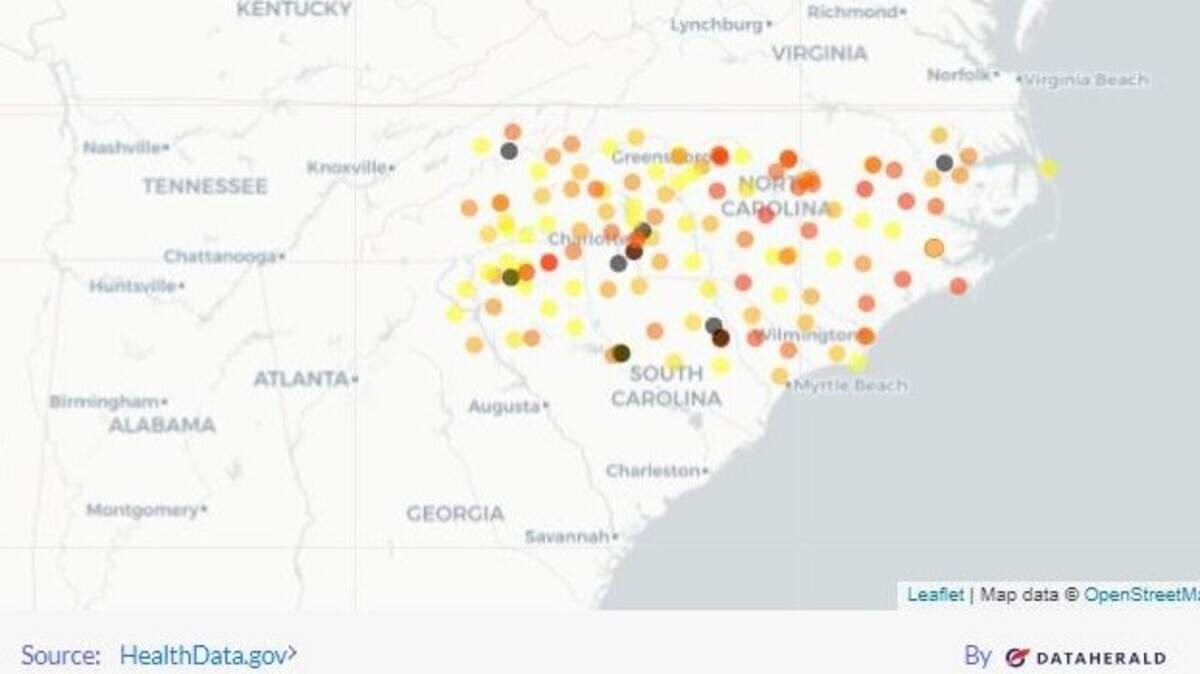
Illustrations show COVID hospitalization data for North Carolina and Triangle
It’s just past midnight and my head is throbbing with all the worries I have been suppressing.
My thoughts have elevated from waking me up at 2:30 every morning to not being able to fall asleep at all.
Is this headache from stress or the first sign of COVID-19? For nearly two years, I have kept my family safe by following the CDC’s recommended guidelines, for the most part. But as the contagious omicron variant touches even those who are being careful, I know it is coming for us.
I feel like I should be disaster planning, but I can’t because I don’t know when or where it is going to hit.
Like many who are dealing with our third hump in this pandemic roller coaster, I am so tired of the worry, the limited supplies and paying more for everything. I dread sending yet another note to my editor explaining that I need to head out because school aftercare was canceled for the week, or my kid has yet another cold and has to stay out until his symptoms improve and he has a negative COVID test.
I am not alone in my struggle.
Jan. 20 will mark two years since the U.S. Centers for Disease Control and Prevention identified the first laboratory-confirmed case of COVID-19 in the nation.
The News & Observer recently spoke to people in the Triangle about how they are handling the COVID burnout as record cases are being reported.
This is what they said.
The healthcare worker who’s overwhelmed
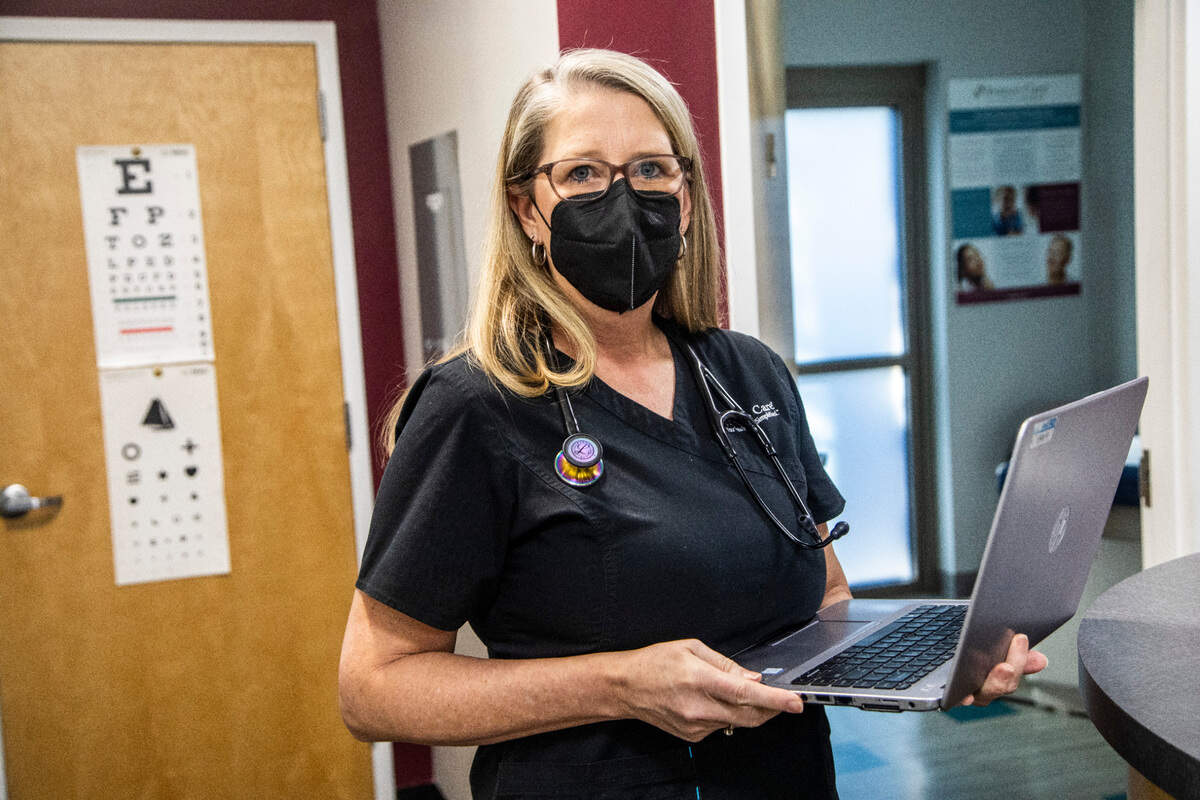
Recently a patient walked into Stephenie Brinson’s 10-by 10-office with a mask that kept slipping down.
“You sound like you have a cold,” Brinson, a family nurse practitioner at a Garner primary care office, said she asked the patient.
The person failed to report it during a health screening just minutes before. It’s happened again and again, and sometimes those individuals test positive for COVID, Brinson said.
“I don’t think it is malicious,” she said. “I just don’t think they are thinking.”
That was the same week Brinson decided to suspend most in-person patient visits and turn to video at the clinic which serves about 90 patients a day.
Moving to telehealth lessens the risks and the administrative burden for staff. It is reimbursed by insurance providers at a lower rate than in-person visits.
“It is a fine line between making sure you are taking care of the patients, but you are also trying to keep your staff safe,” she said.
Ultimately, having a healthy staff is key to keeping the doors open, she said.
Among the office’s many challenges: Eight of 18 employees were out on last week due to COVID-related issues, staff have left the practice because they were tired of patients yelling at them, and she can’t find new people to fill the positions.
Add in personal protective equipment shortfalls.
“I would think the best word to describe it is overwhelmed,” said Brinson, 56, of Raleigh.
Many similar practices across the county are facing the same challenges, she said.
“We feel like we get it taken out on us an awful lot,” she said. “I had three staff members quit because they got tired of being yelled at by patients who didn’t like the fact their phone call wasn’t answered immediately, or it took a day to get back with them.”
Brinson, and her fiance, who also works in healthcare, have not had COVID-19.
“My commitment is to my business, and when the leaders of the business goes down, what does that say?” she said.
Still, she has pretty much resigned to the fact that she is going to catch it.
“I have said that multiple times, over the course of the last week,” she said. “It is not if, it’s when.”
The COVID denier turned long-hauler and vaccine advocate
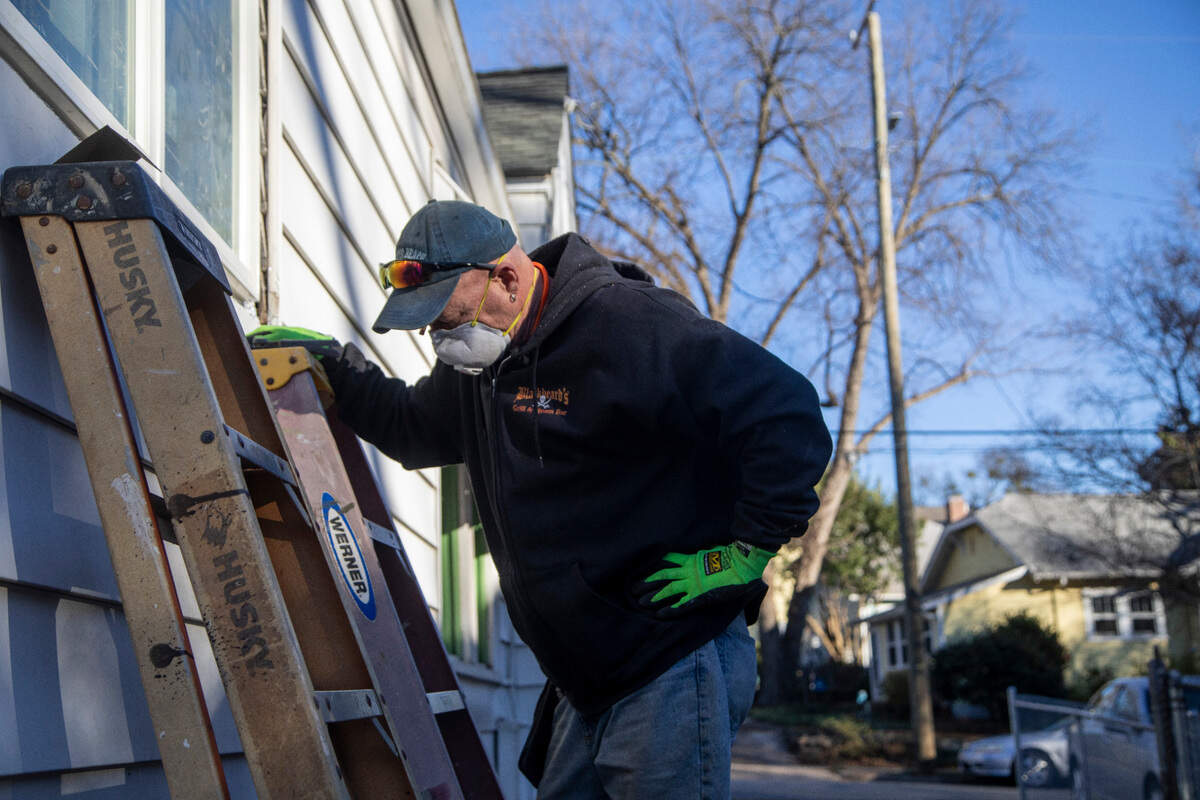
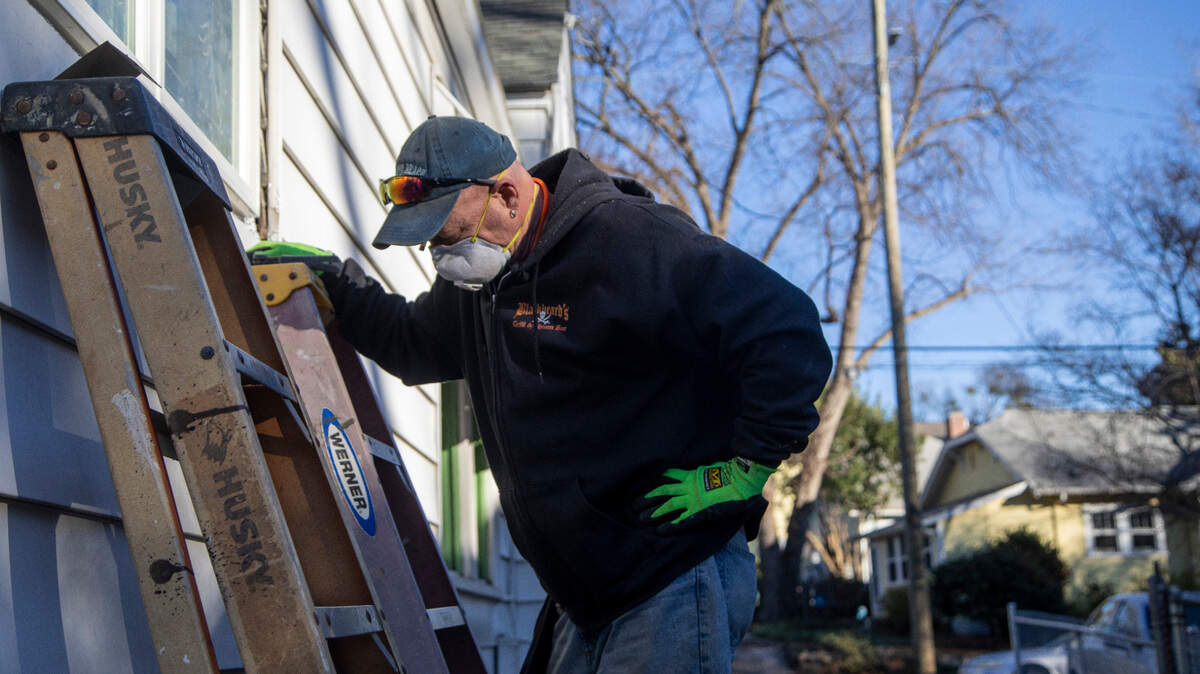
Archie Willis didn’t believe COVID-19 was real until he nearly collapsed while tearing down a chimney on a hot summer day.
Willis had heard different perspectives about the vaccine, including that it is a government conspiracy, the number of the beast and uses chips to track people.
“A lot of people were telling me just your basic natural immunity should be enough to combat this thing,” said Willis of Raleigh. “Exercise, eat right and take your vitamins and supplemental medications. That all sounded really good, so I just wanted to go with that.”
In August, Willis, a 56-year-old type 2 diabetic who works in construction, was in a yard picking up debris and moving mats as his colleagues deconstructed the chimney from a lift.
Over the day, allergy-like symptoms elevated to a sore throat, coughing and shortness of breath as he worked through the 90-degree day.
Towards the end of the day, Willis had to bend over with his hands on his knees.
“I felt like I was going to fall out, right out in the field,” Willis said. “I said ‘man, maybe I better go get tested.’”
Willis did test positive and was “spooked,” he said.
Had he infected his co-workers? What if they took it home to their families? What should they expect? Will they survive?
“I just had a lot of unanswered questions,” he said. There was little he could do at that point, beyond taking cold medicine.
He later learned he likely infected a co-worker, who sat beside him at lunch, along with his wife and daughter.
Willis, who believes he caught COVID-19 while playing guitar in the band at Greater Love Church, was out of work for more than a month as he battled the different stages of the virus. A drummer and a keyboard player also had COVID around the same time.
First Willis had a flu-like fever, then came aches and pains, trouble breathing and digestive issues, which remain today.
“I am what is known as a long-hauler,” Willis said, pointing to the pain he feels behind his eyes, in his ears, jaws and teeth and a fatigue that comes and goes. A pain that his co-worker who has COVID shared.
Willis has received his first two vaccinations and plans to take the third when he is eligible.
At this point in the pandemic, Willis is concerned for people who aren’t vaccinated.
“I am very concerned for the people who are not vaccinated. I have a sister right now, she thinks it is a government conspiracy,” he said. “We are trying to talk sense into her because she won’t let her child get vaccinated. … She wants to get vaccinated.”
The single mom waiting on COVID test results
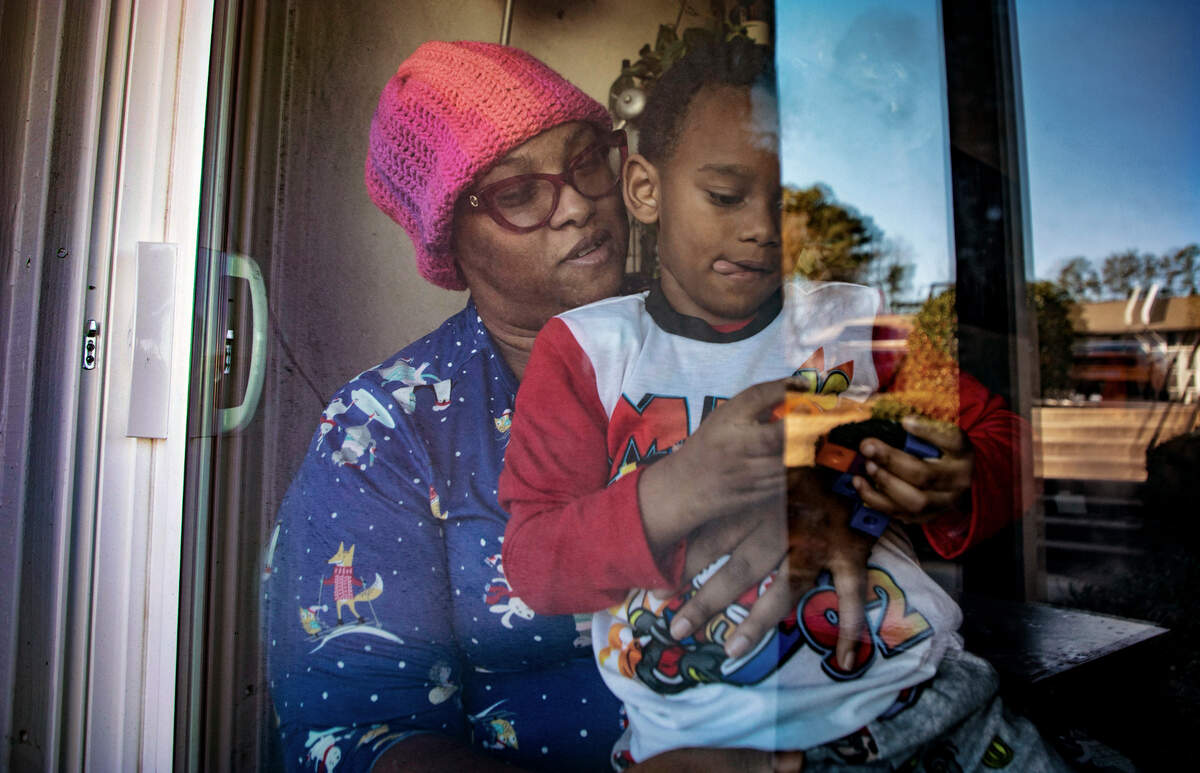
Shawnte Kelley is waiting for the results of a COVID-19 test.
Kelley, a single mother of a 4-year-old boy who has autism, started feeling bad last Friday and sought a test on Sunday.
“I have been having headaches. I have been tired,” she said. “It is weird to describe. I have mucus sitting in my throat.”
The concerns running through Kelley’s head include what will happen if she is hospitalized, she said. Or if her son, Andrew, who hates doctor’s appointments and COVID tests, gets it.
“I am tired and weak,” said Kelley, of Durham. “I don’t know if I will be able to hold him down to get him tested.”
Kelley depends on her mother, who has asthma, and her sister, who has a lung condition, for support and childcare.
For those reasons, Kelley generally wears masks in public and has had the first two vaccinations. She wants the booster, but she was waiting for a window of time where she could take a break for a day in case she has a reaction.
Despite her safety measures, as a dispatcher for a local cable company, Kelley spends a lot of time at a socially distant office. If she has COVID, she thinks she got it from a co-worker who recently tested positive.
So far, Kelley’s symptoms have been easier than when she had COVID in April 2020.
Back then, Kelley was sick for three weeks. She assumed Andrew had it, and they quarantined together.
He has had a fever off and on for about three days, but he still wanted to play and needed to be fed and cared for. Kelley could barely lift her head off the couch, at times.
“That was really tough,” she said. “Especially those moments when I am having to hold myself up against the wall to go to the refrigerator to get him something to eat or get him something to drink.”
For the past two years, Kelley hasn’t taken Andrew on playdates or to local museums, such as the Museum of Life and Science.
Her son plays with his older cousins, but the only interaction he has with kids his age are at preschool.
“I feel really bad for him, I remember as a kid going outside to play,” she said. “I can’t do that with him right now.”
The unvaccinated who protested against mask mandates
Charles Dingee said he is also tired, tired of hearing about the pandemic.
“Every single day,” he said. “All right. We got it.”
Dingee, a 31-year-old Realtor and small business owner, isn’t vaccinated from COVID-19, and often doesn’t wear masks in public. In September, the Wake County Young Republicans, which Dingee chairs, organized a protest of mask mandates in downtown Raleigh. He believes individuals should be able to decide if they want to wear masks or get vaccinated and discuss it with their doctors, he said.
At the beginning of the pandemic, Dingee and his wife wore face shields.
“Nobody knew anything, right,” he said. “It was very different.”
But now they don’t take precautions, beyond washing hands and other practices they were already doing, he said.
“I have already had it. My wife has had it twice,” he said. “We are kind of done with this.”
Dingee’s wife caught COVID the first time early in the pandemic, and he and she caught it in November around Thanksgiving.
Dingee was sick for about five days with flu-like symptoms, he said, but quickly recovered. He isn’t making any changes as the numbers spike.
“A lot of it, I just ignore it at the end of the day,” he said. “It doesn’t change anything. It’s going to keep running its course until it doesn’t.”
The pastor navigating church services
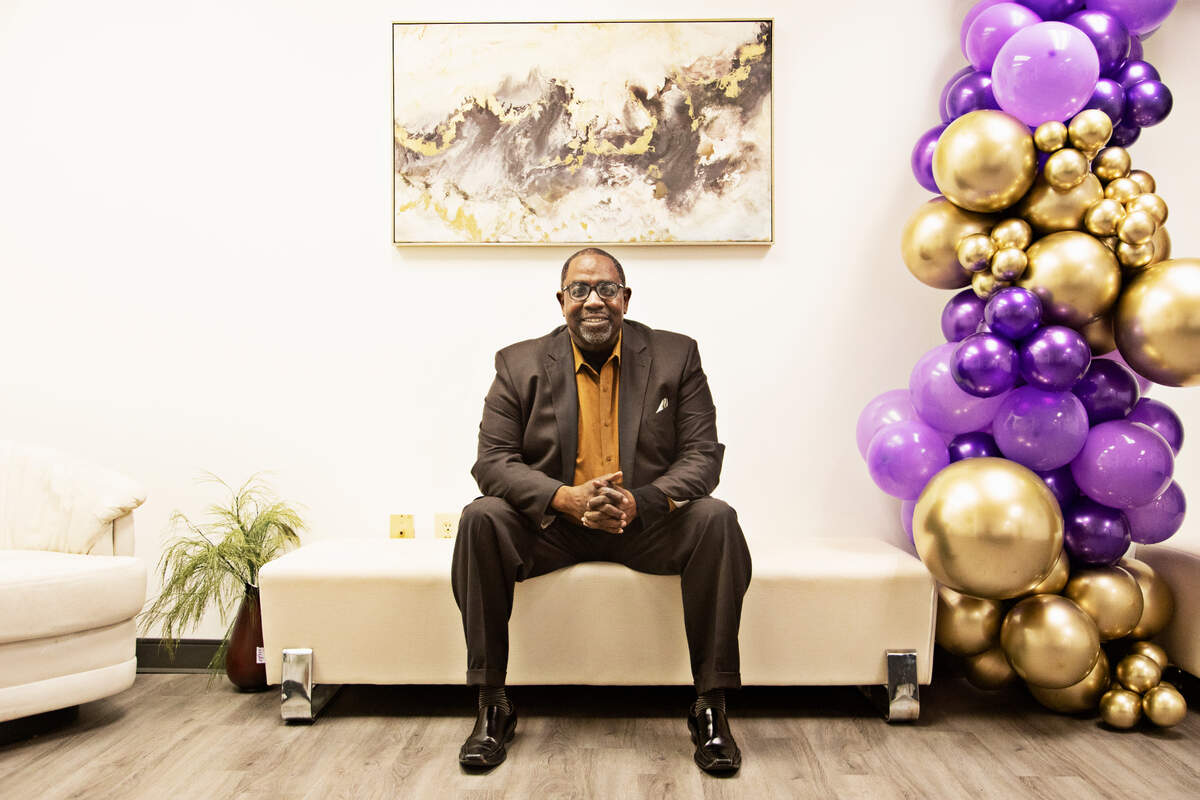
As COVID-19 first started to spread across the United States, Greater Love Church’s Bishop Harvey Spencer made a statement to God.
“I am going to pray every morning at 4 a.m. in the morning until this leaves our country,” Spencer, 64, said he told God.
At the time, he thought it would last six months, at most.
Nearly two years later, he said, God has not stopped waking him up at 4 a.m.
“Yes, I am tired, but I am mostly frustrated with what is going with our country,” Spencer said, pointing to untruths being spread about the pandemic. “It has really been breaking my heart to see people dying that really didn’t have to die.”
Greater Love is based in a 16,000-square-foot warehouse that used to house a nonprofit light manufacturing operation and fulfillment center, providing jobs for people with disabilities. Now, Spencer owns the building and leases the upstairs office space to about 15 businesses. Downstairs holds classrooms, a boutique that gives away donated clothes and a 3,000-square-foot worship area.
Before the pandemic began, the 13-year-old Greater Love had about 150 people filling that room. Now, about 65 come to services regularly. Online views, however, have soared. One week, Spencer had 7,000 views, which is way up from the 100 that viewed services before the pandemic.
Early on in the pandemic, Spencer said, God revealed to him lessons from the Bible on how to handle the infectious disease of leprosy: identify and isolate to mitigate.
Through that and other lessons, Spencer continues holding services and providing food to families in Raleigh, Windsor and Roper, he said, but alluding the virus by following all the recommended protocols.
Spencer is self-publishing a book, “The Biblical response to COVID-19”, which will be out in about a month. The book touches on the three W’s - wear your mask, wash your hands, watch your distance, but also the c’s: caring, compassion for others and character.
Spencer is also the caretaker of his wife’s sister, who receives dialysis three times a week, which is another reason for his family to be careful.
Outbreaks at the church have been limited to one. In August, three out of four members of the band were sick with COVID. The church took a Sunday off.
Spencer is aware of the severity of omicron, he said.
His message to his congregation: Don’t drop your guard.
“Continue to do what you have been doing,” he said. “It’s been working.”
The scientist whose mom had a lung transplant
.jpeg "2020 12 05-77 (2_fitted (1).jpeg")
Lindsay Marjoram is coping by clinging to her tunnel vision.
Marjoram, a scientist, has continued to go into the office throughout the pandemic for a contract research organization in the Triangle. Her son, 7, has asthma and her mother had lung transplant surgery in February.
“The vigilance that we lived by is probably what some folks would consider extreme,” said Marjoram, 39, of Durham. When schools closed, they hired a nanny. They limit their inside contact to a small group of friends. Before they spend time with others, they ask those people to take precautions.
Her mother’s time isn’t promised, Marjoram said.
“Every day is precious and we want to make the most of it,” she said. “I also couldn’t live with myself if we gave her COVID. For her to have this new lease on life and then get this disease, it’s unforgivable, and, for me, it’s infuriating.”
After getting the COVID vaccine booster, Marjoram did go to a few DPAC shows but ended up giving up her tickets to a Christmas Eve show away due to concerns linked to omicron.
“Everything is a calculation,” she said, “and that’s exhausting.”
Marjoram is burned out, but she knows she can’t give into it.
“I maybe have less burnout than rage that we are still here,” she said. “Maybe if everybody had a lung transplant recipient in their family, they would feel differently.”
Marjoram is coping by giving into her tunnel vision.
“People want to make plans for a week from now. I can’t do that. I am incapable of doing that because of omicron. I just feel like the other shoe is going to drop at any point because friends of ours we think are super conservative, they are getting COVID.”
One of the hardest parts, she said, is there is no way to plan for the impending disaster.
“I do wish I could enter the void and scream into it,” she said.
The cafe owner whose business is down by more than half
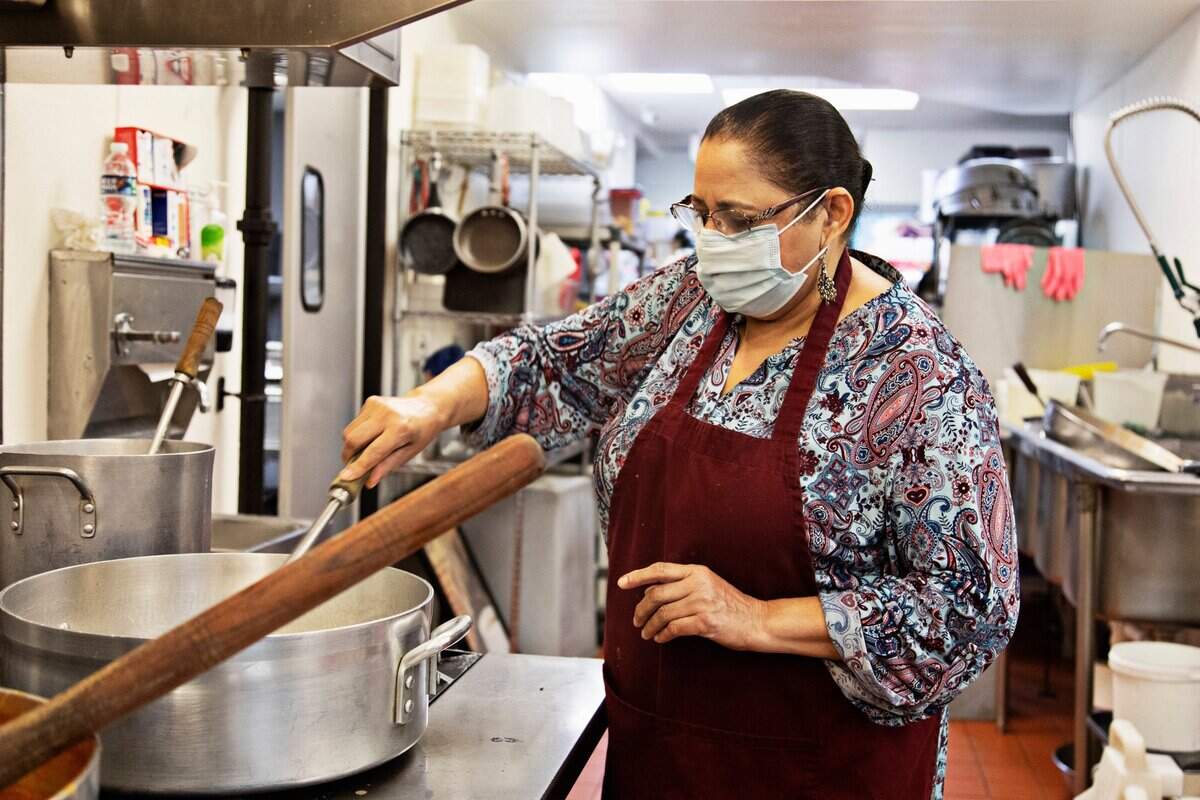
At 11 a.m. on a cold Monday, Darvir Ahluwalia places a sign on the downtown sidewalk advertising his homemade chicken korma — the day’s special at Plaza Cafe in downtown Raleigh.
But inside Ahluwalia’s Fayetteville Street diner, a single customer is sampling it.
“Great for a cold day,” Ahluwalia calls to the customer, noting that he has not visited for two years. “Is it as good as you remember?”
As the COVID-19 pandemic nears its second anniversary in Raleigh, a fatigue has dropped over businesses that rely on foot traffic and trade on polite chatter.
Ahluwalia and his mother, Ravinder Kaur, occupy the bottom floor of the Duke Energy building, and their downtown business crowd used to queue up daily for gourmet omelets or homemade naan.
But business is down by more than half, and the only thing that keeps them going is by following their routine.
“The first thing I do when I get here is wash my hands,” he said. “Turn on the coffee machine. Get ready for breakfast. Do what has to be done, and try not to think too far into the future.”
Plaza Cafe prides itself on repeat customers, watching kids too short to reach the cash register grow into college students. The staff remembers faces and personal details.
The past two years without the interaction and the banter is doubly hard for friendly extroverts. They wonder when the office buildings downtown might fill up again, with so many people who have grown accustomed to virtual life.
“Potentially,” Ahluwalia said, “it might never get back to normal.”
Still, he said, these are not the hardest days.
The early pandemic restrictions closed Plaza Cafe for two months, and the downtown riots of 2020 shut their doors for another several weeks.
COVID-19 hit just as they had renovated the cafe, and they took out both PPP and SBA loans. Some of their neighbors on Fayetteville Street — like the Rocket Fizz candy store — couldn’t survive.
When the pandemic first struck, Ahluwalia would scrub down his tables and counters with “hardcore, industrial” cleansers several times a day. They’ve scaled that back now that surface contact isn’t considered a major risk.
So they get their shots.
And they wait.
“We just go day by day,” Ahluwalia said.
“It is what it is,” said his mother.
The lone customer finishes the chicken korma, and the cafe goes quiet again.
This story was originally published January 16, 2022 at 6:00 AM.