
What the camera saw the night an Orange County inmate died, and what jailers missed
The night Maurice King died, surveillance video shows four inmates followed him to his cell in the Orange County jail, including the man accused of killing him. The last inmate to reach the cell closed the door as others appeared to contain someone inside.
Over the next several minutes, the video obtained by The News & Observer shows three inmates emerged and then, after a delay, the man charged with King’s death.
A detention officer walked through shortly after, doing his required check on inmates, but never looked in King’s cell or others. On subsequent checks, he and another officer continued to pass by inmates’ cells without looking in them.
It wasn’t until roughly 90 minutes after what deputies now say was a fight among inmates that one of the detention officers started to realize King wasn’t doing well. Eventually, the officer and two others carried King from the pod of cells and took him to a jail nurse, where he struggled to remain conscious. The nurse called for an ambulance.
By then King, who was overweight and asthmatic, gasped for air and was sweating heavily. He told paramedics on the way to Duke Hospital he had been “stomped and choked” in the jail, a medical examiner later reported. King died in the emergency room. The autopsy report said his face took several blows that helped trigger heart failure.
He was 34, the father of three children ages 10, 13 and 15.
“He was my world, and when his life was taken, it’s like my world was shattered,” said his mother, Tiffany King, of Durham.
Her attorney, Allyn Sharp, obtained the surveillance video by petitioning the court. What Tiffany King saw left her distraught.
“I don’t think that they were doing a check at all,” she said. “I don’t think they was watching their video. I don’t think they was basically, like, handling those inmates the way they should, protecting them, especially my son.”
She’s not the only one troubled by what the cameras show.
State health department officials, after viewing the video of the night her son died on March 4, 2020, found that detention officers violated state regulations by failing to look into his cell during inmate checks. Those regulations require jailers to check inmates at least twice an hour.
The jail video The News & Observer obtained from the family (shown above) shows numerous rounds made by detention officers walking along the two rows of cells in the pod. They electronically check in on each end of the pod — a system to record their checks — but they don’t look into the cells.
“The recording reflects officers making rounds but not looking into the cell,” said the report by Chris Wood, the state health department’s chief jail inspector. He investigated the week after King’s death.
Tiffany King said her son might be alive today if detention officers had supervised the pod as they should. He was being held on federal drug trafficking charges and had entered a guilty plea the previous month.
Jail deaths are rising
Orange County Sheriff Charles Blackwood said in a written response to DHHS’s report in May the detention officers didn’t conduct the checks properly, but that had nothing to do with King’s death.
“(W)hile the deficiencies noted by the Chief Jail Inspector did not cause or contribute to the inmate’s death, they are nonetheless concerning and are being prioritized for correction,” he said.
In a text message to the N&O this month, Blackwood said the actions that King and other inmates took to hide the fight also delayed help.
Susan Pollitt, a senior attorney for Disability Rights North Carolina, a nonprofit that looks out for people with physical and mental disabilities, questioned the sheriff’s claim after reviewing the DHHS reports.
“If you don’t actually observe at any point, then that system of supervision doesn’t result in a safe jail,” she said.
King’s death marks the third in North Carolina’s jails in the past two years that resulted from violent confrontation between inmates. In all three, DHHS inspectors cited the jails for a lack of supervision. The other deaths happened in Cleveland County and Craven County.
The death in Cleveland County’s jail has prompted a lawsuit, with the inmate’s family contending jailers knowingly left unchecked two violent, unstable men in a cell with a window so badly cracked no one could see in. Jeffery Todd Dunn, 37, died after jailers found him beaten and unconscious. The other inmate has been accused of asphyxiating him and faces a murder charge.
Those violent deaths are part of a steady increase in jail deaths across the state over the past several years. Last year, jail deaths reached another high, despite efforts to reduce jail populations to limit the spread of COVID-19. DHHS records show at least 49 inmates either died behind bars or became infirm at a jail and died at a hospital. That’s three more than the 46 deaths in 2019, which was the previous record.
In 16 of those 49 deaths, state DHHS officials found supervision failures. That’s a systemic problem the N&O first reported in a 2017 series, “Jailed to Death.”
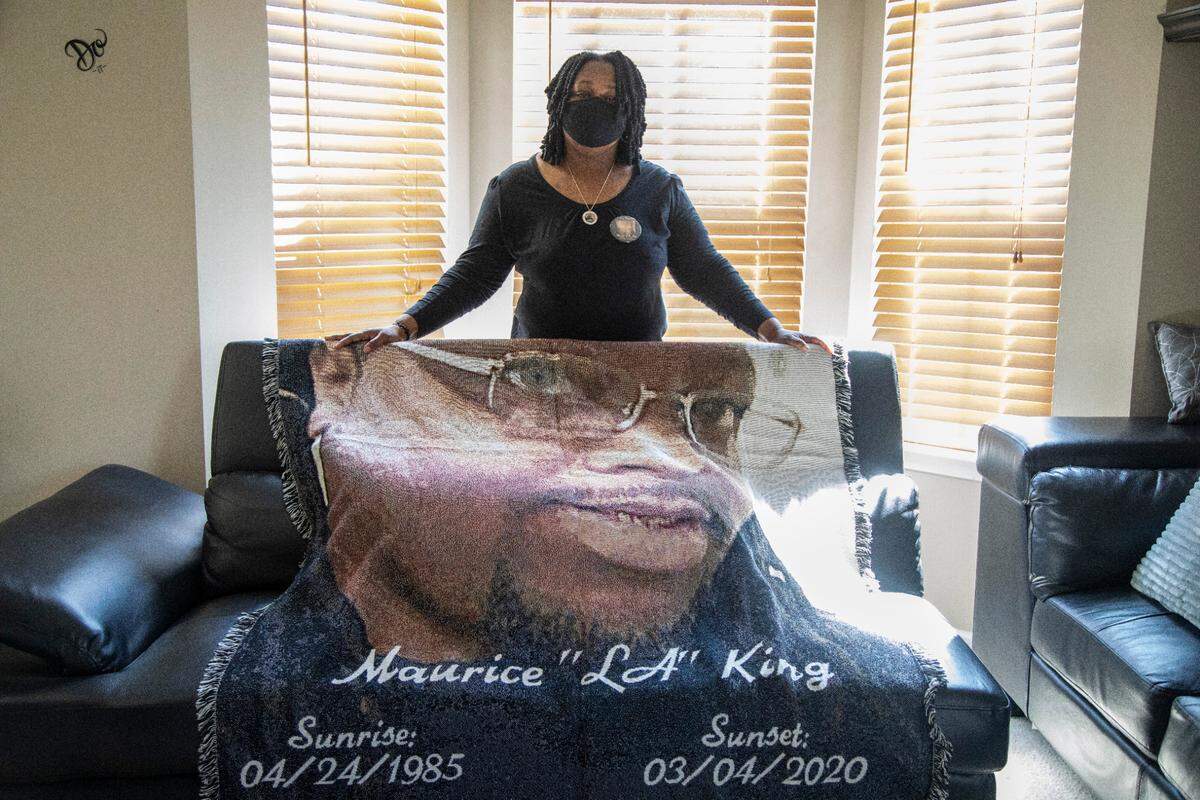
King grew up in Durham, the oldest of Tiffany King’s two children. He lacked a high school degree, she said, and worked as a janitor, a locksmith and a mover among other odd jobs. He had been married and divorced, though he and his ex-wife had stayed in touch.
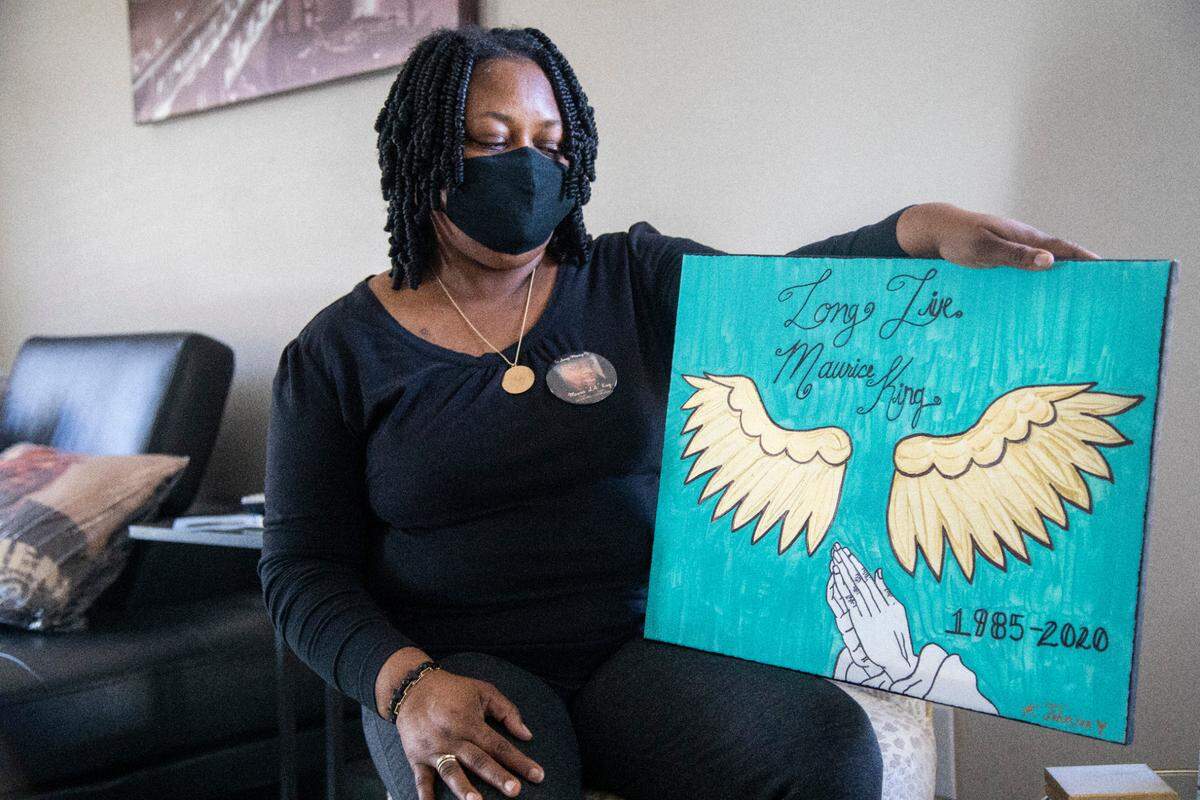
His mother said he could sketch nice portraits with a pencil and drew several of his family.
“He was like an artist,” she said. “He loved to draw. His kids was his world. I was his world. If we were OK, he was fine.”
King had prior convictions on drug, firearms and indecent liberties with a child charges, but had been out of prison a few years before the 2017 arrest on drug charges that landed him in the Orange County jail.
Tiffany King said many of the charges against him had been dropped and she thought her son might be released for time served as the case ground on. Federal court records show Durham police had arrested him on state charges which were dismissed after a federal grand jury indicted him.
At one point, notes in the federal court docket show, one federal judge declared King incompetent. The decision came after a psychologist reported King had intellectual disabilities and a history of mental illness, according to a copy of the report provided by his mother.
King’s defense attorney said in a court document King was then placed in a federal prison facility for “education.” King later told the court he could understand the case against him, the docket notes show, and another judge allowed it to proceed.
A sound in the cell
On the night of March 4, 2020, the jail video shows King talking with fellow inmate Tyler Grantz in the pod’s open area at 6:38 p.m. (the time stamp on the video is off by 54 minutes), and then King gesturing for Grantz to follow him to his cell on the upper row. As they enter the cell, Grantz closes the door behind them. Two other inmates follow, and as they enter the cell, it appears they are trying to contain someone.
A fourth inmate on the pod floor watching the cell then quickly walks up, briefly entering the cell and reaching behind him to close the door. He and the two other inmates who had followed Grantz into the cell slip out. One stands in front of King’s door looking in; the other two stand alongside looking out over the pod.
Six minutes after entering the cell, Grantz leaves and walks to his cell on the same row. One of the other three inmates closes the door to King’s cell.
A detention officer begins an inmate check on the pod two minutes later, at 6:47 p.m. He walks past the lower row of cells without looking into any of them, then goes up the stairs to the upper row, where one of the inmates who went into King’s cell appears to direct him to another cell past King’s.
The detention officer walks past King’s cell without looking and enters the other cell. A second inmate then goes into King’s cell before the detention officer emerges from the other cell. At that point, the detention officer is joined by the first inmate, who walks between the officer and the cells. The officer passes King’s cell again without looking in and goes downstairs.
Jailers found King in distress shortly after 8 p.m. the night he died, Blackwood said in a text message to the N&O. A detention officer making the checks heard a sound in the cell that caught his attention, but it was not enough to make him go back.
When the detention officer returned to the control room, he reported having second thoughts and turned on the intercom in King’s cell, Chief Deputy Jamison Sykes said in an interview. Hearing nothing, the detention officer went to King’s cell to check on him, Sykes said. King told the detention officer he was OK, but out of breath and in need of an inhaler, which the officer provided, Blackwood said.
Neither King nor any other inmate said anything about the fight, Sykes said. There was no reason for officers to suspect anything other than a breathing problem or call 911 more quickly, he said.
The deputy alerted other employees that King needed help around 8:15 p.m., reports show.
“It seems that all parties involved, including King, attempted to keep this event from us,” Blackwood said.
“The fight appears to have been an event that was orchestrated and designed to be concealed from staff,” he said. “The inmates in the block actively attempted to conceal the fight, which was not held in the open block but rather in the cell. They even went as far as attempting to divert staff from knowing a fight was taking place.”
One of the inmates later helped detention officers carry King down the stairs and place him in a wheelchair to be wheeled out of the pod.
The day after King died, two deputy U.S. marshals showed up at Tiffany King’s door.
“They just said my son was in an altercation,” she said. “And I said I’m going to put on some clothes and have them to escort me there or drive there. And that’s when they said he’s gone.”
Should officers have noticed?
Detention officers on duty that night operated from a central control room surrounded by four pods.
It’s not uncommon for inmates to hang out together in their cells. While Sheriff Charles Blackwood has considered a policy on whether cell doors have to be open when inmates are inside, there is no limit and no policy barring them from closing the door, Sykes and other officials said. The cells are locked from 2 to 6 a.m.
“I wasn’t there,” Sykes said, when asked why officers didn’t see the inmates go into King’s cell and close the door. “I can tell you that there’s other cells and other pods they’re responsible for. I can tell you it’s not uncommon for inmates to congregate in cells. Beyond that … I don’t know what distractions, other duties the detention officers were (handling).”
He declined to discuss details of the case, citing the investigation and potential litigation.
“Nobody wants to see anyone harmed while in custody,” he said. “We pride ourselves on taking extreme measures to protect the people in our jail. It’s a bad situation, and it’s unfortunate when something like this happens. It’s just a sad situation.”
Donald Leach, an expert in jail security based near Salt Lake City, Utah, said the series of events captured on the video, as described by an N&O reporter, should give detention officers watching from a control room reason to investigate if they caught all of what the video showed. But it’s hard for officers to catch everything on a bank of security cameras, especially when they often have other duties.
“There’s no doubt in my mind if the officers had seen that, they would have gone in there, if they had seen that whole progression as you saw on the video,” Leach said. “But if you only saw snippets of it, piece A, piece B, you wouldn’t think anything of it.”
He, too, said the regular inmate checks are important. When detention officers don’t do them, it sends a signal to inmates that they can get away with violent behavior.
“These guys are very sharp,” he said. “They see the practices.”
The jail, which has a capacity for 129 inmates, had gone without an inmate death for nearly a decade. The county is building a new jail west of Hillsborough on U.S. 70 that can hold 144 inmates, and expects to complete the project later this year.
No charges for other inmates
The sheriff’s office declined to identify the other inmates involved, because they are “relevant to the investigation.”
Search warrants in the case identified the men who entered King’s cell along with Grantz as Linwood Stephens, Dawan Salters and Darryl Bradford Jr. Grantz, 22, was later charged with involuntary manslaughter. His attorney, Dana Graves, declined to comment on the case.
Tiffany King said the video shows a coordinated effort by all four inmates. She said Grantz should face a more serious charge, and the others should have been charged in the case.
“I don’t think that the justice system is fair, because all of them should be charged,” she said. “All of them were accessories to the fact of my son’s life being taken.”
Blackwood said in the DHHS response that the officers who did not do proper checks had been disciplined. Sykes, after consulting with the office’s attorney, declined to identify the officers or say what their punishment was. The state’s personnel records law does not make minor disciplinary actions public.
State personnel law requires suspensions and demotions of state or local employees to be public record, but other forms of punishment, such as a letter of reprimand, are not. If an employee is dismissed, that too is public, as well as a letter explaining the firing.
Blackwood also said in the DHHS response that jailers would undergo training that “clarifies and emphasizes” direct observation of inmates during rounds, and supervisors will spot check to make sure they are done correctly. DHHS officials have accepted Blackwood’s plan of correction.
Orange-Chatham District Attorney Jim Woodall said last year that his office did not plan to charge Grantz with King’s death in the spring, but after more research and re-interviewing jailhouse witnesses, they filed the manslaughter charge in October.
Everybody knew the men were going to fight, Woodall said. There was no evidence to support the idea that King was set up, he said.
“It’s pretty clear and based on witness evidence that (King) invited this guy to fight, but we think it just went a little too far,” Woodall said in an interview with The N&O.
Prosecutors did not think there was enough evidence to charge the other men or prove beyond a reasonable doubt what they intended to do in that situation, Woodall said.
He declined to talk about the pending case against Grantz but said the jailhouse video is only good for speculation, because it doesn’t show what happened in the cell. The trial has not been scheduled yet, he said.
“It’s a tough case. It’s going to be a close case,” Woodall said. “I think it’s going to be tough enough (to prosecute) the man who actually participated in the fight. When you start moving away from the guys who maybe closed the door to the cell or stood there, as the theory is, and watched, causation gets much, much tougher for them.”
State lawmakers take little action
The rising death toll in county jails has drawn little action from state lawmakers. Last year, two lawmakers tried to cancel long-planned rules intended to provide more safety and supervision. One of those lawmakers is a former sheriff; the other a former chief deputy.
Their legislation died in a House committee as unsettling information surfaced about another jail death. John Neville, 56, died Dec. 4, 2019, after five Forsyth County deputies and a nurse left him cuffed and shackled in a prone position in a cell, making it difficult for him to breathe. They have been charged with involuntary manslaughter.
The new jail rules increase screening of inmates for signs of mental illness, and provide better supervision by making sure checks are done more effectively. But Pollitt of Disability Rights North Carolina said the rising numbers of jail deaths, along with the sudden spate of violent deaths, show the state’s laws aren’t doing enough to curb lax supervision.
She said DHHS needs increased penalties to enforce compliance for repeat offenders, and state lawmakers should require an annual report on jail deaths so the public sees what’s going on.
“It’s just time to pull the curtain back on what’s going on in these jails, so we can make sure these people are safe,” she said.
This story was originally published March 22, 2021 at 6:00 AM.