The Triangle housing bargain: Record home prices look like a deal from the West Coast
READ MORE
The lure of losing a housing bargain
The Triangle housing market is setting price records every month. But it still looks like a good buy to people moving from other places along the East and West coasts. How does the Triangle’s record-high median home price look like a “deal” to so many migrants? This is The N&O’s special report.
Expand All
The Triangle housing bargain: Record home prices look like a deal from the West Coast

North Carolina has good home prices but low inventory — even when you can afford to compete

Raleigh needs more nightlife if it wants to keep attracting newcomers
An entrepreneur placed a help-wanted ad in the Triangle. Applicants convinced him to move
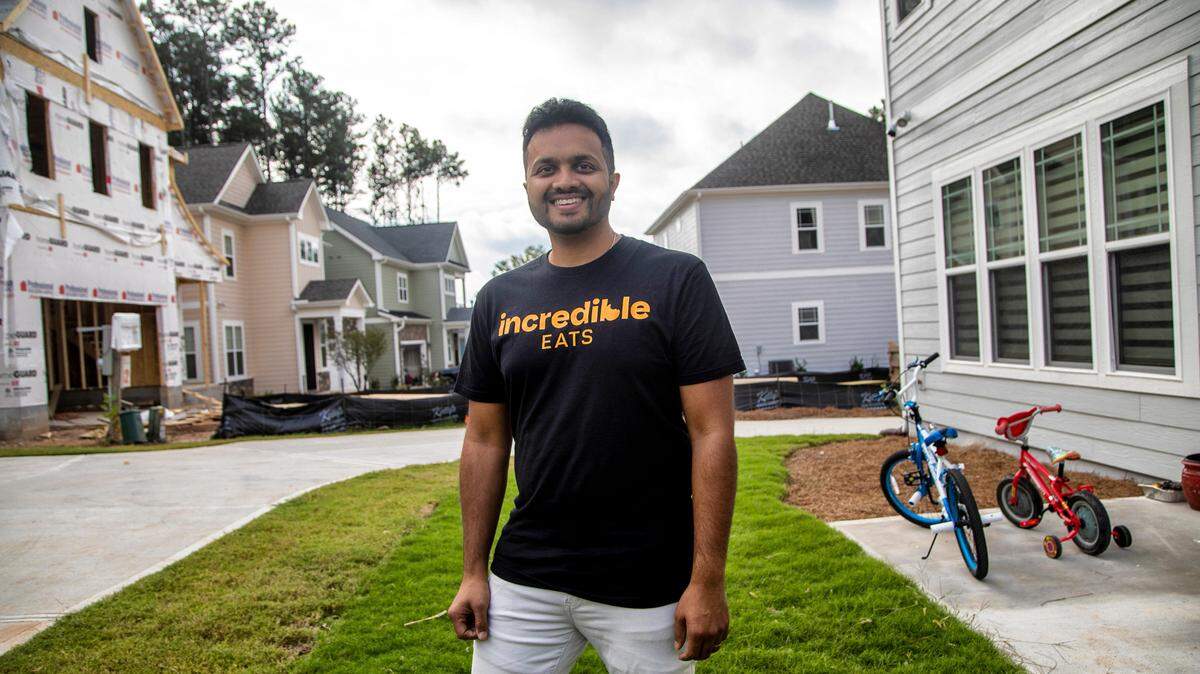
Dinesh Tadepalli knows he’s a frugal person. He’ll tell you that. The money he saves today, he’ll be able to use for myriad reasons tomorrow.
That’s why he had to leave California.
“It’s just getting too expensive to stay there,” the 35-year-old Intel engineer said in an interview. Especially, as he is trying to fund a new project on the side: a startup company that makes edible spoons.
So when the pandemic happened, and the possibility of remote work became a reality, Tadepalli began looking for places to decamp from San Jose.
The search brought him to Morrisville, a suburban town nestled near the center of the Research Triangle, an area where he had friends and could envision an enjoyable lifestyle.
Back in California, he was able to sell his home for enough money that it allowed him to invest not just in his own startup, Incredible Eats, but also to put a down payment on a new home in Morrisville.
“It has a laid-back atmosphere,” he said of the Triangle. Unlike in California, where it felt like everyone was competing with one another for space and opportunities. “Plus the schools are good. My kids are growing up.”
Tadepalli is one of the thousands of people who have moved to the Raleigh area over the past 18 months, spurred in part by the pandemic, which gave many people in higher-cost metro areas a chance to re-evaluate where they lived.
For Tadepalli, it meant moving to a place where he could afford to build a new home, be around other professionals and grow a startup while working remotely.
More broadly, he is part of a wave of newcomers who have been showing up for decades — drawn by lower housing costs and plentiful opportunities. Companies, too, keep moving here thanks to the number of graduates churned out by local universities, giving the Raleigh area the fourth-highest concentration of college graduates of the 50 largest metro areas, trailing only Seattle, San Francisco and Washington, D.C.
Just in the past year, both Apple and Google, behemoths of the digital economy, announced plans to add thousands of jobs in the region, and other industries, like biotechnology and health care, are growing rapidly.
Fast-paced growth
It’s all led to a fast-growing population, and growing concerns about how to handle the additional people. Raleigh was the second-fastest growing large metropolitan area in the country, only trailing Austin, Texas. The area’s population grew by some 23% over the past decade.
At the request of The News & Observer, Carolina Demography at UNC-Chapel Hill analyzed out-of-state migration patterns into the Triangle from 2015 through 2019, the latest year for which data is available.
New York had the highest in-migration numbers of any state with an average of over 6,000 people per year moving to the Triangle, which for the analysis included Wake, Durham, Orange, Johnston, Chatham and Lee counties.
California had the second most migrants of any state with around 5,600 per year. Florida was third at over 5,200.
The Triangle has also seen relatively high migration numbers from East and South Asia. China averaged 2,350 people per year and India nearly 2,700. If they were states, India would rank ninth and China 11th.
Most of the people moving to the Raleigh area (around 73%) are renters, according to data from the Raleigh Chamber of Commerce. And half of those renters can afford to buy a typical home in the region.
The consistent growth for the past decade has put pressure on the local real estate market. To be sure, it is not just out-of-staters influencing the local economy. It is also current residents looking to upgrade homes or buy one for the first time that have sent the region’s real estate market to record highs.
But those rapidly rising prices — which are eye popping to longtime residents of the Triangle — look like bargains to people living in many other cities across the country.
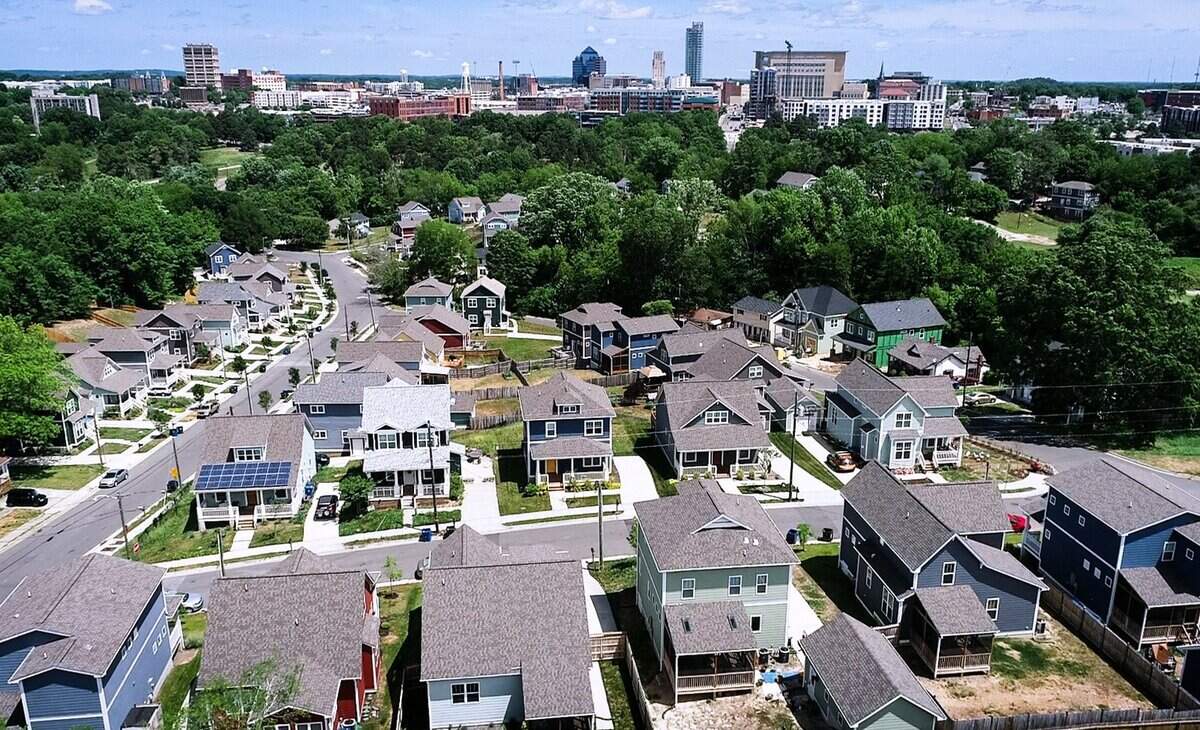
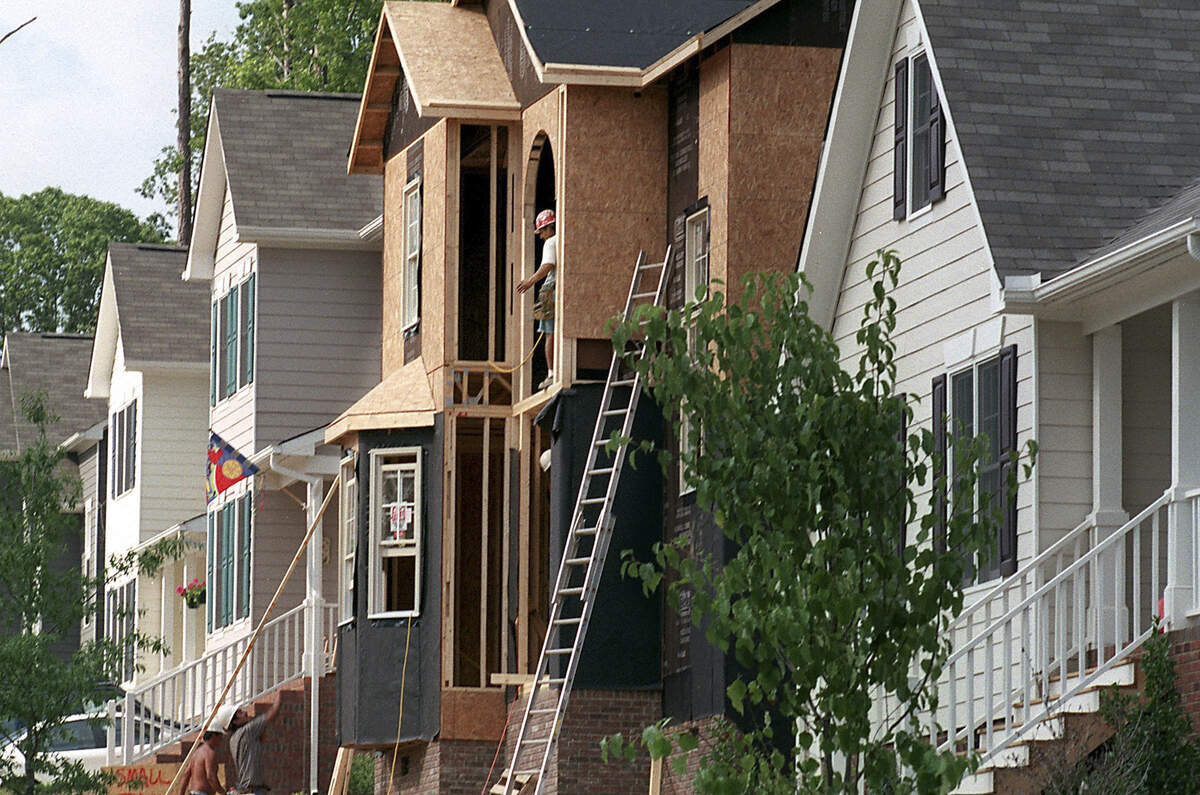
In September, the median sales price for real estate in Wake County hit a record high of $390,000, The News & Observer reported, as low inventory and low interest rates pushed up prices. It wasn’t until this year that the number of new homes being built reached the number being built in 2008, when the Great Recession hit, despite the region’s population growing significantly since then.
But new construction is also coming in at higher prices, as land, supplies and labor make it harder to build homes for under $300,000.
“There’s so many different factors that force (prices) up,” said Jim Anthony, CEO of APG Capital in Raleigh. “It’s increasing land prices, which is created by competing developers who want into the market, and it’s increasing competition from buyers who are pushing up prices.”
“All the folks in this market, who are sellers, are getting multiple bids well over asking price on their homes,” he added. “It’s supply and demand forces working the way they always do to push up land prices, push up rents, push up construction costs, (and) push up eventual sales prices.”
Historically, the Triangle has trailed national rates for home prices. But it has caught up. In September, the median home price in the country was $408,800, Marketwatch reported.
And yet that price is still cheaper than the median home prices in places like the Bay Area ($1.13 million), Los Angeles ($795,000), Seattle ($775,000), New York City ($765,000) or even Austin ($528,000).
RTP’s momentum
The growth the Triangle is seeing today, in many ways, can be traced back to policy decisions made 60 years ago, when the state’s leaders hatched the idea for Research Triangle Park, said Alex Sayf Cummings, a history professor at Georgia State University and the author of “Brain Magnet: Research Triangle Park and the Idea of the Idea Economy.”
In 1966, when the state was able to recruit IBM to RTP, North Carolina was one of the poorest states in the nation and had an economy built on tobacco, textiles and furniture.
Cummings said IBM was a signal to the rest of the country that the Triangle could be more than a Southern backwater. That you could convince highly educated people they could work and live in North Carolina, as they could in California or New York.
“The momentum really snowballed from there,” Cummings said, leading to other companies joining the region. IBM was the technology giant of its day, and it completely changed the trajectory of the region. The arrival of Apple, recruited some 50 years after IBM, could echo that story.
“Apple in 2021 is kind of like what IBM was in 1965,” John Hardin, executive director for the North Carolina Board of Science, Technology & Innovation, told BusinessNC Magazine earlier this year.
Yet it’s still the combination of the Triangle’s universities, as well as relatively affordable housing prices, that continue to help it stand out today.
“The Triangle has been able to present itself as a real sweet spot,” Cummings said. “You’re not talking about San Francisco or San Jose, where the median house price is $2 million. And It’s not rural Idaho either where the wages might be very cheap, but there’s not a really specific reason to move there as a company or as a family.”
Raleigh has repeatedly been able to show itself to companies and their employees as a place “you can move to and have a nice house in the suburbs, not a lot of traffic, and have a professional job in science or tech,” Cummings added. “And I think that is still true today,” especially as the large millennial population has begun to raise families.
An inflection point
It still rang true when Peter Wells was deciding where to relocate his power company Smart Wires from its headquarters in the Bay Area.
“It had become a challenge” to operate in California he said, with “the cost of doing business, the cost for your employees to live there, (and) the ability to recruit and retain the right talent.”
The Triangle, he said, offers a similar level of talent but at a much more affordable rate, even compared to Austin, the only large city that grew faster than Raleigh in the last decade. A former North Carolina resident in the early 2000s, Wells was also surprised by how much more culturally vibrant the Triangle had become in the past decade, with a growing restaurant and music scene. North Hills, which is near his new apartment, is barely recognizable now.
The Triangle, he added with some caution, is at an interesting place at the moment, where it has attractive prices, talent and amenities to attract a lot of companies and residents. It reminds him of places he used to live, like Portland, Oregon, before prices really began to escalate there.
“The cost of living and housing clearly is going up here, because companies are coming in and they’re investing,” he said, noting those same forces are creating more restaurant and entertainment options.
“As long as that inflection point on housing and cost of living doesn’t go too far, people will still come here,” he said. “But I think there’s a long way to go before we get there, especially for people moving from” the West Coast or the Northeast.
Cummings said that could be true, but noted that a place like Austin seems to keep attracting new companies and residents despite becoming pricey.
“They are seeing rising inequality, sprawl and traffic,” Cummings noted, “but in terms of actually growing the economy there, they seem to keep doing it.”
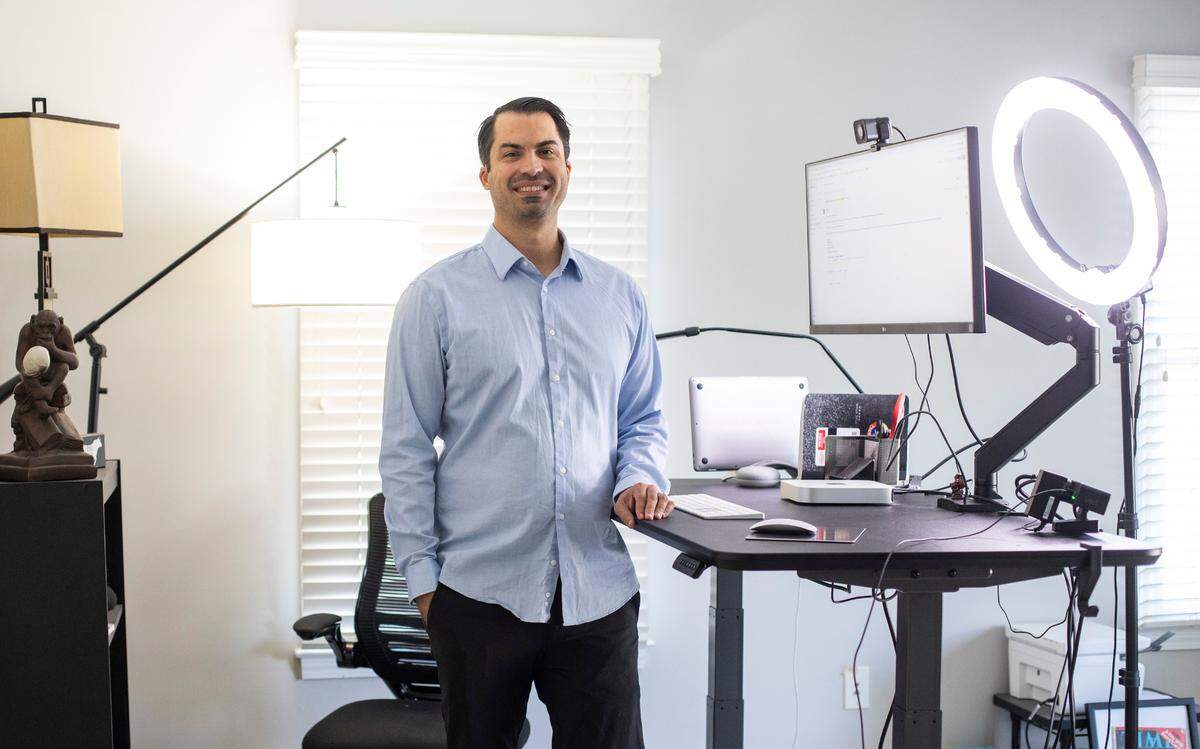
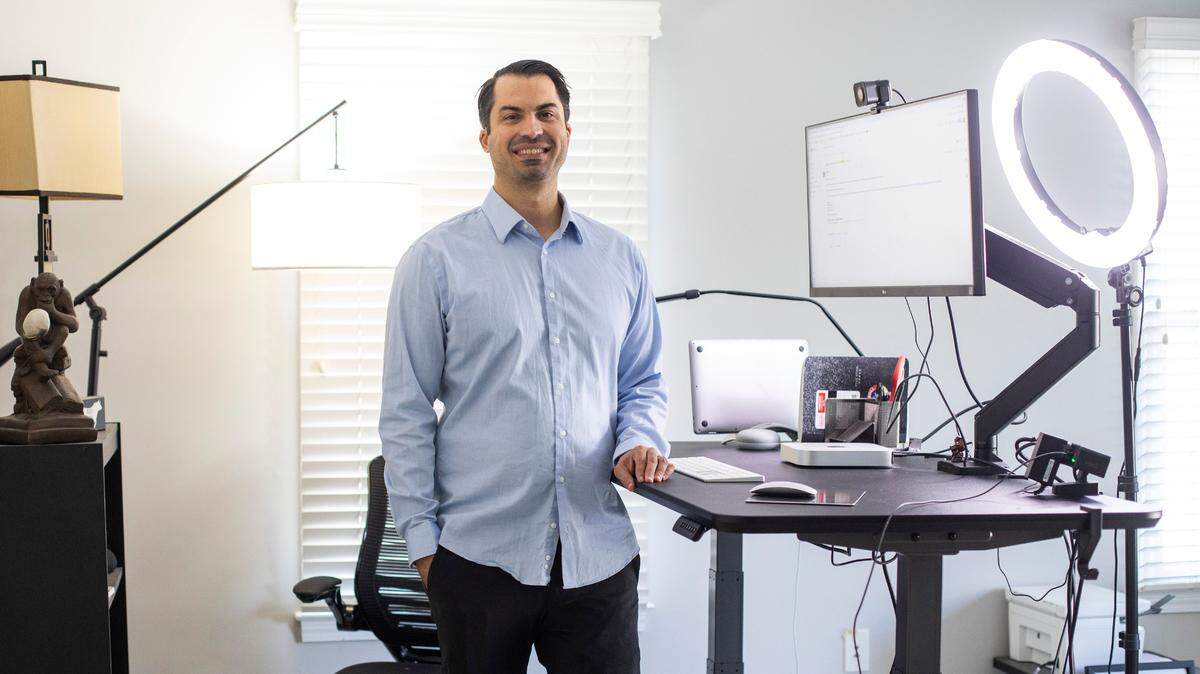
For Ryan Bethencourt, a 42-year-old entrepreneur, the Triangle represents a chance to join a growing region before it gets saturated with attention and becomes too expensive. Last winter, he decided to leave his small place in Oakland, California, for a four-bedroom home in South Durham.
“A lot of people don’t want to be where it is already built out. They want to be part of the next thing,” he said, noting that Austin was like that for the past decade. “Raleigh and Durham are developing a reputation they could be that.” Once Google and Apple open, he added, that narrative will really start to build.
But, for now, the reputation remains that the Triangle is a bargain compared to many cities.
For Tadepalli, it is still that.
“My goal is to bootstrap my company for as long as I can,” he said. “I can do that longer here.”
This story was produced with financial support from a coalition of partners led by Innovate Raleigh as part of an independent journalism fellowship program. The N&O maintains full editorial control of the work. Learn more; go to bit.ly/newsinnovate
This story was originally published November 14, 2021 at 6:00 AM.