‘Waking up for the first time.’ Can a new gene therapy change some children’s lives?
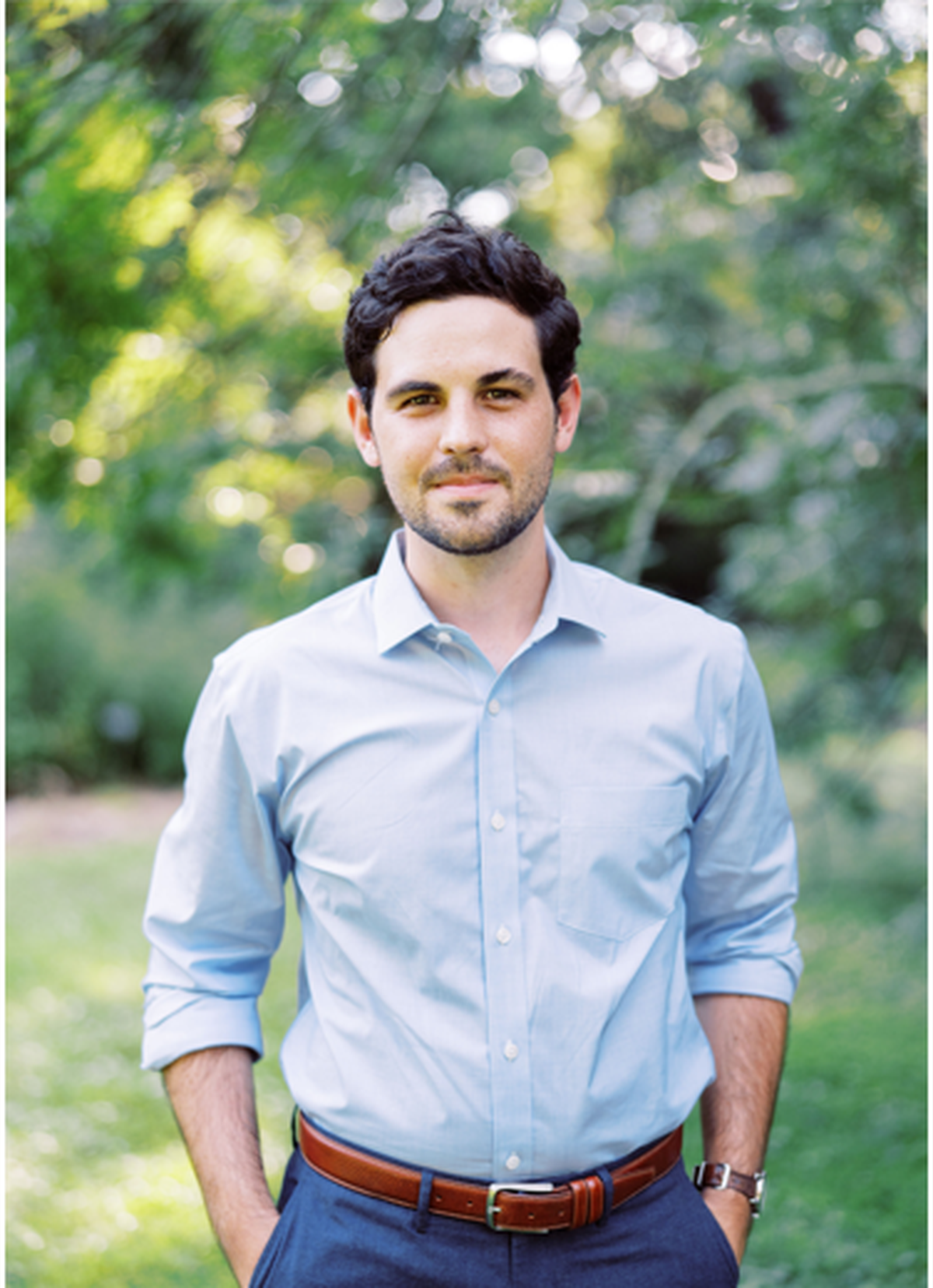
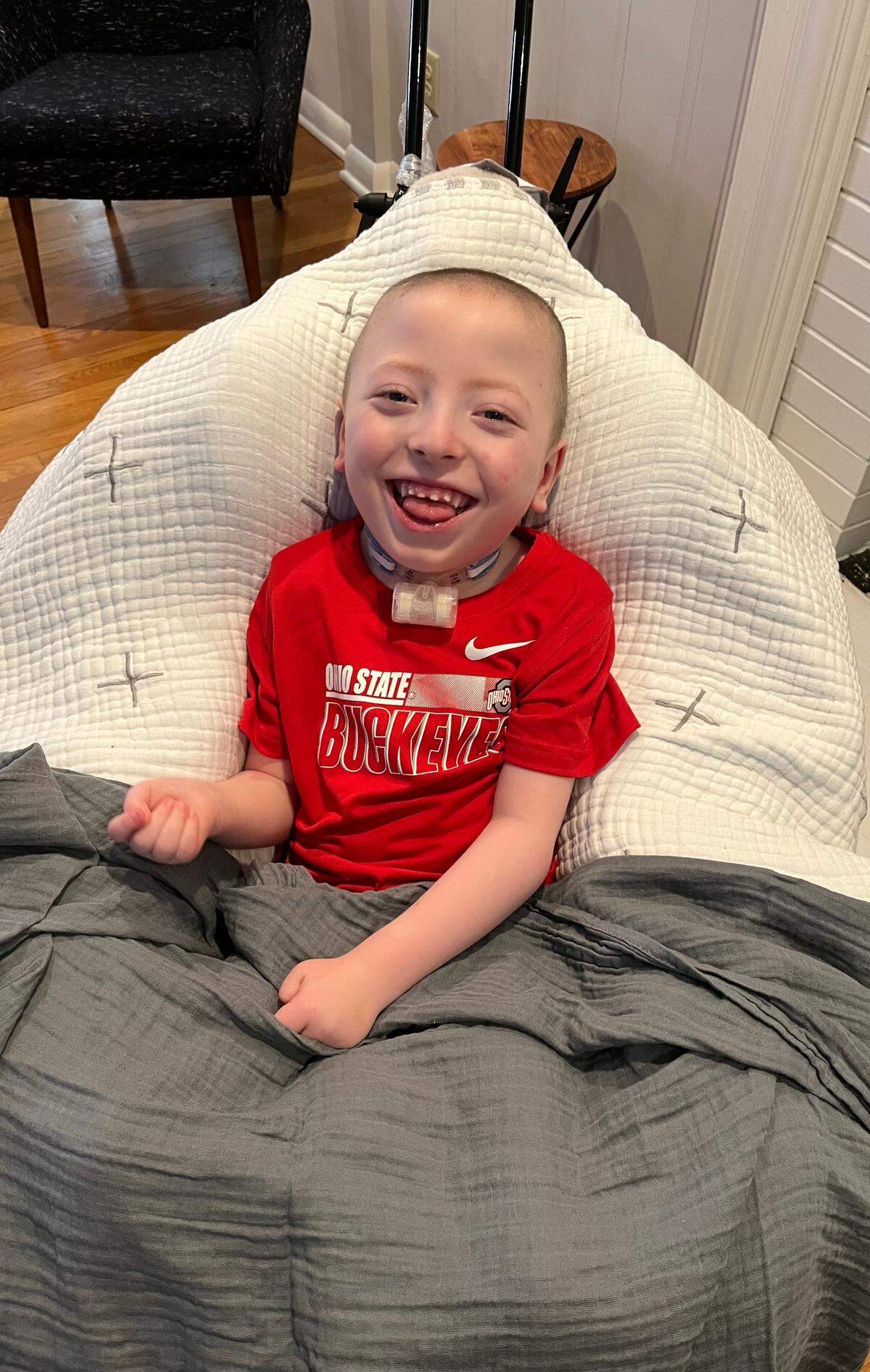
Five-year-old Boston Yannotti’s ear-to-ear smile masks what has been an extremely difficult childhood.
The young boy, with reddish-brown hair and bright blue eyes like his mother, has been confined within the walls of his house for much of his life, unable to experience the world around him.
A trip to the beach or the playground is all but impossible. In fact, simply holding his head up is a herculean task.
That’s because Boston suffers from an ultra-rare disease called AADC deficiency — a genetic disease that stops his brain from producing serotonin and dopamine, a chemical that moves electric signals through the brain and, in turn, controls bodily movement.
“He’s been a prisoner in his own body,” his father, Michael Yannotti, said from their home near the Dan River in Eden, a small town around 100 miles northwest of Raleigh. “But he’s the strongest little fighter and still has the biggest smile you will ever see.”
Without the ability to produce dopamine, Boston can’t feed himself, sit upright or communicate. He’s prone to fits of oculogyric crises, which send his eyes upward and his muscles into painful spasms for hours. His small body, pale from a lack of sunlight, is stiff from a lack of use.
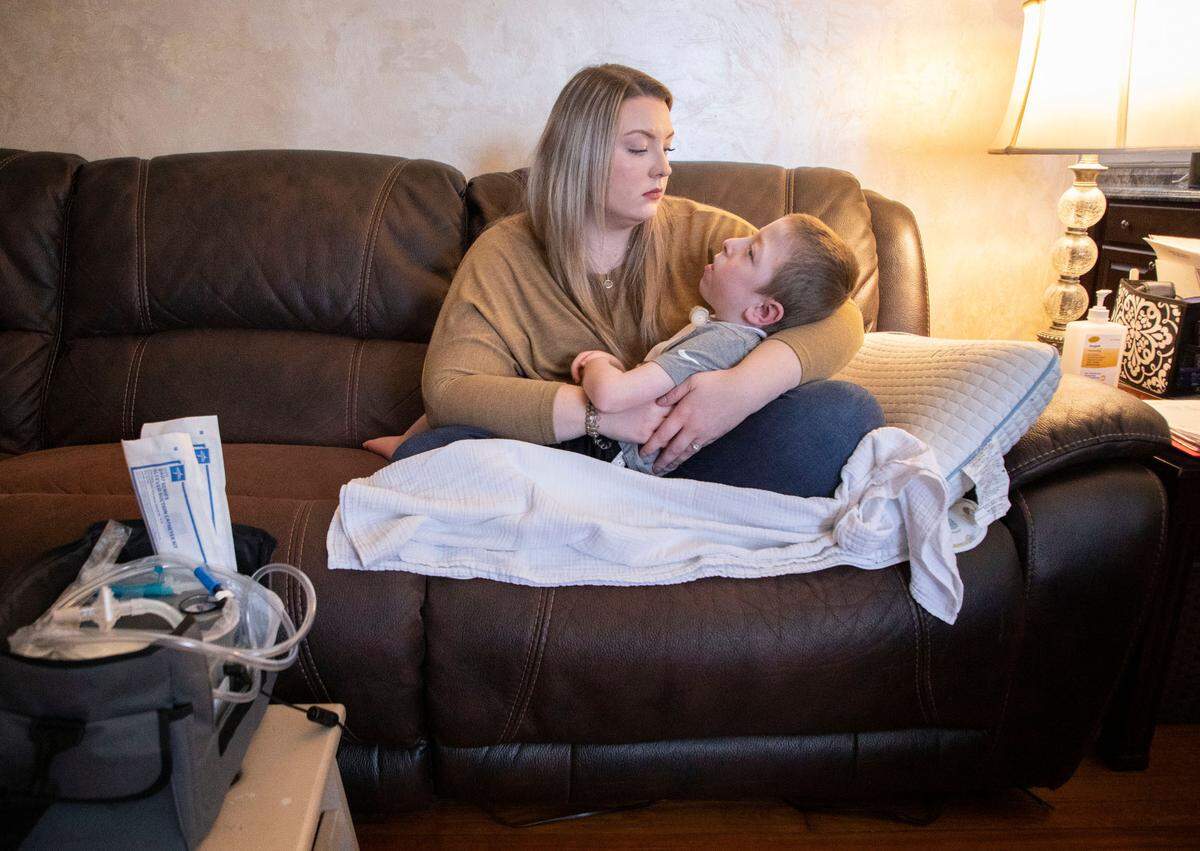
His parents, Michael, 26, and Claudia Moore, 25, live in constant fear of him catching a cold, flu or COVID-19 because he struggles to clear his lungs of liquid.
But that could all be about to change.
In January, Boston received an experimental gene-therapy for children with AADC deficiency. If successful, his parents and scientists hope, Boston could begin to take control of his body for the first time. The two-way communication between the brain and the body could begin to work.
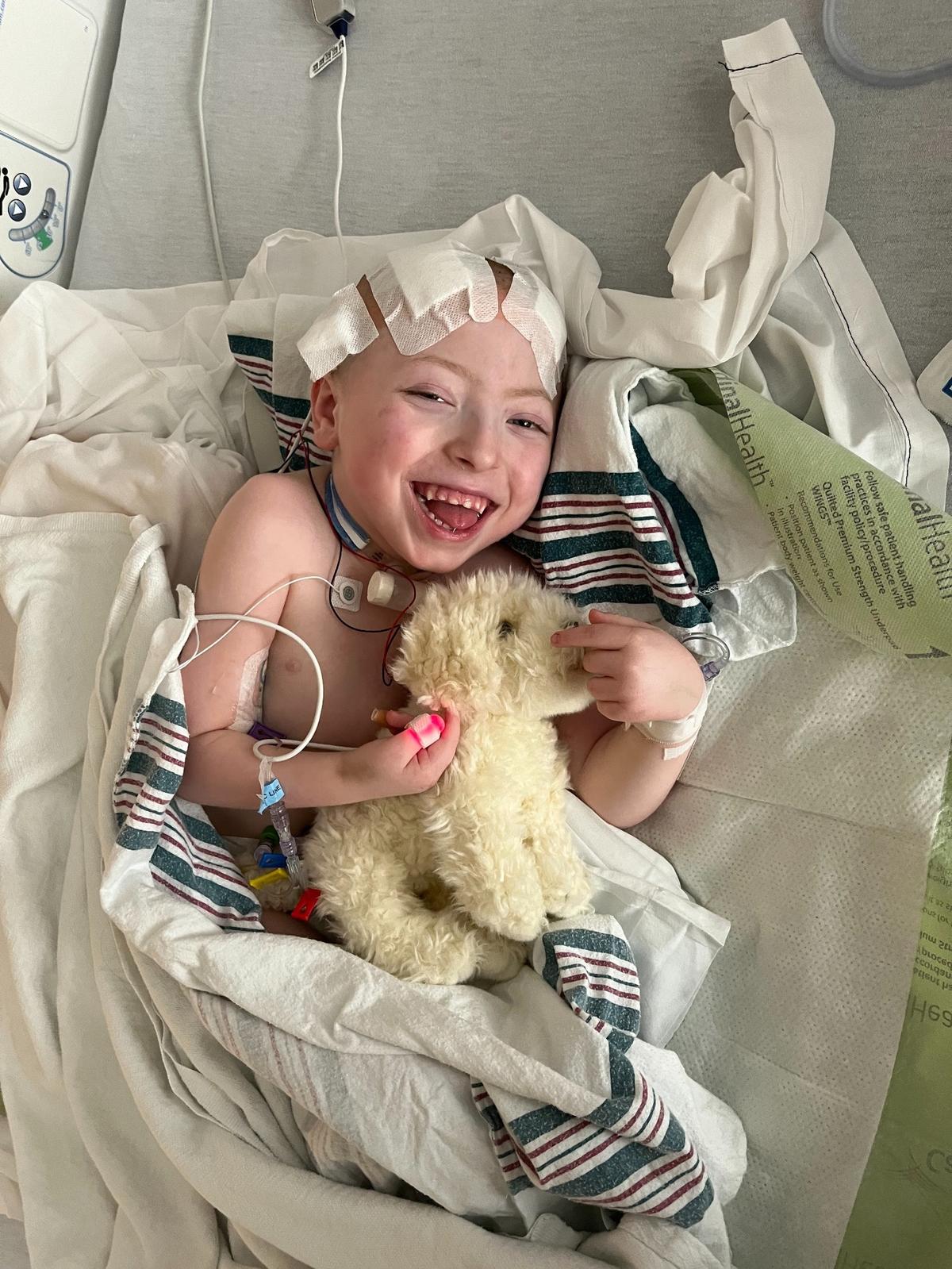
“It could absolutely be life changing,” said Dr. Krystof Bankiewicz, a professor at Ohio State University who helped pioneer the gene therapy for AADC deficiency and its surgical delivery.
Bankiewicz is a close associate of UNC-Chapel Hill’s Jude Samulski, a pioneer in the field of gene therapy and founder of AskBio, a Research Triangle Park-based gene-therapy company.
The two researchers work together on the Columbus Children’s Foundation to help children access treatments for rare diseases that wouldn’t be profitable for a company to fund.
The AADC gene therapy, which costs around $80,000, is one of those treatments.
‘Silently aspirating’ weeks after birth
Claudia first noticed something was off about Boston in the weeks after he was born.
Boston was born early at 33 weeks, and stayed in the newborn intensive care unit for seven weeks because he couldn’t regulate his own body temperature.
At first, Claudia, then 21 years old, thought his slow development was due to his premature birth. But he continued to struggle to eat. At six months, he was only hitting the milestones of a 2-month-old baby.
“As new parents, we didn’t really know,” Claudia recalled. “But we were growing concerned.”
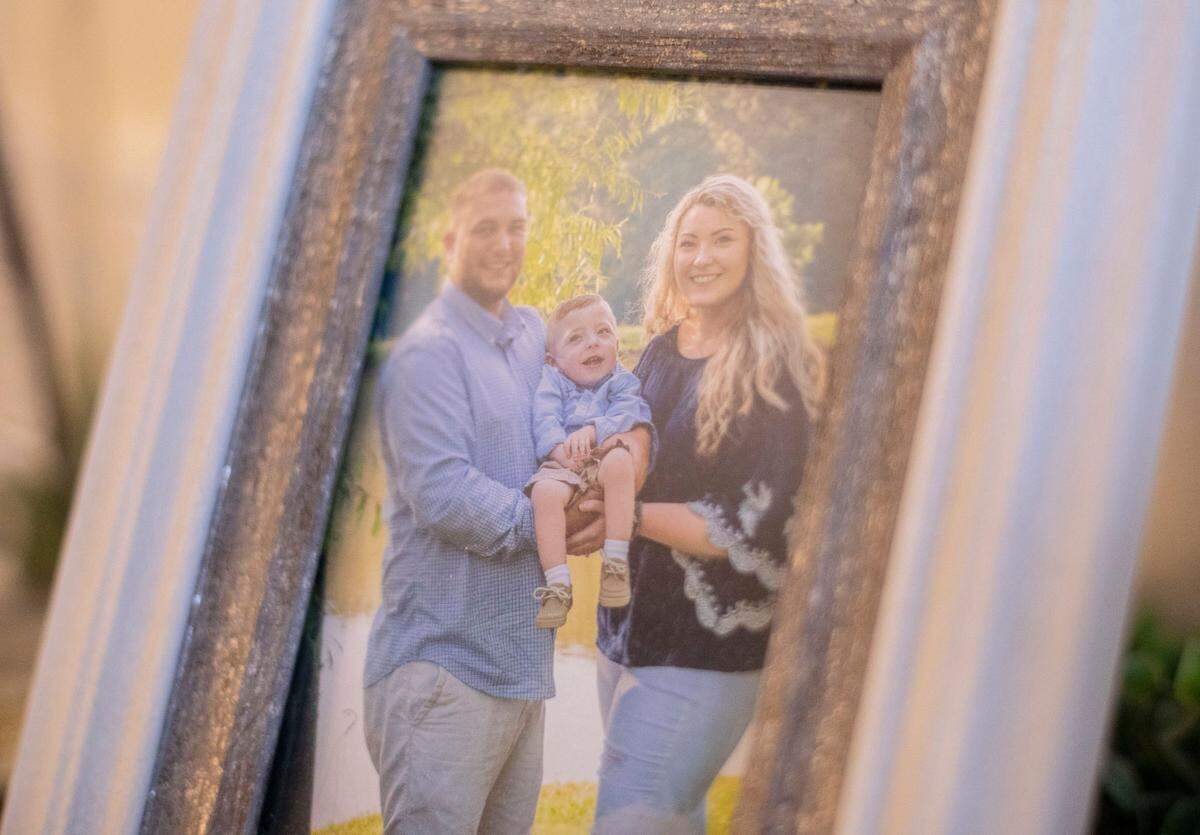
They took him in for tests, but doctors didn’t have an immediate answer for Claudia’s questions about why her son didn’t seem to be thriving.
A few days later, Boston went into cardiac arrest for the first time, ultimately changing the trajectory of his care. They didn’t realize it yet, but his inability to swallow was risking his life every time he fed. He had two ounces of formula in his lungs. “He had been silently aspirating his entire life,” Claudia said.
At that point, doctors believed that Boston’s issues stemmed from a genetic defect. After a long long list of tests, they came back with the diagnosis of AADC deficiency.
Only 150 cases reported thus far
Just around 150 cases of AADC deficiency have been reported in medical literature. It is likely the disease is under diagnosed because the symptoms are similar to other diseases and genetic testing isn’t widespread around the world.
The disease is sometimes referred to as juvenile Parkinson’s because it affects a similar part of the brain as Parkinson’s disease.
Essentially, AADC deficiency has severed Boston’s brain from his body. Signals his brain sends to move aren’t sent, leaving him motionless. A feeding tube has solved his eating problem, but he still lives at high-risk due to his struggle to clear secretions from his GI tract.
A sickness in 2019 led to him being hospitalized for the second time, as he struggled to breathe on his own. Claudia and Michael both live in fear of him catching something. “Because of COVID we did not take him out a lot,” Claudia said. “We wanted to really keep him in a bubble.”
Dr. Sujay Kansagra, a pediatric neurologist at Duke University who sees Boston regularly, said AADC deficiency is a particularly devastating disease.
“Typically children tend to be severely affected, and they oftentimes have a challenging quality of life,” he said. “They experience spells frequently in which your muscles can lock up. They can become stiff, they can be very uncomfortable. So the overall quality of life can be quite poor for children that have the severe end of the spectrum.”
Those painful episodes happen frequently for Boston. They rob him of his life outside of the home, because they could happen at any moment and last for hours. On his fifth birthday, for example, his family wanted to celebrate by going to Build-A-Bear, their first celebration of his birthday in years. “We were just about to walk out the door, and he went into one,” Claudia said. “We weren’t able to take him out, and that was devastating.”
Claudia and Michael, who have known each other since high school and have been engaged since 2017, have devoted their lives to their son’s needs. Claudia, who is studying social work at UNC-Greensboro, has sought every shred of information she can find on AADC since Boston’s diagnosis in 2017.
She has joined small Facebook groups for parents of children with AADC and made friends with other parents. That is how she discovered that in 2016, the year her son was born, a new gene therapy trial had been launched by Bankiewicz at Ohio State.
She did everything she could to get her son into the trial — which she viewed as the best chance for him to live a better life. Five years later, Boston is one of the first 30 children in the world to receive the therapy.
“She has been Boston’s biggest advocate through everything,” Michael says of Claudia. “She was bound to do whatever it takes so he can live a semi-normal life.”
NC ties help craft a gene therapy
For 20 years, Bankiewicz, a doctor originally from Poland who works in labs at both Ohio State and the University of California, San Francisco, has been developing ways to use gene therapy to treat rare diseases such as AADC.
Gene therapy has been viewed as one of the most promising forms of treatment in recent years for diseases like cancer and inherited disorders, like AADC. The treatments work in a variety of ways, but typically replace a disease-causing gene or introduce a new, modified gene to treat a disease. Investments into them have exploded since the first gene therapy was approved by the FDA in 2017.
Bankiewicz has built on methods that UNC professor Samulski helped create, especially the delivery mechanism of adeno-associated viruses (AAV). Injecting therapeutic genes through AAV has become popular because the virus doesn’t cause disease in humans and does not replicate inside the body like other viruses.
Bankiewicz developed a new method of delivering gene therapies directly into the brain, the idea being that gene therapies are more effective the closer they are introduced to the part of the body with the disease. The surgery was first performed in 2017, and Bankiewicz has now trained a handful of surgeons to do it.
In the AADC gene therapy, Bankiewicz’s treatment replaces the non-working gene with one that does.
The surgery is done in an MRI scanner, giving the surgeons real-time images of the brain as they enter it with a cannula — a plastic tube created to insert the gene therapy. The surgeons need the images to ensure the gene-therapy infusion hits the exact part of the brain — the substantia nigra — that produces the dopamine that helps control movements and emotions.
The procedure is similar to one that AskBio is using in a clinical trial for Parkinson’s. Bankiewicz’s own company, Brain Neurotherapy Bio, was acquired by AskBio in 2020.
Samulski said the therapy is akin to flipping a switch in the brain. AADC is not a degenerative disease, he said, so the architecture of the brain is still intact. It just needs to be told how to work.
“They’re once-in-a-lifetime, transformative type of therapeutics,” Samulski said. These patients have been “frozen in place, and these kids basically are waking up for the first time in their lives. It’s humbling to watch.”
In a study published in the peer-reviewed journal, Nature Communications, Bankiewicz and his collaborators noted that the gene-therapy led to some marked improvements for young children with AADC. The subjects of the study, published in 2021, saw signs of improved brain activity and the near elimination of oculogyric crises. A year after surgery, some patients were able to eat and drink by mouth, rather than a feeding tube, and another gained the ability to speak through a device.
The therapy is a one-time surgery, and the improvements from it are gradual. One child, for example, was able to take a few independent steps two and a half years after the surgery.
“These kids, which are over five years in, they keep getting better and they keep finding new skills,” Bankiewicz said.
Bankiewicz keeps proof of these improvements in videos sent to him from the families of the nearly 30 children who have now received the gene therapy under his care.
They show once frozen lives now in motion. One child can walk slowly with assistance. Parents can communicate with another. A third is able to use a swing set.
“I realize the burden that (parents) carry with having a child like this,” Bankiewicz said. “And to be able to do something to relieve that is amazing. I know these kids are walking now. They’re back at school. I mean, they have never been in school.”
Update: Seven weeks post surgery
The videos give Claudia and Michael the most hope — visualizations that Boston might one day be able to live a better if not normal life.
He received the gene therapy seven weeks ago, and after two weeks in the hospital, he has been recuperating at home.
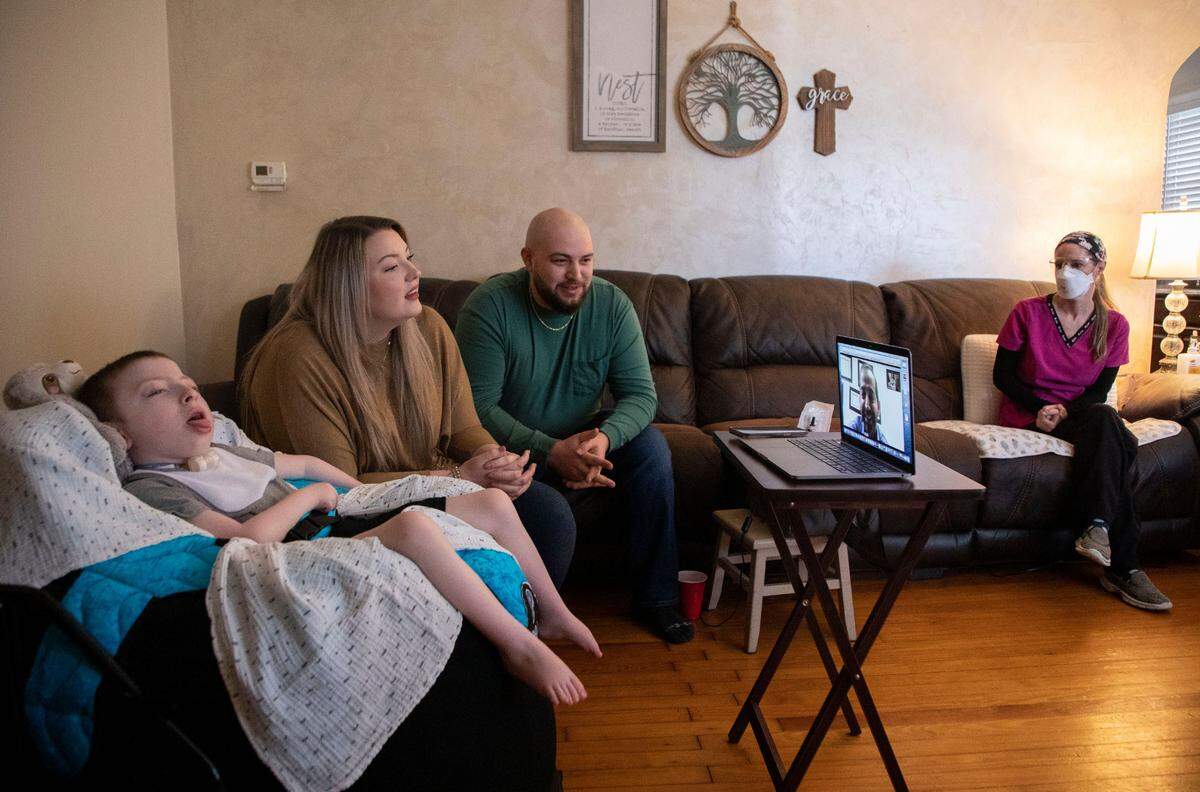
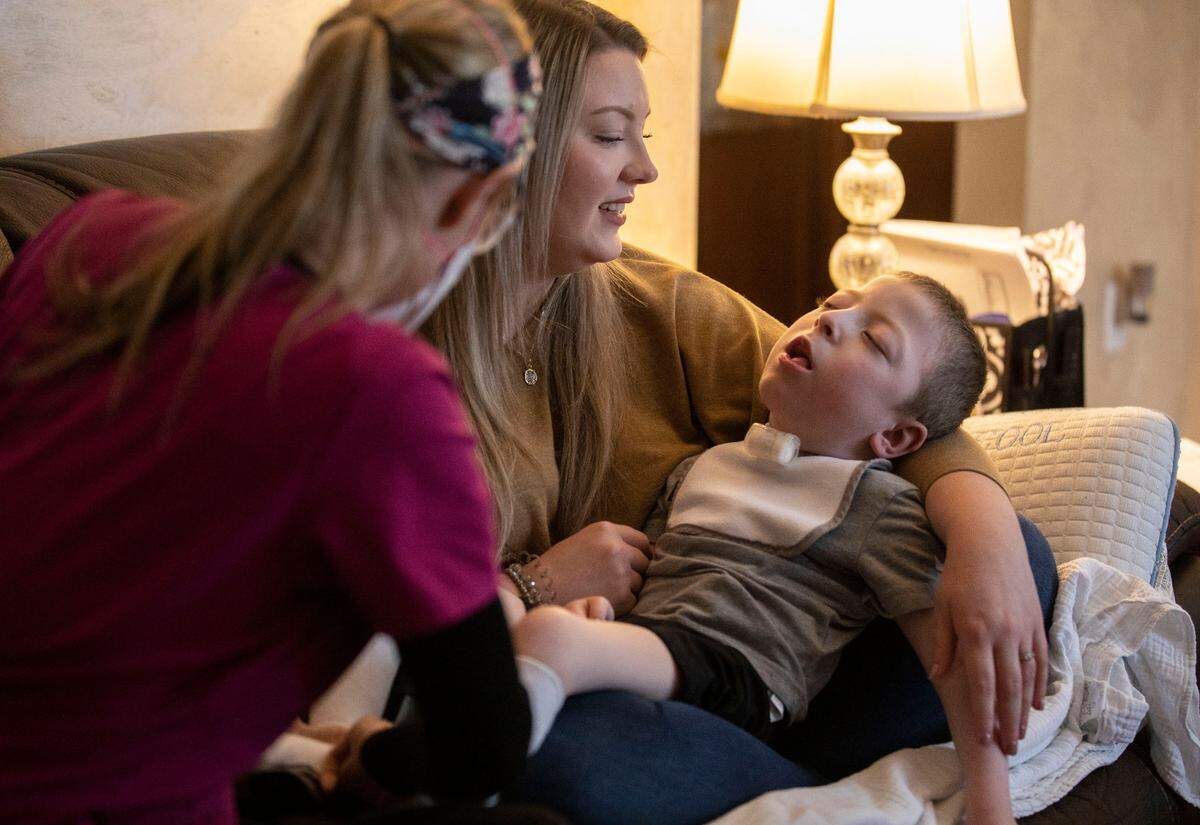
On a typical morning, a nurse visits Boston, helping feed him and give him a bevy of medications. She writes a report on his symptoms and gently massages his arms and legs, working to loosen the muscles.
Then Claudia, Michael and Boston join a telehealth call with Kansagra, discussing Boston’s symptoms and progress.
Boston, thanks to his brain’s surging levels of dopamine, is a bundle of movement. He can’t keep still — his tongue, his feet and head all move constantly. He’s lost weight because his body isn’t used to burning so many calories. These movements prevent him from sleeping much, at the moment, but it’s a sign that something is happening below the surface.
His parents’ eyes light up when they watch him rotate his head — movements that would not have happened just a few short weeks ago.
Claudia relays Boston’s insomnia to Kansagra but proudly shares that her son has not had a crisis since the surgery. “That is just huge for Boston,” she said — and for the entire family.
Michael and Claudia are trying to stay realistic with their expectations, but they can’t help hoping that Boston could see some of the results others have. Will he be able to walk? Will he be able to talk to them? Could he one day go to school?
Those questions remain to be answered, Michael said, but already his life has improved tremendously, if just for the lack of crises.
“When you have a baby, you look forward to their first step, their first words, them smashing a cake on their first birthday,” Michael said. “Hopefully, his progression continues and we get to see these things because those are going to be huge celebrations for us. … Like, if he sits up on his own, it’s gonna be a huge celebration here.”
While they wait for the surgery’s outcomes to unfold, though, Claudia is hoping to share what she has learned with any parent who hasn’t heard about the therapy. Without the Facebook group and other parents sharing their stories, she said, they would never have gotten to where they are today.
“We have a treatment option for Boston, but there are many that don’t have that — yet,” Claudia said. “But science is amazing. And that’s the big thing: to stay hopeful for what’s to come.”
This story was produced with financial support from a coalition of partners led by Innovate Raleigh as part of an independent journalism fellowship program. The N&O maintains full editorial control of the work. Learn more; go to bit.ly/newsinnovate