NC has among the highest diversity of hummingbirds. See what they look like
AI-generated summary reviewed by our newsroom.
- Ruby-throated hummingbirds are the most common in North Carolina.
- Rufous hummingbirds are the second-most prevalent and usually appear when it's colder.
- Six hummingbird species are considered “extremely rare” in our state.
Hummingbirds are migrating to North Carolina — and you have the best chance of seeing one type of them.
The ruby-throated hummingbird is “by far and away” the most prevalent species in our state. But that doesn’t mean that others have gone unnoticed, Susan Campbell, who has worked with hummingbirds for almost 30 years, told The News & Observer in a Thursday, March 12 email.
Eleven hummingbird species have shown up in North Carolina, including six that are considered “extremely rare.” For example, the green violet-ear has been seen in our state a few times, and the green-breasted mango may never be spotted here again, The N&O reported in 2023.
If you want to see photos of hummingbird species, you can visit allaboutbirds.org. Here’s what else to know about identifying the fluttering visitors you may see in your yard this spring.
Ruby-throated hummingbirds in NC
In warmer months, the ruby-throated species represents more than 99% of the hummingbirds in North Carolina. The species can be found living in “open woodlands, forest edges, meadows, grasslands, and in parks, gardens, and backyards,” the Cornell Lab of Ornithology wrote on its website.
“Male ruby-throated hummingbirds have red throat feathers that sometimes appear black in poor light,” Christopher Moorman, professor and associate head of the department of forestry and environmental resources at N.C. State University, told The N&O in a Wednesday, March 11 email. “The female lacks the red feathers on the throat.”
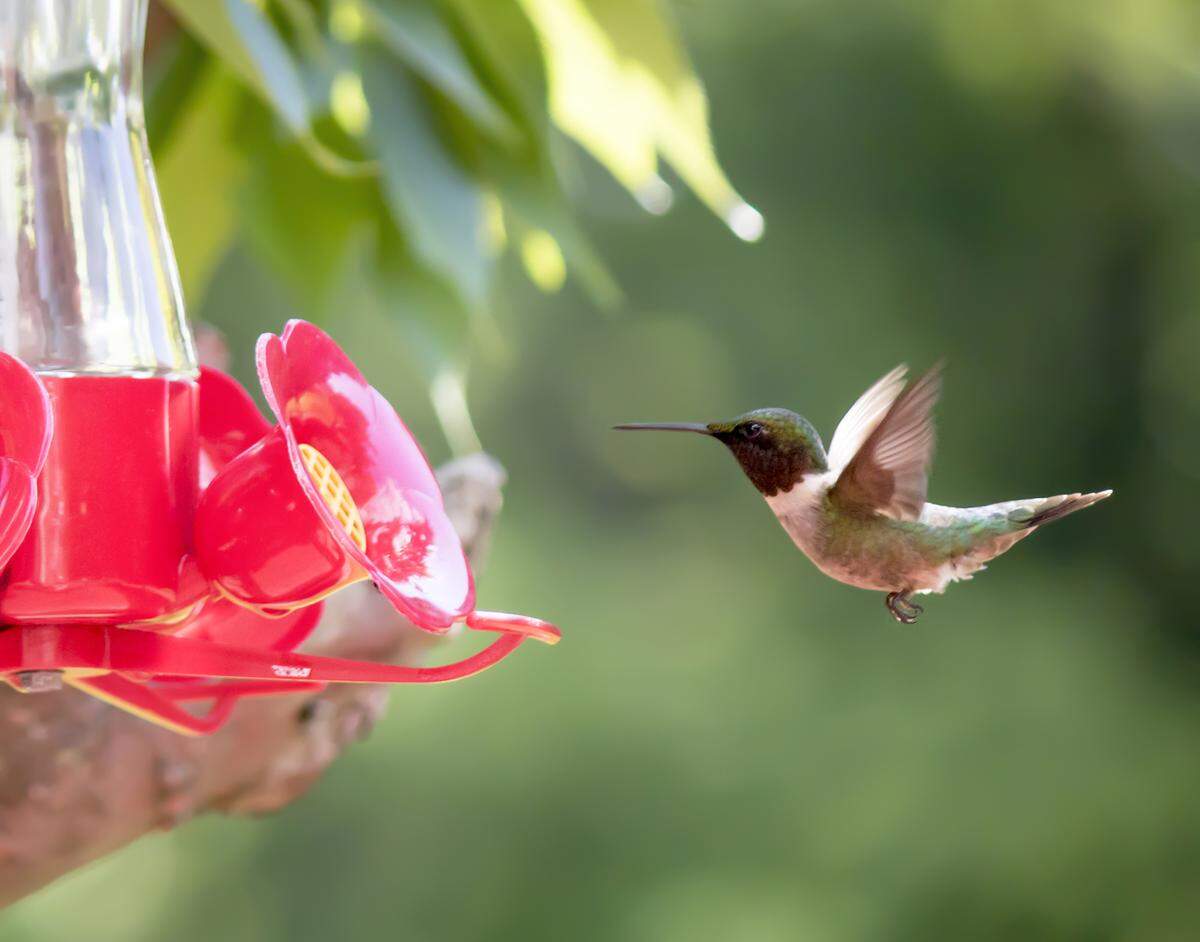
Here are some of the other physical characteristics of ruby-throated hummingbirds that Cornell experts shared online:
- Thin bill that curves down slightly
- Body roughly 7 to 9 centimeters long
- Short wings that don’t reach to the tail when the bird is seated
Also, ruby-throated hummingbirds are known for having “exquisite control” over their bodies.
“They often visit hummingbird feeders and tube-shaped flowers and defend these food sources against others,” the lab wrote on its website. “You may also see them plucking tiny insects from the air or from spider webs.”
What do other species of hummingbirds look like?
You’re more likely to see rufous hummingbirds in colder times of year than in the spring or summer. Still, the rare species is the second most common in North Carolina, The N&O previously reported.
Here’s what the Cornell lab said about identifying rufous hummingbirds and the three other species considered “pretty rare” in the state:
- The rufous hummingbird is small with an almost straight bill. “In good light, male Rufous Hummingbirds glow like coals: bright orange on the back and belly, with a vivid iridescent-red throat.” Females and young birds have rust-colored sides, green tails and “often a spot of orange in the throat.”
- The Allen’s hummingbird is stocky with a bill almost the same length as its head. “Adult males have a coppery tail, eye patch, and belly that contrasts with their bronze-green back and deep reddish orange gorget. Females and immatures are bronze-green above with paler coppery sides.”
- The black-chinned hummingbird is roughly the same size as the ruby-throated hummingbird. Its coloring is “dull metallic green above and dull grayish-white below. Males have a velvety black throat with a thin, iridescent purple base. Females have a pale throat.”
- The calliope hummingbird is known for its hunched posture and short tail. “The standout feature of a calliope hummingbird is the magenta rays on the male’s throat. Both males and females are greenish above, but males wear a greenish vest below while females and immatures have a peachy wash across their underparts.”
‘Extremely rare’ hummingbirds in NC
In North Carolina, these six hummingbird species are considered “even more rare,” The N&O previously reported:
- Anna’s hummingbird
- Broad-billed hummingbird
- Broad-tailed hummingbird
- Buff-bellied hummingbird
- Green-breasted mango hummingbird
- Green violet-ear hummingbird
One of the most rare birds ever spotted in the state was an Allen’s-Anna’s hybrid. It came up to a feeder in Concord, a roughly 25-mile drive northeast from uptown Charlotte.
“We were fortunate to see it because of the dedicated birders in our state who spotted it and shared it with us so we can band it. If it didn’t have such vibrant plumage, we might not have known just what it was,” Campbell, scientific director at the Cape Fear Bird Observatory and a research affiliate focusing on hummingbirds with the N.C. Museum of Natural Sciences, previously told The N&O.
Portions of this story were previously published in The News & Observer.