An ark for the unloved: this Raleigh lab breeds the state’s rarest aquatic species
AI-generated summary reviewed by our newsroom.
- Yates Mill center breeds endangered Carolina madtoms and freshwater mussels.
- Sedimentation, habitat loss and the invasive flathead catfish are threatening extinction.
- While propagation is significant, scientists say habitat restoration is equally important.
Finger-sized catfish with venom-packed spines and dark blue eyes back into modified clay pots, wary of their looming observers.
This is Notorious furiosus, the Carolina madtom. In the low hum of pumps and filtered water at a lab south of downtown, a small team of biologists is trying to keep it — and a handful of its obscure, imperiled neighbors — from becoming a fish only seen in photographs.
The federally endangered Carolina madtom was historically found in two river basins in North Carolina and nowhere else in the world. The last fish in the Neuse River basin were found in 2018, according to Michael Fisk, conservation biologist with the N.C. Wildlife Resources Commission (NCWRC).
“They’re more than likely gone from the Neuse basin,” Fisk said. “The last ones we’ve found were in 2018. We’ve done a lot of work since then, and just haven’t found them since.”
It’s a small range that covers just a handful of counties from the Triangle to the coastal plain, all within the Tar and Neuse watersheds. That’s the same water Raleigh drinks, which is part of why Fisk says people should care about a fish most will never see.
“The Carolina madtom and the rare mussels that we have are all really good indicators of water quality,” Fisk said. “So if those are disappearing, you know there’s issues.”
Breeding Carolina’s own madtom
Hundreds of these fish sit inside tanks at the Yates Mill Aquatic Conservation Facility in southwest Raleigh, a collaboration between Wake County and NC State University. Craig Lawson, conservation aquaculturist at the facility, manages the Carolina madtom propagation after starting his career researching commercial fish breeding.
“It’s kind of a dream come true, really,” Lawson said.
Once a male and female pair up, they plug their den entrance with small pebbles and mate. Afterward, the females leave, and it’s the single dads who do all the work, according to Lawson.
“The male takes care of the egg mass,” Lawson said. “He’ll defend the babies too.”
Then, the baby fish are carefully suctioned out one by one and grown for more than a year until they are released into the wild. Before release, they are tagged with a colored implant or microchip so their success can be tracked in the wild.
For Lawson, the appeal of this work isn’t just the fish themselves but what they represent about the place he calls home.
“Learning as much as you can about the little miracles in your own backyard is one of the great joys of doing aquatic conservation,” Lawson said.
As the Triangle develops, madtom habitat is suffocating in sediment. Impervious surfaces can’t absorb rainwater, so rain washes dirt and pollutants from construction sites and eroded riverbanks straight into the river.
That sediment buries the rock and debris madtoms depend on for cover, so they take shelter wherever they can, including beer cans and discarded prayer candles, according to Lawson. It also leaves them exposed to invasive predators like the flathead catfish, introduced decades ago and blamed for finishing off what habitat loss started.
Madtoms also shelter under old mussel shells, a small sign of how tightly the fates of these species are bound together.
Not just fish, but mussels, too
While the facility opened in 2023, the work of preserving rare, little-loved aquatic species was not new for assistant director Chris Eads, who has been propagating endangered freshwater mussels for more than 25 years.
“About 70% of our species in North America and in North Carolina are imperiled to varying degrees,” Eads said. “Freshwater mussels are some of the most endangered animals on the planet.”
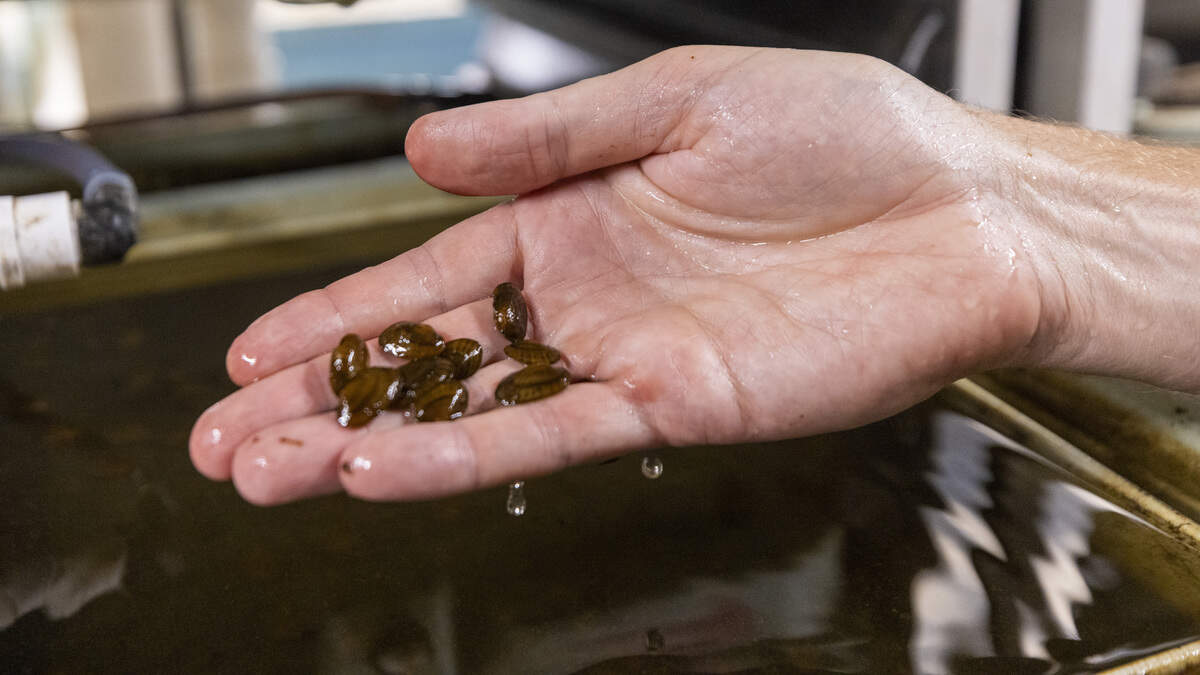
The Yates Mill center specializes in endangered, endemic species — organisms at risk of extinction that exist nowhere else on Earth. Breeding mussels might sound simple, but according to Eads, the process was practically undefined when he began.
“I came up in a time where we were just kind of figuring it out,” Eads said. “Mussel propagation and rearing is 100 years behind what fish aquaculture was. But it’s cool. I love seeing people’s reactions when they come in and see them up close.”
It turns out mussels have a rather complex life cycle. It begins when male mussels release packets of sperm into the water known as spermatozoa.
These float until they are sucked in by a female mussel, who uses it to fertilize her eggs. Now, the baby mussels need to disperse, but they can’t move, so they hitch a ride on fish instead.
Some species have even adapted to look like minnows to attract fish. When a bigger fish comes by to grab a meal, the mussel releases its larvae, which attach to the fish’s gills and feed off its blood for a few weeks before dropping off.
Even in the lab, sometimes only 20% of larvae successfully attach to a host fish, according to Eads. That’s where Loretta Lutackas, a conservation aquaculturist and PhD student at NC State, pushes the boundaries of mussel propagation.
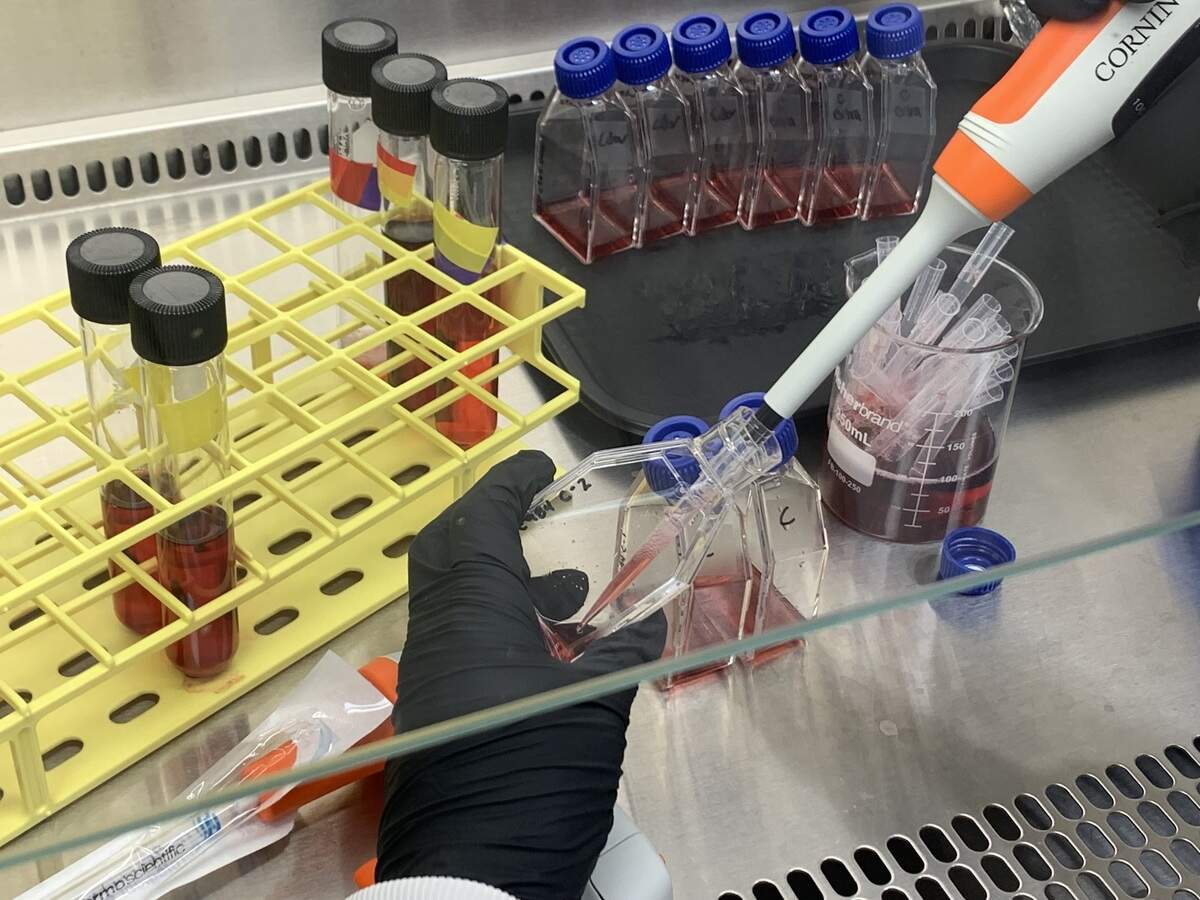
Sometimes she harvests the unattached baby mussels — the size of a fine grain of salt — and raises them in plastic vials in the lab. Other times, she has to start from scratch, as some species have never been bred in captivity before or have unknown or hard-to-source host fish.
Using modified lab techniques and supplemental blood serum from horses, rabbits and calves, Lutackas can let the mussels skip the parasitic stage entirely. For a program working with endangered species, Lutackas said, lab propagation is critical.
“Every individual matters,” she said. “If we can get most of them on fish, and we can catch even just a couple more in vitro, then it matters, because we are getting them out there.”
When breeding isn’t enough
For all the species in Yates Mill’s tanks, captive breeding can’t undo what’s happening in the rivers. Fisk has watched it happen with the madtom.
“When we’re doing snorkel surveys for madtoms, and we start seeing flathead catfish, the madtoms disappear pretty quickly after that,” Fisk said.
Flathead catfish are native to North Carolina, but not in the Neuse and Tar River basins. They were introduced into the Neuse River decades ago and had no natural predators.
The madtom population was already declining due to sedimentation and habitat loss in the Neuse River basin. The invasive predator didn’t so much cause the collapse as accelerate it.
“They were already kind of hanging on by a thread, just because of chronic water quality issues and habitat issues,” Fisk said, “Then you add an invasive predator on top of that, and it just more than likely has wiped them out.”
Fisk said there is no real way to reverse that once it’s underway.
“There’s a level of hopelessness because currently, there’s really no way to control flathead catfish once they become established in a place,” Fisk said. “The biggest management tool we have is prevention, just keeping them out.”
However, Fisk said that in the Tar River basin, the invasive flathead catfish have not traveled into some tributaries farther up the watershed, providing a safe haven for the two main creeks where the captive-bred fish are released.
According to Lawson, the spread of the catfish and the degradation of the river is a reminder that captive breeding, however carefully managed, is not a substitute for a healthy river.
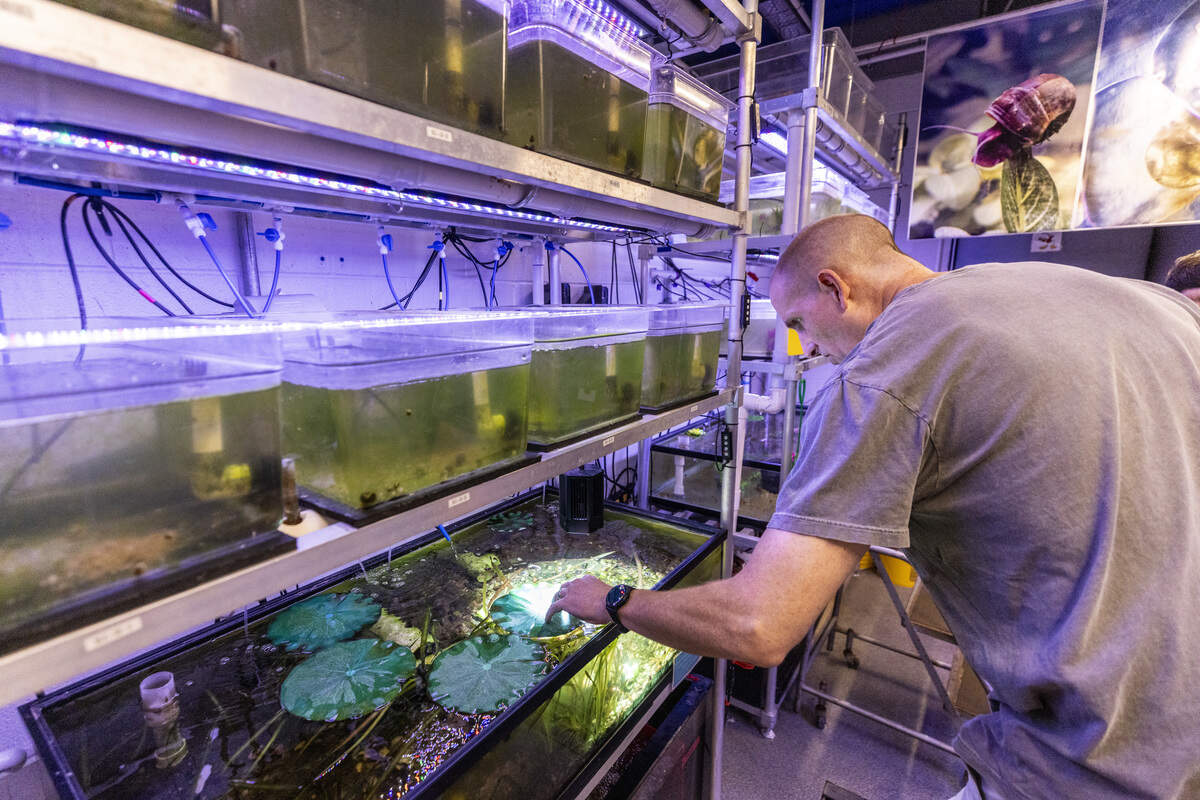
“Propagation is really great,” Lawson said. “Producing fish is cool, and it’s a visible thing you can do. But the thing to emphasize to people is that, as rad as propagation is, it’s really got to be paired with habitat restoration … in order to be a successful solution.”
Saving fish and mussels most Triangle residents will never see in an ever-changing landscape is unsung work. But for Eads, the mission expands beyond just these threatened species.
“Mussels are helping clean our water as filter feeders,” Eads said. “They are important bioindicators, and as we protect these small, rare species, we are then protecting their habitats and streams that we depend on, too.”