Museum of Life and Science debuts climate exhibit, welcomes red wolf pups
AI-generated summary reviewed by our newsroom.
- The museum unveiled its new climate and sustainability exhibit in April.
- Exhibit seeks to empower visitors by matching them to local groups.
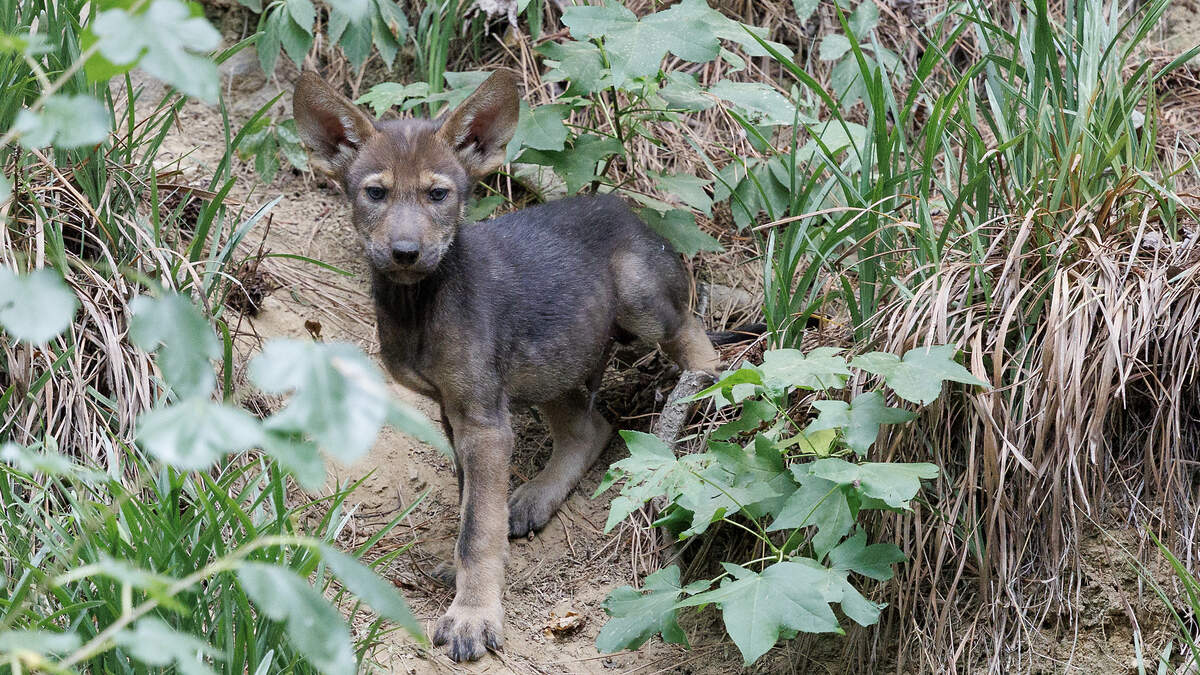
- Museum recently reopened its red wolf habitat after the birth of five pups.
Step into the Museum of Life and Science, turn a knob, watch the numbers shift and see the future of North Carolina unfold before your eyes. The museum’s new climate and sustainability exhibit, positioned right at the entrance, puts visitors at the center of the climate conversation from the moment they arrive.
“From Here On: Shaping Our Future,” the museum’s latest in-house creation, is designed to spark curiosity and action.
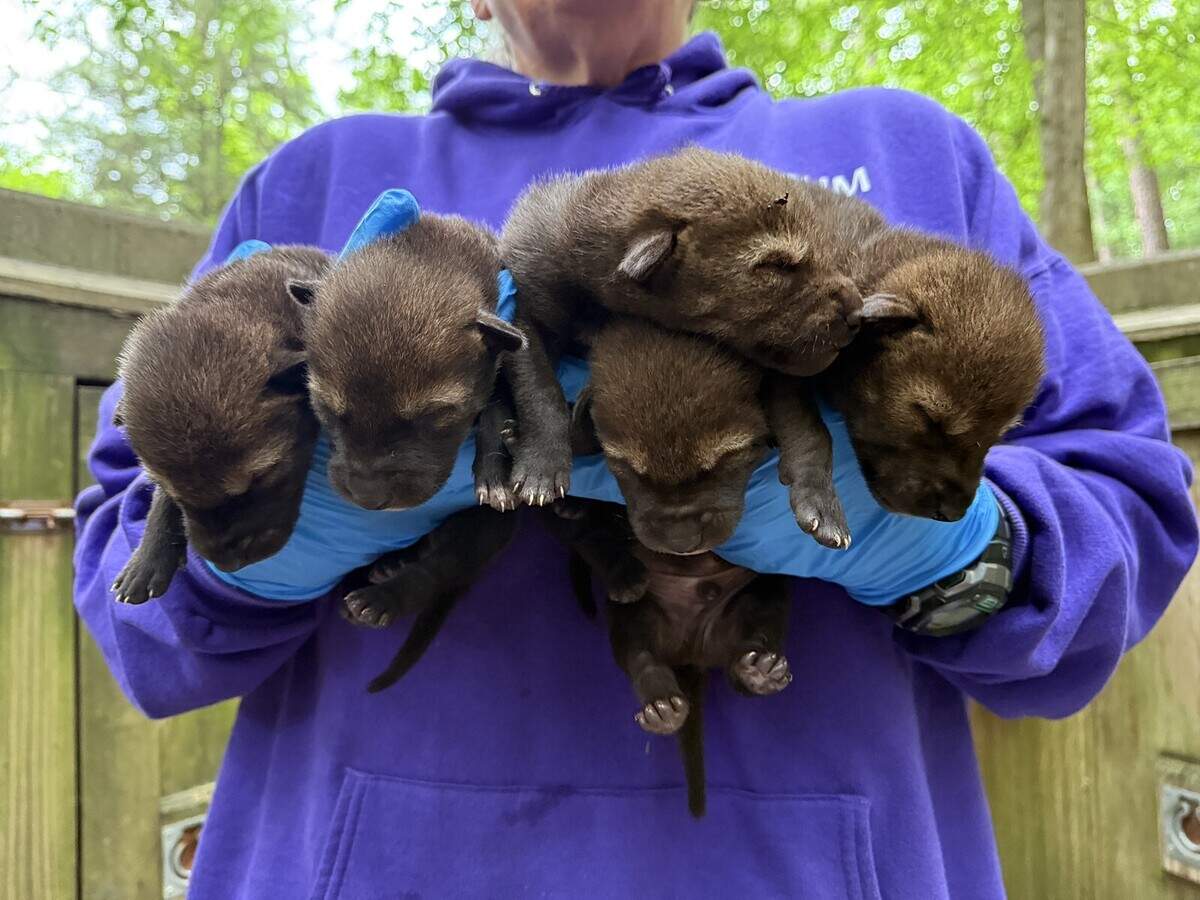
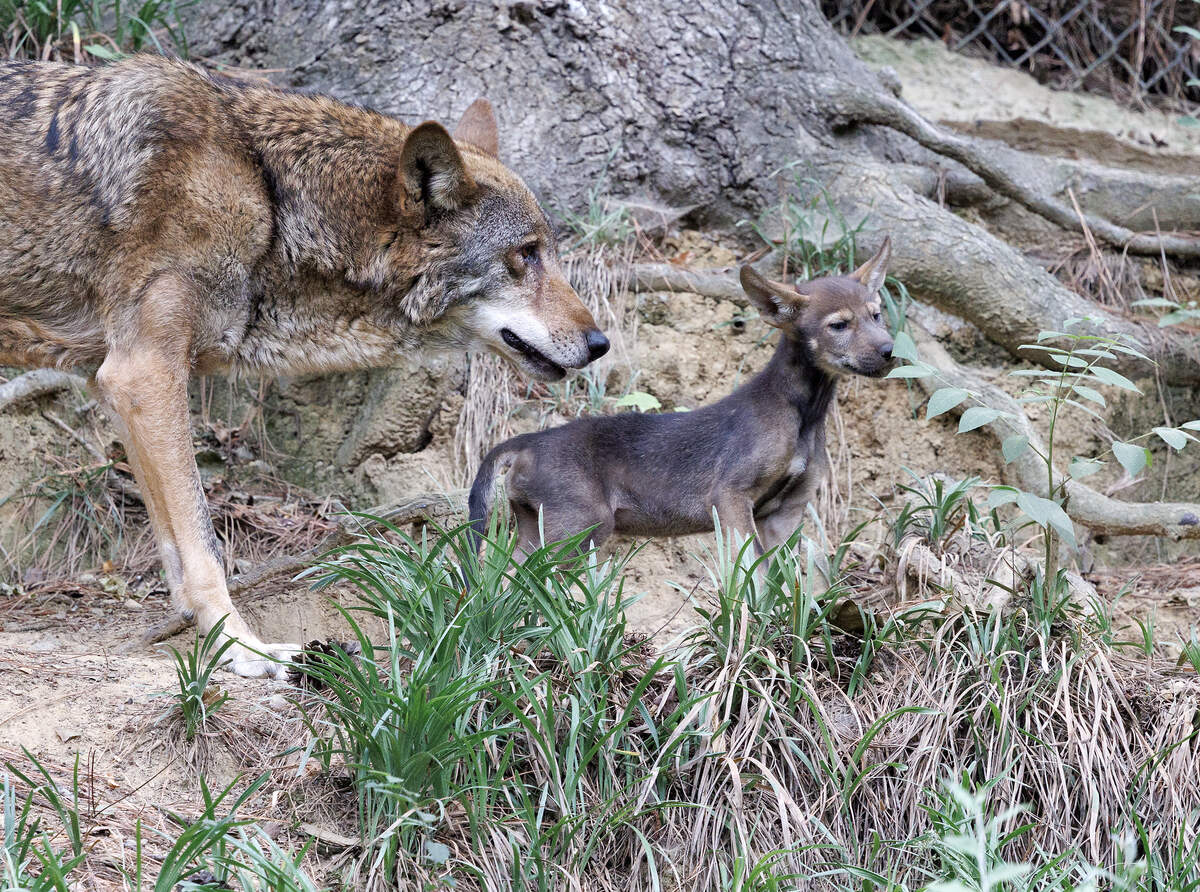
Meanwhile, another corner of the museum is bustling for a different reason: the birth of five red wolf pups, which prompted a temporary closure of their exhibit for the animals’ well-being.
What’s in the new exhibit?
Among the highlights is a climate resilience patio surrounded by native plants and buzzing bees. In the reimagined coffee shop, where tabletops double as conversation starters, prompts and displays spark debate over the planet’s future.
Sustainable design principles are evident throughout the exhibit, from recycled plastic chairs to walls constructed with mud and stones sourced on the property.
In one display, visitors turn dials representing different human choices — such as economic growth or coal use — and hear the future unfold through sound. As the dials shift, the music changes in pitch and mood while also displaying future scenarios, such as the number of days Wilmington could spend underwater by 2100.
Not all doom and gloom
But “From Here On: Shaping Our Future” is anything but discouraging. Beyond the science and challenges, visitors discover what Molly Trask-Price, director of exhibits development, privately calls “the imaginarium.”
This space is dedicated to possibility and change. As Trask-Price explains, it’s a place to envision a brighter future and ask: “What do you want the world to look like?”
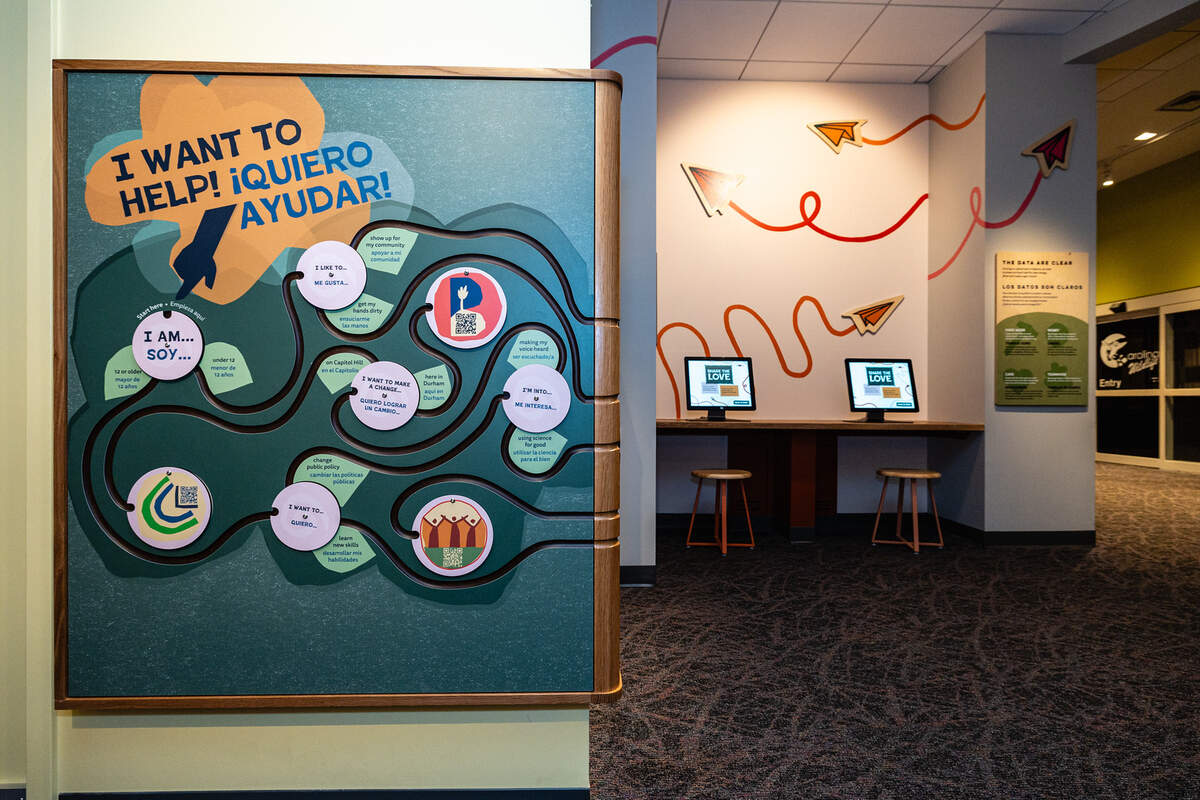
Visitors can design a city modeled on Durham, making it cleaner and safer for people and wildlife alike. The experience is also personalized — another activity matches visitors with local climate organizations tailored to their age and interests.
How to see the wolves
To reach the red wolves, visitors walk along winding forest paths, descending through a former rock quarry that has been transformed into a wetland full of life. Here lies “Explore the Wild: Red Wolves,” home to five rapidly growing pups, the museum’s latest conservation success story.
Housed at the museum since 1992, red wolves are the most endangered canines in the world. This year marks the third in a row that pups have been born at the museum.
“We are fortunate to say we have seven red wolves here, and with a total of less than 300 under human care, over 2% of the population is right here at the museum,” Sherry Samuels, senior director of animal care, said.
Once extinct in the wild, the species was saved by management under human care. Now, the only wild population lives in Alligator River National Wildlife Refuge.
Few know the wolves’ story as well as Samuels. She has devoted more than 30 years to the museum’s animals and once cradled Carolina, the mother of the new pups, when Carolina was just a pup herself.
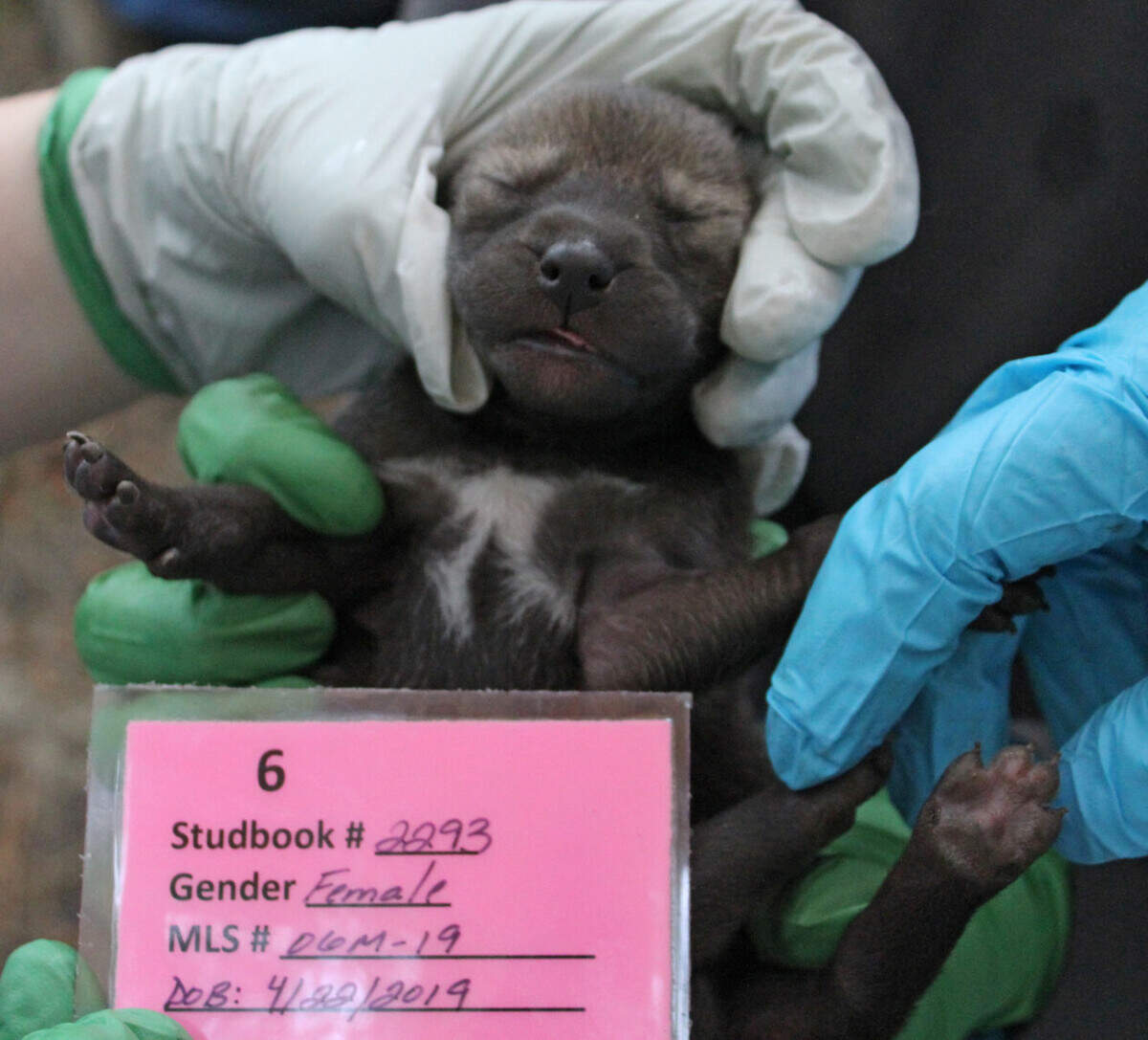
When this quintuplet was born, the museum closed the exhibit to the public to lower stress in the animals. For two weeks, red wolf pups don’t even open their eyes.
“The first 30 days of a pup’s life is critical,” Samuels said. “They don’t always survive. Our first priority is that wolves are taken care of, and only then do we open up the habitat.”
That happened on June 5. Those hoping to see the pups will need to visit soon, as their stay is not guaranteed.
As part of the national reintroduction plan, wolves are frequently swapped between facilities to increase genetic diversity and resilience. The annual meeting will take place in mid-July this year, when the pups’ fates will be decided.
Samuels noted that there are a variety of ways individuals can support red wolves, ranging from advocacy or simply learning more about wildlife.
“It begins when you just understand and know, wow, nature is cool,” Samuels said.