Chapel Hill nears big decision on downtown parking deck, office deal. What’s at stake?
Chapel Hill’s Town Council will make a $32.9 million decision Wednesday with big implications for downtown, public parking and the town’s financial health.
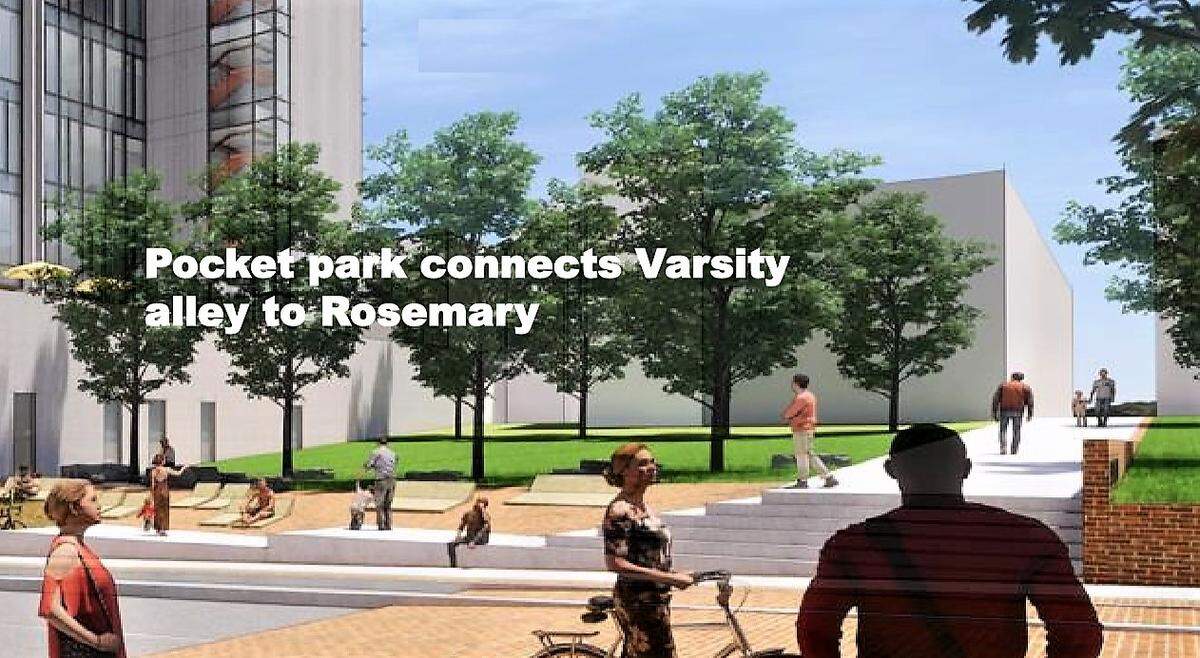
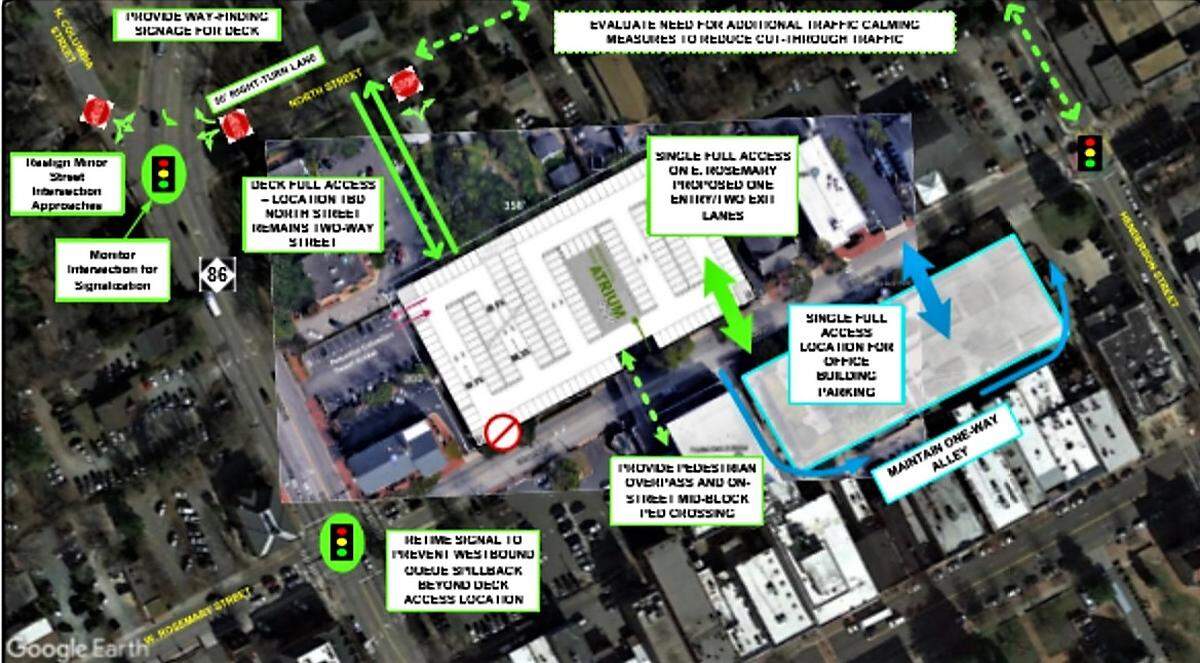
A proposed land swap with developer Grubb Properties would consolidate two East Rosemary Street parking decks into a new, 1,100-space garage with room for food trucks and two pocket parks.
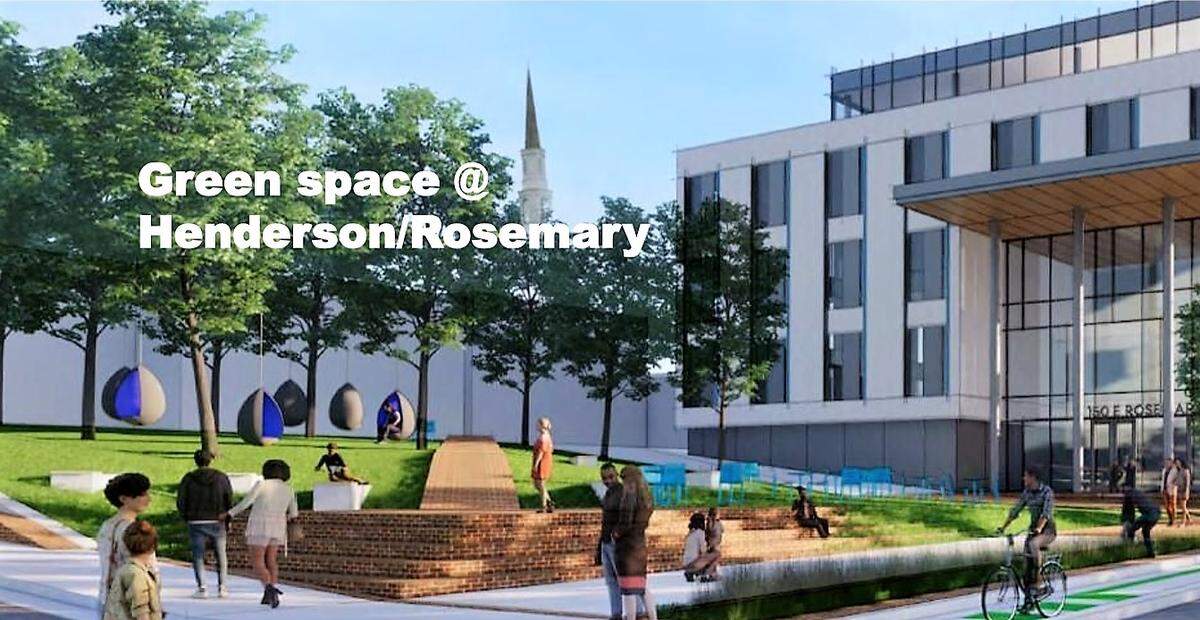
Grubb would replace the town’s Wallace deck at 150 E. Rosemary St. with a six-story office and wet lab building for startups and research companies. It would complement Grubb’s Innovation Hub in the former CVS building next door.
UNC is a potential tenant in that building and, along with Grubb, could lease spaces in the new public deck.
Mayor Pam Hemminger, in a recent column, said the deal would increase the town’s parking, attract business and encourage other East Rosemary landowners to redevelop.
Grubb’s $80 million investment in the new office building could bring 800 jobs, $4.2 million in local sales, and over $435,000 a year in town property tax revenues, economic development officer Dwight Bassett said. Orange County and the schools could get over $850,000 in property tax revenues.
“As we work to help our businesses recover from COVID-19 and plan ahead, now is the time to invest in our future,” Hemminger said. “By creating new commercial opportunities and bringing more jobs and people to Chapel Hill, this project can create an important turning point in the downtown’s trajectory, helping it continue to evolve into an innovative, creative, and fun place for the whole community.”
However, no project is without risk, officials said.
Council member Hongbin Gu urged caution in a recent interview with The News & Observer. The council and the public need to talk more about the details, she said.
“I can understand why it is important for the town, but what I’m seeing in the deal, at least as it is currently written, it will significantly benefit the investors — almost at zero risk for the investors,” Gu said. “On the other side, our town is taking a significant risk in doing this.”
.jpg "East Rosemary areial view from northeast (2).jpg")
Chapel Hill, Grubb Properties deal
What is it: An $8.5 million land swap.
What is the town’s role: Build a $32.9 million parking deck at 125 E. Rosemary St. and give Grubb Properties the deed to the Wallace Parking Deck at 150 E. Rosemary St.
The town also would pay $1.7 million in cash to Grubb and lease, manage and maintain the Wallace deck for up to five years. The rent would be $30,000 a month until the new deck opens. The town then would pay Grubb Properties 60% of the Wallace deck revenues minus expenses until demolition starts.
What is the developer’s role: Give the CVS deck at 125 E. Rosemary St. and an adjacent parking lot owned by Investors Title to the town. Pay $400,000 to help the town buy the Investors Title lot.
How much the properties are worth: An appraiser has valued the Wallace deck at $6.3 million, or nearly twice its assessed property tax value. The CVS deck was appraised at $3.6 million, or about 1.4 times its property tax value. However, the parking lot was appraised at nearly three times its assessed value at $5.1 million. (The town will buy it for $4.9 million.)
Why is the Investors Title lot worth more: Two developers offered Investors Title between $4.5 million and $5 million for the lot in June. The appraiser said it is worth more because of those offers, its high-density development potential, proximity to UNC’s campus and its location in the town’s federal Opportunity Zone.
What is the Opportunity Zone: A program that gives developers a capital gains tax credit for 10-year investments in economically disadvantaged areas. Orange County’s only zone is from East Franklin Street to Estes Drive and is mostly residential, leaving very little to redevelop. Grubb Properties is using it to renovate the former CVS building and also might use it for the new office building.
What if the office project doesn’t happen: There is no guarantee that the town will approve the building or that Grubb Properties will build it. The town will have an option to buy back the Wallace deck, but the sale price will be the value of the CVS deck and adjacent parking lot, plus a 6% increase each year, and any money that Grubb Properties spent planning the office building.
Office building, parking deck timeline
Wednesday: The council will consider approving the deal. The meeting starts at 7 p.m. online.
November: Grubb Properties could submit a concept plan for the six-story office building. The town could spend up to a year holding advisory board and public hearings before the council votes on the project.
Spring 2021: Samet Corp. would demolish the CVS deck and start building the new parking deck.
2022-23: Grubb Properties could demolish the Wallace deck and start building the new offices.
Chapel Hill parking needs
The 1,100-space parking garage would give the town 250 more public spaces than currently exist in the Wallace deck, CVS deck and the Columbia/Rosemary parking lot. It also would provide leased spaces for UNC and Grubb Properties.
Of the three, the parking lot has the highest average occupancy at 88%, town data shows. The CVS lot averages 77% occupancy, while the Wallace deck averages 60%. All three stay full between 11 a.m. and 2 p.m. weekdays.
A 2018 report noted the town needs more parking now on East Rosemary and East Franklin streets and up to 1,000 more spaces across downtown over the next 10 years. It suggested working with UNC and private developers to build shared parking, among other steps.
The council explored renovations to the Wallace deck. However, it needs significant repairs and is not structurally sound. The cost to repair the building and add just one more level of parking — 100 spaces — could be several million dollars.
Can the town afford this?
The garage would be financed over 20 years at 2% interest and repaid using Parking Fund fees and fines.
Town data shows the Parking Fund has lost money nearly every year since 2016. In 2018, there was a profit, but mostly because the town sold a West Rosemary Street parking lot for $300,000.
COVID-19 also has taken a big bite out of revenues this year because the town suspended parking fees from March to August to help downtown merchants and UNC closed its campus.
Council member Jessica Anderson acknowledged in an N&O interview that COVID-19 could affect the town for a year or more, making it extremely important that the council consider every detail of the development agreement.
“But it’s an also an argument for let’s plan ahead, let’s plan for recovery, let’s make sure we make it so people are coming downtown, that we’re putting things downtown that people are going to come to and ways that people can be more active downtown,” she said.
The town will free up over $900,000 a year in parking funds by 2023 when the 140 West and Wallace deck debt is repaid. The town also is being more strategic about parking rates, occupancy and maintenance costs that exceed the national average, Bassett said.
UNC could pay roughly $2.9 million toward construction costs and $40,000 a year ($400 per space for 100 spaces) for maintenance.
Another strategy is earning more from the town’s current parking. In August, parking fees were raised to $1.50 an hour and $125 for a monthly lease. The plan would increase the fees every three years.
A March analysis estimated a 1% increase in the hourly parking rate could reduce demand by 0.16% to 0.20% an hour, and adding $10 to the monthly lease rate could reduce demand by 1% to 2%. But the report also noted the town might need over 900 spaces to serve 100 people on a waiting list, the Innovation Hub and office building tenants, and visitors to UNC’s future admissions office.
The town increased lease rates from $100 to $125 a month in August, and also could offer 12-hour leases instead of 24-hour leases. Overleasing those monthly spaces — selling more leases than there are spaces — could increase the town’s profitability, Bassett said.
“We find in the industry, that most are overleasing,” Bassett said. “That’s part of how that leased parking covers its weight is because there’s someone out sick, someone’s on vacation, someone’s not using their space today, so you overlease and keep those spaces fuller.”
The town also is increasing its payment-in-lieu fees for new construction, he said. Developers build 50% of their parking for a project and pay the town to provide the rest. The building’s owner then pays a monthly fee for each space — now $5,000 a month, he said.
Thinking “strategically and smartly” about parking dollars and how to best use current parking is critical to her support, Anderson said.
“I think that was the conversation we were all having early on, is that if we try to do this with the way the parking fund has traditionally been structured, then that would be a huge concern,” she said.
This story was originally published September 29, 2020 at 2:52 PM.