Why the death penalty wasn’t considered for Wake deputy’s ‘cold-blooded’ killer
AI-generated summary reviewed by our newsroom.
- Death penalty wasn’t an option in prosecution of man who admitted killing deputy.
- Alder Marin-Sotelo pleaded guilty to murder and received life imprisonment.
- Marin-Sotelo’s escape and extradition from Mexico spanned nearly 22 months.
The Wake County district attorney this week revealed why imposing the death penalty wasn’t an option for the man who admitted to executing a Wake County deputy in 2022.
On Tuesday, Alder Marin-Sotelo pleaded guilty to Deputy Ned Byrd’s murder. Marin-Sotelo escaped from a Virginia federal detention center in 2023 and fled to Mexico after he had been charged in Byrd’s murder.
As part of the deal to have him returned to the United States, Wake County District Attorney Lorrin Freeman had to promise not to seek the death penalty, Freeman said in the packed courtroom Tuesday.
“In order to have Mexico cooperate in his return, that was one of the things that they required,” Freeman told The News & Observer. “At that point, we had to take consideration of the death penalty off of the table.”
On Tuesday Marin-Sotelo, 28, pleaded guilty to first-degree murder and was sentenced to life in prison. His brother, Arturo Marin-Sotelo, 32, pleaded guilty to accessory after the fact of murder and was sentenced to up to 10 years in prison.
.jpeg "Mari_fitted (1).jpeg")
The escape from jail
On April 30, 2023, around 1:40 a.m. Alder Marin-Sotelo climbed over a fence at the Piedmont Regional Jail in Farmville, Virginia, after he was arrested on a federal gun charge. At the time, Marin-Sotelo was also facing a murder charge in Wake County, in the killing of Byrd.
About four hours after Marin-Sotelo scaled the fence, surveillance cameras caught him driving a red Mustang out of a parking lot by the detention center. The car, along with some cash tucked under the driver’s seat, had been dropped off for him earlier by someone his sister hired, according to federal court records.
After an international manhunt, Marin-Sotelo was arrested in the Mexican state of Guerrero four days after his escape.
That set off a rush of activity at the state and federal level, Freeman said.
The U.S. Justice Department led the effort to extradite Marin-Sotelo, whose brother had provided information about Byrd’s killing, she said. Part of the process required Freeman to sign an affidavit saying she would not seek the death penalty, she said.
Mexico’s influence in the sentencing of Alder Marin-Sotelo
Mexico abolished the death penalty in 2005. Under an extradition treaty between the U.S. and Mexico, Mexican officials can refuse to extradite someone when a charged offense is punishable by death.
While Marin-Sotelo was caught four days after his escape, nearly 22 months passed before he was returned.
Freeman said she understood the delayed return of Marin-Sotelo to be related to him working through the process of having an extradition hearing and then an appeal.
But on Feb. 28, Marin-Sotelo was one of 29 people taken from prisons across Mexico and handed over to the United States.
That came as the Trump Administration — just a bit more than a month after the president’s inauguration — started focusing on illegal immigration and designated Mexican gangs as foreign terrorist organizations and discussed a 25% tariff on Mexican imports, NBC News reported.
The defendants included Mexican drug cartel leaders, including a kingpin believed to have killed and tortured DEA Special Agent Enrique “Kiki” Camerena in 1985.
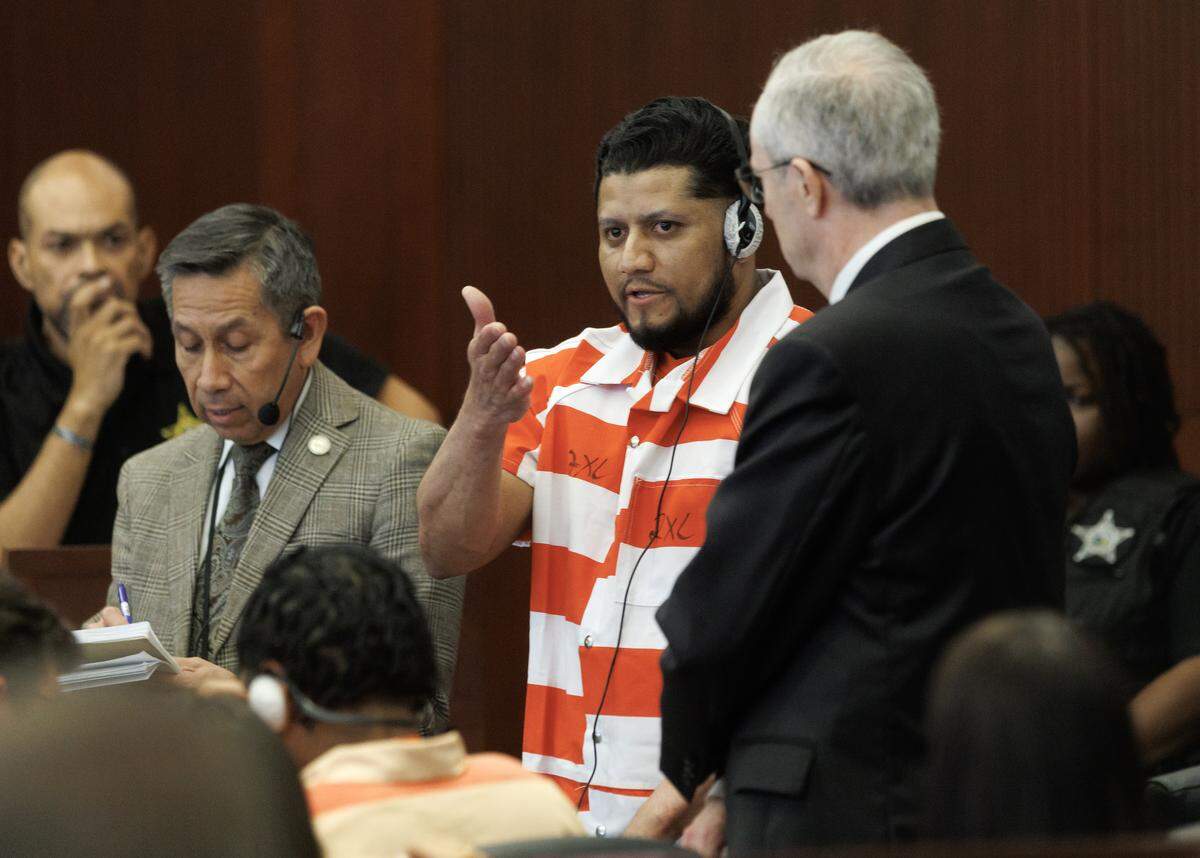
Police and Freeman’s office have not released much information about the Marin-Sotelo brothers beyond their involvement in Byrd’s killing and other criminal charges.
In 2014, Arturo Marin-Sotelo was convicted of driving while impaired in Forsyth County. In July 2021, a state trooper pulled over Alder Marin-Sotelo due to a fictitious tag, The News & Observer has reported.
When the trooper approached Marin-Sotelo, he observed Marin’s hand shoved down between the center console and a seat, according to court documents. The trooper ordered Marin-Sotelo to show his hands and found a 9 mm Beretta with one round in the chamber between the seat and the console.
Marin-Sotelo was cited for carrying a concealed weapon, but the case was put on hold when he failed to show up to court, according to court documents
Death penalty decision
When Alder Marin-Sotelo escaped in 2023, Freeman said she hadn’t decided whether she would seek the death penalty, a decision process in murder prosecutions that includes talking with a victim’s family and deciding what “would be in the best interest of them and the community.”
But pursuing a death penalty in this case would fit under her approach to seek the punishment in the most egregious cases, she said.
Freeman is the only district attorney in the Triangle who still considers the death penalty an option for her office, unlike top prosecutors in Orange and Durham.
“This certainly has the factors that would have tended towards declaring it capital,” Freeman said.
Those factors include the “cold-blooded execution-style murder” of an on-duty deputy, Freeman said.
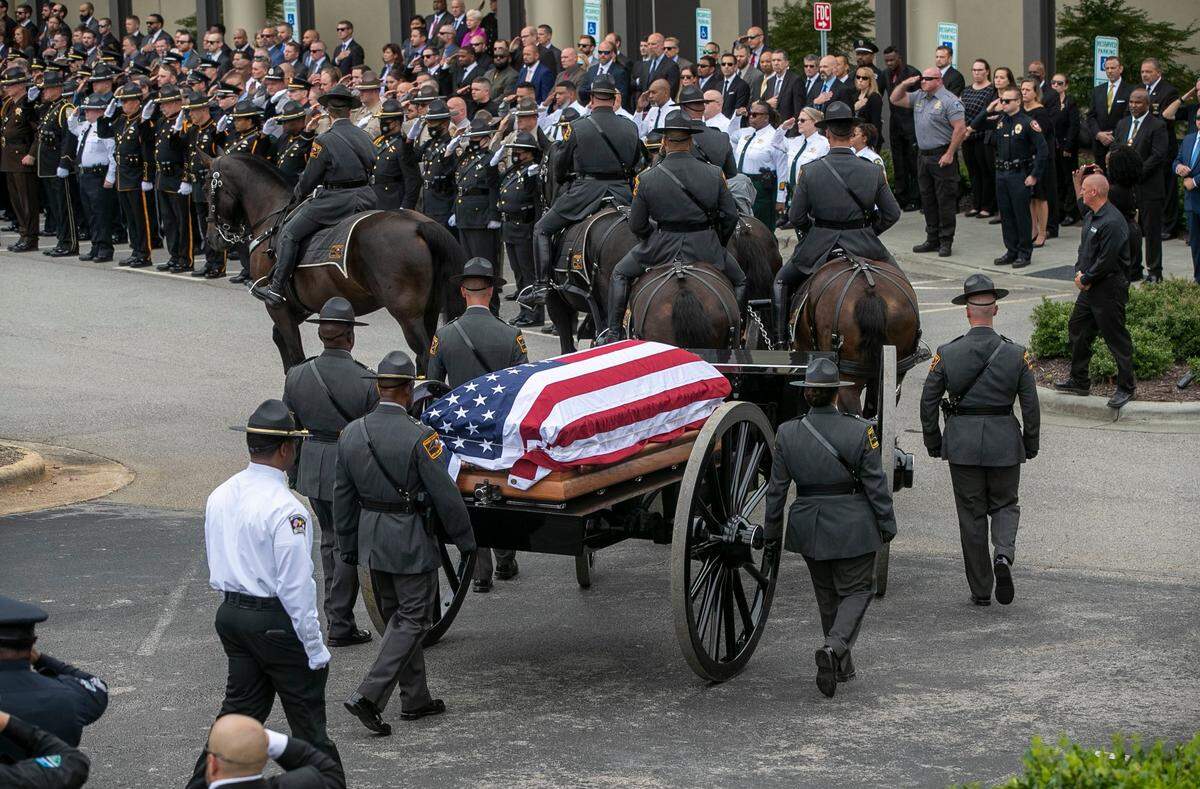
GOP state lawmakers are looking at ways to restart the death penalty in North Carolina after a 19-year pause on executions here due to ongoing legal challenges
About Deputy Ned Byrd’s murder
On Aug. 11, 2022, Byrd, a 48-year-old K-9 deputy, was driving down a dark Battle Bridge Road in the rural southeastern corner of Wake County just after 11 p.m. When he drove by a red pickup on the side of the road, he backed up and pulled over.
Evidence shared by investigators and Freeman indicates that about 13 seconds after Byrd got out of his vehicle, Alder Marin-Sotelo fired three shots, hitting Byrd in the chest, according to interviews and court documents.
Then he shot Byrd three times in the back of the head. Marin-Sotelo appeared to try to take Byrd’s firearm, but couldn’t get it out of his case, Freeman said.
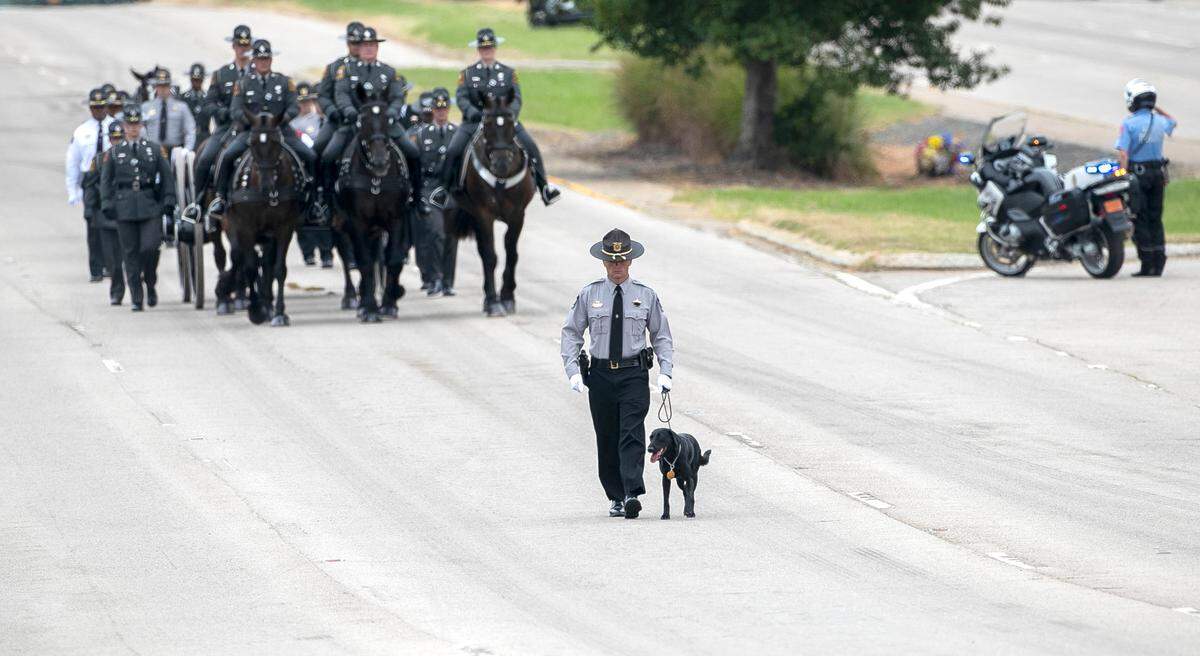
Alder Marin-Sotelo took off in his truck, and he and his older brother, who investigators believe was with Alder to hunt deer, tried to flee the state four days later before they were arrested in Burke County.
After their arrest, Arturo Marin-Sotelo told investigators that his younger brother stayed in the truck, while he hunted deer in the woods with an AK-47. Text messages sent between the brothers before the killing supported the story, Freeman said.
Arturo told police that he saw the police lights, heard the gunshots, and saw his brother speed off. When Arturo called his brother, Alder said an officer had been shot.
Reaching out to slain deputy’s family
After Alder Marin-Sotelo had been captured in Mexico and Freeman learned about the requirements of the treaty, she reached out to Byrd’s sister Mignon Byrd and walked her “through the realities of where we found ourselves,” the district attorney said.
While Alder Marin-Sotelo was still in Mexico, his sister, Adriana Marin-Sotelo pleaded guilty to conspiring to assist or instigate an escape and was sentenced to 10 months in prison on Nov. 17, 2023, federal court records show. She was released Feb. 29, 2024, according to the Federal Bureau of Prisons.
In June, Alder pleaded guilty to a federal charges related to his escape. He hasn’t been sentenced for that yet but court documents indicate he faces a maximum sentence of five years in prison and a potential fine of $250,000, The News & Observer has reported.
Virginia Bridges covers criminal justice in the Triangle and across North Carolina for The News & Observer. Her work is produced with financial support from the nonprofit The Just Trust. The N&O maintains full editorial control of its journalism.
This story was originally published September 18, 2025 at 5:00 AM.