Books can enlighten, entertain, educate — and divide. Is common ground possible in NC?
READ MORE
A Need to Read
Is it ever appropriate for kids to read controversial books? In North Carolina during the past year alone, books have been challenged around common themes: depictions or discussions of straight or gay sex; rape and other violence; transgenderism; racially sensitive subjects, including historical events; and profanity. But other people are backing these books about to be banned and the subsequent battleground is disturbing libraries. So we asked: What five books should everybody read?
Expand All
Books can enlighten, entertain, educate — and divide. Is common ground possible in NC?
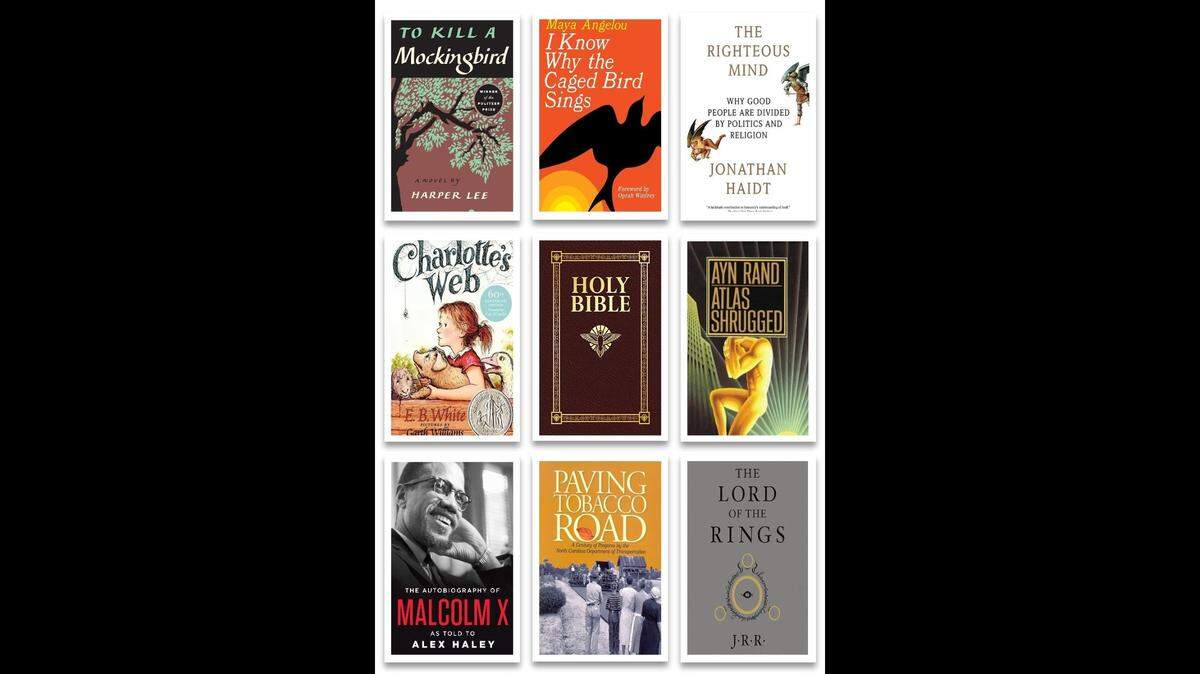
We asked Triangle people to name 5 books everyone should read. Here are their lists.
Which five books do you think everyone should read? Tell us in this poll.
We read these books that some parents say shouldn’t be in school libraries. What we found
Readers who love books also love book lists.
Bestsellers. Best book-club books. Best summer reads. Best books by Southern writers. Classics. Great American novels. Necessary non-fiction.
Lately, the most talked-about book lists may be those that name the tomes some people don’t want to be read — at least, not by impressionable children plucking them from the shelves of their local or school libraries.
The debate over who should have access to what reading material when — an argument almost as old as the written word — has reignited recently across the nation and in North Carolina. It has drawn parents to school board and PTA meetings to complain of the risk of exposing children to pornography, obscenity, political propaganda and sensitive social issues.
Opponents of these groups have protested too, accusing the other side of promoting censorship and saying interfering with book selection restricts intellectual freedom and the flow of information and ideas. Critics say limiting students’ access to books keeps them from learning about other people’s perspectives and experiences.
The urge to ban books isn’t new
Through history, different types of books have been targeted. More than 2,000 years ago, Chinese Emperor Qin Shi Huang is said to have ordered the burning of most books in China, including the Confucian classics.
In the 1500s it was illegal to translate the New Testament of the Bible from the original Greek into English, and a century later Martin Luther’s German translation was ordered torched by the Pope.
Around the world, according to the group that promotes Canadian Freedom to Read Week, books by Galileo, Daniel Defoe, William Shakespeare, Charles Darwin, Victor Hugo, Walt Whitman, Mark Twain, Ernest Hemingway, Lewis Carroll, James Joyce, Upton Sinclair, Albert Einstein, William Faulkner, John Steinbeck, Toni Morrison and J.K. Rowling all have been burned, banned or banished to places where certain audiences could not easily reach them.
The American Library Association, which opposes book restrictions, also lists targeted books by J.D. Salinger, Harper Lee, F. Scott Fitzgerald, Alice Walker, George Orwell, Aldous Huxley, Zora Neale Hurston, Margaret Mitchell, Robert Penn Warren and William Styron.
In North Carolina in the past year, the fight mostly has centered around lists of books such as one from the Pavement Education Project that have circulated nationally as being inappropriate for children, whether as assigned reading or as an offering in the school library. Books have been challenged around common themes: depictions or discussions of straight or gay sex; rape and other violence; transgenderism; racially sensitive subjects, including historical events; and profanity.
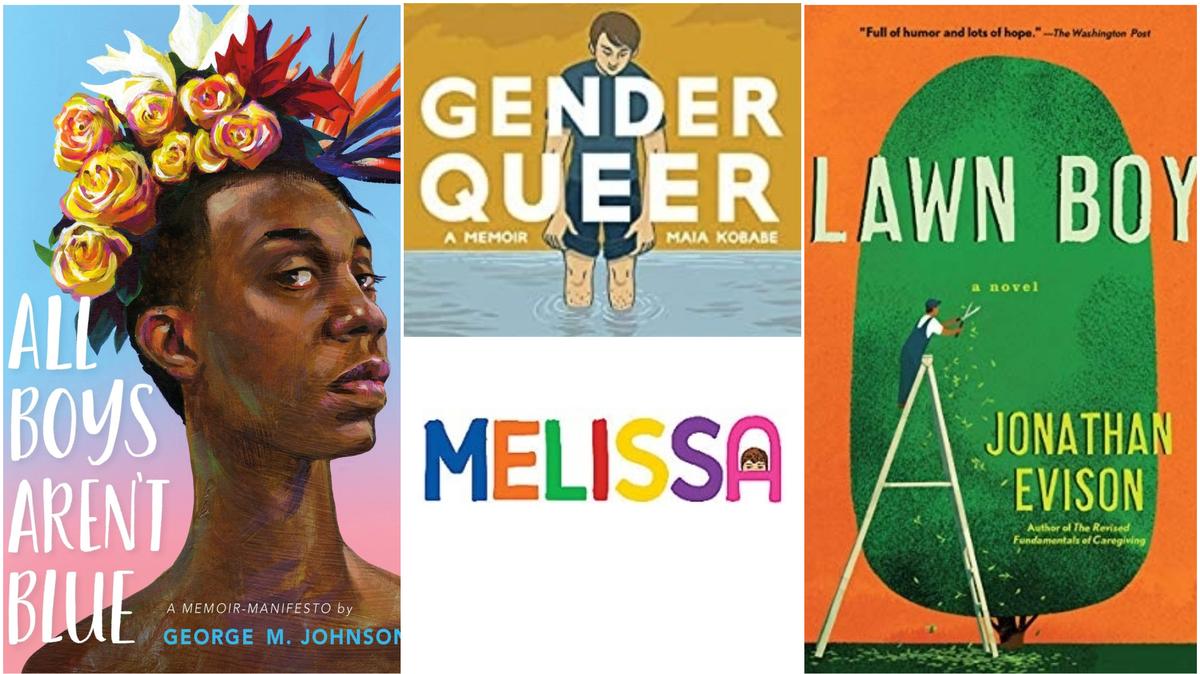
Last October, Lt. Gov. Mark Robinson released a video in which he complained about several books that are available in North Carolina schools, including some schools in Wake County: “Gender Queer: A Memoir” by Maia Kobabe, “Lawn Boy” by Jonathan Evison and “George,” since retitled as “Melissa,” by Alex Gino.
A county school official said none of the books were being used in classrooms or as part of any curriculum. But Robinson held a press conference to say the books shouldn’t be anywhere inside a school.
“I challenge anyone out here to look at this and say that you want your child to look at it, or be forced to look at it in the classroom,” Robinson said then. “I‘m not the bad guy, folks. I’m the guy who’s trying to get pornography out of our schools.”
In December, nine people filed criminal complaints against the Wake County school system, saying books such as “Gender Queer” should be considered obscene and removed from schools. Wake County District Attorney Lorrin Freeman reviewed the complaint and, saying it didn’t constitute a criminal matter when balanced against First Amendment issues, sent the parents back to the school board’s procedure for challenging books.
So far, no schools in Wake County have removed books as a result of the complaints.
The Wake County Public Libraries also were asked to take “Gender Queer” and “Lawn Boy” out of circulation. The library system decided in December to keep “Lawn Boy” but remove “Gender Queer” from its shelves, then reversed in January and returned “Gender Queer” to circulation. The library system said it would review the way it handles book challenges.
One mother’s spreadsheet
Wendy Runyon of Raleigh, a mother of three, decided to see for herself whether books available to her children and their classmates rose to the level of obscenity. After reading more than 100 titles, she said, she decided to spend her energy on “the worst of the worst,” not worrying about gay or transgender content or anything resembling Critical Race Theory. She said she focused on books that had explicit content about sex, incest and rape, especially if those acts involve children.
One book had a description of a gang rape Runyon said made her physically ill.
She then researched the availability of those books throughout Wake County schools and charted into a spreadsheet which schools had what books, from high schools to elementary.
Runyon was a party to the December criminal complaint and said she was disappointed in the district attorney’s decision not to pursue the case. The books she identified, she said, have no educational value and the schools’ making them available amounts to disseminating obscenity. Runyon and others say exposing children to sex prematurely is a way of normalizing the sexuality of children, and makes them vulnerable to abuse.
“It consumed me,” Runyon said of the work she did. “I just couldn’t believe it. And the more you look, the worse it gets.
“I’m not for banning books,” Runyon insisted. Though she said she would have liked for some of the material to be removed from the schools, she believes the most objectionable books should at least be kept where students have to ask for them.
Then, she said, librarians would be required to contact parents before letting students check out the books, giving parents a chance to review them and say yes or no.
Books with sexual content are alluring to some public school students in North Carolina as a source of information they may not get from their parents or their teachers. By law, sex education emphasizes abstinence as the best way to prevent pregnancy and sexually transmitted diseases, and it stresses the importance of cisgender, heterosexual marriage. Equality North Carolina and other advocacy groups have said the curriculum should be overhauled to provide more consistent, accurate and comprehensive sexual health information.
Runyon said that when it came time to teach her children about sex, she reviewed and checked out books from the public library for them to read. That’s better than trusting their training to popular graphic novels, she said.
“I’m not under any illusion that my children haven’t looked up pornography,” Runyon said. “I’m not stupid. But I’m not going to give them a Hustler.”
Standing up for targeted books
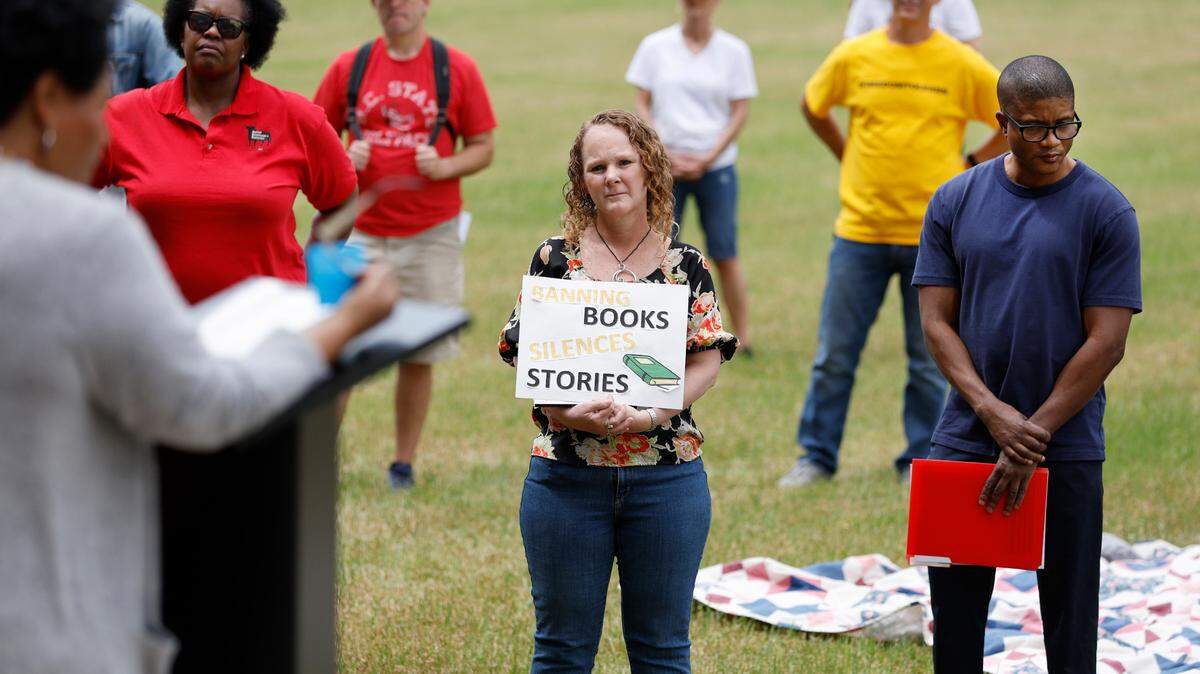
Save Our Schools NC, a small group of local volunteers, hosted a small rally in downtown Raleigh to celebrate banned books on the first Saturday in May in collaboration with PEN America’s North Carolina/Piedmont Chapter.
About 25 educators, activists, parents and children gathered on the Halifax Mall to read from targeted books like “All American Boys,” “Melissa” and “The Hate U Give.”
Renee Sekel, one of the founders of Save Our Schools NC, said they wanted to push back lovingly.
“People will read one or two words and say, ‘We don’t want this filth in our schools,’ when the book itself is lovely,” she said ahead of the rally, holding a copy of “Melissa,” from which she would later read.
In her copy, the original title of “George” is marked out with a silver marker, which Sekel also used to scrawl “Melissa” above it. The 2015 book is about a trans girl, and author Gino and publishing company Scholastic elected to retitle it with the name the child herself prefers.
“Melissa” has been banned in school districts in Florida, Texas, Oklahoma and Pennsylvania, according to an index compiled by PEN America, a national nonprofit that fights for free expression, especially as it relates to literature.
William Johnson, program director of PEN America’s PEN Across America program, said the books being banned target communities who have had to fight to for visibility and representation.
“Literature is a way for people to see themselves,” Johnson said, highlighting the role books played in helping him connect with his identity as a gay man. “I don’t want us to go back.”
Cary mom Lorelei Stephenson brought three of her six children to the rally. She said it’s cruel to ban books and when she stumbled across an ad for the event, she felt drawn to join the fight.
“I don’t want them to be afraid of ideas,” Stephenson said of her children. “When they had questions, I knew we had to come and let them hear from the experts who are fighting for stories.”
Michelle Burton, a media specialist and president of the Durham Association of Educators, said challenging censorship is literally written in the American Library Association’s Bill of Rights.
“As a librarian, that is what my duty is,” she said.
Burton, who is Black, said it’s more personal for her though.
“People who look like me were denied access to libraries and information,” she said. “Hearing my father talk about how he grew up in segregated Fayetteville, North Carolina, he didn’t go to the public library. That was denied to him.”
‘All my banned books are checked out’
Burton said her father found great joy in raising his own children in Chicago, where they had access to public libraries.
“When we deny people access, we are limiting people’s potential and we’re limiting human greatness,” she said.
Susan Book, who co-founded Save our Schools NC in 2016, said the group typically operates at the state level, lobbying the General Assembly for school funding. Discussions about book banning at local school board meetings in the past year, however, demanded their attention.
“What we were seeing was fear,” Book said.
Kristel Behrend, a media specialist at Knightdale High School, said she’s noticed an interesting trend.
“I have to tell you, as a librarian, all my banned books are checked out,” she told the crowd. “All the books that I’m like, ‘Oh, where’s my copy?’ It’s in the hands where it should be — with my students who are learning things about people that are like them and people that are not like them. And everybody wins in that situation.”
Janice Robinson, North Carolina director of Red, Wine & Blue, a group of suburban women who organized after Donald Trump’s election in 2016, sees recent book challenges as a political maneuver to mobilize conservatives ahead of the 2024 presidential election. Conservatives have said liberals are using the issue the same way.
“This is an orchestrated culture war started by think tanks out of (Washington) D.C. who are using this as a tactic to scare women and children, particularly white suburban women — I repeat that, white suburban women — into showing up at the polls and voting for right-wing candidates up and down the ballot,” Robinson said.
Robinson said Red, Wine & Blue is targeting school board elections in 12 North Carolina counties, including Wake and Johnston.
She repeated a refrain throughout her speech at the rally: “Suburban women are not stupid.”
Deonna Kelli Sayed leads the Piedmont Region of North Carolina’s PEN America chapter.
“The inability to sit with stories that are different from ours is an erosion of democracy,” Sayed said. “And if we’re not exposed to ideas that sometimes make us uncomfortable, if we’re not exposed to people who are different from us, we can’t be full participants in a democracy.”
Jennifer Olsen, director of undergraduate programs and education at Meredith College, used to teach children’s literature courses and follows discussions about limiting access to books. The objectionable material might be about religion, witchcraft, sex, LGBTQ culture or even a historical event written from a Black person’s perspective, Olsen said. But the sentiment often boils down the same.
“It’s something they don’t believe should be happening, so they don’t want their kids exposed to it,” she said.
Olsen said it’s important to remember that public school systems and libraries across the nation have procedures in place through which parents can challenge books and debate their merits with others. A criminal complaint such as the one filed in Wake County, she said, “is an attempt to circumvent the process.”
Stanley Litow teaches graduate courses at Duke University on the politics of education and served as a deputy schools chancellor for New York City in the 1990s. Litow said he believes that the types of books now being challenged are backlash against the widespread protests that followed George Floyd’s murder and subsequent efforts at improving racial equity and inclusion.
But to him, efforts to bar schools from offering a book on any subject indicate a bigger disagreement than just what is appropriate for children to read.
“It’s not about books,” Litow said. “It’s about teachers. A book in and of itself is not education. It’s how the teacher uses the book to help students understand the message in an effective way.
“If there’s a book in the school that someone doesn’t like, we have to have confidence and trust in the ability of teachers to effectively balance one book against another. We have to have confidence that the teacher will be able to give the student the skill to think critically and interpret the book the way they want to.
“We have allowed these issues to become so politicized, and I think we need to step back and have a little more trust,” Litow said. “That’s really what our education system should be about.”
This story was originally published May 18, 2022 at 6:00 AM with the headline "Books can enlighten, entertain, educate — and divide. Is common ground possible in NC?."