Thousands of tutors needed for Wake students to address learning loss. Can you help?
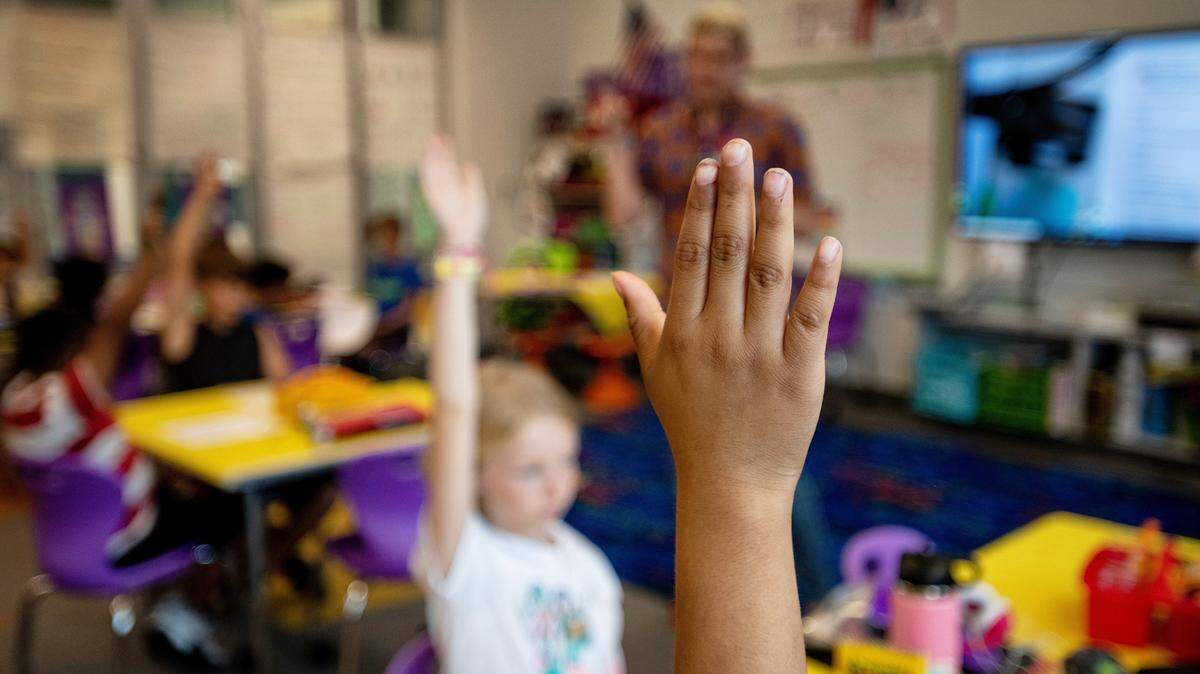
Thousands of tutors are needed for a new program that will start in September to help Wake County elementary students recover from pandemic learning loss.
Wake County school administrators and the YMCA of the Triangle presented to the school board on Tuesday a plan to provide intensive one-on-one and small-group tutoring in reading to students in second through fifth grades.
But the HELPS program will need many community members to volunteer at least once a week to provide consistent tutoring.
“The community is ready to help,” said Tom Oxholm, a member of the board of the YMCA of the Triangle and a former Wake school board member who has been spearheading the tutoring effort. “We want to be asked.
“Business people, retirees, church groups, everybody will say, ‘I need to step up now. I’ve done nothing to help the community for 27 months and this is the most important thing I can do.’ Nothing is more important to the future of Wake County than Wake County Public Schools.”
Oxholm said he’d be among the people who will serve as tutors.
Details such as how people can sign up to volunteer as tutors still need to be worked out. But school board members said they’ll do what they can to help.
“We need to be missionaries for this and find as many of the willing to join the effort,” said school board vice chairman Chris Heagarty.
The presentation comes amid research showing that the pandemic put students months and, in some cases, more than a year behind academically.
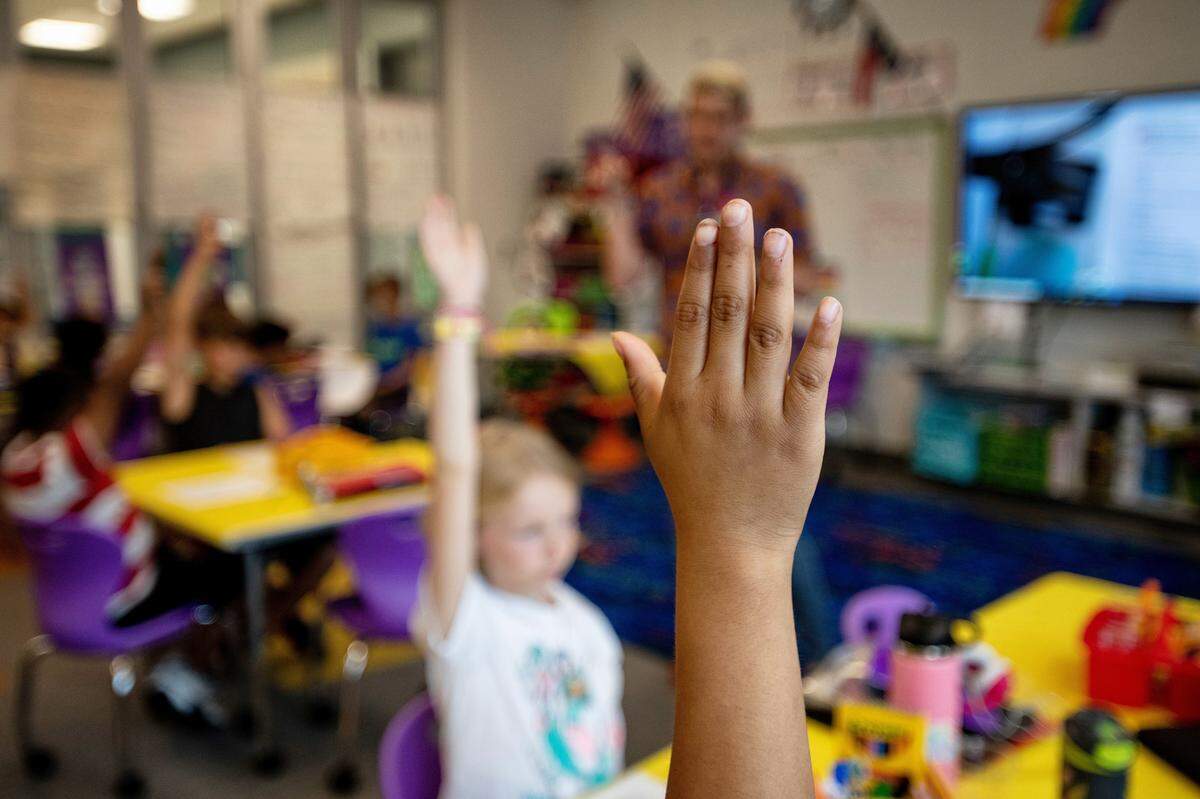
The Raleigh-based HELPS Education Fund helps schools improve the reading skills of students using proven strategies such as focusing on phonics.
According to the YMCA, 53% of the district’s elementary schools already use HELPS. Most of the schools in the program use it for one-on-one instruction with students.
The YMCA has been using HELPS with Wake students since 2019.
Wake, the YMCA and HELPS are in the process of identifying who will be served starting in September.
Wake students behind
The program expansion comes after students in Wake County, like the rest of North Carolina, saw limited amounts of in-person instruction during the 2020-21 school year.
A state report released last month said North Carolina students ended the 2020-21 school year between two to 15 months behind in reading and math.
Results of a state survey released last week found that 59% of teachers said their students are at least six months to one year behind academically this school year compared to a normal school year.
Among Wake County teachers, 53% said in the survey that their students are at least six months to a year behind. Only 28% of Wake educators said their students were about the same or better academically compared to a normal school year.
More than 44% of Wake teachers said they’ve spent at least half this school year reteaching material that students should have learned in the prior school year.
More than 72% of Wake teachers also said that their student needs for social, emotional and mental health support are more than a typical school year.
Research has shown that “high-dosage tutoring” programs such as what HELPS uses can be effective at helping students get caught up.
“We fully expect that high-dosage tutoring can and will have a positive impact on student outcomes,” said Drew Cook, assistant superintendent of academics. “To be clear, and as we talked about earlier this afternoon, we have no notion that we can just ‘tutor our way’ through an effective pandemic recovery effort.
“But if done with strategy and with purpose, we believe it can and will be an important and impactful tool, especially if we’re able to harness the collective energy and willingness of community partners like are in the room this evening.”
Wake’s summer learning programs
Wake won’t serve as many students compared to last year in summer school programs.
Last year, state lawmakers required school districts to give at-risk students in all grades the chance to receive up to six weeks of summer learning. There’s no statewide mandate this year for a K-12 summer learning program.
Cook told the board that they didn’t want the summer programs to take away from the ability of schools to prepare how they’ll teach students next school year.
“We learned a lot last summer with a really comprehensive full-scale summer learning program that was legislated,” Cook said. “What you’re seeing today is our best efforts for 2022 to strike that balance.”
▪ Wake expects to serve more than 4,000 second- and third-grade students in the state mandated Read To Achieve camp to help kids who are having reading difficulties.
▪ High schools will offer credit recovery programs to help students pass classes they need to stay on track for promotion or graduation.
▪ A new Career Accelerator program will give at least 685 students experiences they may have missed out on during the pandemic, such as working with local businesses.
“We’re not going to ‘summer learn’ our way through effective pandemic recovery,” Cook said. “But we do believe it can and will be one important tool — one of many — to extend and enhance first-time teaching and learning in the classroom, which must be our primary focus.”
This story was originally published June 7, 2022 at 7:50 PM.