Timeline: How botched raises in Durham schools prompted closures, protests, resignations
READ MORE
Durham Public Schools Salary Dispute
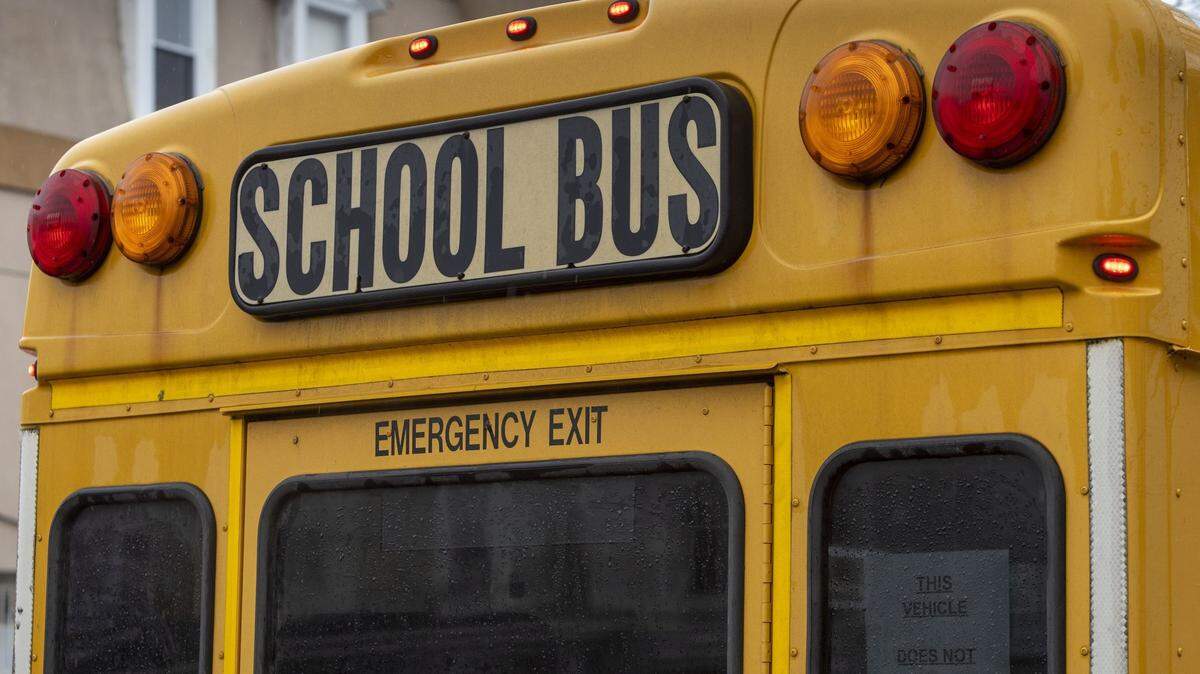
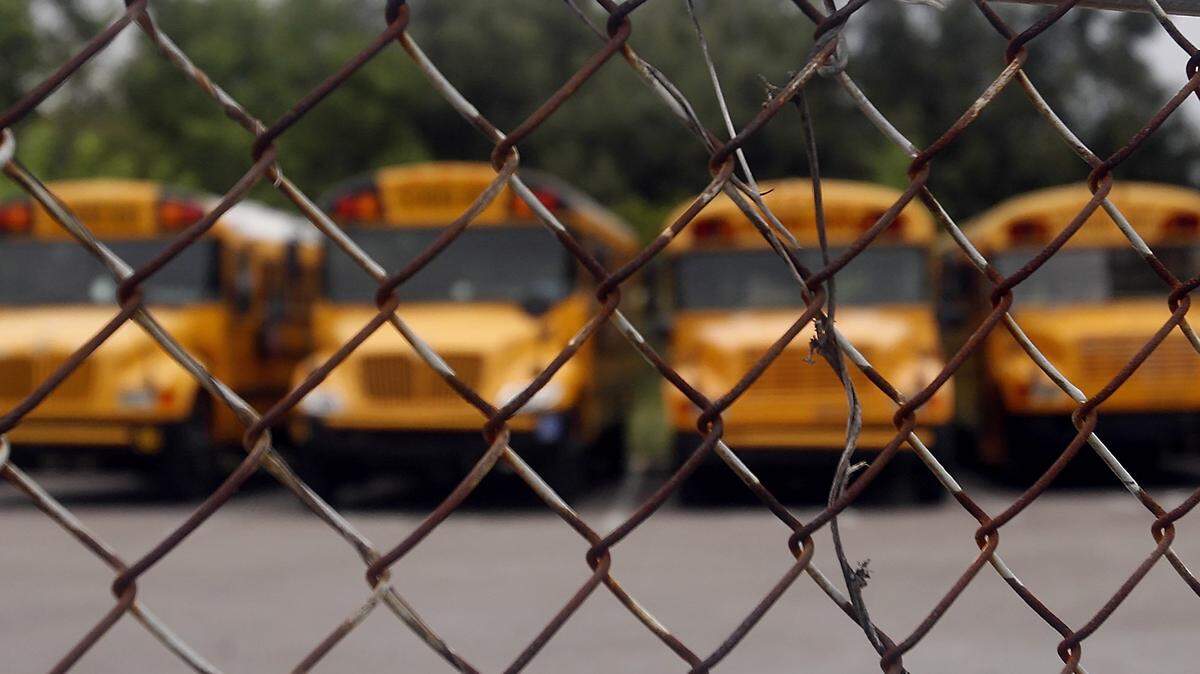
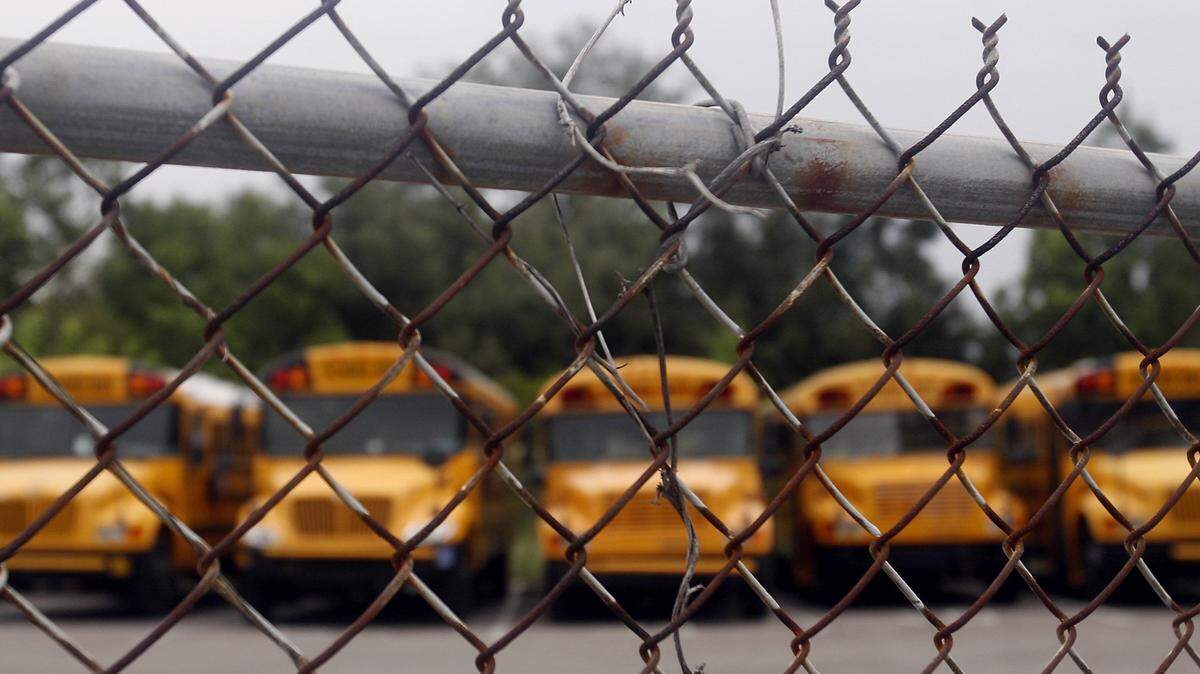
Budget problems in Durham Public Schools have caused disruptions, including halted bus routes and schools closings as staff members call in sick to protest. The protests come as the school district reported it had budgeted incorrectly and could not pay raises for 1,300 classified staff members, including bus mechanics, cafeteria workers and physical therapists. Here is ongoing coverage from The News & Observer.
Expand All
Nearly two months after Durham schools superintendent alerted the school board chairwoman and a board member about a possible budget shortfall related to staff salary increases, the school system remains in turmoil.
The pay issues hinge on millions in promised raises to the school system’s non-licensed staff — bus mechanics, groundskeepers, instructional assistants and cafeteria workers — who began receiving increased pay in late 2023. But board leaders in recent months learned that the district didn’t actually have the money to pay for those raises.
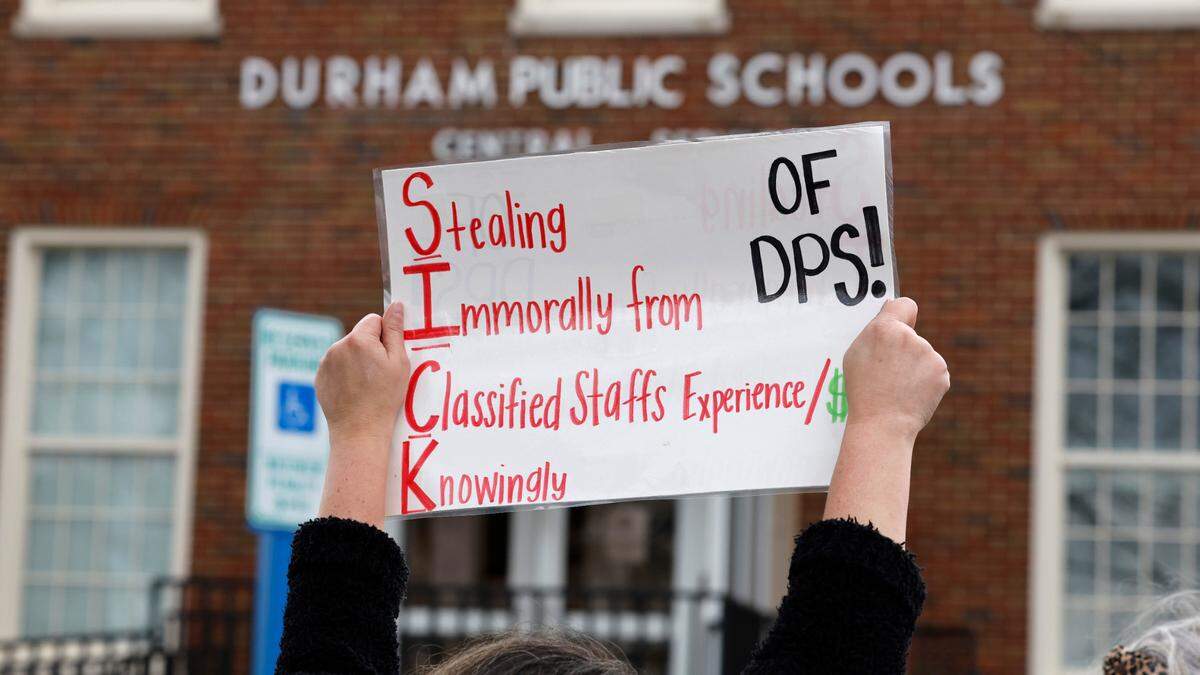
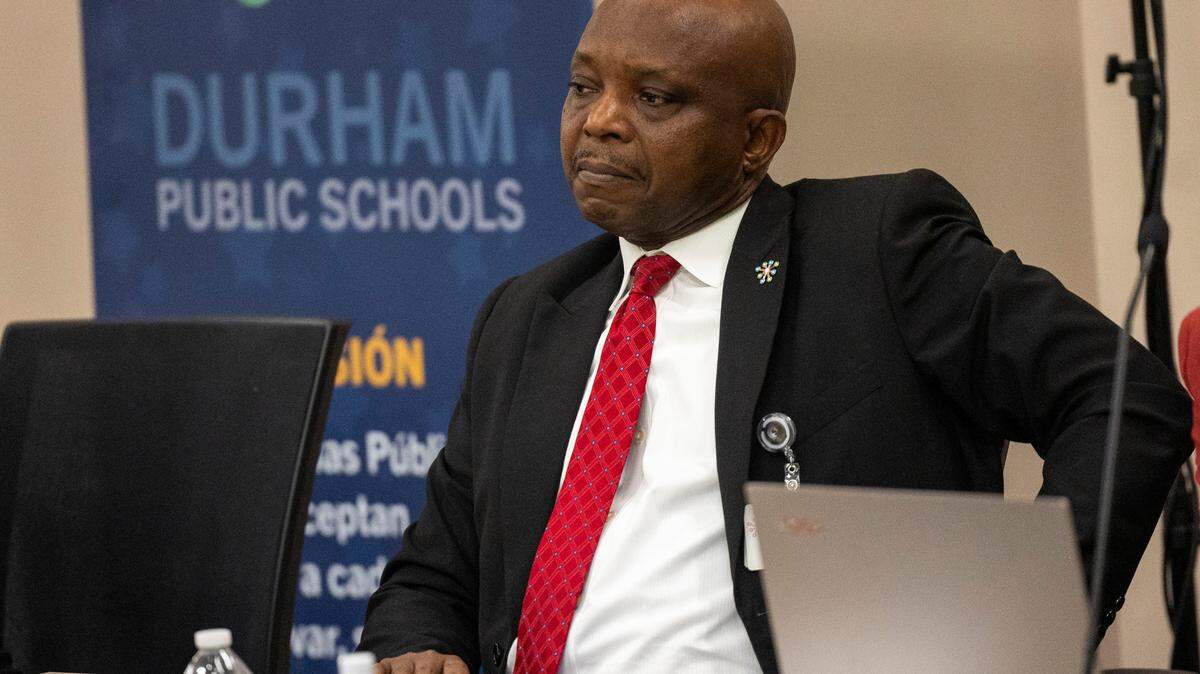
The controversy has so far prompted protests, school closures and the resignations of Durham Public Schools Superintendent Pascal Mubenga and Chief Financial Officer Paul LeSieur.
A report by the Raleigh-based law firm Tharrington Smith, released by the board Feb. 7, has shed some light on how the salary increases were implemented. But questions remain — and school leaders continue to grapple with the aftermath.
Here’s a timeline of how we got here.
2017
Oct. 16: Durham Public Schools announces the hire of its new superintendent, Pascal Mubenga, who will start after Thanksgiving. Mubenga had been superintendent of the Franklin County school district since 2015.
Dec. 7: Durham Schools Superintendent Pascal Mubenga announces the hire of interim finance officer Paul LeSieur as the district’s chief financial officer. LeSieur was first hired by DPS in 2010 as executive director for budget and management services, following roles at the N.C. Department of Public Instruction.
2022
October: Durham Public Schools hires HIL Consultants to complete a salary study and recommend new salary grades for “classified” employees — non-licensed workers like bus mechanics, groundskeepers, instructional assistants and cafeteria workers — at a cost of $78,500 plus expenses.
2023
Jan. 12: The Durham Public Schools Board of Education hears the results of the HIL Consultants salary study, which provided multiple options for counting employee work experience. The consultants said a “rough” estimate of new salary schedules would be $10.8 million, based only on how long they’d worked for DPS or state agencies.
Jan. 31: The Durham school board holds a joint meeting with the Durham County Board of Commissioners, during which Chief Financial Officer Paul LeSieur forecasts the cost of salary increases to be $10.8 million. That figure includes just over $4 million for classified worker raises as part of the proposed salary study.
Early February: Durham Public Schools hires Hickory-based HIL Consultants to perform another salary study, this time for administrators that had not been included in the original study.
Late February: Durham Schools CFO Paul LeSieur asks his contracted budget analyst, who is not named in the Tharrington Smith report, to calculate the total cost of the increased employee salaries. She estimated the cost at $21 million based on total years of relevant work experience.
About one week later, LeSieur asked her to recalculate the estimate based on state longevity instead. LeSieur shared her $13 million figure with HIL Consultants, but not anyone with the school system.
March 23: Superintendent Pascal Mubenga presents his budget proposal to the school board with a request for $4.1 million in local funds for salary increases. The figure was actually based on state longevity only, rather than relevant work experience for both state agencies and the private sector.
April 6: Durham Public Schools shares the superintendent’s funding request at a public budget hearing.
May 4: The Durham school board approves the superintendent’s budget request at a work session.
Spring: DPS administration implements new salary schedules using the existing system of basing pay on total experience — at state agencies and the private sector.
June 12: The Durham County Board of Commissioners approves its $889 million budget for 2023-2024. The county allocated nearly $188 million for Durham Public Schools, a $10.8 million increase from last year. The increase includes the requested $4 million for classified worker salary increases in the proposed salary study.
Oct. 3: North Carolina’s two-year budget becomes law without Gov. Roy Cooper’s signature, after it received final approval from the legislature on Sept. 22.
Oct. 12: At a school board work session, school system administrators present HIL Consultants’ latest salary study in a verbal presentation. Because of the high cost of the new administrator salary schedules, DPS decided not to ask for those raises and instead proposed a 7% pay increase for 68 administrators that would cost a projected $330,000.
Durham Public Schools Finance Officer Paul LeSieur again informs the board that salary increases for classified workers would cost about $10 million total.
Oct. 18: In a presentation to DPS supervisors, Assistant Superintendent for Human Resources Alvera Lesane and Chief Finance Officer Paul LeSieur say that the calculations for increased salaries are based on both relevant state agency and private sector experience.
Oct. 30: In a video presentation to staff, school system administrators tell employees that they did not implement recommendations from HIL Consultants to switch to state longevity but will continue to classify salaries based on relevant state and private sector work.
Oct. 31: Durham Public School staff members begin receiving bigger paychecks. The change applies to “classified” or non-licensed workers like bus mechanics, groundskeepers, instructional assistants and cafeteria workers.
Though the raises were promised at the start of the school year, the state budget wasn’t passed in time. In higher paying districts like Durham, the state covers base pay for school employees and the county supplements their wages.
Nov. 8: Durham Public Schools Chief Finance Officer Paul LeSieur informs Superintendent Pascal Mubenga that salary increases for classified employees will cost close to $19 million, $10 million more than budgeted by the school board.
Mubenga asks HIL Consultants to review the district’s finances to confirm the deficit.
Nov. 30: Durham Public Schools issues paychecks to employees that include both their increased salaries based on total work experience and the lump sum retroactive payments for the increases from July through October, while the new state budget was pending.
Dec. 13: Assistant Superintendent for Human Resources Alvera Lesane confirms to HIL Consultants that the school system chose not to implement their recommendation to only use state longevity when calculating salaries.
Dec. 15: Filing deadline for candidacy to state and local offices, including the Durham County Board of Education.
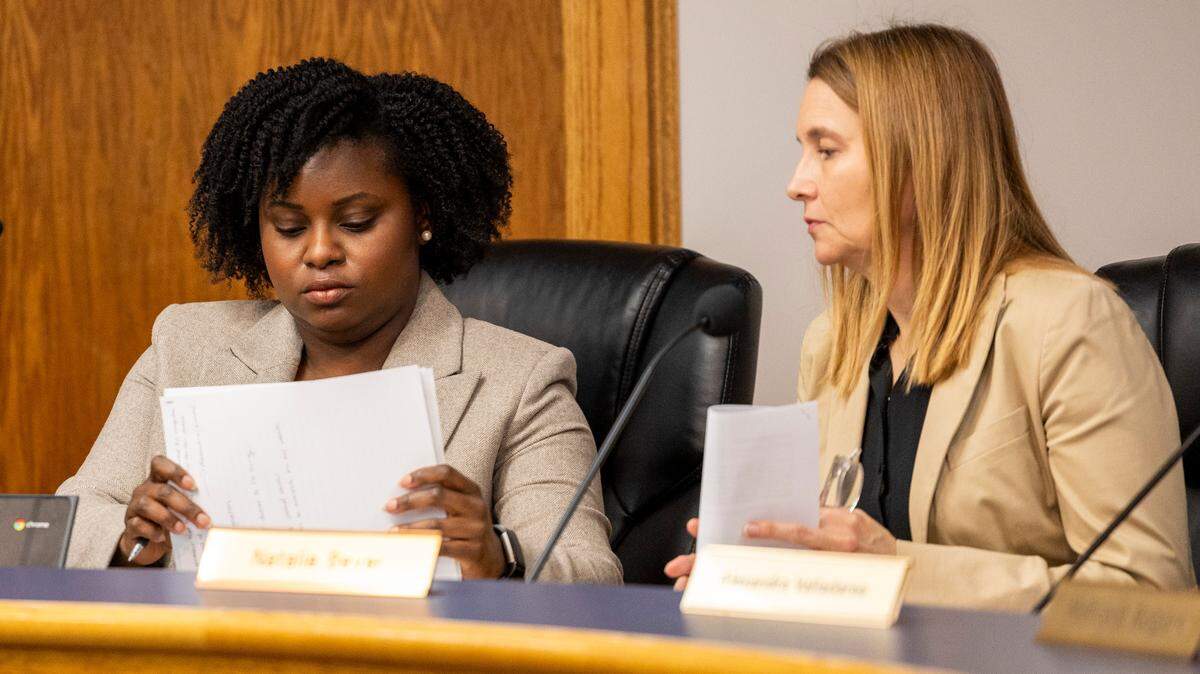
Dec. 18: Durham Public Schools Superintendent Pascal Mubenga tells Durham School Board Chair Bettina Umstead and board member Natalie Beyer about the pay issue after running into them in the school system office. He told them he would bring the full board more detail and potential solutions after the holidays after working with HIL Consultants.
Dec. 21: Durham Public Schools issues paychecks to employees containing new raises, spending about $3.6 million more than anticipated through December.
2024
Jan. 4: HIL Consultants releases a report on the salary problems to Durham Public Schools Superintendent Pascal Mubenga that summarizes budget issues linked to salary and declining student enrollment.
Jan. 9: Durham Public Schools Superintendent Pascal Mubenga contacts the school board attorney regarding the salary issues.
Jan. 11: Durham Public Schools Superintendent Pascal Mubenga informs the full school board of the salary issue, inaccurately telling them the finance department “had used the wrong data set to implement new salary schedules.”
Jan. 12: The district’s chief financial officer, Paul LeSieur, is suspended with pay.
Jan. 13-15: 1,300 DPS staff members learn their raises will be affected. They will no longer get credit for any years of work earned in the private sector, meaning employees won’t get the full raises they expected after the 2023 salary study.
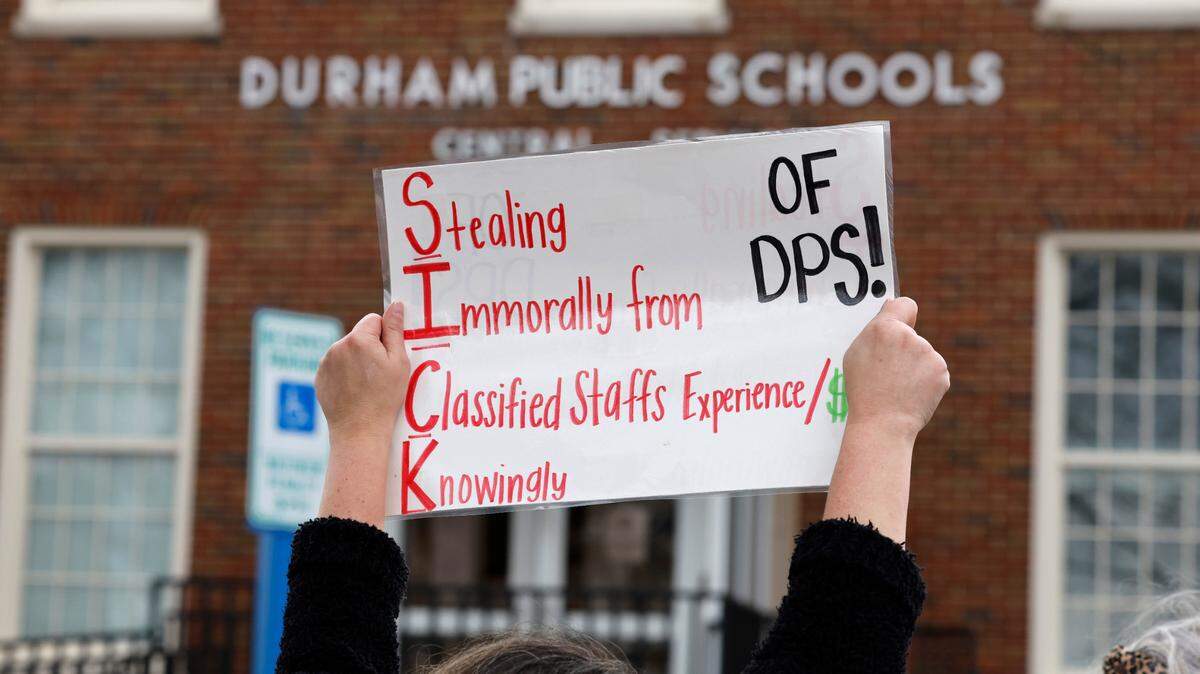
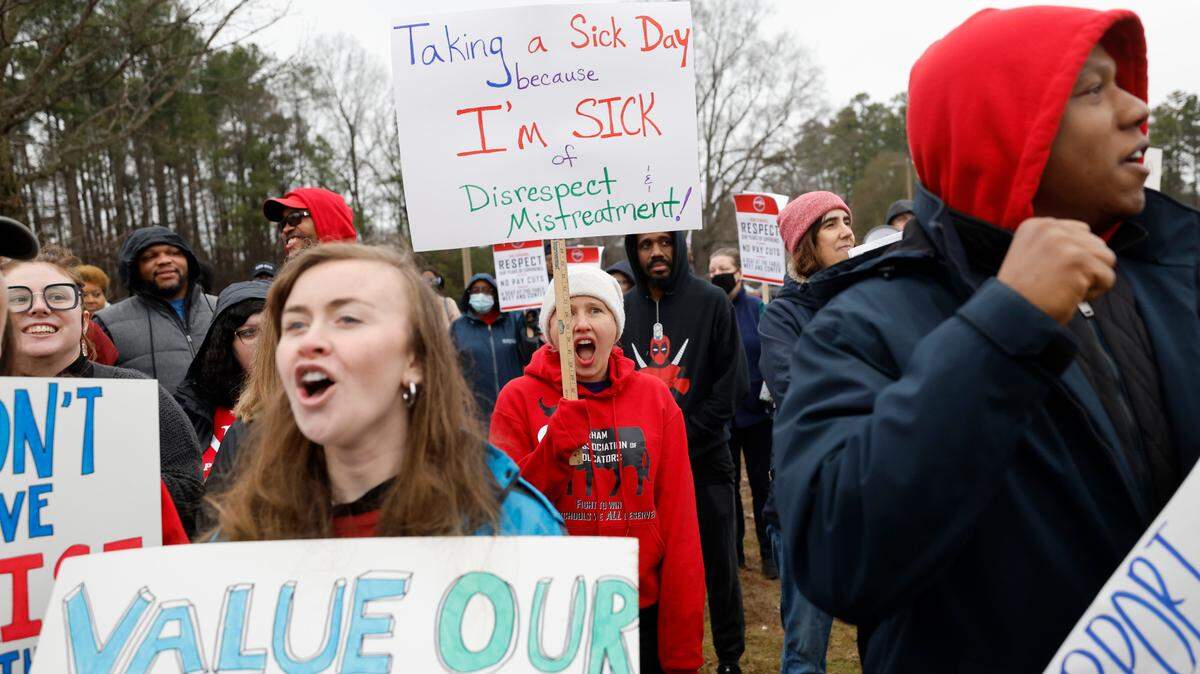
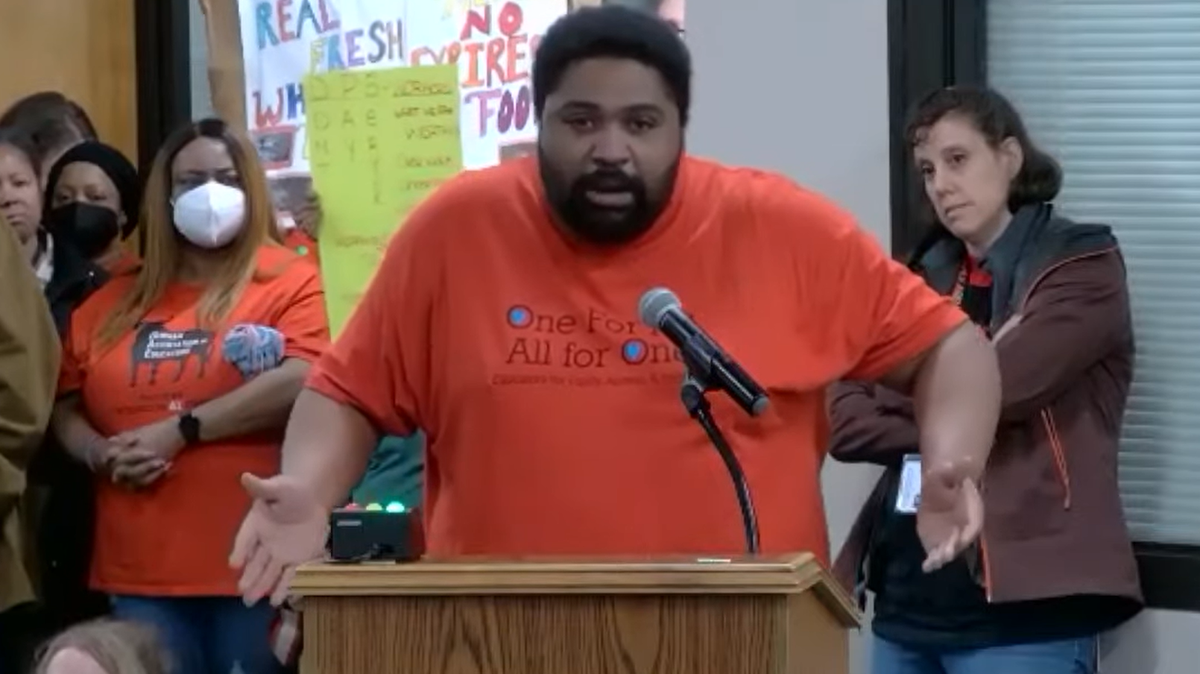
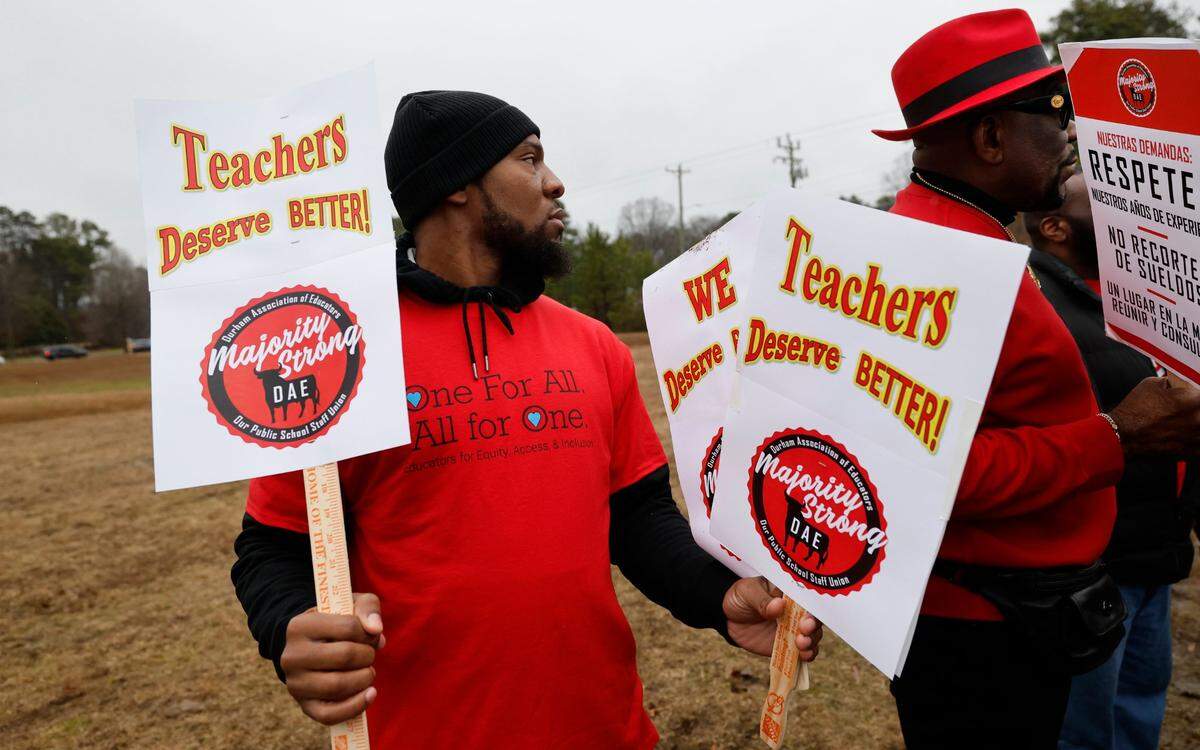
Jan. 17: DPS employees protest pay issues by skipping work, throwing the district into chaos and sending remaining employees and families scrambling to get students to school. Some parents have to wait longer than usual in drop-off and pick-up lines, and some students miss school altogether.
A district representative emails parents blaming the week’s understaffing on an “unfortunate error” in the payroll system.
Unrelated to the payroll issue, the district has a two-hour weather delay after extreme overnight temperatures. DPS asks parents to take their students to and from school because of bus delays.
Also unrelated, a Duke Energy power outage occurs in the afternoon, affecting some DPS schools.
Jan. 18: Seven DPS schools close because of Wednesday’s Duke Energy outage. DPS asks parents to take their students attending schools that are still open to and from school because of bus delays.
Jan. 19: DPS Chief Operating Officer Larry Johnson meets with staff to determine what’s on the horizon for the following week after significant disruptions, per a district spokesperson. DPS again asks parents to take their students to and from school.
Jan. 22: The Board of Education meets behind closed doors at 8 a.m. to “review the salary overpayment issue.” Experts tell The News & Observer that the board did not follow legal requirements for going into closed session.
Superintendent Pascal Mubenga meets with transportation workers at 12 p.m. to try to smooth things over.
At 2:30 p.m., board chair Bettina Umstead said they were trying to find money so employees could keep the pay they received in 2023, as well as the higher pay rate for January 2024.
Jan. 25: DPS workers organize ahead of a Board of Education meeting, asking DPS not to take back their pay and reconsider withdrawing raises.
The board votes unanimously to move $4.5 million from a rainy day fund, ensuring employees can keep the money they were paid through January.
The board also votes unanimously to ensure that when new salaries are finalized, all affected staff receive at least a 4% raise compared to last school year. That was a provision of the state budget.
The district’s reserve fund now sits at $6.4 million, well below the $12.7 that HR director Alvera Lesane said is recommended.
Jan. 26: Chief Financial Officer Paul LeSieur submits his resignation to Superintendent Pascal Mubenga, with his last day set for Jan. 31.
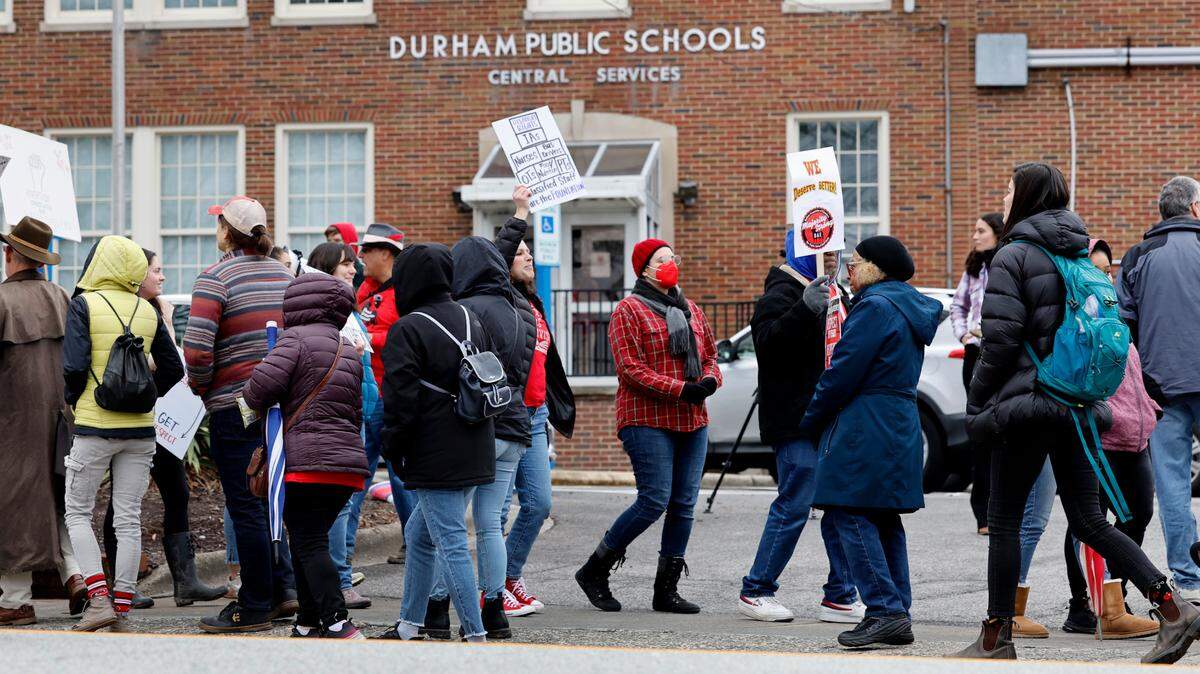
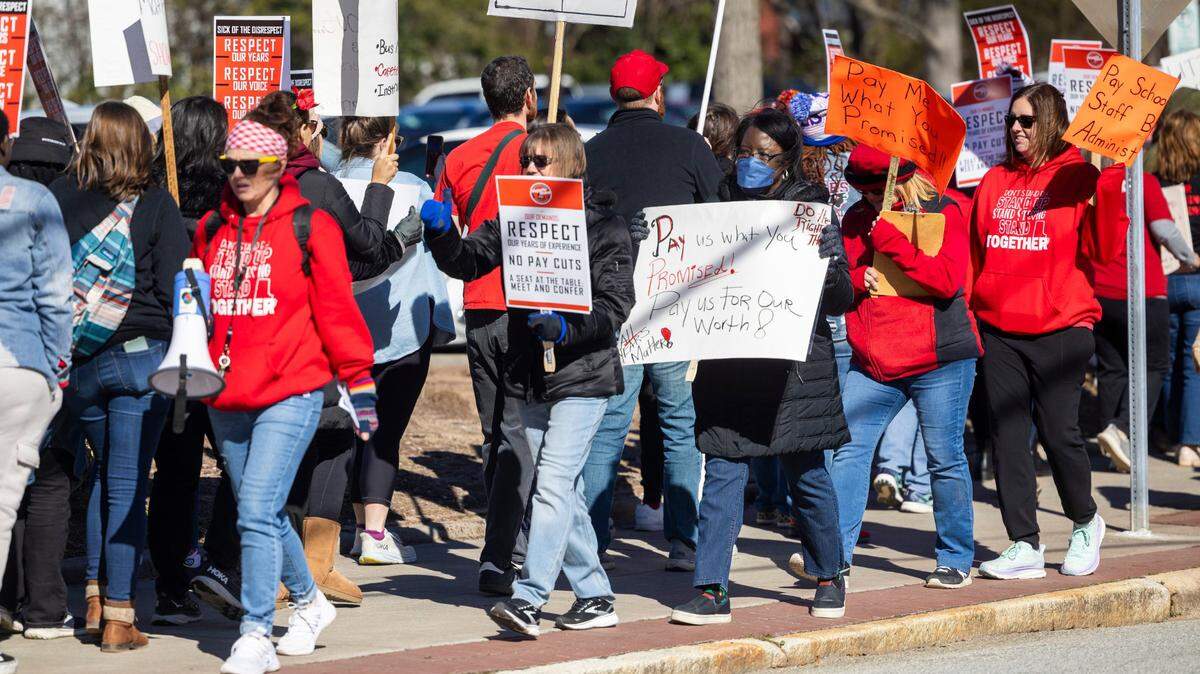
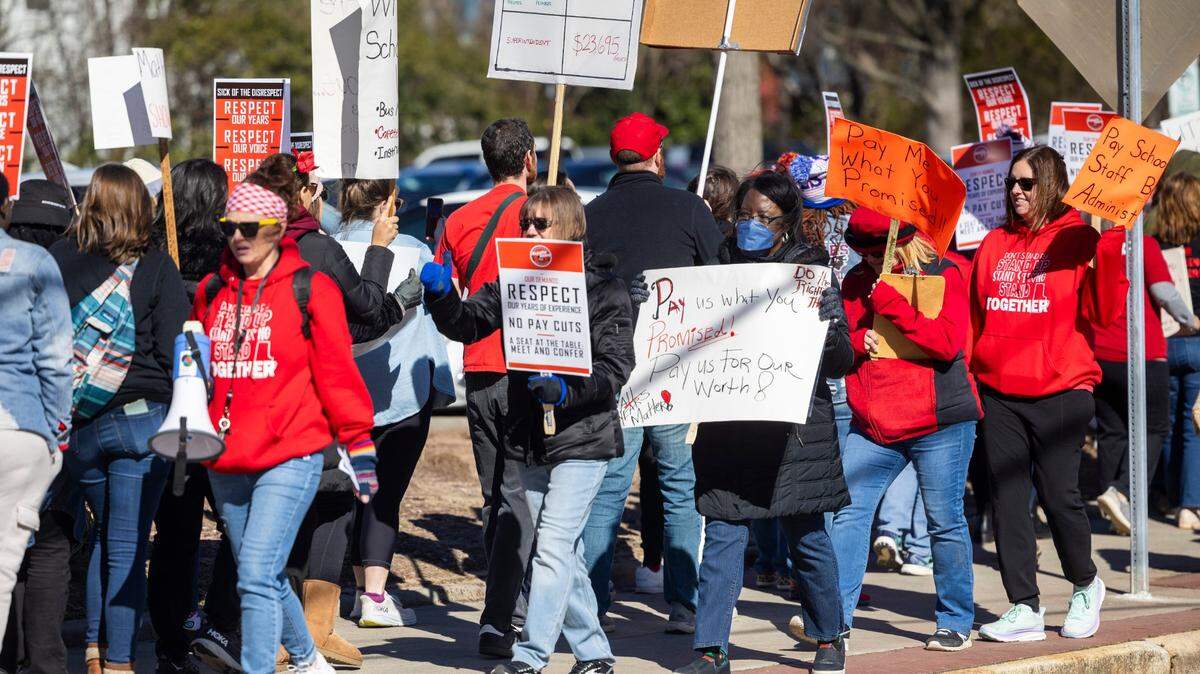
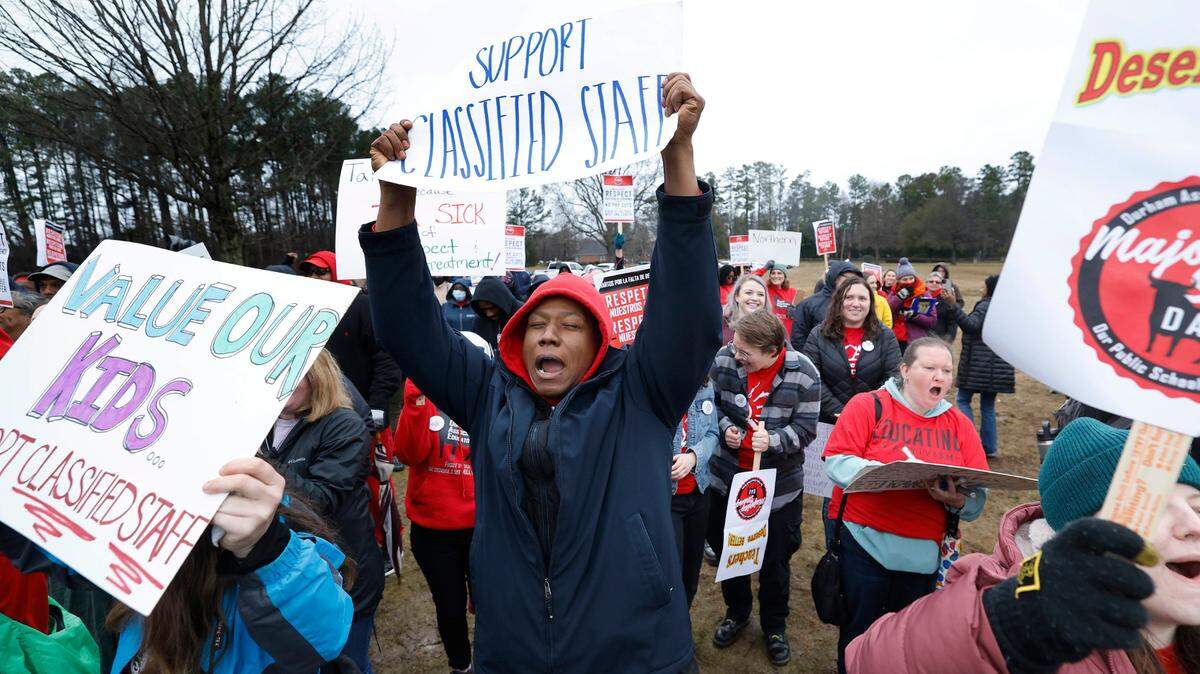
Jan. 31: At least 12 Durham public schools are closed because of the staff sickout. At two protests, DPS staff call for raises to be reinstated going forward.
This is the last day of pay at the higher salaries. Umstead told DPS staff a future check will make up for any lingering discrepancies since January paychecks already went out.
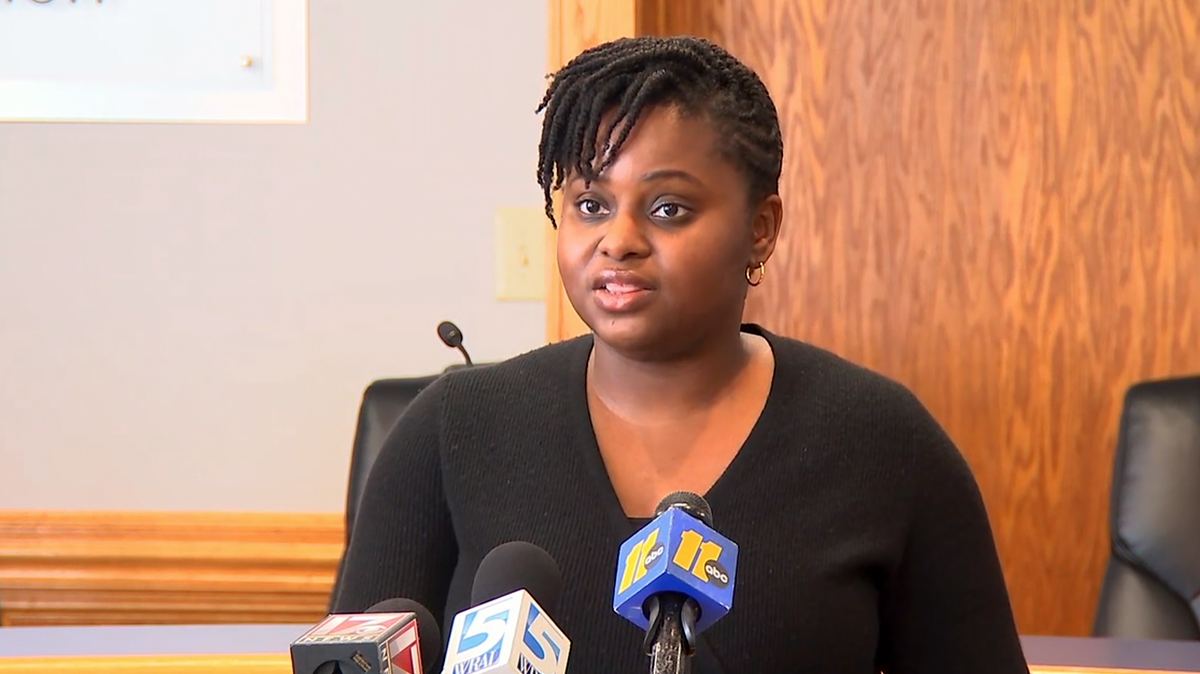
Cierra Ojijo begins her term as interim CFO. She was formerly the senior executive director of financial services.
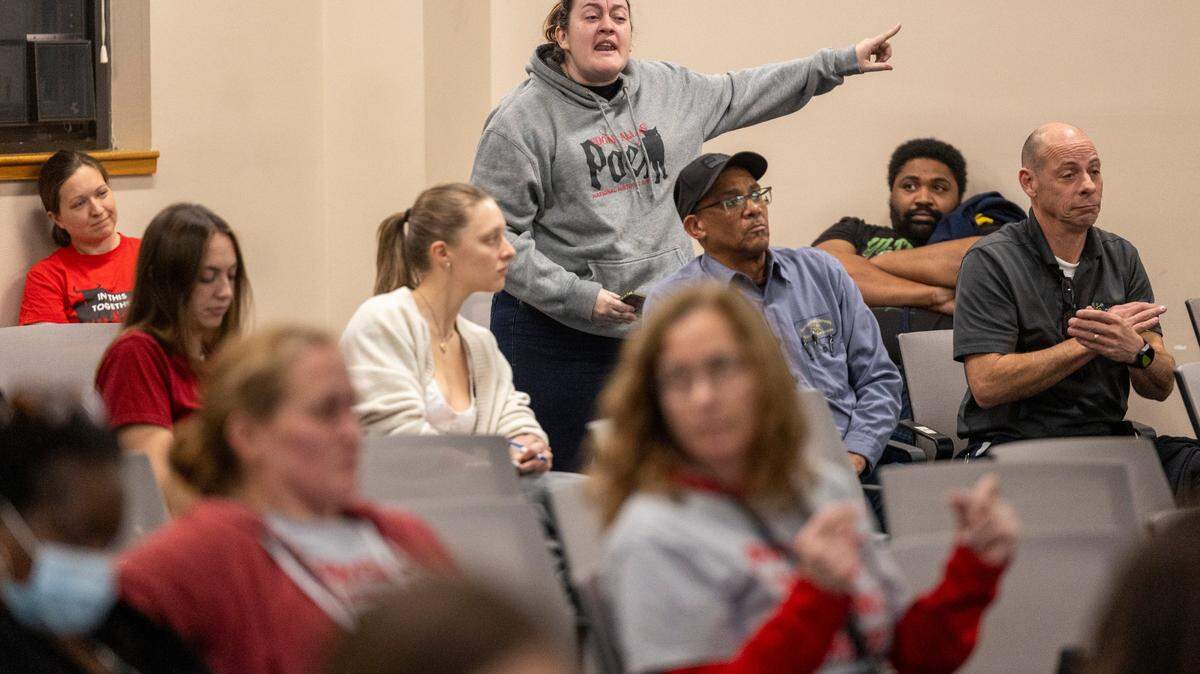
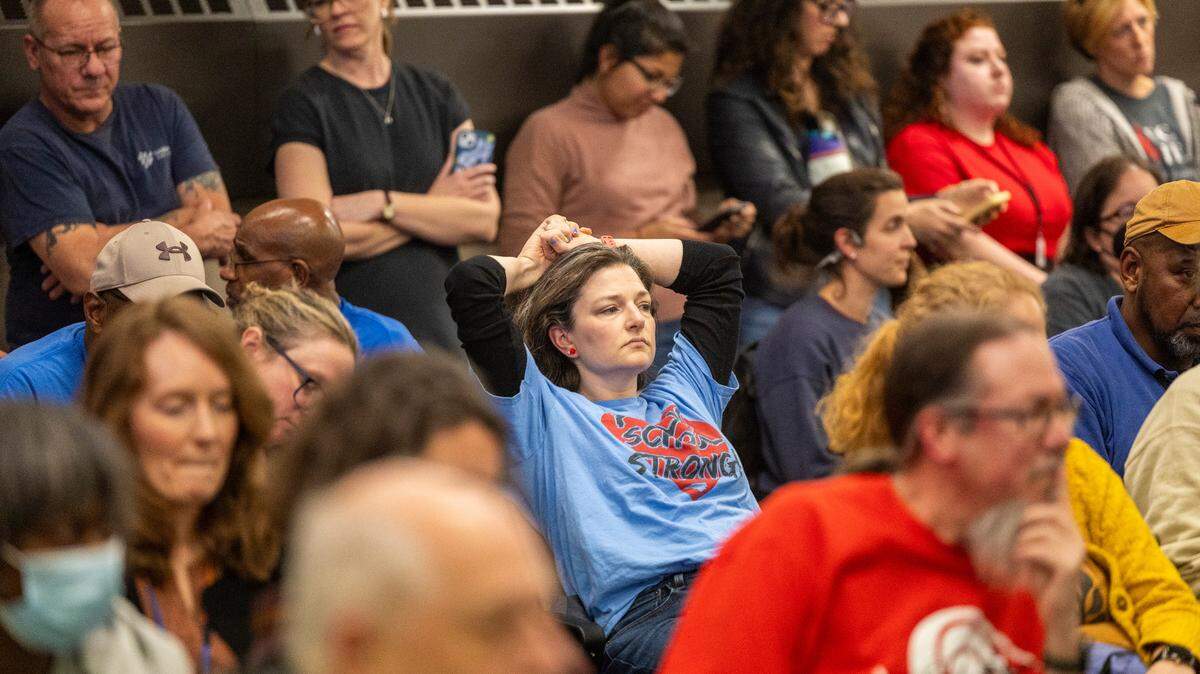
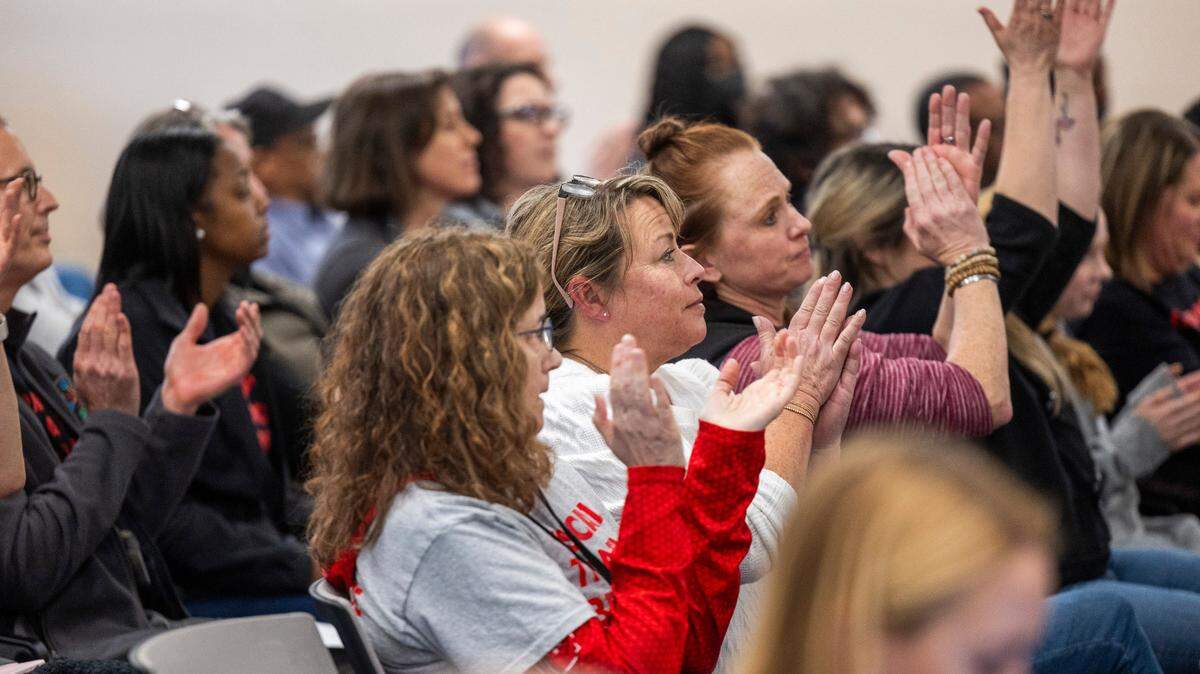
Feb. 2: School board members say they will meet weekly to find a solution. The first of those meetings lasted five hours with no decision about what employees will be paid. About 150 people attend the meeting. An additional 250 to 300 follow the stream on YouTube.
The administration presents two options the district can afford without asking for more money from the county:
Use the salaries emailed to staff in January. This would result in paying 1,300 employees significantly less than they were told in October, but at least 4% more than last school year. Annual cost: $91.2 million
Give an across-the-board 11% raise. This throws out the salary study and restores steps for classified staff. The pay bump would include 4% from the state and 7% from local funds. Some employees would receive less than they were told in October and January. Annual cost: $90.1 million
Workers with the Durham Association of Educators reject both ideas. The association, whose membership has doubled since the start of the year, has three core demands:
Restore pay steps and commit to no pay cuts in February paychecks
Publicly explain why January checks did not look like people expected
Schedule a work session next week about giving DAE a seat at the table
The school board voted to table the matter until Feb. 8.
The board requests results from an investigation to find out when the administration knew about the problems.
Board votes to hire an independent comptroller to review the system’s finances and report to the board.
Feb. 3: The Durham Association of Educators alerted the Durham Board of Education in a letter that it plans to conduct another “Day of Protest” Feb. 5 that will likely result in school closures.
Feb. 5: About 200 people picketed for four hours, many of them staff or parents from seven schools the district closed due to staffing concerns. They’re different schools than the 12 that closed the previous week.
Symone Kiddoo, who leads the Durham Association of Educators, said more “school-based actions” are planned, but “nothing that will close down schools.”
Feb. 7: The Durham Board of Education holds a special meeting on the salary issue, in place of a meeting previously scheduled for Feb. 8.
- Durham Public Schools Superintendent Pascal Mubenga resigns, less than a month after the scandal over pay was revealed to the public. In his resignation agreement, the school board agrees to pay him $297,759 by Feb. 9. The agreement also says both Mubenga and board members must agree not to make any “disparaging statements or comments” about each other in the future.
- The school board announces that Nicholas King, one of Mubenga’s deputies, will serve as interim superintendent.
- The board releases a summary of findings following an investigation into the salary issues by the Raleigh-based law firm Tharrington Smith. The firm notes in the report that its review is ongoing.
Feb. 8: The Durham Board of Education votes to keep higher salaries for classified staff for the month of February. Interim Finance Director Cierra Ojijo has said each month of pay at those higher salaries adds $700,000 to the budget.
There is still no decision on what will happen the rest of the school year. The board votes to delay discussion to its Feb. 22 board meeting, which will begin at 6:30 p.m.
They’ll meet with the Durham Association of Educators in the meantime. A work session with the union is on the calendar for Feb. 15.
- The school district also announced that all classes are canceled Friday for students due to all transportation support staff calling in sick, a district spokesperson said.
- Catty Moore, who was the Wake County schools superintendent for five years, is named interim superintendent.
Feb. 9: Durham Public Schools are closed for students due to an “overwhelming number of staff absences.” It is a teacher workday.
This story was originally published January 31, 2024 at 2:28 PM.
CORRECTION: This story was corrected Feb. 1, 2024 with the accurate name of Durham Public Schools’ chief operating officer, Larry Johnson.