St. Augustine’s bets big in fight for survival. Why students and alumni keep the faith.
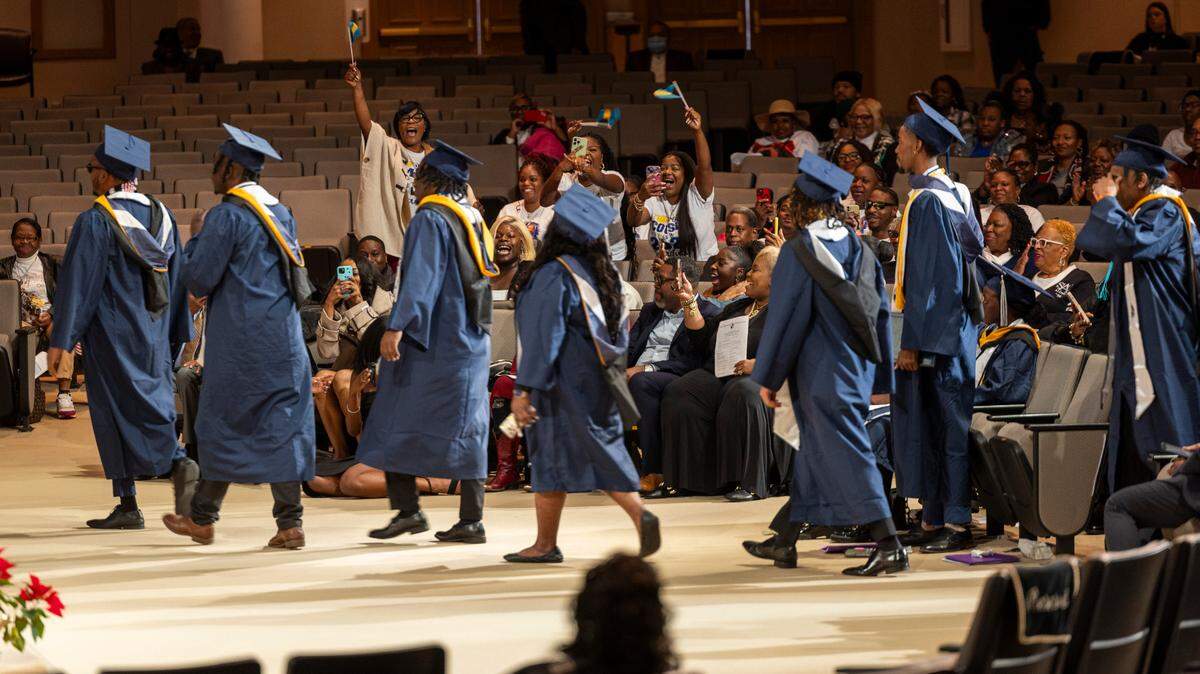
Graduating from St. Augustine’s University wasn’t an easy road for Kristoff Strachan.
Strachan, 29, initially enrolled in college in 2012 before pausing and restarting his studies multiple times at different schools over the years — first in his native Bahamas, then at Virginia’s Hampton University, then finally, in 2023, at St. Augustine’s. Along the way, his mother fought cancer twice and he battled Crohn’s disease.
After those tribulations and more, Strachan graduated from St. Augustine’s in December, earning a degree in political science. He plans to enroll at Virginia Theological Seminary in August, pursuing a master’s degree in divinity, and eventually begin a career focused on addressing the impacts climate change is bringing to island nations.
St. Augustine’s, like Strachan, has faced trials in recent years.
For more than a year, the historically Black university has fought to keep its accreditation amid ongoing financial and governance issues. The Southern Association of Colleges and Schools Commission on Colleges (SACSCOC), in its most recent decision on St. Augustine’s status, denied the university its accreditation and voted to strip it of membership with the organization — the third time in a year that the agency or one of its committees had done so. The university plans to appeal the ruling in February.
The outward signs of the university’s struggles have been plenty: Faculty and staff at times have not been paid on schedule, and the university in November cut roughly half of all employee positions. Financial documents from the North Carolina Secretary of State’s office show that the school owes millions in unpaid taxes. And enrollment dropped to about 200 students last fall, down considerably from the roughly 1,000 the university had enrolled in recent years.
But despite the university’s woes, Strachan — like the roughly 30 other students who graduated at the school’s first-ever December commencement ceremony — saw a reason to stay at St. Augustine’s. Transferring elsewhere, Strachan feared, would put him behind in his studies yet again.
“I did not want to do that,” Strachan told The News & Observer after receiving his degree on Dec. 13. “I’ve already been pursuing this degree for 12 years, so I just said that I would just stick it out with St. Augustine’s University, and I knew that my faith would hold me strong. It did.”
Leaders of St. Augustine’s, including interim President Marcus Burgess, also say they have faith in the future of the university. And they’re betting big as they look to secure the university’s finances, taking out a multimillion-dollar loan and entering into an agreement to lease much of the campus’s land, among other efforts.
“I am very optimistic,” Burgess told The N&O after last month’s graduation ceremony. “I feel great about our opportunities going forward, that we can turn this institution around.”
Alumni and others with ties to the university are hopeful, too. But there remains a sense of caution among some, who are concerned that campus leaders’ new plans will not address broader issues that they say have long threatened the university’s future.
“I have no other choice but to hold out on faith that something will happen that will allow us to save the university,” alumnus Steven Williams told The N&O, “and bring it back to its prominence.”
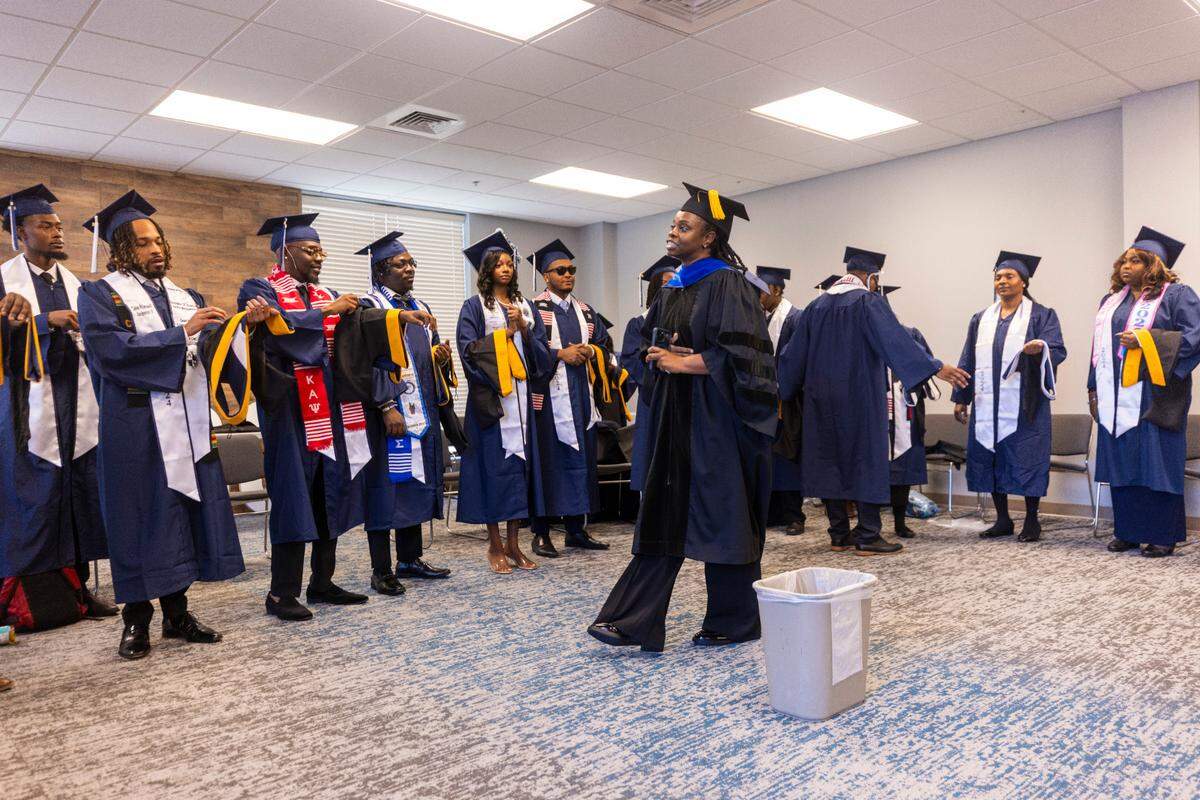
Williams isn’t merely holding out on faith. Last year, seeking to enact some change on the school’s Board of Trustees, he ran for a seat on the board as the representative of the St. Augustine’s National Alumni Association.
He won the election.
But he hasn’t been seated to his position.
In October, board chair Brian Boulware informed the alumni association president that Williams was ineligible due to his being a plaintiff in a lawsuit seeking to reconstitute the board — despite Williams not being added to the lawsuit until months after he won his seat in July.
But Williams plans to remain in the fight for his alma mater.
Rich campus history and culture
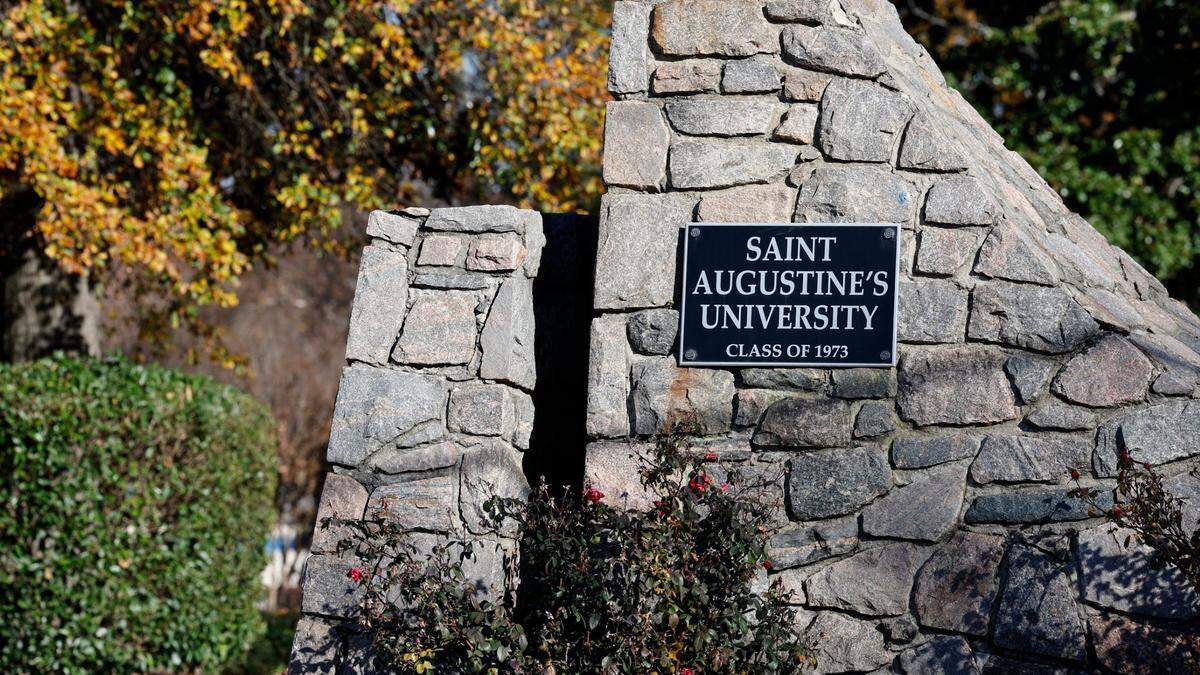
Originally founded by Episcopal clergy in the late 1860s to educate formerly enslaved people, St. Augustine’s has stood in the Oakwood area of Raleigh for more than 150 years. (The school became a college in 1928 and a university in 2012.)
Its rich history includes the former St. Agnes Hospital, which opened in 1896. The hospital offered the first professional training program for Black nurses in North Carolina and for 65 years was the only hospital in the area to serve Black patients.
The university’s legacy extends to athletics, too — notably with its track and field program, which has won nearly 40 Division II national championships and produced dozens of Olympians.
That’s part of what drew Williams to the university in 1992.
The university’s legendary track coach, George Williams, recruited him out of Hillside High School, then trusted him to anchor the 4x400 meter relay his freshman year. It was a formative experience for “a young kid coming out of Durham, North Carolina,” Steven Williams told The N&O.
“We were a family on the track team,” he said. “Even though a lot of us were different majors, still, when it came down to practice every day, everybody pushed each other and everybody rooted for each other.”
That sentiment extended beyond the track and onto campus, Williams said.
The university was lively and bustled with about 1,800 students when he first enrolled, according to federal data. That’s considerably larger than the school’s enrollment now, but Williams was still able to connect with professors and receive the “structure” he wanted from a small college.
And Williams recalled meeting fellow students on a near-daily basis with different economic backgrounds and countries of origin. That was, and still is, at the heart of the university’s mission to offer “a college education to students who otherwise wouldn’t get the opportunity,” as it was described in an N&O story from July 2000.
Former professor Derrick Sauls said that mission was key to why he left Duke University to teach at St. Augustine’s in 2012. Educating first-generation college students, or those who faced financial difficulties, was rewarding — and made the pay cut he took worth it.
“It was a professional obligation, where it wasn’t a job, it wasn’t about the money,” Sauls said. “It was about looking at the students and getting them to the next level.”
That feeling continued for many years, Sauls said, even as he disagreed with a series of decisions by administrators, like the controversial firing of coach George Williams in 2020. But by 2021, he’d had enough and he accepted an offer to teach at neighboring Shaw University instead.
“Now,” Sauls feels, “Oakwood Avenue is becoming a desolate place.”
Financial, governance issues over time
As the new millennium began, there were signs that the university might be facing hardship.
Enrollment had declined since the early 1990s. Because the university has historically relied more on tuition dollars for funding than its endowment or other fundraising efforts, budget deficits loomed.
By 2001, SACSCOC had placed St. Augustine’s on warning status for “serious academic and financial deficiencies,” The N&O reported. That warning was lifted after a year, but the university was placed on probation in 2003. By 2004, The N&O reported, the university “owed too much money, was failing to collect money it was owed and was relying too heavily on lines of credit.”
Similar issues have continued, off and on, in the two decades since then.
Financial struggles have been accompanied by high turnover among university leadership, with eight permanent or interim presidents at the helm since 2014. SACSCOC has also noted problems with the university’s Board of Trustees, finding on multiple occasions since 2022 that the board is not in compliance with at least some of the accreditor’s principles for governance.
St. Augustine’s isn’t the only HBCU to experience such challenges.
There are systemic reasons that may contribute to the issues, explained Marybeth Gasman, executive director of the Center for Minority Serving Institutions at Rutgers University. (Gasman, a prominent education scholar, previously served on the Board of Trustees at St. Augustine’s about a decade ago.)
For example, HBCUs historically have been underfunded and serve a higher proportion of low-income students compared to predominately white colleges, a dynamic that often compounds any funding losses the schools may experience due to enrollment declines or other factors.
“You have to consider the history of these institutions, where you have people who were systematically oppressed and not rewarded for their labor,” Gasman said. “And then, as these institutions come into play and are giving Black people an opportunity to go to school, it’s not like they could charge a lot of tuition.”
And compared to larger, predominately white universities, HBCUs and other small, private colleges generally have less of a “safety net” — like a large endowment — to cover any issues that arise.
“If you are tuition-driven, you have a small endowment, and you even have a small shift in your enrollment, you’re going to be in trouble,” Gasman said.
It is possible, but not necessarily easy, for HBCUs to rebound from such issues, Gasman said.
“It’s hard to dig yourself out of that,” Gasman said. “You have to be really creative.”

Betting big on a loan and land deal
As they attempt to right the university’s ship, St. Augustine’s leaders appear to be banking on two key deals announced last year.
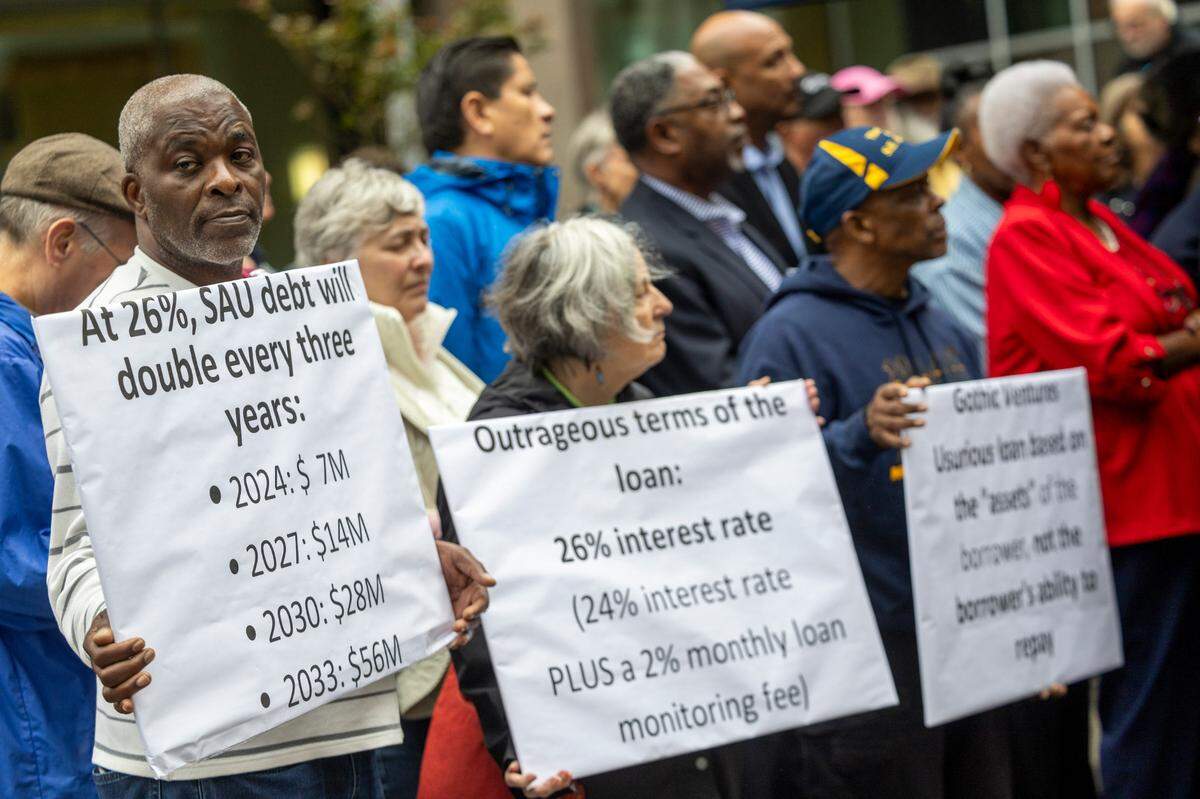
In August, the university announced it had secured a $30 million line of credit and an initial $7 million loan from Gothic Ventures, a Durham-based firm. Boulware, chair of the trustees, touted the move in a statement as “crucial to our journey toward excellence.”
But onlookers, including alumni and local clergy, have since raised concerns about the loan and its terms — which reportedly include a 24% interest rate with much of the university’s land used as collateral — and described the deal as “predatory.”
Kip Johnson, founder of Gothic Ventures, previously defended the terms of the loan in a statement to The N&O, saying they were drafted “based on the financial challenges facing the University,” and that his firm would be open to discussing a change in the terms if university leaders asked to do so. The university has also defended the loan, saying it agreed to the terms as “a short-term solution to provide the university with time to secure long-term financial deals.”
One of those long-term deals appears to be in its early stages.
Through a “transformative partnership” announced in November with 50 Plus 1 Sports, a Florida-based real estate investment company, the university now plans to lease its land to the firm, receiving a $70 million upfront payment from 50 Plus 1 for doing so. The money will provide “a financial boost to ensure SAU’s sustainability and growth,” a December news release read.
The exact details and timeline of the plan remain sparse, and it is unclear whether the firm has yet transferred any funds to the university.
Multiple attempts by The N&O to reach 50 Plus 1 by phone and email were unsuccessful.
Asked by The N&O in December for more details about St. Augustine’s partnership with the company, Burgess said only: “It’s good to have great partners.” The university said it would host a press conference about the deal in December, but never did.
The lack of information released about the deal thus far is concerning to some.
“There’s not a lot of transparency,” Sauls, the former professor, told The N&O.
In a statement to The N&O, Boulware said the Board of Trustees understands “that some members of the Saint Augustine’s community may have concerns about transparency and the details surrounding partnerships with Gothic Ventures and 50 Plus 1.” But, he added, the board is working to foster “open lines of communication through regular updates, forums and stakeholder meetings to ensure the community remains informed and involved.”
“We are actively implementing enhanced measures to increase transparency, including more user-friendly reporting mechanisms and ongoing engagement with alumni and community members,” Boulware said.
INDY Week, which interviewed 50 Plus 1’s managing partner, reported that the company plans to lease all 105 acres of the St. Augustine’s campus and use it for a mixed-use housing development. Demarcus Williams, a university spokesperson, previously confirmed to The N&O that the university would not sell any land as part of the deal. The university will receive 35% of the development’s revenue over the first 10 years of the agreement, and 40% in subsequent years, according to the December news release.
Boulware said in his statement that the deal with 50 Plus 1 includes an agreement for the firm to cover half of the university’s “liability” and all of the penalties included in the loan terms with Gothic Ventures.
“Both partnerships underwent thorough vetting processes to guarantee alignment with the university’s mission and long-term objectives,” Boulware said. “These collaborations are essential for resolving existing debt, creating sustainable revenue streams, and securing the university’s future for generations to come.”
There is precedent for HBCUs “leveraging” their land in their attempts to rectify financial and accreditation issues, Gasman said. One such example comes from Morris Brown College in Atlanta, which regained its accreditation after roughly 20 years and, among other tactics, entered into a partnership to build a Hilton hotel on campus through a long-term land leasing deal.
Compared to Hilton and the Miami developer tapped for the hotel project at Morris Brown, 50 Plus 1 is a relatively young and unproven company. The firm made a bid in 2023 for the redevelopment of Florida’s Tropicana Field, where the Tampa Bay Rays play baseball. But St. Petersburg city staff who evaluated the bid said the company “lacked experience as a lead developer” and that its plan lacked detail, The Tampa Bay Times reported.
Gasman noted that making deals involving a university’s land isn’t a solution that will work for every HBCU. But “if you want to survive, you’ve got to figure out what you have to leverage, and you’ve got to do it in the safest way possible,” Gasman said.

Concerns about deals, board
University leaders themselves are also crucial to getting struggling HBCUs back on track, Gasman said. College presidents, for instance, will be better positioned for success if they are a proven “a risk taker” or “somebody with a lot of energy” — traits that Gasman said are key to the “really hard work” it takes to combat financial and accreditation issues.
College boards of trustees are key to the plan, as well, Gasman said. In Gasman’s experience, the most effective boards are “forward-thinking” and include members who “give generously” — of their money, time, skills or business connections — to the university and its efforts.
“This is incredibly important,” Gasman said. “You can’t have a board that is not giving and not connected.”
But there is room for overreach by boards in these situations, Gasman noted. While it is acceptable for members to offer their business connections or donate to the university, they should not engage in conflicts of interest or profit from the university’s endeavors, Gasman said.
Some alumni and other onlookers to St. Augustine’s struggles are distrustful of the university’s current Board of Trustees, going so far as to file a lawsuit seeking to reconstitute the board.
Save SAU, a coalition of “concerned alumni, students, parents, former faculty and administrators” and other university supporters, filed the lawsuit in May. Williams, the former track athlete, was among the plaintiffs.
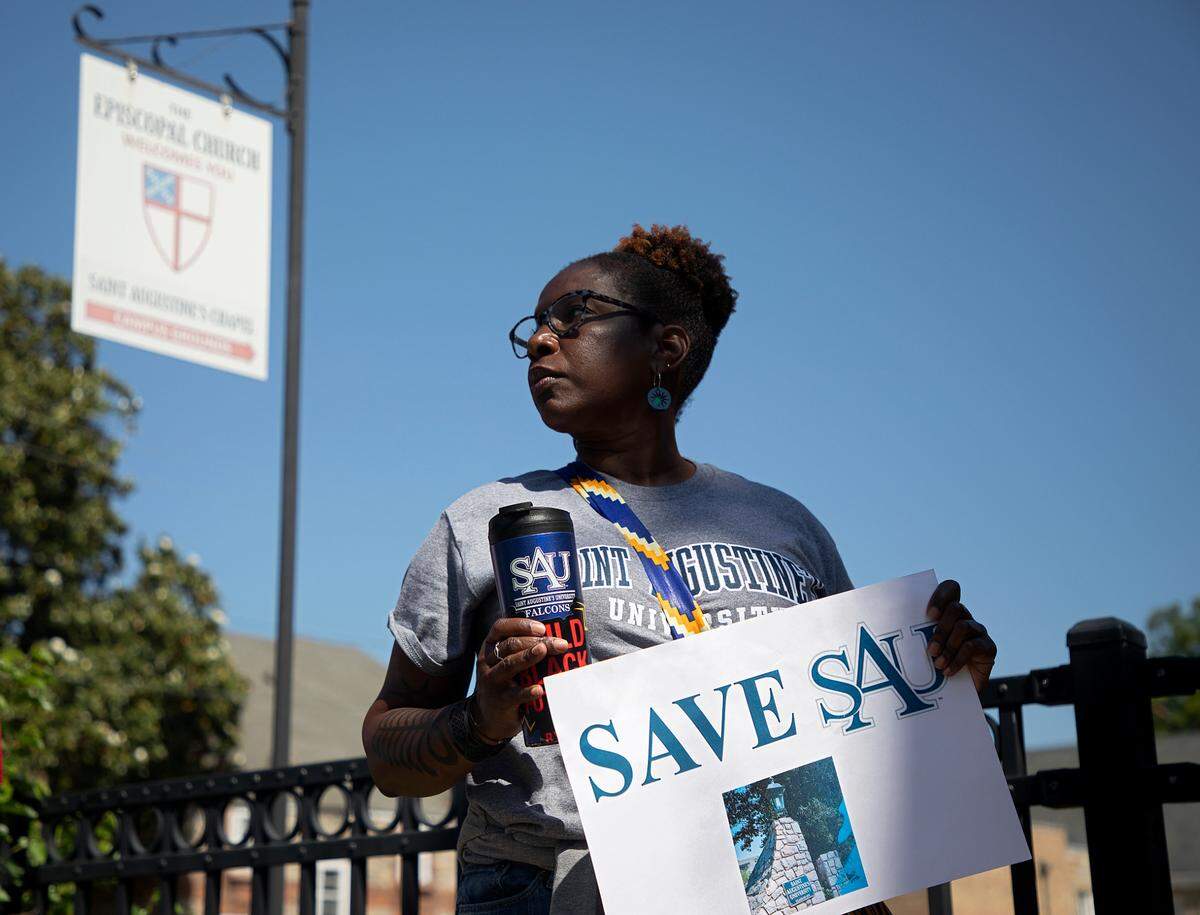
The suit alleged that there had been multiple instances since roughly 2019 in which trustees had skirted formal bidding processes for university construction and renovation projects and engaged in conflicts of interest.
The university has called the lawsuit “baseless” and called the allegations within the suit “simply untrue.”
A Wake County judge dismissed the lawsuit in November, citing a lack of standing among the plaintiffs. But the state attorney general’s office plans to look into the allegations “further in the coming weeks,” N.C. Department of Justice spokesperson Nazneed Ahmed said in a statement to The N&O.
Boulware, in his statement to The N&O, said: “The dismissal of the Save SAU lawsuit allows us to redirect our focus entirely on what matters most — our students, faculty, and the long-term sustainability of the university. While we respect the right of individuals to express concerns, we are steadfast in our efforts to ensure that Saint Augustine’s continues to be a beacon of excellence in education and community service.”
An independent audit, released in November, found no evidence to support an allegation that Boulware benefited from a brokerage fee for a loan the university secured in 2023, nor to support allegations, as included in Save SAU’s lawsuit, that the university made payments to Boulware or his businesses between 2021 and 2023. Boulware told The N&O that he was “pleased that the audit findings reaffirmed that there was no wrongdoing associated with” the loan or other financial matters included in the lawsuit.
St. Augustine’s “will look forward to the opportunity to provide the attorney general’s office with the facts regarding the Plaintiff’s allegations if the attorney general’s office decides to contact the University,” a university website states.

Looking forward
Regarding the seat he won on the Board of Trustees, Williams said he has not heard an update on whether he might be seated now that the Save SAU lawsuit has been dismissed. In his statement to The N&O, Boulware said “the board will review the alumni seat and determine the best course of action in alignment with our bylaws and commitment to effective governance.”
“Our goal is to maintain a board that is unified, transparent and fully focused on advancing Saint Augustine’s University’s mission,” Boulware said.
Still, Williams remains an involved alumnus, as he has been since he graduated from St. Augustine’s
For roughly 15 years, Williams has led Falcons Unite, a group that works to support current students. Through the group’s efforts, from hosting annual cookouts at the university’s homecoming, to offering emergency financial assistance, the organization tries to instill a sense of pride in students, akin to what Williams and thousands of other students experienced decades ago.
Through his work with Falcons Unite, Williams has seen the university’s financial and governance issues continue over time. But over the past year, he’s seen more alumni and St. Augustine’s supporters grow attuned to the challenges — and get involved in the fight to address them.
“We are very astute, and we are not sitting on our hands,” Williams said.
As the university moves forward with its deal with 50 Plus 1, it has asked for alumni support and will invite them to provide feedback, according to a December news release.
Alumni involvement is key, Gasman said, as struggling universities try to climb out of financial issues.
“If you really care about your alma mater, you should be giving to your alma mater,” Gasman said.
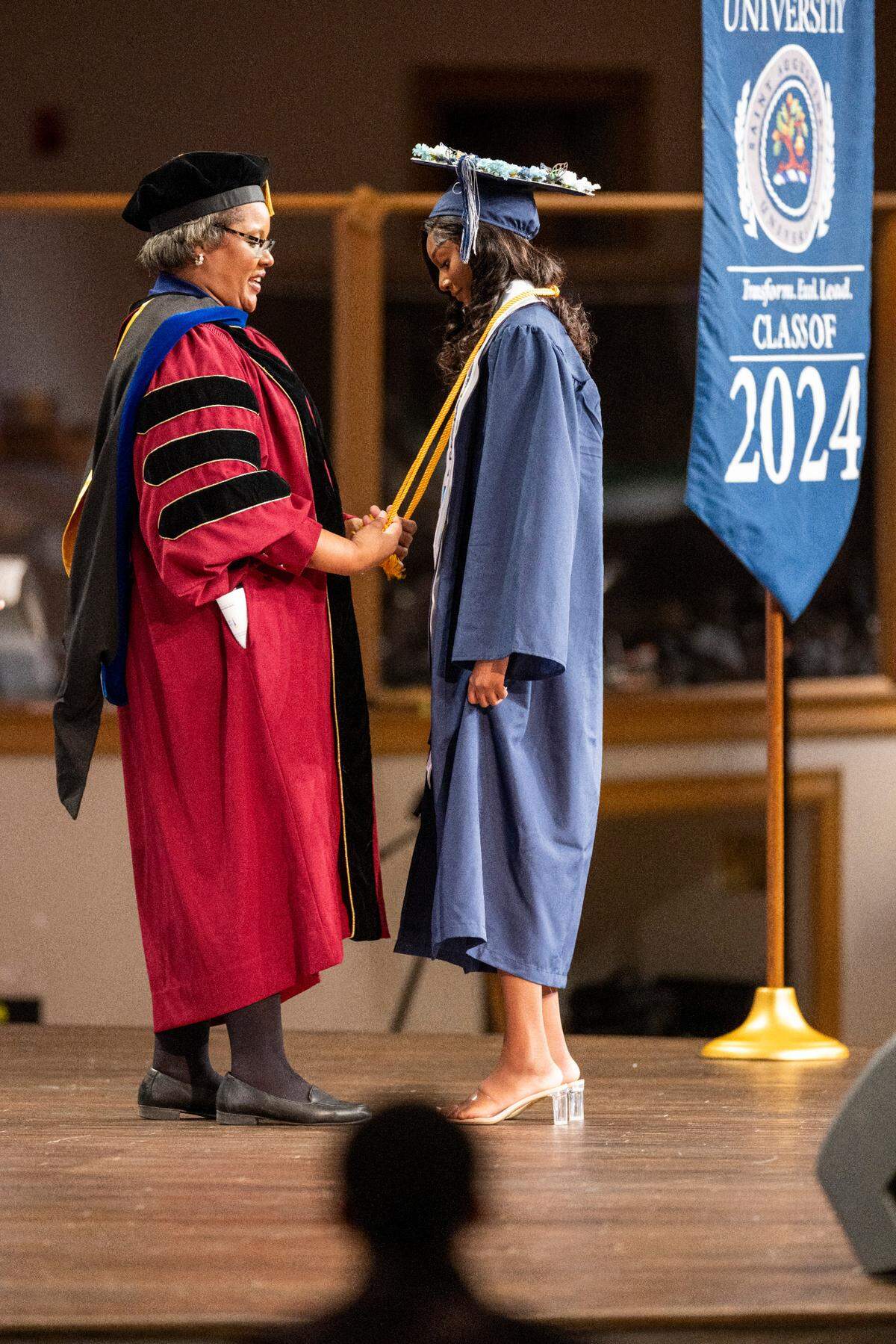
The university’s new graduates seemed to understand that sentiment in December.
Taymar Smith, a new graduate from Greenville, South Carolina, said she wants St. Augustine’s to “bounce back” and continue to provide future students with the experiences she enjoyed. Smith, who was a member of the school’s legendary track and cross country teams, said she understands why some students — including some of her teammates — chose to leave the university during its recent struggles.
But throughout it all, St. Augustine’s continued to provide Smith with “a really great sense of family” and support from her professors and advisers. She now feels prepared to pursue her dream of becoming a physician assistant, after completing more patient-care experience this spring. As she leaves the university, she is grateful — and hopeful for what might come next.
“I’m sad to be leaving it, but I’m glad to be a part of it,” Smith told The N&O after receiving her diploma.
Strachan, who completed his degree after the many trials he faced, feels similarly.
“I’m hopeful that the legacy of St. Augustine’s University can remain for decades beyond,” Strachan said. “I’m now officially an alumnus of the university, so I’m hopeful that 10, 20 years from now, I can say that my school is still there, still thriving.”
This story was originally published January 9, 2025 at 5:00 AM.