More first-year students can enroll at UNC-Chapel Hill, starting with this fall’s class
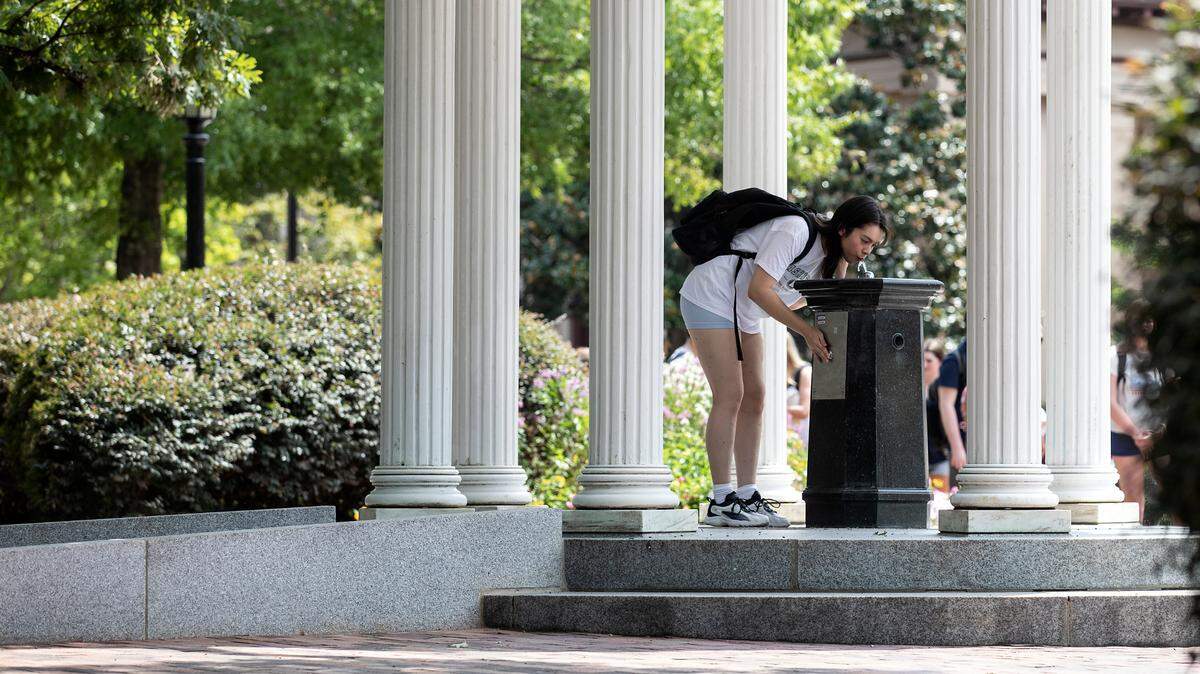
UNC-Chapel Hill will make space for hundreds more students than usual in this fall’s first-year class, Chancellor Lee Roberts announced Wednesday — the first step in a plan to eventually increase the university’s enrollment by 5,000 students over the next decade.
The university will enroll 500 additional first-year students from the ongoing admissions cycle, Roberts said during a committee meeting of the Board of Trustees.
And most of the new slots will go to in-state students, since a cap on out-of-state enrollment will remain — for now.
This past fall, the university welcomed more than 4,600 first-year students to campus, meaning the additional spots being made available this cycle are likely to put the size of the next first-year class at more than 5,000 students. Overall, the university currently enrolls more than 20,000 undergraduate students.
Enrolling those additional students this fall will “jump start” plans to further grow the university’s enrollment over 10 years, a recommendation developed last year by a working group that Roberts appointed to consider, among other objectives, how UNC could better serve the state’s high school graduates.
“Everyone who lives here knows how quickly the state is growing,” Roberts told reporters Thursday.
But as the state has experienced that rapid growth, the university’s enrollment has remained relatively flat, which means UNC now serves a lower proportion of the state’s high school graduates — a trend that is perhaps at odds with its mission as the state’s flagship campus. On multiple occasions over the past year, Roberts has noted that, while the university at one time enrolled about 5% of North Carolina’s high school seniors in the first-year class each fall, that amount now hovers around 3.5%.
Trustee Jim Blaine, a former chief of staff to Republican state Senate leader Phil Berger, noted that trend during a committee meeting Wednesday and urged university officials to pursue efforts to grow enrollment “in the short-term.”
“It’s hard to be the ‘university of the people’ if we aren’t serving very many people,” Blaine said. “And I think it’s really time for us to be aggressively thinking about how we provide the benefits of an education at Chapel Hill to more of the people of North Carolina.”
Roberts, responding to Blaine, said the decision to enroll 500 more students this fall will be “an important down payment” on further growth at the university. Adding students “is not easy,” Roberts added, noting that doing so places constraints on campus infrastructure, such as residence halls, and services like dining and academic advising.
“There are constraints across the enterprise,” Roberts said, “but so far, we haven’t identified an insurmountable constraint.”
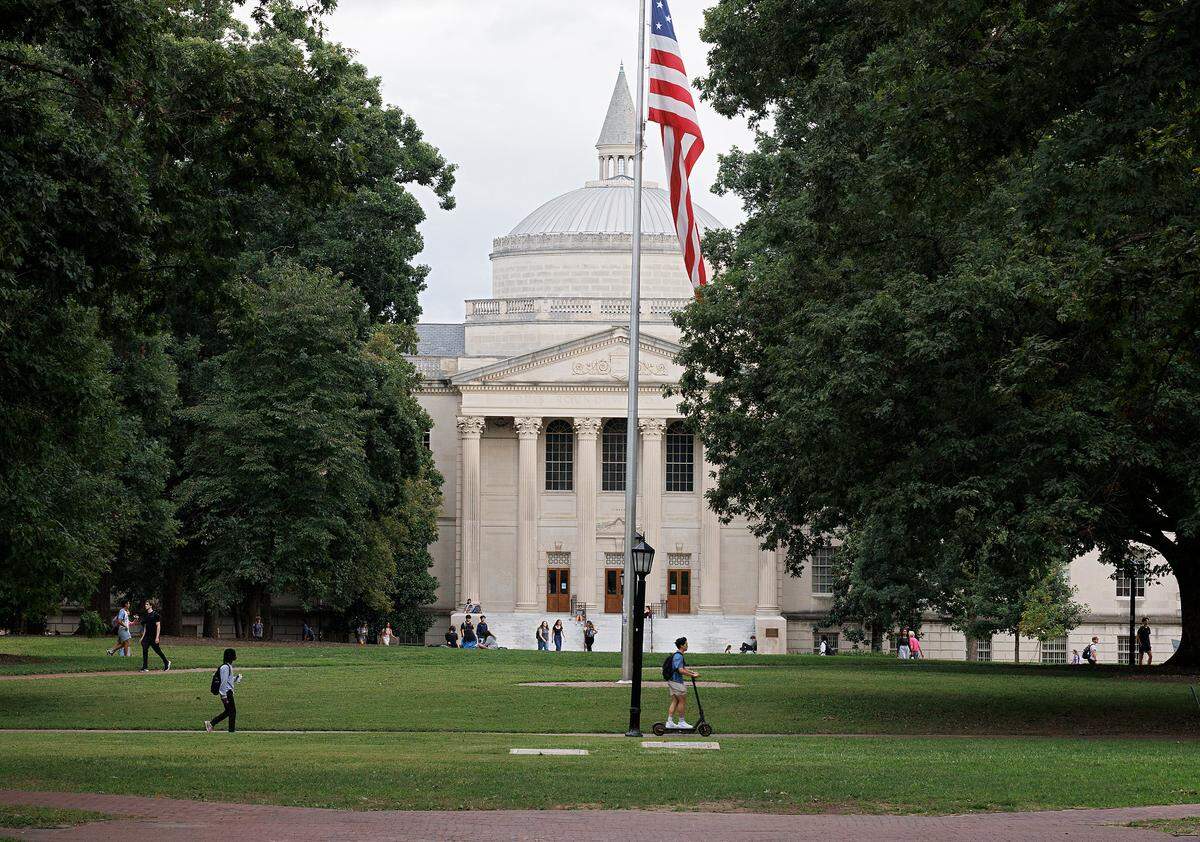
Applications to UNC up 15% this year
Even with more spots available in the incoming first-year class, it will remain competitive to get into the university.
Roberts announced Thursday that the university has received about 10,000 more admissions applications this cycle as compared to the previous one, making for an increase of about 15%. The university last cycle received more than 73,000 applications.
Under UNC System policy, the university’s first-year classes must consist mostly of in-state students, at 82% of the class, compared to out-of-state students, who can account for no more than 18% of the class.
That ratio will not change this fall, even with additional students enrolling. It could change down the line — though exactly when remains unclear.
Last year’s enrollment working group, appointed by Roberts, recommended that the additional 5,000 undergraduates the university plans to add over the next decade be equally divided among in- and out-of-state students. Out-of-state students pay higher tuition, so in order to accommodate the increased costs that adding students to campus will create, the committee recommended raising the out-of-state enrollment cap in each incoming class from 18% to 25%.
It would be the first increase to the cap at UNC since the UNC System instituted it in 1986. The university is one of just five in the 16-university system that still adhere to the 18% cap, with the others now capped between 25% to 50% after a series of increases in recent years.
Asked by The News & Observer on Thursday about whether, or when, the university plans to request an increase to the cap, Roberts said: “If there’s an opportunity to have a discussion in the future about changing that ratio, we’ll certainly have that conversation at the appropriate time.”
The UNC System Board of Governors, which Roberts resigned from to become interim chancellor last year, would be responsible for considering and approving such a request.
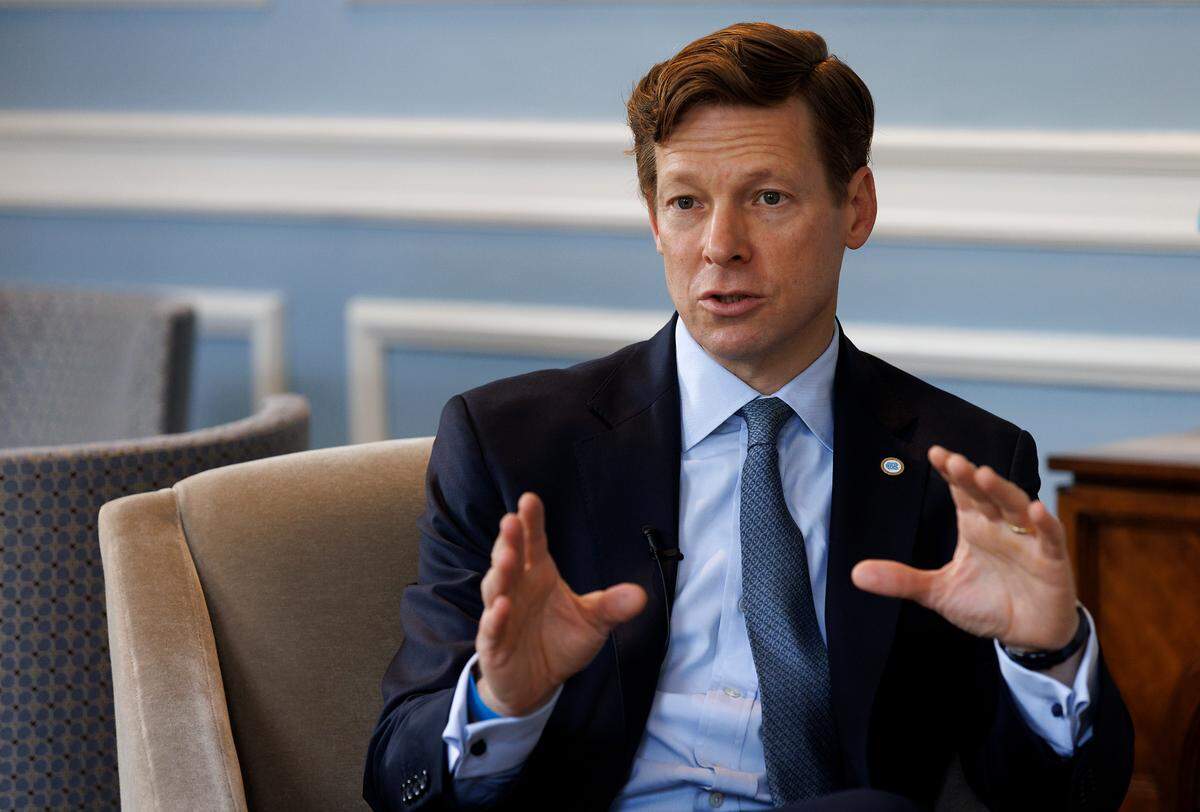
Admissions decisions available soon
The deadline to apply to the university for students enrolling this fall was Jan. 15. The first admissions decisions for the incoming class will be available by the end of January, for those who applied by the early-action deadline in October. For those who applied by the Jan. 15 deadline, decisions will be available by the end of March.
New this year to UNC’s application process is the “Choose NC” pilot program, a partnership with five other schools in the UNC System: UNC Asheville, Elizabeth City State University, UNC Pembroke, UNC Greensboro and Western Carolina University.
Through the optional program, students who are denied admission to UNC-Chapel Hill can choose to have their application forwarded to any of the five participating schools for consideration there. Roberts said Thursday that 23% of all students and 41% of in-state students who applied to UNC-Chapel Hill opted in to the program.
Students who are admitted and choose to attend UNC must confirm their enrollment by May 1, a deadline used by most colleges and universities around the country.
But some students may be admitted later than that deadline, as spots in the incoming class become available for those applicants who were placed on the waitlist. The university promises it will notify any students on the waitlist of its final decisions by June 30.
In response to an N&O story published last month, which detailed trustees’ text and email conversations with university officials regarding admissions and certain applicants, trustee Ramsey White raised concerns about the length of time it takes for applicants on the waitlist to receive a final decision. White, who regularly messaged with a top university fundraising official about at least one applicant, told The N&O she believed the admissions office was “overwhelmed” with the year-over-year increase in applications and the “number of applicants put on the waitlist.”
Asked by The N&O Thursday about whether he has any concerns about the waitlist, Roberts noted that the process and timeline to admit students off the list is based on “yield,” or the number of students who enroll after being admitted. Because students have until May 1 to make that decision, spots may not become available until after that date.
“I’m not sure how it can be more accelerated, given that it’s dependent on the responses from admitted students,” Roberts said. “We use it to make sure that we’re filling out the class appropriately based on the responses that we get from the first wave of accepted students.”
Regarding the trustees’ correspondence, Roberts said: “Everything I’ve seen shows that we followed our process with respect to with respect to admissions.”
“We get a lot of input, a lot of feedback, and it’s up to us to make sure that our admissions process has integrity and is well structured,” Roberts said, “and I believe that to be the case.”