Words like ‘culture’ under scrutiny in ECU curriculum as UNC System hunts for DEI language
Culture. Justice. Women’s rights.
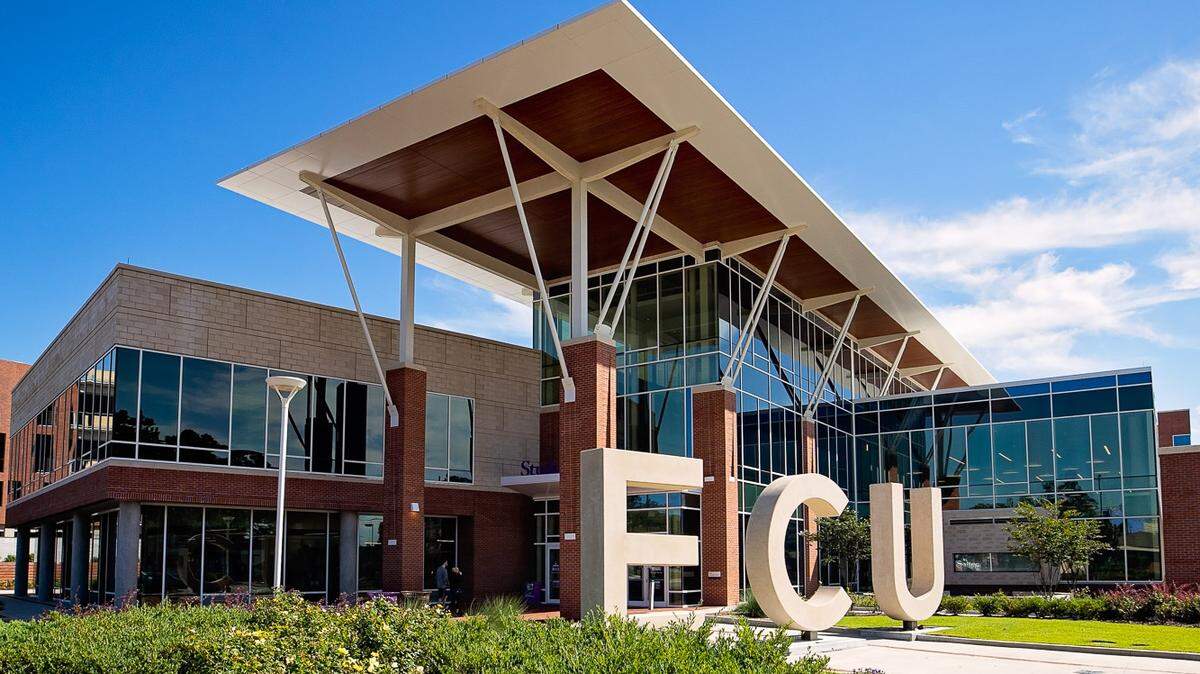
Faculty at East Carolina University say those three terms and many others have been “flagged” in course titles and descriptions in recent weeks as the UNC System and federal government continue to crack down on diversity, equity and inclusion under orders from President Donald Trump’s second administration.
The university-wide “screening” of curricula at ECU comes after the UNC System’s top attorney, Andrew Tripp, sent a memo last month instructing campus chancellors to immediately suspend all DEI-related general-education and major-specific requirements for students. Tripp and system leaders justified the move by citing Trump’s Jan. 21 executive order that enacted new restrictions on federal agencies’ ability to enter into contracts with third-parties, including universities, with programs “promoting DEI.”
Universities across the 17-campus system are permitted to continue offering DEI-related courses, but they may no longer require students to take them as a condition of graduation. Students who were enrolled in such courses at the time the requirements were suspended were given the choice to remain in the classes, or to drop the classes without penalty.
Just a handful of schools, including ECU, UNC Asheville and NC State University, required students to take courses on diversity prior to the system’s crackdown.
In response to the system directive, ECU suspended its “domestic diversity” and “global diversity” requirements for undergraduate students. Just 21 students withdrew from the courses they were enrolled in, interim provost Chris Buddo said at a meeting of the university’s Faculty Senate last week.
Now ECU leaders are seeking to understand whether additional courses at the university, including those that fulfill requirements in major programs, might run afoul of the new restrictions.
To do so, they are using a list of DEI-related “keywords” developed months ago to scan the university’s entire course catalog for possible issues.
It is unclear whether, or how, other universities in the UNC System are undertaking similar scans of their courses to comply with DEI restrictions. System spokesperson Andy Wallace said in an email to The News & Observer that each campus is “responsible for determining compliance” with Tripp’s memo and that “the steps to get there are up to them.”
Aside from curricular matters, though, there is evidence that additional campuses are deleting references to DEI and related terms from university websites and other official documents. NC State, for example, last week changed both its ongoing strategic plan and vision statement to remove such references.
And there are likely even more examples, according to Wade Maki, the chair of the UNC System Faculty Assembly, which represents faculty across the system. Maki said the process is being described among faculty and others as “scrubbing.”
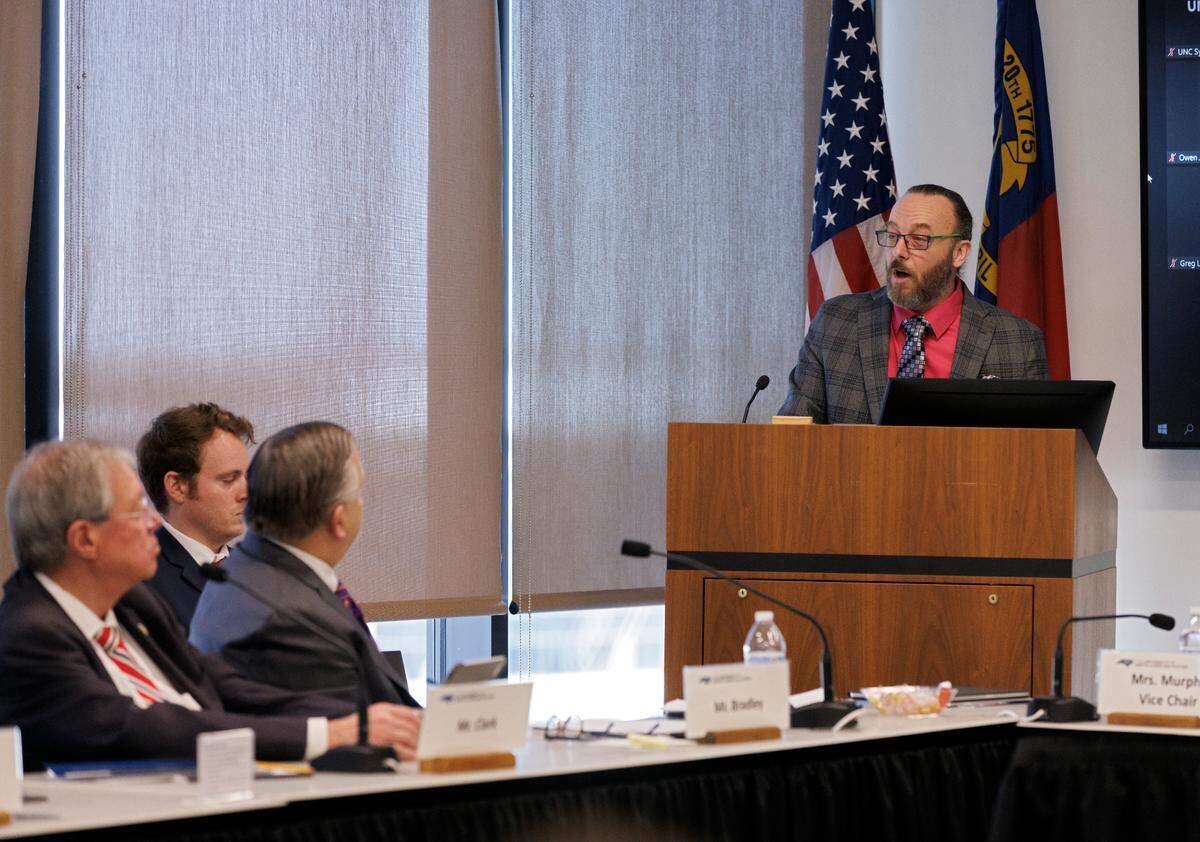
“I can confirm that’s happening all over the system,” Maki, who meets regularly with faculty representatives from all UNC System campuses, told The N&O. “And it’s happening very quickly, and generally pretty quietly.”
Full list of DEI keywords remains unclear
The keywords ECU leaders are using to parse the university’s curriculum are not entirely new.
Buddo told the Faculty Senate that the list has been in use for several months. ECU lawyers and other officials first developed it, he said, in an attempt to remove references to DEI and related terms from campus websites as they worked to comply with the UNC System’s “equality policy,” which replaced former DEI requirements with a focus on free speech, institutional neutrality and other ideals last May.
“That process is still ongoing and will continue to involve every aspect of our online presence, to include websites, faculty manual codes, job descriptions and more,” Buddo said.
Still, the full list of keywords ECU officials are using for their efforts remains somewhat of a mystery. The N&O filed a public records request seeking the list, but has not received it.
But comments from faculty members and Buddo’s remarks last week, plus other documents obtained by The N&O, offer some clues about the terms that are included.
For example, a document containing instructions for the catalog review, which was attached to an email to faculty, states that the keywords “include but are not limited to DEI, Diversity, Equity, Inclusion, and Cultural/Culture/Intercultural.” The keywords do not include “international/global,” per the document. (It is unclear who sent the email or who, in all, received it.)
English professor Margaret Bauer said at last week’s Faculty Senate meeting that colleagues in her department were being required to examine their courses with “cultural” in the name or title — a word, Bauer noted, that appears twice in the university’s mission statement. The list also included “justice” and “women’s rights,” according to Lisa Ellison, an instructor in the department of foreign languages and literatures.
The list is broad, Buddo said, going beyond the terms of diversity, equity and inclusion specifically, because “if we miss one, the risks are high.”
In his Feb. 5 memo, Tripp noted that the UNC System expected further guidance on how to interpret Trump’s order on federal contracting compliance, but was choosing to act without first receiving such guidance. The reason, Tripp wrote, is that “the risk of jeopardizing over $1.4 [billion] in critical federal research funding is simply too great to defer action.”
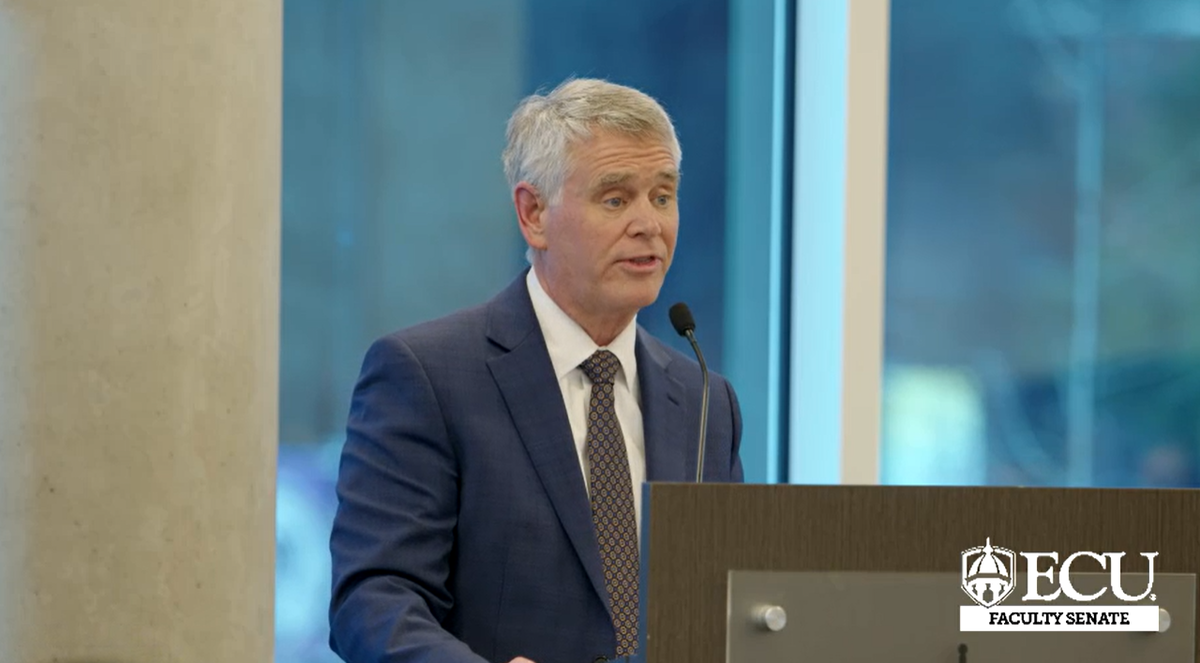
In higher education broadly, and specifically in the UNC System, it is common for universities to hold contracts with the federal government for research or other campus operations such as student aid. At ECU, Chancellor Philip Rogers told the Faculty Senate last week, there are nearly 250 active federal awards for research.
Buddo told the Faculty Senate that “none of the words on the list are inherently problematic.”
“But I will tell you,” he added, “the list was developed as a way to cast the widest possible net, to make sure we could be aware of all the places that we might be viewed as being noncompliant.”
Catalog scan has caused ‘anxiety,’ ‘panic’
But the use of the keywords to scan course descriptions is concerning to some faculty.
Bauer said the catalog review process, which appears to have begun in mid-February, has caused “anxiety” among faculty whose courses have been flagged. Ellison said the process had been the source of “panic,” particularly because “many faculty believed that this was an order to remove those innocuous terms from their program descriptions, course titles and, in some cases, course content.”
Generally, adhering to higher education’s long-held belief and practice of academic freedom, faculty retain the right to set the university’s curriculum and teach courses on topics of which they are experts — even if they are controversial — without interference from administrators or onlookers.
While the outcomes of the catalog review remain to be seen, Buddo predicted that just a “handful” of classes will require a “deeper look” to ensure they comply with the new directives.
More likely, Buddo said, is that many courses that were flagged based on their including a keyword will turn out to be “false positives” — that is, “courses that have nothing to do with DEI content,” or courses that “actually have DEI content” but that students are not required to take, by virtue of them being an elective or because a department offers enough courses to fulfill a given requirement that students have a real choice in whether they enroll in the DEI-related class.
“Let me be clear: we are not forbidden from including DEI concepts in our coursework,” Buddo told faculty.
According to the document containing instructions for the catalog review, obtained by The N&O, each of the university’s eight colleges received “a list of programs identified through the screening,” with faculty then directed to sort the flagged programs as false positives; as a DEI-related requirement that would need a waiver to continue, per the UNC System’s directive; or as a program that would be revised in order to comply with the restrictions on DEI.
Revisions might be “editorial,” or dealing only with the program description, or require changes to the curriculum itself, per the document. Anne Ticknor, chair of the Faculty Senate, said curriculum-based changes might include no longer requiring the DEI-related course as part of the degree program, or adding additional courses for students to choose from that would fulfill the same requirement.
Maki, the UNC System faculty chair, said faculty are “deeply worried” about the possibility of some words that have nonpolitical meanings — like “bias” — being swept up, and potentially censored, in the catalog scan at ECU or similar processes that may play out at other campuses. So far, though, academic leaders, such as ECU’s provost, being involved in the process has been a slight reassurance, he said.
“Luckily, the people who are doing this work on campuses tend to be people in the academic side of the house, and so they’re a little better at understanding the differences,” Maki said.
Any changes to the ECU curriculum resulting from the scanning process are set to be considered by the Faculty Senate next month, according to the document. That was important to Ticknor, she said, given the faculty’s typical role in overseeing the curriculum.
“I wanted to make sure we were being as transparent as possible, that the faculty had eyes on it from the start to the end,” Ticknor said.
The changes are expected to be reflected in ECU’s catalog for the upcoming academic year, which will begin in August.
Changes to strategic plans, websites at NC State and across system
Meanwhile, other universities in the UNC System are making similar moves to clear their websites, mission statements and strategic plans, among other documents, of DEI references.
“There have been a lot of changes made to university websites, all the way down to the departmental level,” Maki said.
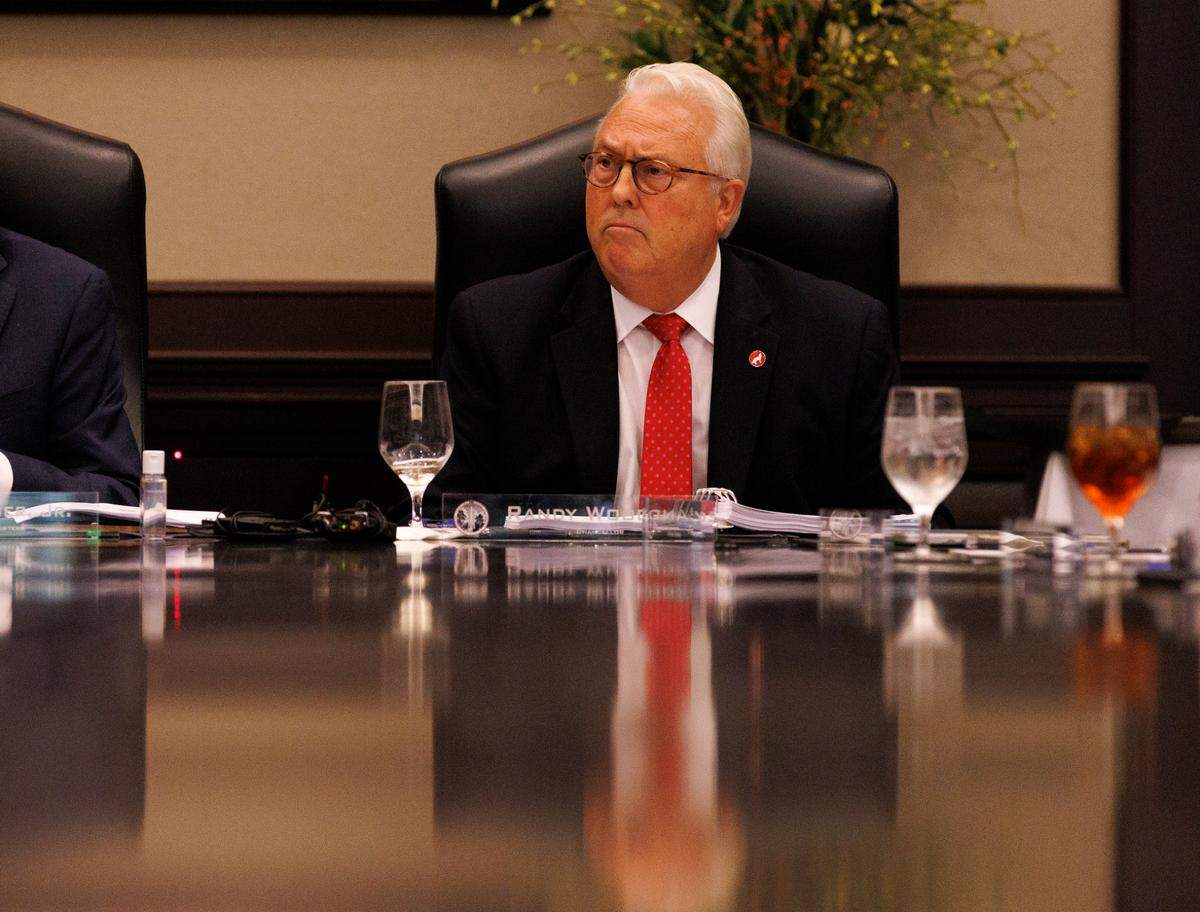
Last week, NC State Chancellor Randy Woodson and provost Warwick Arden wrote to faculty and staff to inform them that they had changed a goal for the university’s 10-year strategic plan, as well as its values and vision statement, to comply with the UNC System’s equality policy.
Previously, the fourth goal of the strategic plan, as approved in 2021, was that the university would “Champion a culture of equity, diversity, inclusion, belonging and well-being in all we do.” Now, the goal reads: “Champion a culture of equality, belonging and well-being in all we do.”
The university’s vision statement, which previously stated that “NC State will be known as a diverse, equitable and inclusive community,” now reads that the university “will be known as a welcoming and supportive community.”
Additionally, NC State no longer lists “inclusion” as one of its “core values.” Instead, the university now values “representation of all the people of North Carolina by seeking, welcoming and supporting individuals and ideas from across the state — and beyond — in service to our shared needs.”
The changes at NC State will extend further, if they haven’t already.
In a Feb. 24 email to deans and other leaders across the university, obtained by The N&O, Arden wrote that the “alternate language” for the strategic plan, vision and values would be implemented “at the university level immediately.” He then asked the email recipients “to do the same at unit level websites.”
“To be clear, I need all references to Diversity, Equity and/or Inclusion deleted from your website and replaced with the alternate language this week,” Arden wrote.
And NC State isn’t alone in making such changes.
In November, UNC Charlotte received approval from the UNC System Board of Governors to remove a line from its mission statement that said the university was “a diverse and inclusive institution.” At the time, the university was believed to be the only school in the system that had revised its mission statement to comply with the equality policy, though several schools already did not include references to DEI in their statements.
The equality policy, as described to reporters after a committee first approved it last April, was not expected to impact campus mission statements. Neither legal guidance on the policy issued by system staff to campuses, nor the policy itself, mentioned mission statements or said that references to DEI within the statements would need to be removed in order for universities to comply with the policy.
UNC Charlotte is also in the process of updating its strategic plan to align with the equality policy, a university spokesperson previously told The N&O. That plan, approved in 2021, included a focus “to ensure that our campus is diverse, equitable and inclusive.”
.JPG "UNCC (3).JPG")
Still, it appears other campuses are maintaining references to diversity in their mission statements and other materials — at least for now.
UNC-Chapel Hill, for instance, maintains that its mission is “to teach a diverse community of undergraduate, graduate, and professional students to become the next generation of leaders.” Similarly, UNC Pembroke, which was originally founded to educate American Indian students, says in its mission statement that the university “now serves a distinctly diverse student body and encourages inclusion and appreciation for the values of all people.”
At some point in recent months, Western Carolina University had removed “diversity and inclusive excellence” as a “core value” on the university’s mission statement website. But when The N&O contacted the university about the change on Monday, a spokesperson then said it was a mistake. The phrase was restored to the website that day.
Rules, expectations remain unclear
Maki, in speaking to The N&O and in remarks to the Board of Governors at a meeting last week, expressed concerns over the processes that are being used to comply with the system’s equality policy and other recent directives, and the lack of consistency among campuses.
“The rush to comply is occurring in an environment where the rules are unclear,” Maki told the board. “Inconsistent and uneven application of mandates is occurring throughout our system and nationally.”
For instance, it is unclear who, exactly, is directing campuses to change their materials and remove references to DEI across the board.
“We’re in an environment where, what happens if somebody sees something on a website and complains to the right person in Raleigh?” Maki told The N&O. “And what tends to be happening is, that complaint gets turned into a ‘Hey, you need to take some action to make that disappear.’”
Asked whether such directions to change university materials were coming from someone in the UNC System office, Wallace, the system spokesperson, said only that campuses “are constantly evaluating to ensure compliance” with system policy.
What is somewhat clearer, though, is that at least one key member of the Board of Governors is unhappy with the pace at which campuses have sought to comply with some policies approved by the board.
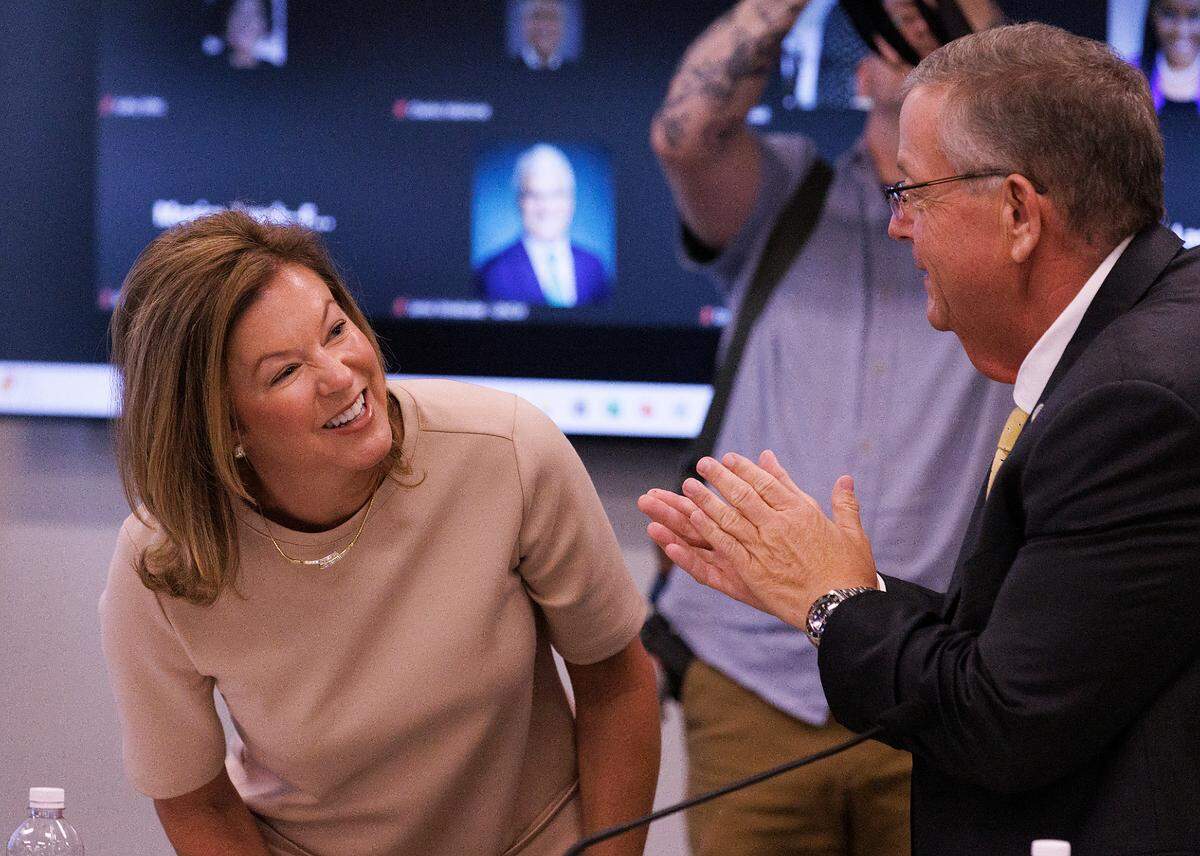
In her remarks last week, board Chair Wendy Murphy said it “it appears that campuses are still struggling with full implementation” of the equality policy and other “important directives.”
“Going forward, all board policies must be executed thoroughly, efficiently and effectively and not require repeated interventions by the board and the system office,” Murphy said. “Quicker implementation can be done.”
Maki, for his part, is urging system leaders to make room for “nuance” as higher education continues to be thrust into the national spotlight and universities are forced to make sweeping changes with little notice.
“We really need a nuanced conversation, and we need clarity on the rules in order to properly serve our students,” Maki said. “And right now, that’s not what we have.”
This story was originally published March 6, 2025 at 2:15 PM.