More charter schools want to open in Wake County. Here’s what they’ll offer.
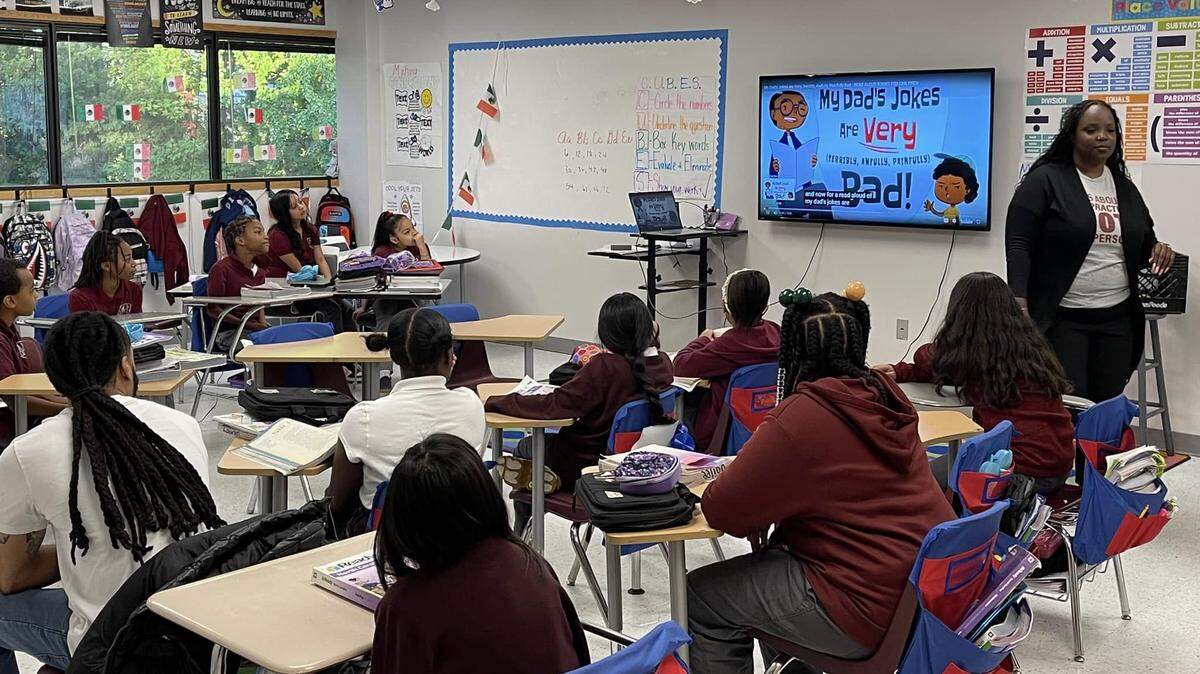
Wake County could see another five new charter schools open in the next two years, further fueling the growth of nontraditional public school seats.
The state Office of Charter Schools recently received 17 applications for new charter schools seeking state approval to open in 2026 or 2027. Five applications are in Wake County, representing a mix of groups wanting to duplicate existing charter schools and those proposing to start new programs.
Wake County is already home to 26 of the state’s 208 charter schools. Only Mecklenburg County has more with 34 charter schools.
“Can Wake County absorb five new charter schools? Probably,” Rhonda Dillingham, executive director of the N.C. Association for Public Charter Schools, said in an interview. “But those schools are going to have to get out and recruit.”
If they win state approval, the new charter schools will put even more pressure on the Wake County school system to attract students.
“Wake County Public Schools needs to tell their story even more about the good job they’re doing,” Keith Poston, president of the WakeEd Partnership, said in an interview. “It’s definitely more competitive now. But Wake County is well seated to deal with the competition.”
New Wake charter school applicants
The Office of Charter Schools is reviewing the 17 new applications who met the April 25 filing deadline. One applicant from Gaston County has withdrawn.
Some applicants want to open in 2027. Those that want an accelerated opening in 2026 will face greater scrutiny from the N.C. Charter Schools Review Board.
The Wake County applicants are:
▪ Focus Academy Charter School wants to open in 2026 serving the Garner community. School leaders say they’ll integrate arts throughout the curriculum as they teach students how to think critically while focusing on character development.
The Charter Schools Review Board rejected Focus Academy’s application last year due to concerns about the school’s budget. Many charter applicants reapply using what they learned from their failed attempts.
▪ Pine Springs Preparatory Virtual Academy opened this school year as a remote program offered by Pine Springs Preparatory Academy in Holly Springs. The virtual academy now has 2,390 students.
School leaders said Pine Springs’ board of directors thought the virtual academy would be better served as its own charter school. They’re applying to be a standalone statewide virtual charter school starting in 2026.
▪ The WorldCommons School wants to open in 2026 offering what school leaders call a model beyond traditional education. The school says its overarching purpose is to empower students, especially those from historically marginalized communities, to become compassionate, confident and independent individuals.
The school says students will be asked to explore pressing social and environmental questions such as how can food security be eliminated and what strategies can be implemented to combat climate change.
▪ The Institute for the Development of Young Leaders, also known as IDYL Charter School, has served students in Durham for a decade. Now IDYL want to expand into Wake County by opening a second charter school in 2026.
“Many families in Wake County are in need of the type of school like IDYL, where every single child is cared for and the staff stops at nothing to help the student,” the school says on its website.
While IDYL only has a D grade from the state’s school performance model, it has exceeded growth targets on state exams for four years in a row.
▪ Encompass Montessori Charter School wants to open as an elementary school in eastern Wake in 2027.
In general, Montessori educators believe children benefit from doing things hands-on, so items such as blocks are available for them to use. The children are given the freedom, within limits, to learn at their own pace and do what interests them. The teachers act as observers who keep them on track.
Charter school enrollment surging in Wake County
Charter school enrollment soared after state lawmakers lifted the cap on the number of charter schools in 2011. Between 2013-14 and 2023-24, charter school enrollment increased 164% in Wake County.
Under state law, school districts collect and pass along to charter schools their share of the local money they get for each student. The district expects to distribute $74.4 million this school year for the 18,772 Wake students who are attending charter schools. The district has more than 161,000 students.
The school board is asking the Wake County Board of Commissioners for a $40.3 million increase in local funding for the 2025-26 school year. Of that $40.3 million, $7.3 million is for expected increases in charter school enrollment.
The increase in local funding for charter schools comes at the same time that private schools are seeing huge increases in state funding from the expansion of the Opportunity Scholarship program. The number of private school vouchers more than doubled statewide after state lawmakers opened the program to all families, including those who were already attending a private school.
“We are concerned overall about the resources that are being drawn away from our traditional public schools both through charter schools and the private school voucher program,” said Poston of the WakeEd Partnership. “While we believe the public school system is the best first choice for most families, we are seeing more funds being taken away.”
But Dave Machado, executive director of the N.C. Coalition for Charter Schools, said what matters most is that charter schools are helping some families escape from low-performing schools.
“Parents have the option to decide where their children will go to school not based on their ZIP code,” Machado said in an interview.
Some charter schools in Wake have had problems attracting students. Machado said the market will decide whether any current or new charter schools rise or fall.
“I don’t know if there’s a number that a person or a bureaucrat can put on what is the saturation point,” Machado said. “Saturation is when people stop applying, and for the most part people have not stopped.”
This story was originally published May 19, 2025 at 6:45 AM.